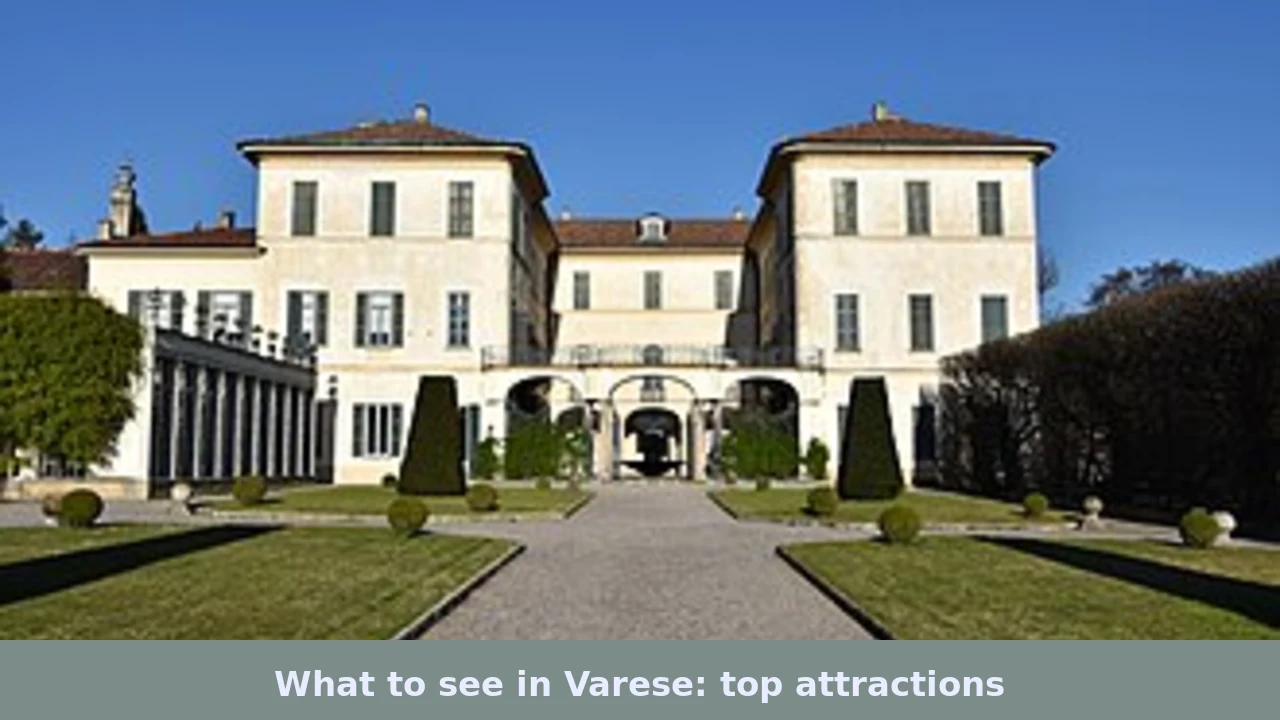
Among the unmissable attractions in Varese, Villa Panza stands out, a site managed by the Italian Environment Fund (FAI) since 1996. This historic residence, originally built in the 18th century for the Menafoglio family, is renowned for its extraordinary collection of contemporary art. The villa represents a significant example of how art and architecture can interact within a context of great historical and scenic value. Visiting Villa Panza means immersing oneself in a cultural experience that uniquely unites past and present. It offers an original perspective on what to see in Varese, away from more conventional routes.
The History of the Panza Residence
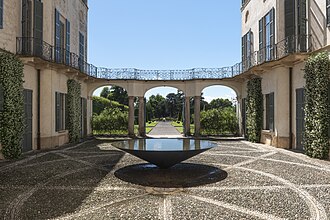
The origins of Villa Panza date back to the 18th century when the Menafoglio family began its construction. The property then passed to the Litta family, who expanded it and transformed it into a prestigious country residence. In 1935, the estate was acquired by Ernesto Panza di Biumo, who moved there with his family. His son, Giuseppe Panza di Biumo, is the key figure who shaped the villa’s current artistic identity.
Starting in the 1950s, Giuseppe Panza began collecting contemporary art with a very personal vision, focused on environmental and perceptual art. His collection, rich in works by international artists, was conceived to integrate with the villa’s spaces, creating a continuous dialogue between architecture, natural light, and artworks. In 1996, Giuseppe Panza donated the villa and part of his collection to the FAI, ensuring its preservation and public access. More details on the villa’s history are available on its Wikipedia page.
The Architecture and Gardens of Villa Panza
The architecture of Villa Panza reflects the elegance of 18th-century Lombardy, with sober lines and a harmonious arrangement of spaces. The villa is organized around a large courtyard of honor, which serves as a visual and distributive focal point. The facades, while not overly ornamented, express a sense of balance and proportion, typical of noble residences of the era. The interiors, despite being adapted to house the art collection, maintain the original atmosphere of the historic home.
The gardens surrounding the villa are a distinctive feature of the property. They are divided into an Italian garden, with trimmed hedges and geometric flowerbeds, and a larger English park, characterized by ancient trees and winding paths. These green spaces are not merely a backdrop but also host contemporary artworks, creating an outdoor exhibition route. Their meticulous care enhances the entire complex, offering visitors the opportunity to stroll between nature and culture.
The Contemporary Art Collection: Light and Space
The heart of Villa Panza is its exceptional contemporary art collection, curated by Giuseppe Panza di Biumo. The collection primarily focuses on works that explore light, space, and perception, created by American artists from the 1960s onwards. Among the most celebrated names are James Turrell, Robert Irwin, and Dan Flavin, whose installations were specifically designed for the villa’s environments.
Turrell’s works, for example, manipulate natural and artificial light to create immersive experiences that alter the perception of space. Irwin focuses on the relationship between the artwork and its surrounding environment, while Flavin uses fluorescent tubes to define and transform spaces. This fusion of art and architecture makes every room in the villa a unique sensory experience, inviting visitors to reflect on the nature of light and vision.
Why Villa Panza is Worth Visiting
Villa Panza offers a profound cultural experience, combining the beauty of a historic residence with the innovation of contemporary art. The opportunity to see works by world-renowned artists integrated into such a unique context is rare. The dialogue between 18th-century architecture and luminous installations creates an atmosphere that stimulates reflection and admiration. Every corner of the villa and its park holds a discovery, whether it’s an architectural detail or an artwork that interacts with its environment.
Furthermore, FAI’s management ensures meticulous preservation of the structure and the collection, guaranteeing that every visit is an opportunity to appreciate an invaluable cultural heritage. The villa is a place where history, art, and nature merge, offering a chance to explore new perspectives on art and landscape. It is a destination that enriches the range of tourist offerings in the area.
Practical Tips for Visiting Villa Panza
For those wishing to visit Villa Panza, it is advisable to consult the official FAI website to check opening hours and any temporary exhibitions currently running. The villa is easily accessible by car and has parking available. Alternatively, you can reach it by public transport from Varese city center, using the bus. Allow at least two or three hours to calmly explore the villa, its collections, and the gardens.
Inside the villa, there is also a restaurant that offers a refreshing break, with a view of the gardens. It is advisable to wear comfortable shoes, especially if you plan to walk extensively in the park. For updated information on tickets, hours, and accessibility, it is useful to consult the dedicated page on the FAI website. The structure is a cultural landmark in the province and represents one of the main attractions of Varese, a town that offers various opportunities for discovery.
If you wish to learn more about Varese and its other attractions, you can consult the complete profile of the town. You will find much useful information to best organize your visit and discover all the peculiarities of this fascinating locality. Visit the page dedicated to Varese for more details.