

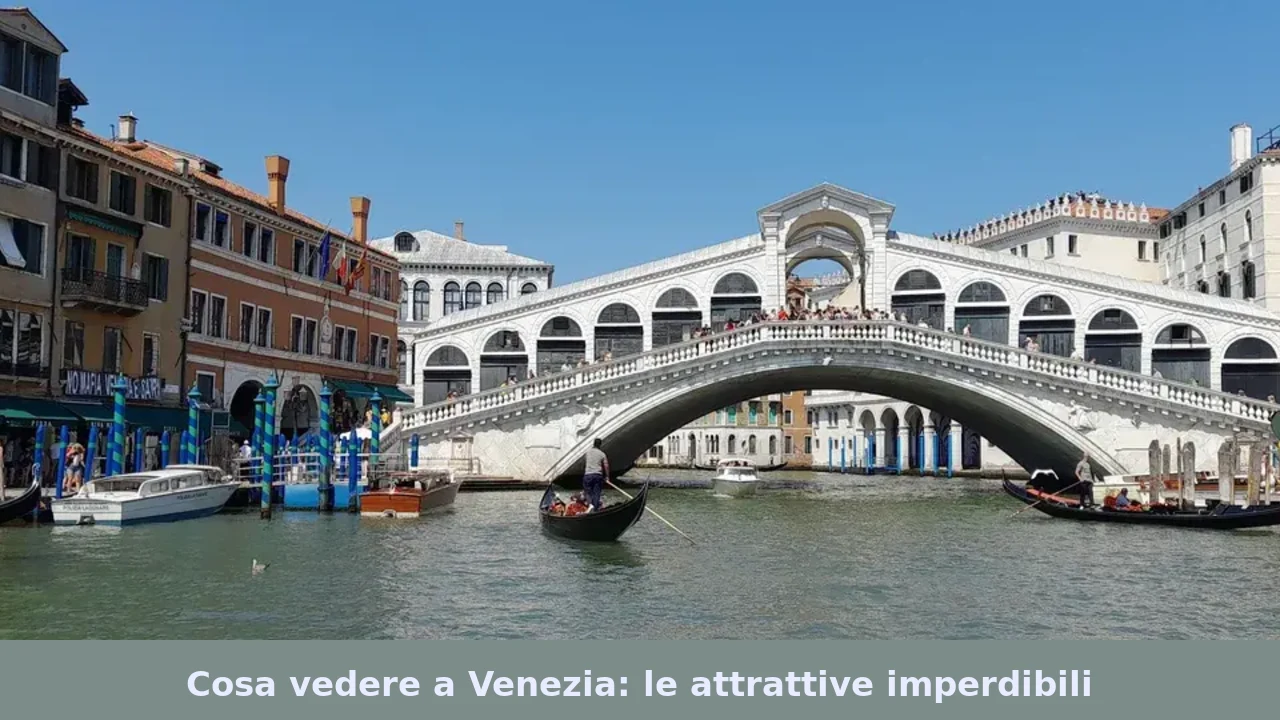
Venice, a metropolitan city with 249,385 inhabitants and a UNESCO World Heritage site, offers a vast panorama of historical and cultural attractions. Among the many wonders that the lagoon city offers, if one asks what to see in Venice, the Rialto Bridge stands out as one of the most recognized and historically significant symbols. This famous crossing over the Grand Canal represents not only an engineering work of great value, but also a fundamental crossroads of city life for centuries.
Its structure has shaped the history and economy of the Serenissima, serving as a meeting point for merchants, residents, and travelers from all over.
The Documented History of the Rialto Bridge
The origins of the Rialto Bridge date back to 1181, when the first bridge, called Ponte della Moneta (Bridge of the Coin), was erected. This initial structure, a simple pontoon bridge, was designed to connect the two banks of the Grand Canal, facilitating access to the Rialto market, which was already a vital commercial center for Venice at that time. Its importance grew rapidly with the development of trade and population in the area.
In 1255, the original bridge was replaced by a more robust wooden structure, equipped with a central drawbridge that allowed taller boats to pass through. This configuration, although more functional, was subject to deterioration and required frequent maintenance. The wooden bridge suffered several collapses over the centuries, often due to fires or the excessive weight of crowds gathering to observe events and processions.
The need for a more stable and durable structure became evident after the collapse of 1444 and the great fire of 1514, which destroyed much of the Rialto area.
As early as 1503, a proposal had been made to build a stone bridge. For the construction of the new bridge, the Serenissima Republic of Venice announced a competition in 1587, in which renowned architects such as Andrea Palladio, Giacomo Barozzi da Vignola, and Vincenzo Scamozzi participated. However, the project that was chosen and received approval was that of Antonio da Ponte, a Venetian engineer, who proposed a daring solution with a single large arch.
Work on the stone Rialto Bridge began in 1588 and concluded in 1591, under the supervision of Antonio da Ponte and his nephew Antonio Contin. This achievement was a remarkable engineering feat for its time, considering the challenges posed by the marshy terrain and the need to maintain naval traffic on the Grand Canal. The bridge immediately became an icon of Venice, celebrated for its majesty and functionality. For further details on its genesis, you can consult the Rialto Bridge entry on Wikipedia.
Architecture and Distinctive Features
The Rialto Bridge, in its current form, is a significant example of Venetian Renaissance architecture, characterized by a single large arch spanning 28.80 meters. This monolithic solution was innovative for its time and allowed for overcoming the structural and navigation problems that had plagued previous wooden bridges.
The choice of a single arch ensured a wide and unobstructed passage for boats, including larger galleons, a crucial aspect for Venice’s maritime trade.
The bridge’s structure is made entirely of Istrian stone, a resistant and durable material widely used in Venetian architecture for its ability to withstand the humidity and salinity of the lagoon environment. The bridge consists of three pedestrian ramps: two side ramps and a wider central ramp. The two outer ramps are flanked by a series of covered shops, which face directly onto the Grand Canal, while the central ramp offers an open panoramic view of the canal itself.
The central part of the bridge is crowned by a portico that opens on both sides, allowing passers-by to admire views of the Grand Canal from an elevated position. The bridge’s decorations include sculptural reliefs depicting the Annunciation, with Archangel Gabriel on one side and the Virgin Mary on the other, and statues of Venice’s patron saints, Saint Theodore and Saint Mark, placed at the cardinal points of the structure.
These elements not only embellish the bridge but also emphasize its religious and civic importance within the city.
Antonio da Ponte’s design was audacious and successfully combined aesthetics and functionality in an exemplary manner. Its robustness and unique configuration with integrated shops make it a one-of-a-kind work, distinguishing it from other historic European bridges. Even today, its structure withstands intense pedestrian traffic and environmental stresses, testifying to the ingenuity and expertise of 16th-century Venetian architects and builders.
Commercial and Social Life on the Bridge
Since its construction, the Rialto Bridge has not merely been a crossing point, but a true hub of commercial and social activity. The shops flanking the inner ramps are a distinctive feature of the bridge and have maintained their commercial function for centuries. Originally, these spaces were leased by the Republic of Venice, and the proceeds contributed to the bridge’s maintenance and public coffers.
Today, these shops mainly house jewelers, souvenir shops, and retailers of typical Venetian products, such as Murano glass and handcrafted masks.
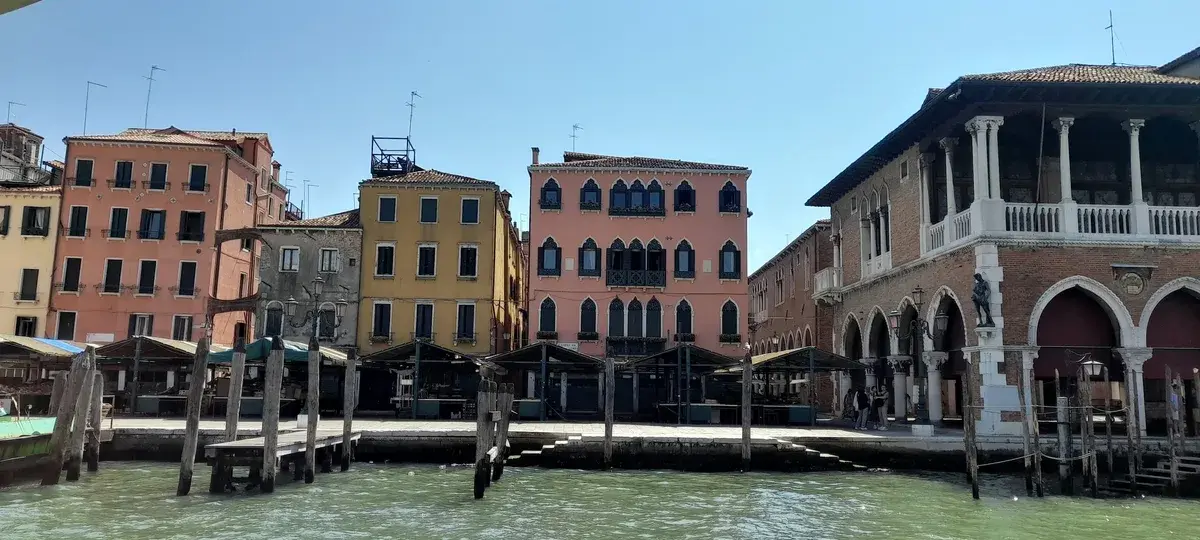
The bridge serves as an essential link between the sestieri (districts) of San Marco and San Polo, making it a natural crossroads for residents and visitors. Its strategic location, just a few steps from the famous Rialto Market – which includes the Pescaria (fish market) and the Erbaria (herb market) – has amplified its role as an economic hub. For centuries, merchants of all kinds have met and exchanged goods in the immediate vicinity of the bridge, solidifying its reputation as the beating heart of Venetian commerce.
Walking on the Rialto Bridge offers the opportunity not only to shop but also to immerse oneself in the lively atmosphere of Venice. From the central ramp, visitors can enjoy one of the most iconic views of the Grand Canal, observing the comings and goings of gondolas, vaporetti (water buses), and water taxis. It is an ideal place to take photographs and observe the city’s daily life unfolding on the water.
Its energy and constant flow of people make it a privileged vantage point for grasping the essence of Venice.
The bridge is also a landmark for meetings and appointments, a place where people stop to chat, admire the panorama, or simply enjoy the moment. Its popularity is continuous, from early morning, when merchants set up, until late evening, when the lights of the shops and boats reflect on the water. This constant commercial and social activity has made the Rialto Bridge a symbol of Venice’s vitality and resilience through the centuries.
Why Rialto Bridge is a Must-See
Visiting the Rialto Bridge is an experience that goes beyond simply admiring a monument; it means directly experiencing a fundamental piece of Venetian history and culture. Its importance is not only tied to its practical function as a connection but also to its profound symbolic meaning. It represents the ingenuity and determination of the Venetians in overcoming the challenges posed by the lagoon environment, creating a work that has endured for over four centuries.
From an architectural perspective, the bridge is a testament to Renaissance engineering mastery.
Its single arch and its ability to support the weight of the shops and pedestrian traffic make it a structural work of art. Admiring the details of its sculptures and the solidity of Istrian stone allows one to appreciate the care and expertise with which it was built, a legacy that continues to amaze with its robustness and beauty.
The Rialto Bridge also offers one of the most famous and photographed perspectives of the Grand Canal. Climbing the central ramp and looking out to observe the gondolas gliding beneath the arch, the historic palaces reflected in the water, and the incessant movement of the city, is a moment that captures the essence of Venice.
This view has been immortalized in countless works of art, photographs, and films, solidifying its status as a global icon.
Furthermore, the lively commercial and social activity that still takes place on and around the bridge today makes it a dynamic and engaging spot. You can perceive the flow of Venetian life, observing residents shopping, tourists exploring, and gondoliers singing their songs. This combination of history, architecture, panorama, and daily life makes the Rialto Bridge an unmissable stop for anyone wishing to fully understand and experience the spirit of Venice.
Tips for Visiting the Rialto Bridge
For those wishing to visit the Rialto Bridge, there are several options to reach it and some tips to best enjoy the experience. If you arrive in Venice by train at Santa Lucia station, the bridge is reachable with a pleasant walk of about 20-25 minutes through the “calli” (narrow streets) and “campi” (squares), following the signs for Rialto. Alternatively, you can take the vaporetto (water bus), line 1 or line 2, which stops right at the “Rialto” stop, located a few steps from the bridge.
This option also offers a suggestive view of the bridge from the water as you approach.
The Rialto Bridge is one of the most frequented places in Venice, so to avoid the most intense crowds, we recommend visiting it in the early morning hours, right after sunrise, or in the late evening, when the lighting creates a particularly suggestive atmosphere. During these times, you will have more space to walk, take unobstructed photos, and appreciate the view of the Grand Canal in greater tranquility. During peak hours, especially between 10:00 AM and 5:00 PM, the bridge can be extremely crowded.
Once on the bridge, take your time to explore the shops located along the covered ramps. You can find local artisanal products, jewelry, and souvenirs. From the central ramp, the view of the Grand Canal is spectacular; from there, you can observe the movement of boats and the palaces overlooking the water. Don’t forget to also look at the architectural details of the bridge itself, such as the sculptural reliefs that adorn the structure.
In the immediate vicinity of the bridge, you’ll find the famous Rialto Market, divided between the “Pescaria” (fish market), for fresh fish, and the “Erbaria” (vegetable market), for fruits and vegetables.
It’s worth taking a stroll among the stalls, especially in the morning, to savor authentic Venetian life and admire the variety of local products. For more information on mobility and tourist services in Venice, you can consult the official website of the Municipality of Venice.
If the Rialto Bridge has piqued your curiosity and you wish to discover more details about the historical and cultural richness of Venice, we invite you to consult the full city profile on Villages Italy. There you can find in-depth information and tips to best explore this extraordinary destination.