


Castelnuovo di Farfa
What to see in Castelnuovo di Farfa: 1,032 inhabitants at 358 m in the Sabina. Explore the medieval castle, San Nicola church and PDO cacio fiore. Plan your visit now.
Discover Castelnuovo di Farfa
Just over 40 kilometres from Rieti, at 358 metres above sea level, Castelnuovo di Farfa is a small town in the Reatine Sabina whose development owes much to its strategic position along the communication routes between the Sabina and the Tiber Valley.
Anyone wanting to understand what to see in Castelnuovo di Farfa should first get to know the surrounding landscape: olive-covered hills, vineyards, and coppice woodland alternating with open clearings.
With just over 1,032 inhabitants, the village retains a compact, readable urban layout, marked by religious and civic buildings that document centuries of Sabine history.
History and Origins of Castelnuovo di Farfa
The village’s name is directly linked to the powerful Abbey of Farfa, one of the most influential Benedictine monasteries in central Italy during the Middle Ages.
The settlement originated as a defensive outpost under the abbey’s authority, which during the eighth and ninth centuries exercised close control over a vast territory corresponding to present-day Reatine Sabina. The word “Castelnuovo” points to its origin as a newly built fortified structure, distinct from the pre-existing castles belonging to the same monastic estate.
The Abbey of Farfa, founded according to tradition in the fifth century and re-established in the eighth, was one of the principal centres of ecclesiastical and political power in the region, and the villages that grew up around it — including Castelnuovo — reflected its administrative and defensive organisation.
During the later Middle Ages, control over Castelnuovo di Farfa passed between several noble families competing for the Sabina’s feudal territories.
The area became caught up in the conflicts between the great Roman dynasties — in particular the Colonna and the Orsini — who disputed dominion over this part of northern Lazio for generations. The feudal structure remained broadly stable until the arrival of the Papal State, which progressively absorbed the Sabine fiefs into its own administrative framework.
Following the reorganisation of the Church State, the municipalities of the Sabina, Castelnuovo included, became part of the Province of Rieti, which remains its administrative jurisdiction today.
In the modern era, the village grew slowly, retaining its role as an agricultural centre and local garrison.
The Sabina’s production of olive oil and cereals provided local communities with a degree of economic stability even during the most difficult periods. Following Italian Unification, Castelnuovo di Farfa became an officially autonomous municipality within the Kingdom of Italy, preserving its Sabine identity and its ties to the area’s agricultural tradition.
During the twentieth century, like many villages in the Lazio hinterland, it experienced a gradual decline in population due to emigration towards urban centres — a process that has, however, helped preserve its historic fabric.
What to See in Castelnuovo di Farfa: Main Attractions
Church of San Nicola di Bari
The church dedicated to San Nicola di Bari, patron saint of the village whose feast day falls on 6 December, is both the religious and urban focal point of Castelnuovo di Farfa.
The building belongs to the tradition of Sabine parish churches with a medieval layout, subsequently modified in the modern era. Its façade faces onto the village’s main square, and the interior preserves decorative elements and liturgical furnishings that document local devotion across the centuries. A visit to the church is the natural starting point for anyone exploring what to see in Castelnuovo di Farfa, as the entire historic urban fabric is organised around it.
The Castle and Defensive Structures
The very name “Castelnuovo” refers to the medieval fortified structure that formed the original core of the settlement.
The remains of the ancient walls and watchtowers are still legible within the townscape, even though they have been partly incorporated into later constructions. The castle served to defend the territory under the Abbey of Farfa’s authority and to oversee the communication routes between the Sabina and the Tiber.
Walking the perimeter of the old defensive system allows visitors to reconstruct visually the logic of medieval settlement, including the control points positioned across the surrounding hillsides.
The Historic Centre and Urban Fabric
The historic centre of Castelnuovo di Farfa extends along a main axis that descends following the natural contours of the hill at 358 metres above sea level.
Local limestone buildings alternate with carved doorways and small open spaces that serve as communal gathering points. The urban layout reflects the logic of medieval Sabine settlement: compact, defence-oriented, with few openings towards the outside. Walking through the streets of the historic centre offers the chance to observe the traditional building techniques of the Reatine Sabina — local stone combined with fired brick — and to find views out over the surrounding countryside.
The Abbey of Farfa
Although the Abbey of Farfa lies within the municipality of Fara in Sabina, a short distance from Castelnuovo, it is inseparable from any historical understanding of the village.
Founded according to tradition in the fifth century by the monk Lorenzo Siro and re-established in the eighth century by Tommaso di Maurienne, the Benedictine abbey was one of the most powerful religious centres in Italy.
Its scriptorium produced manuscripts of European standing, and its landed estates extended across much of the Sabina. Visitors to Castelnuovo di Farfa can easily include the abbey in a half-day itinerary, completing their understanding of the medieval territorial system that gave rise to the village.
The Olive Landscape of the Sabina
The municipal territory forms part of the broader olive-growing landscape of the Sabina, one of the oldest olive-producing areas in Lazio.
The olive groves surrounding the village — including centuries-old specimens with twisted, monumental forms — are an essential component of the local landscape. The road leading to the village passes through plantations cultivated using traditional methods documented since Roman times.
For those wondering what to see in Castelnuovo di Farfa beyond the historic buildings, the agrarian landscape provides a concrete answer: the Sabine olive hills represent a cultural and environmental asset of the first order, recognised at European level through the Sabina PDO for extra-virgin olive oil.
Traditional Food and Local Products of Castelnuovo di Farfa
The cuisine of the Reatine Sabina is rooted in a peasant tradition that developed in close relation to local produce: extra-virgin olive oil, pulses, cereals, and ovine and pork meats.
Castelnuovo di Farfa, like the other villages in the area, has inherited a direct and unpretentious gastronomy in which a small number of quality ingredients are combined with preparation techniques passed down over time. The influence of Farfa monastery is historically significant in the culinary sphere as well: Benedictine abbeys were centres of agri-food production and the custodians of traditional processing techniques.
Among the area’s traditional dishes, the vignarola sabina — a stew of spring vegetables with broad beans, peas, artichokes and guanciale — stands as an example of seasonal, identity-driven cooking.
Pasta with giblet sauce, prepared with chicken offal and spices, is another dish deeply rooted in local peasant tradition.
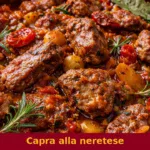
Fresh sheep’s cheese accompanies almost every meal, eaten both fresh and after a brief period of ageing. Lamb, prepared on the grill or braised with the aromatic herbs that grow wild in the Sabina — rosemary, thyme, marjoram — takes centre stage at festive meals, with slow cooking methods that bring out the quality of the raw ingredients.
The territory of Castelnuovo di Farfa and neighbouring municipalities is home to a number of Traditional Agri-food Products (PAT) recognised by the Ministry of Agricultural Policies.
Cacio fiore (PAT) — municipalities: Castelnuovo di Farfa, Fara in Sabina, Poggio Mirteto, Magliano Sabina, Montebuono, Collevecchio, Montopoli di Sabina — is a fresh cheese made from sheep’s milk using vegetable rennet extracted from wild thistle flowers, an ancient technique documented as far back as Roman times.
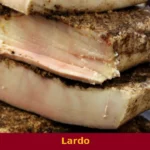
Guanciale (PAT) — municipalities: Castelnuovo di Farfa, Amatrice, Accumoli, Rieti, Poggio Bustone, Leonessa — is produced from the pig’s cheek, cured with salt, pepper and spices.
Guanciale amatriciano (PAT) — municipalities: Castelnuovo di Farfa, Amatrice, Accumoli, Antrodoco, Cittaducale — is the most prized variant, tied to the tradition of Amatriciana cooking and a fundamental ingredient in the classic tomato sauce of the same name.
The best time to purchase local products is during the autumn fairs and markets, when the pig-slaughtering season and the olive harvest coincide with the traditional patron-saint festivities across the Sabina.
Many farms in the area offer direct sales of oil, cheeses and cured meats, allowing visitors to take home certified products bought straight from the producers.
Festivals, Events and Traditions of Castelnuovo di Farfa
The patron-saint celebration of San Nicola di Bari takes place on 6 December and is the religious event most deeply felt by the local community.
The festivities follow the Catholic liturgical calendar with the celebration of solemn Mass, a procession carrying the statue of the saint through the streets of the historic centre, and moments of communal reflection.
San Nicola is one of the most venerated saints in the Catholic tradition, protector of travellers and children, and his feast is celebrated throughout the Sabina with rites that combine the religious with the civic and the communal.
The calendar of local traditions is interwoven with the agricultural cycle of the Sabina. The olive harvest, which takes place between October and November, has always been a collective occasion involving families and communities in shared work.
The spring and summer food festivals held in nearby villages complete a calendar of events that brings the Reatine Sabina to life for much of the year, offering visitors direct contact with local produce and the rhythms of rural life.
The tradition of pig slaughtering, carried out between December and January, is closely tied to the production of guanciale and other cured meats typical of the area.
When to Visit Castelnuovo di Farfa and How to Get There
The most favourable period to visit Castelnuovo di Farfa runs from spring through to autumn.
In spring, between April and June, the Sabine countryside is in full bloom and temperatures allow for long excursions in the surrounding territory. Autumn, between September and November, is the season of the grape harvest and the olive picking, when the agrarian landscape reaches its most vivid colours and the area offers the best of its gastronomic produce.
Winter has its own significant moment with the feast of San Nicola on 6 December, while the summer months — warm and quieter — suit those looking for a visit away from large tourist flows.
For up-to-date information on events and services, it is worth consulting the Castelnuovo di Farfa municipal website.
If you are travelling by car, the most direct route involves exiting the A1 motorway (Milan–Naples) at the Ponzano Romano–Soratte junction, with around 30 kilometres of driving on state roads through the Sabina. Alternatively, you can use the Fiano Romano exit on the A1 and reach the village via the Via Salaria. The nearest railway station is Poggio Mirteto–Stimigliano, on the Rome–Rieti line, approximately 15 kilometres away.
For those flying into Rome, Rome Fiumicino Airport is around 80 kilometres away, reachable in under an hour and a half under normal traffic conditions.
Travellers departing from Roma Termini can take the train to Poggio Mirteto and continue by taxi or local bus.
Where to Stay near Castelnuovo di Farfa
The area around Castelnuovo di Farfa offers several accommodation options in agriturismo farmhouses spread across the olive-covered hills of the Reatine Sabina.
This type of lodging is the most common in the area and allows visitors to experience the territory directly, often with the option of taking part in seasonal agricultural activities such as the olive harvest.
The nearby towns of Fara in Sabina and Poggio Mirteto offer a wider range of accommodation, including bed and breakfasts and small hotels, all easily reachable within a few minutes by car, making the entire Reatine Sabina a practical base from which to explore the area.
Other Villages to Explore in Lazio
Those visiting the Reatine Sabina can easily extend their itinerary to include other Lazio villages that share with Castelnuovo di Farfa a compact scale and a well-defined historic identity rooted in the inland territory.
Accumoli, in the Province of Rieti, is a mountain village tied to the history of the Apennine Sabina, whose territory was marked by the 2016 earthquakes and a subsequent reconstruction process that merits attention.
Moving towards northern Lazio, Onano, in the Viterbo Tuscia, offers a completely different landscape — the tufa plateau and the tradition of mountain lentils are among its well-documented distinguishing features.
For those wishing to explore the Tuscia more systematically, Villa San Giovanni in Tuscia is a small centre in the Province of Viterbo that preserves a clearly legible medieval village, with its tower and walls dominating the Viterbo hillside landscape.
Finally, Latera, overlooking the volcanic caldera of the same name in the Monti Vulsini area, presents a geological landscape unique in Lazio, with the Latera Lake nature reserve as its defining feature.
These four villages, together with Castelnuovo di Farfa, form a varied itinerary through the Lazio interior, combining medieval history, agrarian landscape and gastronomic traditions into a coherent and well-documented route.
In Lazio More villages to discover
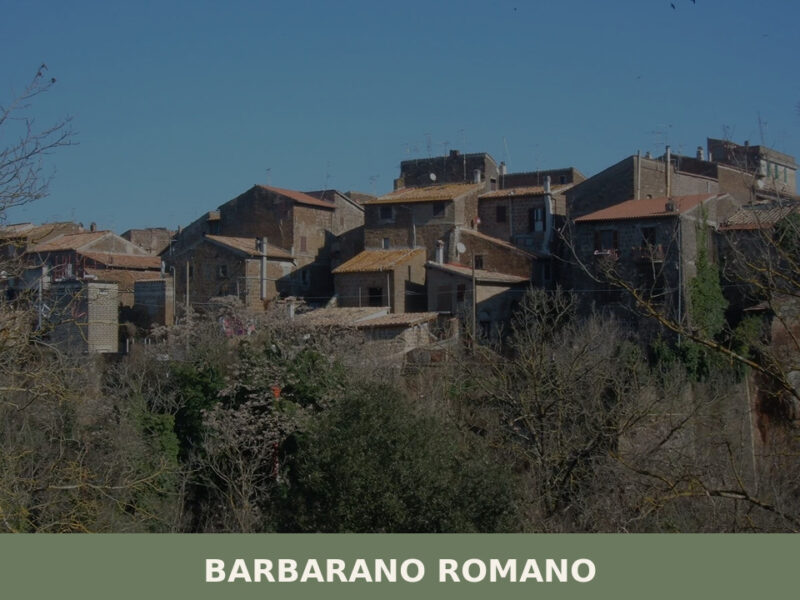
Barbarano Romano
Morning light catches the volcanic tufa in shades of ochre and rust, and the only sound rising from the gorge below is the intermittent call of a jay echoing off ancient rock. Barbarano Romano sits on a plateau in the province of Viterbo, a settlement of barely a thousand souls whose streets still follow the […]
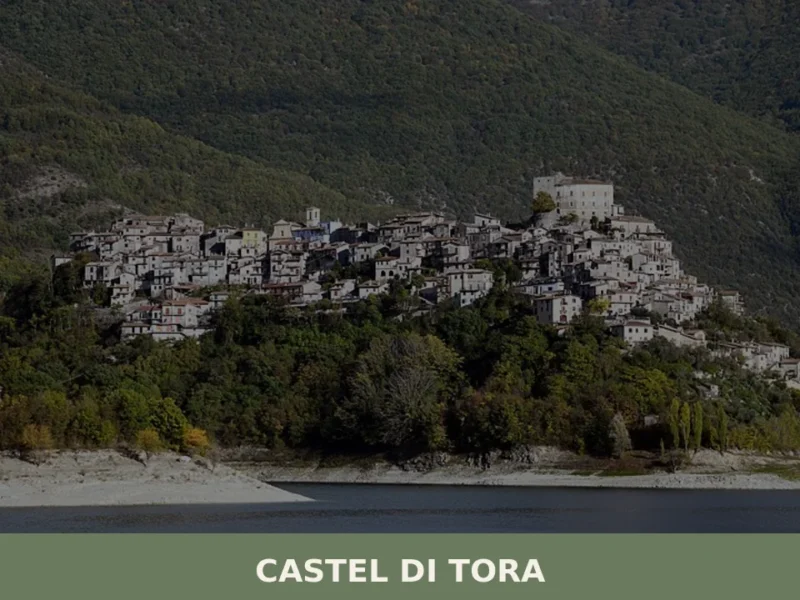
Castel di Tora
What to see in Castel di Tora: medieval village at 607 m above Lago del Salto, 292 residents, 3 PAT-certified products. Plan your visit with our complete guide.
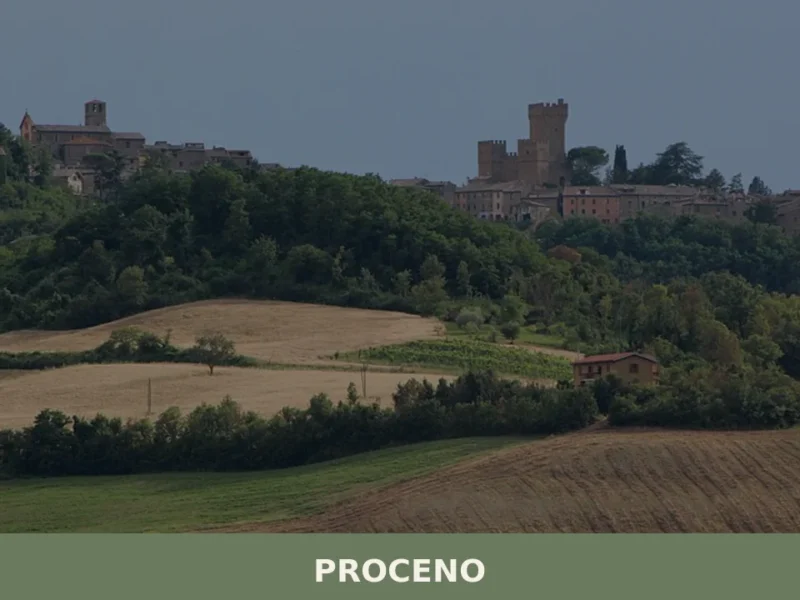
Proceno
A 418 meters above sea level, in northern Lazio, the village of Proceno developed around a Fortress documented as early as the 12th century. This architectural element, central to the settlement’s development, still defines the structure of the historic center today. With a population of 519 inhabitants, Proceno is part of the Viterbo Tuscia region, […]
📝 Incorrect information or updates?
Help us keep the Castelnuovo di Farfa page accurate and up to date.