


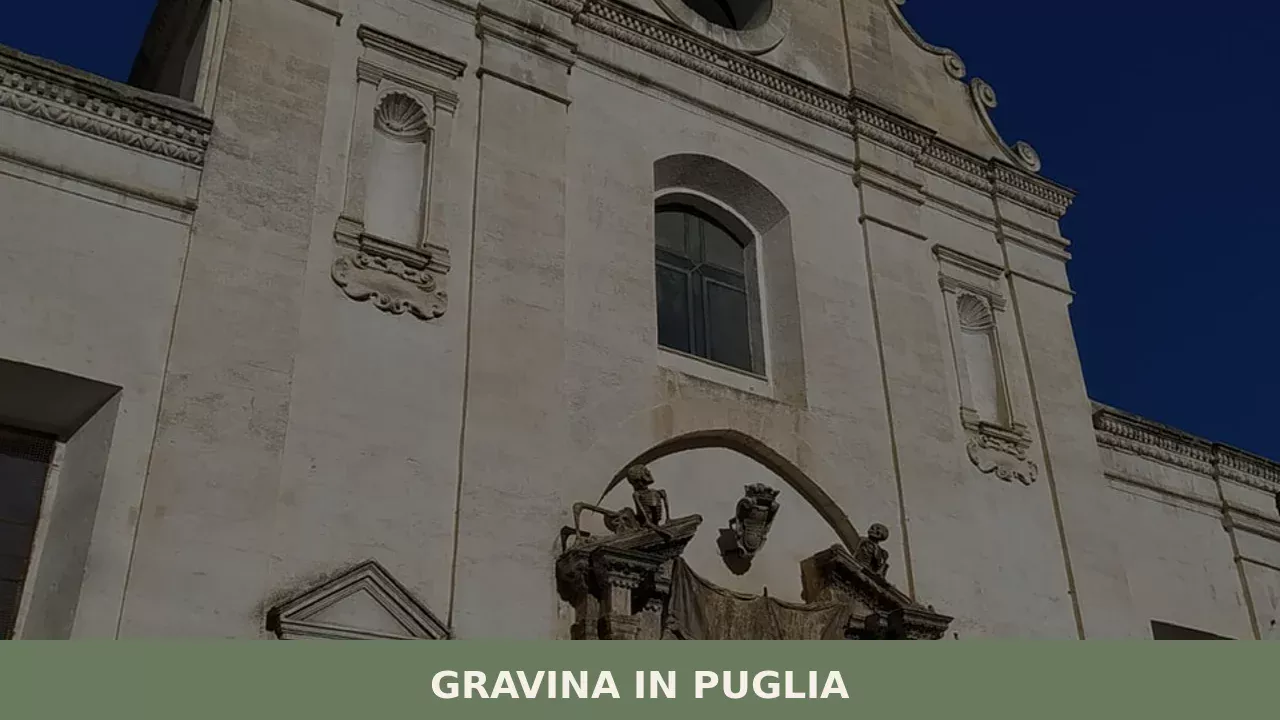
Gravina in Puglia
In 1092, Humfred of Hauteville confirmed the privileges of the cathedral dedicated to Santa Maria Assunta, a document that fixes in the historical record the ecclesiastical rank of Gravina in Puglia well before Frederick II chose it as an imperial hunting reserve. Today, anyone walking along the edge of the gravina — the karstic canyon […]
Discover Gravina in Puglia
In 1092, Humfred of Hauteville confirmed the privileges of the cathedral dedicated to Santa Maria Assunta, a document that fixes in the historical record the ecclesiastical rank of Gravina in Puglia well before Frederick II chose it as an imperial hunting reserve. Today, anyone walking along the edge of the gravina — the karstic canyon up to sixty metres deep that cuts the territory in two — discovers frescoed rock churches, noble palaces with limestone portals, and an urban fabric that develops across multiple geological levels.
Understanding what to see in Gravina in Puglia means crossing at least three millennia of stratification, from the Peucetian village to Baroque architecture, with an obligatory stop in front of the aqueduct bridge that spans the void.
History and origins of Gravina in Puglia
The city’s name derives directly from the geological formation of the territory: the Latin word gravina indicates a deep erosive channel carved by water into the calcarenitic rock, the same type of canyon that characterises the Murgia plateau. The Peucetians, a pre-Roman Iapygian people, inhabited these natural caves as early as the 7th century BC, as attested by the funerary goods found in the Padre Eterno necropolis and on Botromagno, the hill that overlooks the settlement to the north-west. The Roman city of Sidion, later renamed Silvium, stood on that very ridge: Pliny the Elder mentions it in his Naturalis Historia among the communities of Apulia.
With the fall of the Western Roman Empire in 476, the population gradually abandoned the exposed hilltops and took refuge in the natural cavities of the gravina, giving rise to a rock-hewn settlement that expanded between the 6th and 11th centuries. The Normans, who arrived in southern Italy in the 11th century, transformed Gravina into a county seat: it was precisely under their rule that the first fortified structures rose on the summit of the ravine. Frederick II of Swabia designated the territory as an imperial hunting reserve around 1230, commissioning the construction of a castle on the western edge of the gravina.
The bond between the city and the Stupor Mundi is so deeply rooted that the civic coat of arms still bears the two-headed Swabian eagle.
In 1420, Gravina came under the control of the Orsini, a branch of the powerful Roman baronial family, who maintained their lordship until the abolition of feudalism in 1806. The Orsini commissioned the renovation of the ducal palace, the rebuilding of numerous churches, and the opening of street axes that still define the layout of the historic centre. By the 18th century, the city had over 12,000 inhabitants and was a bishopric, with an economy centred on transhumant pastoralism and durum wheat cultivation. The census of 1861, in the aftermath of Italian unification, recorded 19,546 residents; today Gravina in Puglia has 42,703 inhabitants and preserves, in its layered neighbourhoods, the visible traces of every historical passage, from prehistory to the late Baroque.
What to see in Gravina in Puglia: 5 top attractions
1. The Cathedral of Santa Maria Assunta
Founded in the Norman era and consecrated in its present form in 1092, the Cathedral of Santa Maria Assunta stands in the upper part of the historic centre, along Via Cattedrale. The original Romanesque-Apulian structure is still legible in the local limestone façade, which features a twelve-rayed rose window dating to the 14th century. The three-nave interior houses a 17th-century coffered wooden ceiling and a high altar in polychrome marble. In the crypt below, accessible from the right nave, there are remains of Byzantine-influenced frescoes dated between the 11th and 12th centuries, which document the long transitional phase between the Greek and Latin rites in this part of Puglia.
2. The Rock Church of San Michele delle Grotte
Dedicated to San Michele Arcangelo (St Michael the Archangel), patron saint of Gravina celebrated on 29 September, this hypogean church opens directly into the rock face of the gravina, just a few metres from the aqueduct bridge. The oldest phase of the structure dates to the early medieval period, between the 8th and 9th centuries, when the cult of St Michael spread along the pilgrimage routes connecting Monte Sant’Angelo with the rest of southern Italy. Inside, arranged across several chambers carved into the calcarenite, votive frescoes depicting the Deesis, St Nicholas, and scenes from the life of Christ are preserved, painted between the 13th and 15th centuries. The superimposition of pictorial layers offers a chronological sequence that is rare among Apulian rock churches.
3. The Aqueduct Bridge over the Gravina
A masonry structure with two tiers of arches spanning the canyon for approximately 90 metres, the aqueduct bridge connects the inhabited centre to the opposite side of the gravina, where the Botromagno archaeological area extends. The construction dates to the 17th century, commissioned by the Orsini family to channel water from a spring beyond the ravine to the city’s fountains. The main arch reaches a height of approximately 37 metres above the bed of the stream below. The bridge has become one of the city’s most recognisable visual symbols and has also been used as a filming location: several scenes from the James Bond saga No Time to Die (2021) were shot along this route.
4. The Botromagno Archaeological Park
On the hill of Botromagno, reachable from the historic centre via the aqueduct bridge, an archaeological area extends where settlements from the Neolithic through to the Roman period have been documented. Excavation campaigns conducted by the University of Alberta (Canada) between the 1960s and 1980s brought to light foundations of Peucetian dwellings, sections of defensive walls from the 4th century BC, and funerary goods including Apulian red-figure pottery. The park, situated at an average altitude of approximately 350 metres, also offers a complete view over the city and the gravina, making the relationship between the canyon’s geology and urban development clearly readable from above.
5. The Orsini Ducal Palace and the Finya Library
Built by the Orsini from the 15th century onwards and enlarged with 17th-century additions, the Ducal Palace overlooks Piazza della Repubblica, in the city’s administrative centre. The building retains an internal courtyard with a stone-columned loggia and halls frescoed with noble coats of arms. Inside the palace is the Finya Library, established in 1741 by Cardinal Angelo Maria Finya, who assembled over 10,000 volumes including incunabula, 16th-century editions, and manuscripts.
It is one of the richest capitular libraries in southern Italy, and consultation of the historical collection is possible by appointment through the local library system.
What to eat in Gravina in Puglia: local cuisine and regional products
The cuisine of Gravina in Puglia is a direct expression of the agro-pastoral economy of the Alta Murgia, a karstic plateau where sheep farming and cereal cultivation have dominated the productive landscape for centuries. The durum wheat grown on the red soils of the Murgia underpins the tradition of hand-shaped breads, while the sheep stock — still substantial today — provides lamb and stretched-curd cheeses. Proximity to Basilicata and the town’s position along the ancient transhumance routes fostered a continuous exchange of ingredients and preparation techniques, creating a gastronomic repertoire that blends Apulian and Lucanian influences.
The dish that defines the Gravina table is Agnello alla gravinese (lamb stew Gravina-style), a product recognised as a PAT (Traditional Agri-Food Product) by the Puglia Region. It is prepared with pieces of young lamb browned in extra virgin olive oil and slowly cooked in a base of onion, peeled tomatoes, grated pecorino, and a parsley mince. The prolonged cooking over low heat, often in terracotta pots, renders the meat tender enough to fall off the bone.
Alongside this dish comes Agnello al forno con patate alla leccese (Auniceddhru allu furnu), also a PAT product, where sliced potatoes absorb the lamb fat and gratinate under a golden crust of cheese and breadcrumbs.
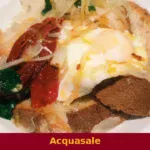
Among the PAT-certified products linked to the Murgia territory, Acquasale holds a distinctive place: it is a peasant preparation based on stale bread soaked in water, dressed with ripe tomatoes, raw onion, oregano, and olive oil, traditionally consumed as a summer meal in the fields. Africani, sweets made from almond paste coated in dark chocolate, represent the local pastry tradition — the name, of uncertain origin, may allude to the dark colour of the glaze. Wild asparagus, gathered on the Murgia between March and May, and asparagus preserved in oil, stored in extra virgin olive oil for winter consumption, complete the range of PAT products available in the area.
The main occasion to taste Gravina’s specialities is the Festa di San Michele Arcangelo, on 29 September, during which market stalls and restaurants serve traditional local dishes. In spring, between April and May, festivals linked to the wild asparagus harvest take place in the rural contrade. The weekly Thursday market in Piazza Benedetto XIII is the most direct point of purchase for cheeses, durum wheat bread, and vegetables from the Alta Murgia. Several masserie in the countryside around the city offer direct sales of extra virgin olive oil and artisanal preserved vegetables in oil.
Gravina in Puglia is also a wine town.
The Gravina DOC designation, recognised in 1983, protects a white wine produced from Greco, Malvasia del Chianti, and Bianco d’Alessano grapes grown on calcareous soils between 300 and 500 metres of altitude. The result is a dry white with hints of almond blossom and a distinctive mineral note linked to the composition of the Murgia soil. Several local wineries, concentrated in the industrial zone and in the agricultural contrade south of the city, offer tastings by reservation throughout the year.
When to visit Gravina in Puglia: the best time of year
The hilltop position at 338 metres above sea level gives Gravina a more temperate climate than the Bari coast during summer, with maximum temperatures in July and August settling around 30–32 °C compared to 35 °C along the shoreline. The optimal period for visiting the city and the Botromagno archaeological area runs from April to June and from September to October, when the days are long, the temperatures pleasant, and the Mediterranean scrubland of the Alta Murgia is in full spring bloom or displaying its autumn colours.
Those interested in gathering wild asparagus should aim for the window between late March and early May.
The most important event of the year is the Festa di San Michele Arcangelo, on 29 September, which features a solemn procession through the streets of the historic centre, fireworks over the gravina, and three days of markets and music. In summer, between July and August, the “Gravina in Festa” cultural programme hosts concerts and performances in the courtyards of historic palaces. The Christmas period, from mid-December to early January, offers a living nativity scene staged among the rock churches of the gravina, with participants in period costume. January and February are the least busy months: temperatures can drop below 5 °C at night, but those travelling in the low season will find sites accessible without queues and lower prices at accommodation facilities.
How to get to Gravina in Puglia
By car, Gravina in Puglia is reached from the A14 Bologna–Taranto motorway by exiting at the Poggiorsini–Gravina in Puglia junction (direction Bari Sud), or via the SS96 state road connecting Bari to Matera. The distance from the centre of Bari is approximately 60 km (50 minutes), from Matera 30 km (30 minutes), and from Taranto 90 km (one hour and ten minutes). The nearest airport is Bari-Karol Wojtyła, 70 km away and connected to the city via the SS96.
Gravina in Puglia’s railway station is served by the Ferrovie Appulo Lucane (FAL) line, which connects Bari to Altamura and continues toward Matera.
Trains from Bari Centrale take approximately one hour and twenty minutes, with hourly frequency during peak times. For those arriving from Matera, the train journey lasts approximately 40 minutes. Services are less frequent on public holidays, so it is advisable to check timetables on the FAL website. Within the city, the historic centre is walkable — the main attractions are no more than fifteen minutes’ walk from each other. To reach the Botromagno Park and the agricultural contrade, a private car or a local taxi service is needed.
Other villages to discover in Puglia
Visitors to Gravina who want to continue toward the Adriatic coast can reach Giovinazzo in about an hour and a half by car, a coastal town north of Bari. Giovinazzo offers a medieval historic centre enclosed by walls along the harbour, with a Romanesque cathedral dedicated to Santa Maria Assunta — a dedication it shares with Gravina — and a seafront where you can dine on fresh fish. The contrast between the Murgia hinterland and the Adriatic shoreline makes the two stops complementary: from the limestone of the canyons to the white calcarenite shaped by the salt air.
In the opposite direction, toward the Tavoliere delle Puglie, Stornarella lies approximately 80 km from Gravina, in the Foggia plain at the foot of the Daunian Sub-Apennines.
It is a small agricultural centre linked to wheat cultivation and the tradition of cereal-producing masserie. An itinerary combining Gravina, Stornarella, and Giovinazzo allows you to cross three different Apulian landscapes in two or three days — karstic plateau, grain-growing plain, and coast — with the culture of durum wheat and its transformation into bread, pasta, and sweets as a connecting thread. For more information on the history and services of the Municipality of Gravina in Puglia, the institutional website provides updates on museum hours, events, and tourist information.
In Apulia More villages to discover
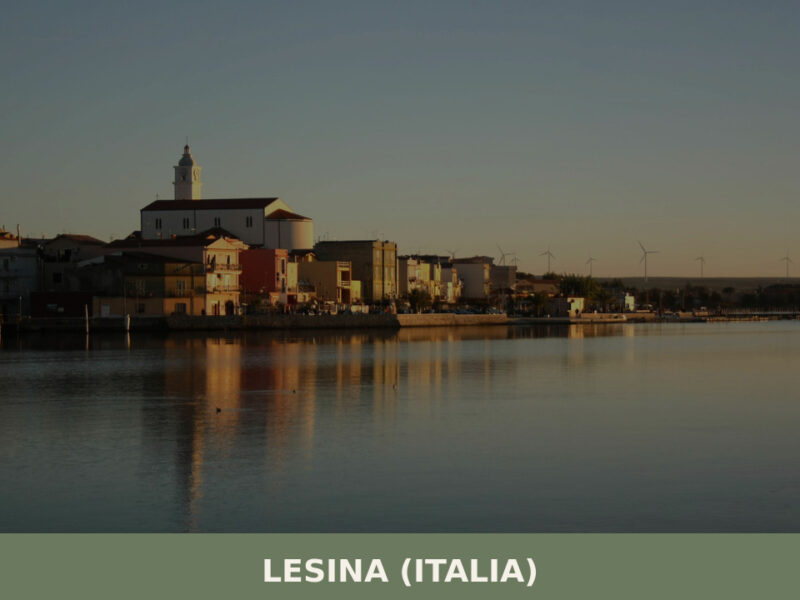
Lesina (Italia)
Lesina sits between Italy's second-largest coastal lagoon and the Adriatic Sea. A guide to its lagoon ecology, eel fishing traditions, and quiet historic centre.
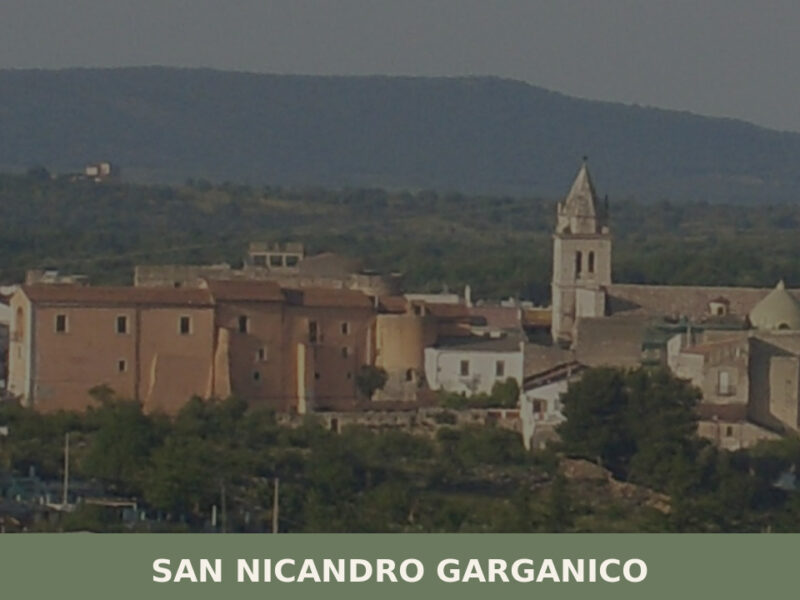
San Nicandro Garganico
A hilltop settlement on the Gargano promontory with a Norman castle, prehistoric dolmen, and a living agricultural culture shaped by wheat, olives, and limestone.
Volturara Appula
A hill village of 378 residents at 489 metres in the Daunian Subapennines. Volturara Appula offers medieval lanes, panoramic views over the Tavoliere, and the quiet of a place most travellers never find.


📝 Incorrect information or updates?
Help us keep the Gravina in Puglia page accurate and up to date.