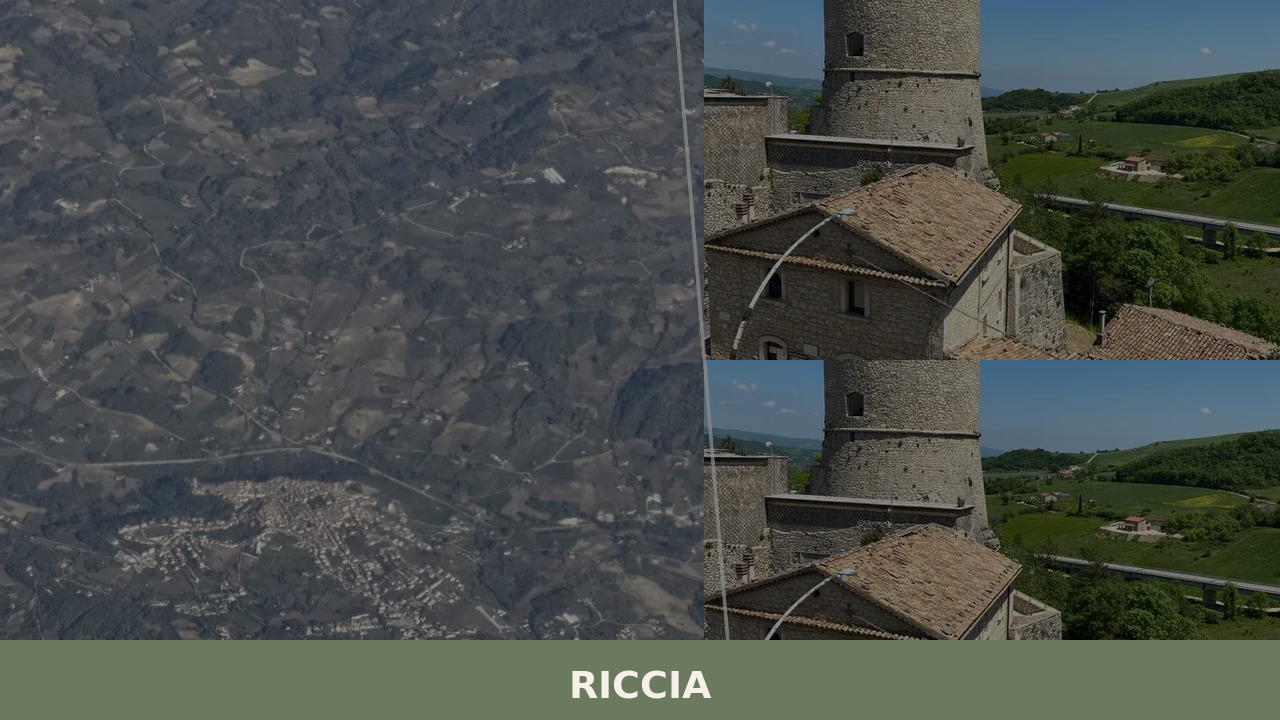
A hilltop village of 4,814 inhabitants in the province of Campobasso, Riccia reveals medieval streets, a Norman castle, and one of Molise’s most celebrated food festivals.
Morning mist lifts slowly off the Fortore valley, and the first thing you hear in Riccia is the echo of church bells rolling across stone rooftops at 665 metres above sea level. This hilltown of 4,814 inhabitants sits in the province of Campobasso, its skyline defined by a castle tower and a cluster of terracotta tiles arranged in tight, descending rows. If you are wondering what to see in Riccia, the answer begins with that skyline — a medieval silhouette that has barely shifted in five centuries — and unfolds through quiet streets where every turn reveals another layer of Molise’s interior.
Riccia’s origins likely reach back to the Samnite period, when the hilltop’s natural defensibility made it a strategic settlement along the routes connecting the Adriatic coast to the interior Apennine valleys. The name itself has been debated by local historians: some trace it to a Lombard personal name, others to the Latin word “aricia” or to references in Norman-era documents. What is certain is that by the eleventh century, Riccia had established itself as a feudal stronghold within the County of Molise, changing hands between Norman, Swabian, and Angevin lords as southern Italy’s political map was redrawn again and again.
Under the Di Capua family during the fourteenth and fifteenth centuries, Riccia experienced its most significant period of architectural growth. The castle was expanded, churches were endowed, and the village’s street plan took the form still legible today — a series of concentric arcs radiating downhill from the fortified summit. Later, the Carafa family held the fief, linking Riccia’s fate to one of the most powerful noble dynasties in the Kingdom of Naples.
Earthquakes, emigration, and the slow economic decline that afflicted much of inland Molise through the nineteenth and twentieth centuries reduced Riccia’s population and its visibility on the Italian map. Yet the village never emptied entirely. Its agricultural traditions — grape cultivation, wheat, olive oil — anchored families to the land, and the built heritage, though weathered, survived largely intact.
The castle crowns the highest point of the village, its surviving tower visible from kilometres away across the Fortore basin. Originally a Norman fortification, the structure was expanded under the Di Capua lords in the fourteenth century. Today the remains include sections of curtain wall, a cylindrical tower, and a gateway that frames the valley below like a stone viewfinder. The site offers a direct, unobstructed perspective over Riccia’s rooftop geometry.
The main parish church anchors the village’s central axis. Its façade, reworked over several centuries, retains a Romanesque portal beneath later Baroque additions. Inside, the nave holds painted wooden altarpieces and a series of devotional statues that chart the changing tastes of southern Italian religious art from the sixteenth to the eighteenth century. The bell tower — the one audible every morning — is among the oldest standing structures in the village.
Located just outside the historic centre, this Franciscan convent dates to the fifteenth century and preserves a cloister with simple stone arcades. The adjoining church contains frescoes and a carved wooden choir that speak to the modest but persistent artistic patronage of Molise’s rural religious communities. The complex is one of the best-preserved conventual sites in the province of Campobasso.
Walking through Riccia’s old quarter is an exercise in reading centuries of daily life inscribed in stone. Carved doorway lintels — some bearing family crests, dates, or protective symbols — mark the entrances to houses built between the fifteenth and eighteenth centuries. The narrow streets, connected by stairways cut into the hillside, follow the contour of the terrain with a logic that predates any formal urban plan.
Riccia’s public fountain, situated along one of the main access routes into the village, served for centuries as a practical gathering point and water source. Built in dressed stone with multiple spouts, it remains a working element of the village’s infrastructure and a quiet landmark where older residents still pause during their daily walks — one of those civic details that distinguishes a living village from an abandoned one.
Riccia sits in the agricultural heartland of inland Molise, and its table reflects the products of a territory defined by elevation, clay soils, and a continental-leaning climate. The village is known across the region for its grape harvest — the local vineyards contribute to Molise’s growing wine production, including varieties made from Tintilia, the indigenous red grape that has become the flagship of Molise’s food and wine identity. Olive oil from the surrounding groves carries a grassy, peppery character shaped by cold winters and dry summers. Cured meats, handmade pasta formats like cavatelli and fusilli, and slow-cooked lamb are staples of the local kitchen.
During August, Riccia hosts its annual Sagra dell’Uva (Grape Festival), which fills the streets with stalls, music, and floats decorated entirely in grapes — a spectacle that draws visitors from across the province. For day-to-day eating, small family-run trattorias in the village centre serve dishes rooted in seasonal cycles: wild herbs in spring, grilled meats in summer, legume soups through the colder months. Bread, often baked in wood-fired ovens, remains a centrepiece of every meal.
The Sagra dell’Uva in mid-August is Riccia’s marquee event — a tradition with deep roots in the community and one of the most distinctive food festivals in Molise. The village is fully animated during this period, with evening events extending well past midnight. Spring (April to June) offers mild temperatures, wildflowers across the surrounding hillsides, and fewer visitors, making it ideal for walking the historic centre in relative solitude. Autumn brings the grape and olive harvests, a working landscape at its most purposeful.
At 665 metres, winters are cold and occasionally snowy. The village quiets considerably between November and March, and some establishments may keep reduced hours. If you plan a winter visit, the reward is a near-private experience of the old quarter, with woodsmoke threading through the alleyways and a quality of light — low, golden, raking across stone walls — that filmmakers and photographers find irresistible.
Riccia is located approximately 30 kilometres southwest of Campobasso, the regional capital, reached via the SS17 and connecting provincial roads. The drive from Campobasso takes roughly 40 minutes through rolling agricultural terrain. From Naples, the distance is about 130 kilometres (approximately two hours via the A16 motorway toward Benevento, then north on regional roads). From Rome, count on about 230 kilometres and a drive of roughly two and a half to three hours via the A1 and A14/SS17.
The nearest train station with regular service is Campobasso, connected to Naples and the Adriatic coast via Trenitalia regional lines, though frequencies are limited. The closest airports are Naples Capodichino (approximately 150 kilometres) and Pescara (approximately 170 kilometres). A rental car is strongly recommended for exploring Riccia and the surrounding Molise countryside, where public transport connections between smaller villages remain infrequent.
Riccia belongs to a network of small, distinct villages that together tell the story of Molise — Italy’s second-smallest and least-visited region. From the inland hills, the landscape descends toward the Adriatic, where Termoli offers a striking counterpoint: a walled fishing town on a promontory above the sea, with a Romanesque cathedral and a Swabian castle that catches the afternoon sun across the harbour. The contrast between Riccia’s mountain quiet and Termoli’s coastal rhythms captures the range of experiences Molise holds within a compact territory.
Inland from the coast but closer to sea level, Guglionesi occupies a ridge overlooking olive groves that stretch toward the Adriatic horizon. Its churches and noble palazzi reflect a history shaped by both agricultural wealth and strategic position along ancient transhumance routes. Together, Riccia, Termoli, and Guglionesi form an itinerary that moves from mountain to coast, from feudal stronghold to fishing port, revealing a region that rewards the slow, attentive traveller.
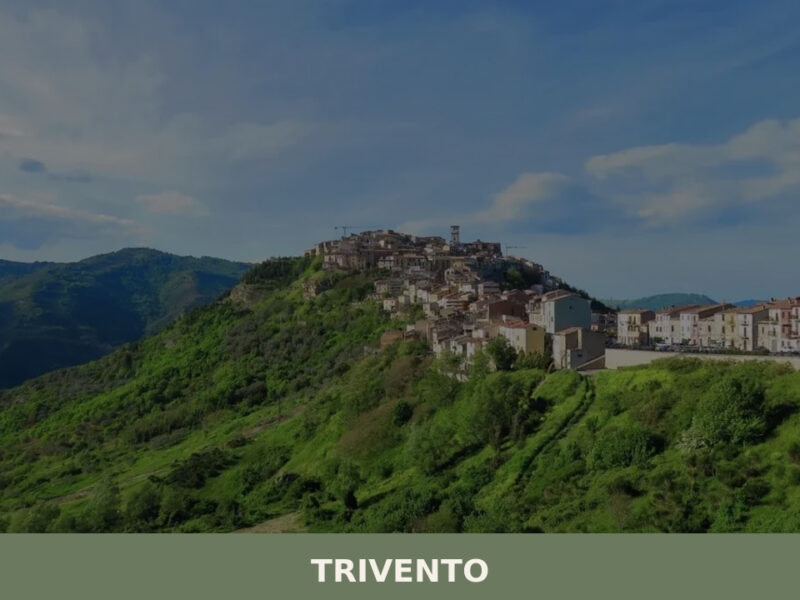
Morning fog lifts off the Trigno valley in slow, pale sheets, and Trivento emerges at 599 metres above sea level — a compact ridgeline of stone and tile roofs, church bells marking the quarter-hour across a town of 4,353 residents. The air carries woodsmoke and the faint resin scent of surrounding oak forest. If you […]
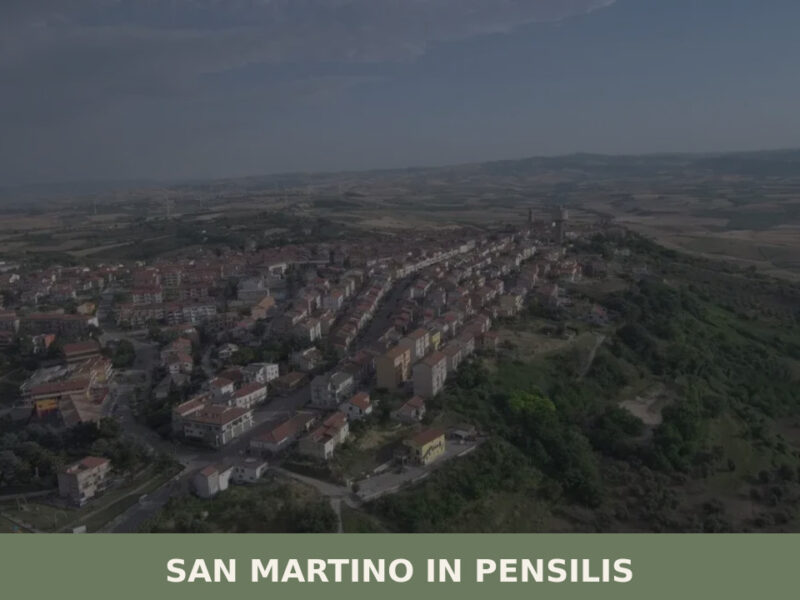
Morning light catches the pale stone of a church bell tower, and below it, the long main street empties into a piazza where a handful of men stand with espresso cups, talking over one another. San Martino in Pensilis sits at 281 metres above sea level in the province of Campobasso, a settlement of roughly […]
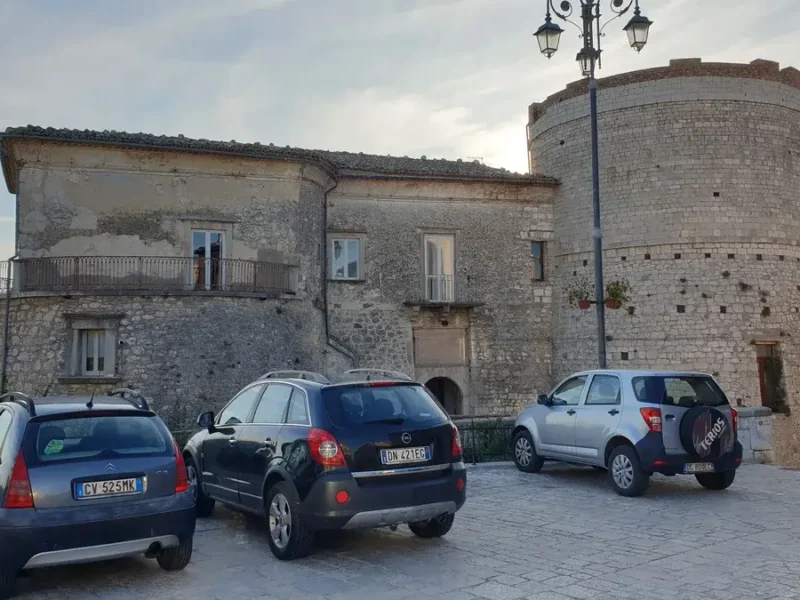
Morning light hits the limestone walls of Ferrazzano at an angle that turns every alley into a corridor of pale gold. At 872 metres above sea level, the air carries a sharpness that the lower towns of Molise never know — a clarity that makes the distant Adriatic coast visible on days when the haze […]
📝 Incorrect information or updates?
Help us keep the Riccia page accurate and up to date.


