


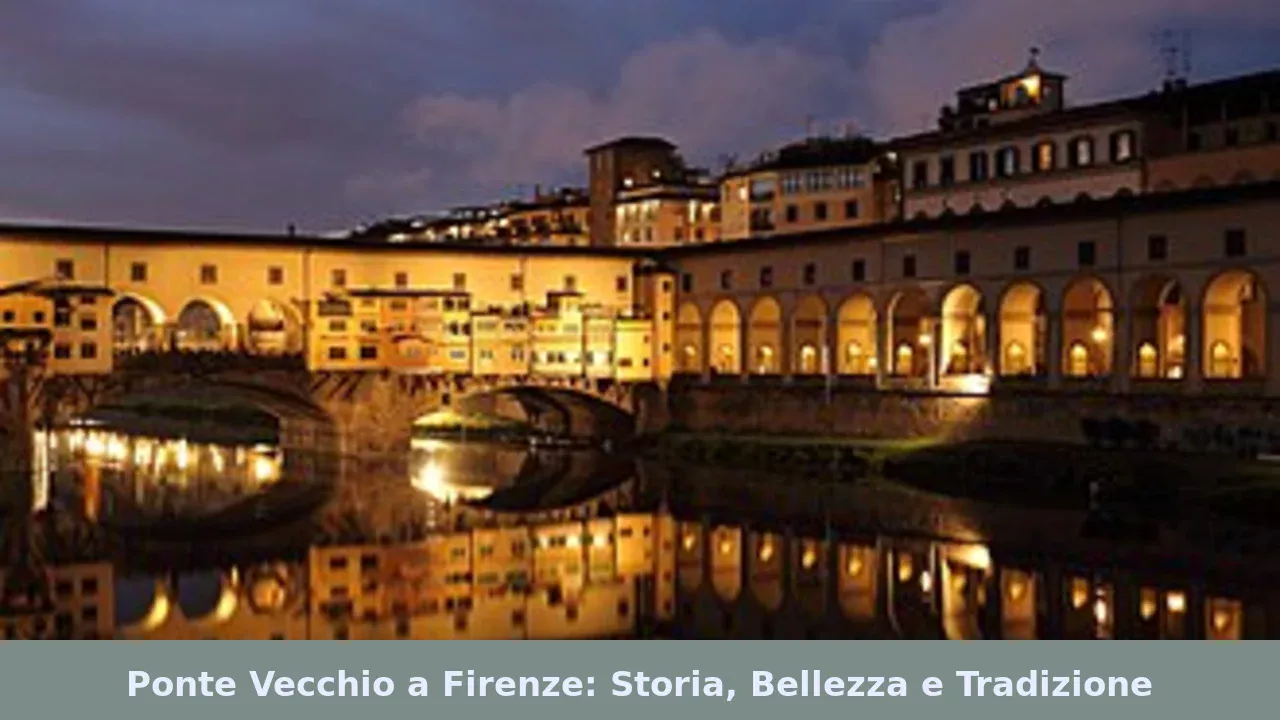
Firenze — Ponte Vecchio
Imagine a river, the Arno, slicing through the heart of a city whose very name whispers tales of unparalleled artistic and intellectual flourishing. Its emerald waters, at times serene, at others tempestuous, have mirrored centuries of human endeavor, from humble beginnings to the zenith of the Renaissance. And then, imagine a bridge, not merely a crossing, but a vibrant, living organism, a testament to resilience, ingenuity, and a unique architectural audacity. This is the story of the Ponte Vecchio, Florence’s iconic landmark, a structure that transcends its function to embody the very soul of the city it graces.
The Enduring Spirit of the Ponte Vecchio: A Journey Through Time
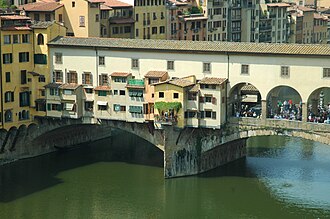
The story of the Firenze and its most celebrated bridge, the Ponte Vecchio, is a saga etched in stone, floodwaters, and the relentless march of human ambition. Its origins are shrouded in the mists of antiquity, with archaeological evidence suggesting a Roman crossing existed at this narrowest point of the Arno as early as the 1st century BC. This initial structure, likely a simple wooden or stone bridge, was a vital artery for the nascent Roman settlement of Florentia, connecting its two banks and facilitating trade and movement within the burgeoning imperial outpost.
However, the Arno, a river of formidable power, proved to be a constant adversary. Successive bridges were built, only to be swept away by devastating floods, a recurring theme in the history of the Ponte Vecchio. The first documented stone bridge appeared around 1170, a robust structure that marked a significant step in the city’s development. Yet, even this testament to medieval engineering succumbed to the river’s fury in 1333, a cataclysmic flood that not only destroyed the bridge but also caused widespread devastation throughout Florence, washing away homes, churches, and irreplaceable manuscripts. The city, reeling from this disaster, faced the daunting task of reconstruction.
The current incarnation of the Ponte Vecchio, the one we admire today, rose from these very ruins. Its construction began in 1345, a mere twelve years after the devastating flood. Attributed to Taddeo Gaddi or Neri di Fioravante, the new design was revolutionary for its time. Unlike previous bridges, which often featured numerous small arches, the Ponte Vecchio was designed with three broad, sturdy arches, allowing for a wider flow of water and thus greater resistance to the Arno’s powerful currents. This architectural innovation was a direct response to the lessons learned from past destructions, embodying a spirit of defiance and adaptability.
What truly set this bridge apart, however, was the decision to incorporate shops directly onto its structure. From its inception, the Ponte Vecchio was envisioned not just as a crossing, but as a bustling commercial hub. Initially, these shops were occupied by butchers, tanners, and fishmongers – trades that required easy access to water for waste disposal. Imagine the vibrant, albeit pungent, scene: the cries of vendors, the smell of fresh meat and fish mingling with the river air, the constant ebb and flow of Florentine life. This unique integration of commerce and infrastructure transformed the bridge into a miniature street, a microcosm of the city itself.
The name Ponte Vecchio literally translates to “Old Bridge,” a testament to its ancient origins and its survival through centuries of history and natural disasters.
From Butcher Shops to Goldsmiths: The Transformation of the Ponte Vecchio
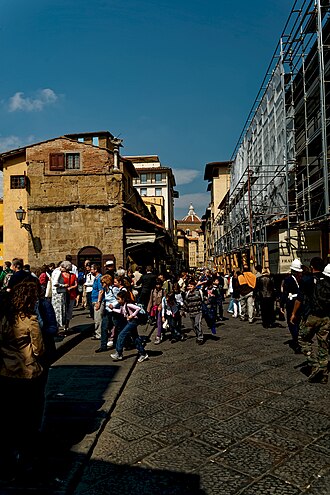
For centuries, the Ponte Vecchio thrived as a bustling marketplace, its shops teeming with the everyday commerce of Florence. The butchers, in particular, became synonymous with the bridge, their stalls overhanging the Arno, making it convenient to discard offal directly into the river below. While practical, this practice eventually led to unsanitary conditions and an increasingly unpleasant odor, especially during the hot Tuscan summers. The bridge, while vital, was not exactly a place of refined elegance.
The pivotal moment in the bridge’s transformation arrived in the 16th century, driven by the ambitions and aesthetic sensibilities of the powerful Medici family. Cosimo I de’ Medici, the first Grand Duke of Tuscany, had a grand vision for Florence, one that elevated it to a center of art, culture, and refined living. He and his wife, Eleonora di Toledo, found the stench and unsightliness of the butchers’ shops on their daily commute between Palazzo Vecchio (the seat of government) and Palazzo Pitti (their new residence) increasingly intolerable.
The solution came in the form of the legendary Vasari Corridor (Corridoio Vasariano). Commissioned by Cosimo I and designed by Giorgio Vasari in 1565, this elevated, enclosed passageway was built in just five months to celebrate the marriage of Cosimo’s son, Francesco, to Joanna of Austria. The corridor allowed the Medici family and their entourage to move safely and privately between their palaces, bypassing the crowded and malodorous streets below, including the Ponte Vecchio. As the corridor snaked its way across the bridge, it literally passed over the existing shops. To facilitate its construction and to enhance the view for the Grand Duke, several shops were demolished, and the corridor was built directly on top of the remaining structures.
With the Vasari Corridor in place, the presence of the butchers became an even greater anachronism. In 1593, Cosimo’s son, Ferdinando I de’ Medici, issued a decree that forever changed the character of the Ponte Vecchio. He expelled the butchers, fishmongers, and tanners, deeming their trades too unsanitary and undignified for a bridge that now formed part of the ducal passage. In their place, he invited goldsmiths and jewelers to set up shop. This strategic move not only eliminated the unpleasant odors but also elevated the commercial prestige of the bridge, transforming it into a glittering showcase for Florentine craftsmanship. The goldsmiths, with their precious wares, contributed to the bridge’s new, more refined image, and their presence ensured that the bridge remained a vibrant commercial center, albeit one of a very different nature.
This shift marked the beginning of the Ponte Vecchio’s golden age, literally. The bridge became renowned for its exquisite jewelry, attracting wealthy patrons and visitors from across Europe. The elegant, small shops, often with their characteristic wooden shutters that fold out to create display cases, became synonymous with luxury and artistry.
Why the Ponte Vecchio Stands Alone: Architectural Marvels and Hidden Passages
The architectural uniqueness of the Ponte Vecchio extends beyond its three sturdy arches and the shops built upon it. It is a masterpiece of medieval engineering and urban planning that has adapted and endured through the centuries.
One of its most striking features is the continuous line of shops that seem to cling to its sides, creating a street-like atmosphere. These shops are not merely freestanding structures placed on a bridge; they are integral to its design, their foundations resting on the bridge’s piers and their upper stories often cantilevered out over the river, supported by sturdy wooden or stone corbels. This ingenious design maximized the available commercial space, a precious commodity in medieval Florence.
The central part of the bridge, however, offers a breathtaking interruption to the continuous line of shops. Here, the structure opens up, providing panoramic views of the Arno River, the Lungarni (riverside promenades), and the distant Tuscan hills. This open space, added in the 16th century, was reportedly created to allow the Medici family and their guests a clear view of the river from the Vasari Corridor, but it also serves as a beloved public vantage point today. It’s a place where lovers attach “love locks” (though this practice is now discouraged due to structural concerns) and where tourists pause to capture the quintessential Florentine vista.
The Vasari Corridor itself is perhaps the greatest hidden marvel of the Ponte Vecchio. Invisible to most passersby below, it is an architectural triumph of privacy and power. Entering from the Uffizi Gallery, it snakes along the Arno’s right bank, crosses the Ponte Vecchio above the shops, and continues through the Oltrarno district, even passing through the Church of Santa Felicita, where the Medici had a private balcony for mass. On the Ponte Vecchio, the corridor features a series of small, round windows, originally designed to allow the Grand Duke to observe the city below without being seen. Today, these windows offer unparalleled, private views of the river and the urban landscape.
The survival of the Ponte Vecchio during World War II is another testament to its singular importance. While retreating German forces systematically destroyed all other bridges in Florence in August 1944 to hinder the Allied advance, the Ponte Vecchio was miraculously spared. The exact reasons remain a subject of debate and legend. Some accounts suggest that Hitler himself, having visited Florence in 1938 and admired the bridge, issued a direct order for its preservation. Others credit the German consul in Florence, Gerhard Wolf, who reportedly intervened to save it, or the quick thinking of Florentine citizens who blocked access roads to prevent explosives from being brought to the bridge. Whatever the precise circumstances, the Ponte Vecchio stood as a solitary beacon amid the rubble, a symbol of hope and enduring beauty in a devastated city.
The Ponte Vecchio is a pedestrian-only bridge, open 24/7. The shops typically operate during standard business hours, generally from 10:00 AM to 7:00 PM, though some may have extended evening hours. Access to the Vasari Corridor is currently closed for restoration, but future guided tours are planned. For up-to-date information on visiting the Vasari Corridor, check the Uffizi Galleries official website.
Experiencing the Magic of the Ponte Vecchio Today
Visiting the Ponte Vecchio today is an immersive experience that blends history, art, and modern commerce. It remains one of Florence’s most visited sites, drawing millions of tourists annually who come to admire its unique architecture, browse its glittering shops, and soak in its timeless atmosphere.
Here’s how to make the most of your visit:
- Stroll Across the Bridge: Take your time walking from one bank to the other. Observe the intricate details of the shops, the way they are built into the bridge, and the craftsmanship displayed in their windows. Even if you’re not planning to buy jewelry, the sheer artistry is captivating.
- Admire the Views: Pause at the central opening, near the bust of Benvenuto Cellini (the renowned Florentine goldsmith), to take in the breathtaking panorama of the Arno River. From here, you can see the other historic bridges of Florence, the Lungarni stretching into the distance, and the iconic dome of the Duomo.
- Explore the Shops: The Ponte Vecchio is still home to an array of high-end jewelers, goldsmiths, and art dealers. Even window shopping is a delight, offering a glimpse into centuries-old Florentine traditions of craftsmanship.
- Walk the Lungarni: To fully appreciate the bridge’s unique structure, walk along the Lungarni, both upstream and downstream. From the banks, you can see how the shops are cantilevered over the water and the elegant arches that support the entire edifice. The view of the Ponte Vecchio at sunset, with the golden light reflecting off the river and the ancient stones, is particularly magical.
- Visit the Vasari Corridor (when open): While currently undergoing restoration, the Vasari Corridor offers an unparalleled historical perspective. When it reopens, a guided tour provides a unique opportunity to walk in the footsteps of the Medici, offering exclusive views and insights into Florentine history.
The bridge is particularly enchanting in the early morning, before the crowds arrive, or late in the evening, when the shop lights cast a warm glow on the ancient stones and the sounds of the city soften. During these times, it’s easier to imagine the bridge as it once was, a silent witness to centuries of Florentine life.
Beyond its physical presence, the Ponte Vecchio holds a deep cultural significance for Florence. It is a symbol of the city’s resilience, its artistic legacy, and its enduring charm. It has inspired countless artists, writers, and poets, and continues to be a focal point for both locals and visitors. The bridge is not just a relic of the past; it is a living, breathing part of Florence, constantly evolving yet firmly rooted in its rich history.
Consider the anecdotes woven into its fabric: the story of Dante Alighieri, who some believe first saw his beloved Beatrice Portinari near the Ponte Vecchio; the tale of the Medici’s private passage, a testament to their power and paranoia; and the miraculous survival during the war, a moment of reprieve that cemented its legendary status. These stories, combined with its unique architecture and vibrant atmosphere, make the Ponte Vecchio an irreplaceable jewel in Florence’s crown.
Frequently Asked Questions
What is the history behind the shops on Ponte Vecchio?
The shops on the Ponte Vecchio date back to its reconstruction in 1345, initially housing butchers, fishmongers, and tanners. In 1593, Ferdinando I de’ Medici expelled these trades due to unsanitary conditions and replaced them with goldsmiths and jewelers, elevating the bridge’s prestige and transforming it into a hub for luxury goods.
Why was the Ponte Vecchio spared during World War II?
During World War II, the Ponte Vecchio was the only bridge in Florence not destroyed by retreating German forces in 1944. While the exact reasons are debated, it is widely believed that orders from Hitler himself, or the intervention of the German consul Gerhard Wolf, led to its preservation, saving this iconic landmark from destruction.
Can you walk through the Vasari Corridor today?
The Vasari Corridor, which passes over the Ponte Vecchio, is currently closed for extensive restoration work. While it has historically been accessible through guided tours, visitors should check the official Uffizi Galleries website for updates on its reopening and future visiting arrangements.
What is the best time to visit the Ponte Vecchio?
The Ponte Vecchio is beautiful at any time, but to avoid the largest crowds and experience a more serene atmosphere, consider visiting early in the morning shortly after sunrise or late in the evening. Sunset also offers spectacular views with golden light reflecting on the river and the bridge.
The **Ponte Vecchio** is more than just an ancient bridge; it’s a living monument to Florentine history, artistry, and an indomitable spirit. Its glittering shops and ancient stones invite you to step back in time, to feel the pulse of centuries past, and to leave with memories as precious as the jewels displayed within its walls. Come, discover the magic that makes this bridge truly unforgettable.