In Vicenza, a Venetian city of significant historical and cultural importance, among the main attractions not to be missed, the majestic Basilica Palladiana stands out. This iconic building, once the Palazzo della Ragione, represents one of the most celebrated and significant achievements of Andrea Palladio’s genius, an architect who profoundly influenced the city’s urban planning and architectural style. Its history is rooted in distant eras, but it was in the Renaissance that it acquired the form and importance that make it one of the world’s recognized architectural wonders today.
Visiting the Basilica Palladiana offers a unique perspective on the grandeur of Renaissance art and the ability of a single artist to transform an entire urban landscape.
The History and Origins of the Basilica Palladiana
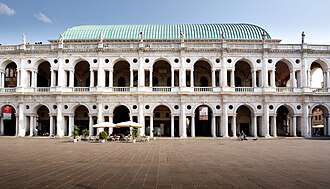
The history of Vicenza’s Basilica Palladiana begins long before Andrea Palladio’s intervention, dating back to the 13th century. The original building, known as the Palazzo della Ragione, was erected starting in 1449 and completed in 1460, serving as the seat for civic magistracies and a marketplace. This Gothic structure featured a large hall on the upper floor, intended for assemblies and tribunals, and a portico on the ground floor, used for commercial activities. However, over time, the building’s perimeter loggias proved structurally weak, suffering several partial collapses that compromised its integrity and safety.
In 1549, after decades of debates and failed restoration attempts by other architects, the city’s Council of One Hundred decided to entrust Andrea Palladio with the task of reconstructing the perimeter loggias. At the time, Palladio was still a young architect, but he had already demonstrated his talent in other projects in Vicenza. The challenge was complex: he had to incorporate the pre-existing Gothic structure, irregular and asymmetrical, into a new Renaissance shell that would ensure stability and aesthetic harmony. His project, presented in 1546 and approved after careful evaluation, proposed an innovative and revolutionary solution for its time.
Palladio’s work extended for many years, well beyond his lifetime, with the completion of the perimeter loggias occurring only in 1614, thirty-four years after his death.
Construction proceeded slowly due to interruptions and financial difficulties, but the final result was a masterpiece that radically transformed the appearance of the Palazzo della Ragione. Since then, the building has been universally known as the Basilica Palladiana, a name that evokes the ancient Roman basilicas, centers of public and commercial life, and emphasizes its majesty and civic importance. To learn more about the history of this monument and the city, you can consult the entry dedicated to Vicenza on Wikipedia.
Palladian Architecture: A Renaissance Masterpiece
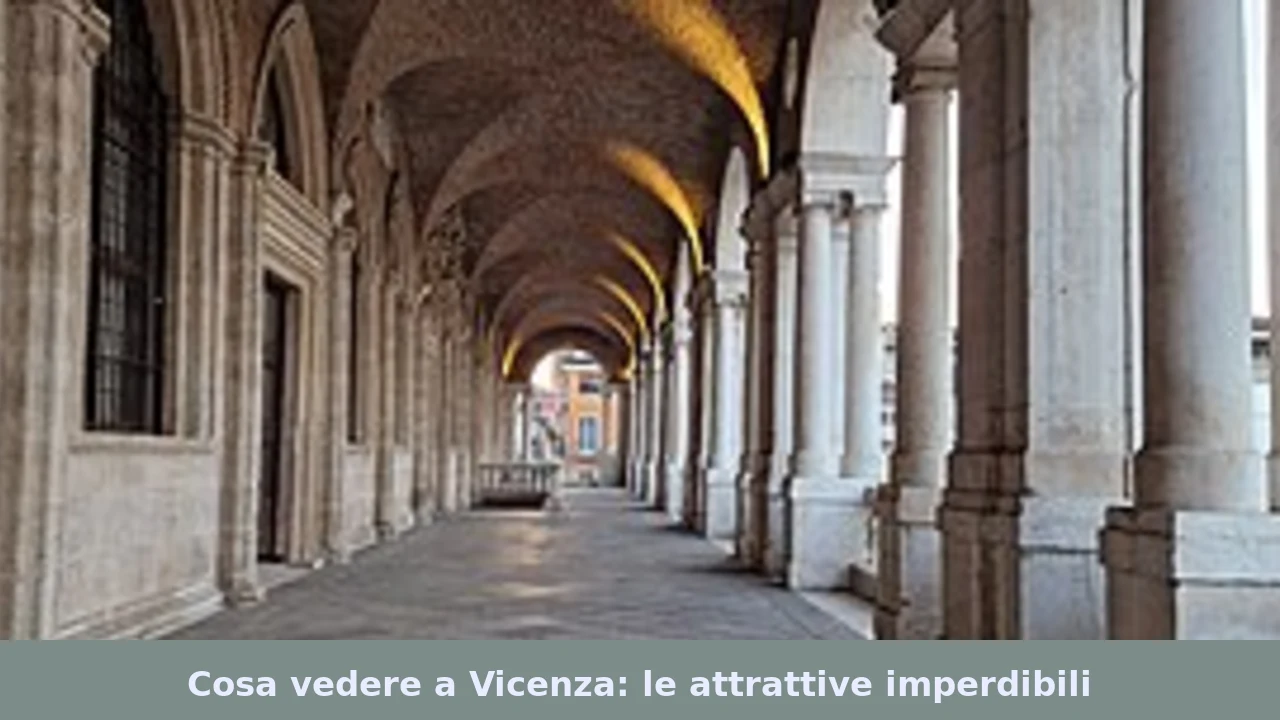
Andrea Palladio’s intervention on the Basilica is a paradigmatic example of his architectural genius and his ability to reinterpret classical models with originality. His solution for the perimeter loggias, which envelop the ancient Gothic structure, is based on the use of the “Serliana”, an architectural element composed of a central arch flanked by two smaller architraved openings, all surmounted by a single entablature. This solution allowed Palladio to adapt to the varying widths of the pre-existing bays, maintaining a coherent and harmonious visual rhythm along the entire perimeter of the building.
The Serlianas are framed by Doric half-columns on the lower floor and Ionic on the upper floor, which give the entire structure a sense of robustness and lightness at the same time.
The columns rest on high plinths and are surmounted by finely carved capitals, respecting the canons of classical orders. The use of these orders, combined with the white stone of Vicenza, creates an effect of great elegance and luminosity, transforming the austere Palazzo della Ragione into a work of art that dialogues with the surrounding piazza. The choice of white marble and the precision of the proportions are distinctive elements that make the building a landmark for Renaissance architecture.
A fundamental aspect of the Palladian project is the inverted ship’s keel dome, clad in oxidized copper sheets. This roof, which rises majestically above the Salone dei Quaranta, not only protects the large internal space but also contributes significantly to the iconic silhouette of the Basilica. The green-copper color of the dome has become a distinctive element in Vicenza’s urban landscape. The Palladian Basilica is a manifesto of Renaissance architecture, an example of how the harmony of forms and the perfection of proportions can create a building of extraordinary beauty and functionality, which continues to fascinate visitors and scholars worldwide.
What to See and Do Inside the Palladian Basilica
The Palladian Basilica is not just an architectural marvel to admire from the outside; it also offers a significant experience inside.
The heart of the building is the grand Salone dei Quaranta (Hall of the Forty), located on the upper floor, which once hosted meetings of the Council of Forty and judicial activities. This vast space, characterized by an imposing inverted ship’s keel wooden roof, is now a versatile and evocative environment, frequently used to host internationally renowned art exhibitions, cultural events, and conferences. Its spaciousness and the particular natural light, filtered through the windows, create an ideal atmosphere for artistic contemplation and large exhibition setups.
The loggias surrounding the Salone offer a privileged perspective on Piazza dei Signori and the rooftops of Vicenza’s historic center. Walking along these galleries allows one to closely appreciate the complexity and refinement of the Palladian Serlianas, observing the columns, arches, and sculptural details that make up the external shell. From the loggias, it is possible to enjoy a panoramic view that sweeps across the main monuments of the piazza, such as the Torre Bissara and the Palazzo del Capitaniato, also a work by Palladio.
It is an opportunity to grasp the urban harmony that Palladio was able to create, integrating it with the pre-existing context.
During the summer months, the Palladian Basilica also opens its spectacular panoramic terrace to the public, located on the building’s roof. This terrace offers a breathtaking 360-degree view of Vicenza and the surrounding Berici Hills, a unique opportunity to admire the urban landscape from an elevated perspective. The terrace often hosts a café or bar, where visitors can relax and enjoy the panorama, especially at sunset. The temporary exhibitions set up inside the Salone and in the other accessible rooms represent an additional reason to visit the Basilica, as they always offer new opportunities for discovery and cultural enrichment.
Why the Palladian Basilica Deserves a Visit
The Palladian Basilica is an undisputed symbol of Vicenza and an essential stop for anyone wishing to understand the city’s artistic and architectural heritage. Its value is recognized internationally, so much so that it is included, along with other Palladian buildings in the historic center and villas scattered throughout the Veneto region, on the UNESCO World Heritage list. This designation highlights not only the exceptional beauty of the work, but also its historical importance and the influence it has exerted on European and global architecture.
Admiring the Basilica means encountering one of the greatest examples of Renaissance architecture, which has masterfully blended the ancient with the modern.
Its central location in Piazza dei Signori makes it a focal point not only architecturally, but also socially and culturally. The Basilica is the beating heart of city life, a place for meetings and events, testifying to Vicenza’s vitality. Its majesty and history offer food for thought on the grandeur of the Italian Renaissance and the ability of an architect to shape an entire urban landscape. Every detail, from the columns to the balustrades, tells a story of innovation and a profound knowledge of classical canons, reinterpreted with a unique sensibility.
Visiting the Palladian Basilica means immersing oneself in a context of extraordinary beauty, where art and history merge into a memorable experience. It is not just a building to look at, but a place to experience, through exhibitions, events, and a simple stroll through its loggias. It is an opportunity to appreciate the genius of Andrea Palladio, whose work continues to inspire and amaze, demonstrating how architecture can be a profound expression of a place’s culture and identity.
Its imposing presence and timeless elegance make it a top attraction in the Italian tourist landscape.
Practical Information for Visiting the Palladian Basilica
Planning a visit to the Palladian Basilica is simple, and several options are available to explore this masterpiece. The Basilica is located in the heart of Vicenza’s historic center, in Piazza dei Signori, making it easily accessible on foot from anywhere in the old city. If you arrive by car, you can use the paid parking lots located on the outskirts of the historic center, such as Park Verdi or Park Matteotti, from which the Basilica is just a few minutes’ walk away. Vicenza train station is also a short distance away, allowing convenient access for those traveling by train.
The opening hours of the Palladian Basilica vary depending on the time of year and ongoing events, especially concerning exhibitions and access to the panoramic terrace. It is advisable to consult the official website of the Municipality of Vicenza or the Civic Museums Foundation of Vicenza for the most up-to-date information on opening days and hours, as well as ticket prices. Combined tickets that include access to other city attractions are often available, offering an economic advantage.
For detailed and updated information on hours and exhibitions, you can visit the Municipality of Vicenza website dedicated to the Basilica.
For a more in-depth visit, you might consider joining a guided tour, which often provides historical and architectural details that enrich the experience. The building is generally accessible to people with reduced mobility, thanks to the presence of elevators connecting the different levels. Those looking for a moment of relaxation can take advantage of the cafe or restaurant located on the ground floor or on the summer terrace, enjoying a break with a view. The Palladian Basilica is a place that lends itself to various visiting styles, from a simple walk-through to a detailed exploration, adapting to the needs of every traveler.
Curiosities and Anecdotes about the Basilica Palladiana
The Basilica Palladiana is rich in stories and anecdotes that enrich its charm. One of the most fascinating aspects concerns the long and complex construction phase of the Palladian loggias. Andrea Palladio’s project was so innovative and ambitious that it required a considerable economic and temporal commitment. It is said that the slowness of the work, which lasted for over sixty years, caused no small frustration among the citizens of Vicenza, who saw their Palazzo della Ragione surrounded by scaffolding for decades.
However, the tenacity in completing the work demonstrates the profound conviction in the validity of the Palladian project.
Another curiosity concerns the name itself, “Basilica”. Although the building was never a church, Palladio defined it as “basilica” to evoke the ancient Roman basilicas, which were places of assembly, commerce, and justice, just like the Palazzo della Ragione. This name conferred upon the building an aura of grandeur and civic importance, elevating it to a symbol of the community. The term “Palladiana” was added later to honor its brilliant designer, recognizing his inestimable contribution to the architecture and identity of Vicenza.
During World War II, the Basilica Palladiana suffered severe damage due to aerial bombardments. Its dome and part of the loggias were destroyed or severely damaged. However, thanks to meticulous and careful restoration work, the building was restored to its ancient splendor, demonstrating the resilience and importance that the Basilica holds for the city of Vicenza.
This episode underscores the not only architectural but also symbolic value of the monument, which rose from its ashes to continue being a cultural and visual landmark for the people of Vicenza and visitors.
The Basilica Palladiana is just one of the extraordinary attractions that Vicenza has to offer its visitors. To discover more about this fascinating Venetian city, its millennial history, its other works of art and architecture, we invite you to consult the complete Vicenza guide, where you will find a detailed guide to best plan your trip to Italy.