


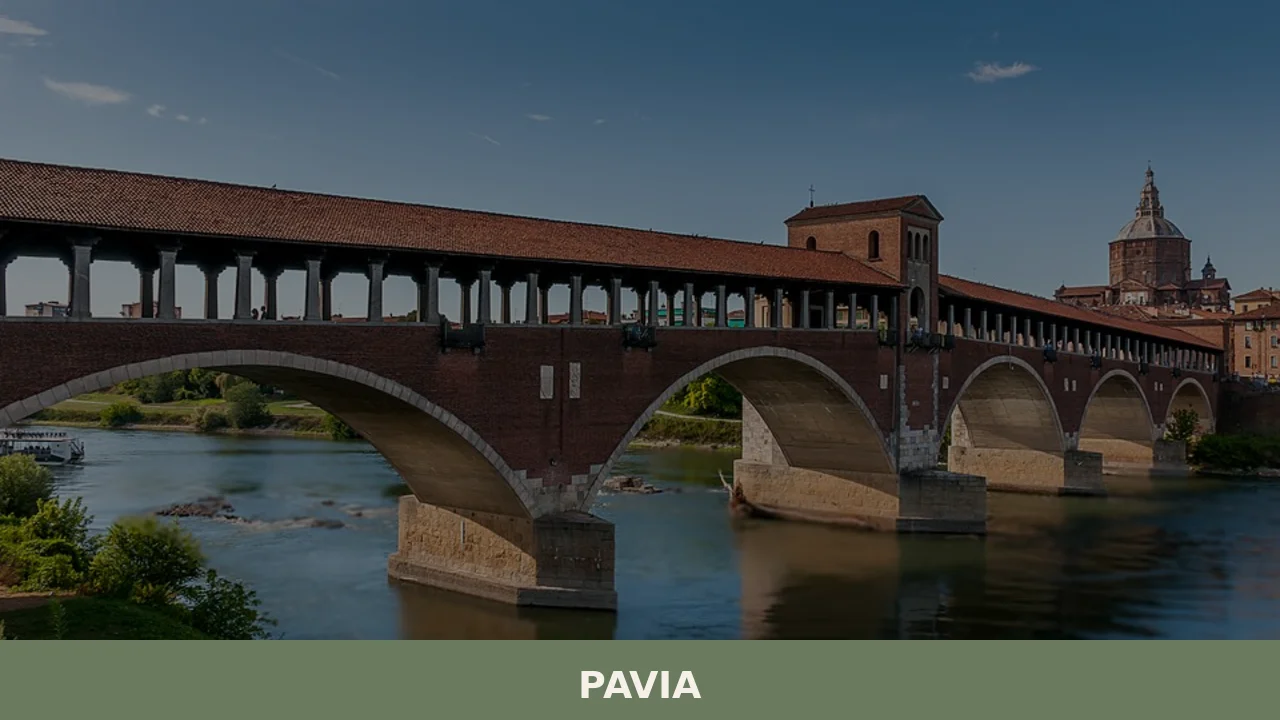
Pavia
what to see in pavia, home to 70,636 residents. Discover its iconic Duomo, the historic Certosa, and the ancient University. Explore Pavia’s rich heritage now.
Discover Pavia
Pavia, the ancient Roman Ticinum, boasts a history rooted in remote epochs, already known for its strategic position along the Ticino river. It became the capital of the Lombard Kingdom in the 6th century, a role that bestowed upon it lasting prestige and influence in the Italian panorama.
Today, the city, located 77 m above sea level in southern Lombardy, continues to be a cultural and university center of primary importance, attracting visitors with its rich artistic heritage and traditions.
Those wondering what to see in Pavia will discover an itinerary ranging from imposing religious buildings to historic palaces, witnesses of a glorious past and a vibrant present.
History and Origins of Pavia
The origins of Pavia date back to the Roman era, when it was known as Ticinum, a settlement that acquired municipal status as early as the 1st century BC.
Its strategic position, at the confluence of the Ticino and Po rivers, made it a commercial and military crossroads of fundamental importance in Northern Italy. After the fall of the Western Roman Empire, the city was conquered by the Lombards in 572 AD and became the capital of their kingdom, taking on the name Papia, from which its current appellation derives.
In the Middle Ages, Pavia continued to be a crucial center, maintaining its centrality even after the fall of the Lombard Kingdom at the hands of Charlemagne in 774 AD.
The city developed as a free commune, often in conflict with neighboring powers, particularly Milan, for control of the Lombard territory. A crucial event for its cultural growth was the founding of the University of Pavia in 1361 by Emperor Charles IV, an institution that immediately established itself as one of the oldest and most prestigious European universities.
Over the following centuries, Pavia came under the domination of the Visconti and Sforza families, who enriched its urban fabric with significant architectural works.
The 16th century marked a turning point with the famous Battle of Pavia in 1525, which saw Spanish forces defeat French forces, leading to the beginning of a long period of Spanish domination for the city and much of Italy.
Subsequently, Pavia came under Austrian control and was finally annexed to the Kingdom of Italy.
Its complex history and multiple dominations have left a varied cultural and architectural legacy, making it a destination rich in charm and opportunities for in-depth exploration, in a historical context that can in some ways resemble that of Brescia, also marked by various historical influences and dominations.
What to see in Pavia: main attractions
The city of Pavia offers a range of historical and cultural attractions that deserve an in-depth visit, bearing witness to a glorious past and a vibrant present. Every corner reveals stories and architecture that capture attention, making exploration an experience rich in discoveries.
For those wondering what to see in Pavia, the answer is a journey that combines art, history, and knowledge, through iconic places of the city and the region.
Pavia Cathedral
The Cathedral of Santo Stefano Martire and Santa Maria Assunta, commonly known as Pavia Cathedral, is one of the city’s most significant churches.
Its construction began in 1488, with contributions from illustrious masters such as Donato Bramante and, according to some sources, even Leonardo da Vinci for the design phase.
The dome, completed only in the 19th century, is the third largest in Italy in terms of height and breadth, surpassed only by St. Peter’s in Rome and Santa Maria del Fiore in Florence. The Greek cross interior houses valuable works of art and the Romanesque crypt, which preserves the relics of Saint Syrus, the city’s patron saint. The facade, which remained unfinished for centuries, was completed in Neo-Renaissance style.
Certosa di Pavia
Located about eight kilometers north of Pavia, the Certosa is a monumental complex that represents one of the greatest masterpieces of Italian Renaissance art.
Founded in 1396 by Gian Galeazzo Visconti as a mausoleum for the Milanese ducal dynasty, its construction lasted for over a century. The church’s facade, richly decorated with marbles, sculptures, and reliefs, is an extraordinary example of the Lombard Renaissance. The interior houses works by artists such as Bergognone and Perugino, while the cloisters, particularly the Great Cloister with its 122 arches, offer an atmosphere of peace and contemplation.
A visit allows one to appreciate monastic life and the artistic excellence of the era.
Visconti Castle
Pavia’s Visconti Castle, built between 1360 and 1365 at the behest of Galeazzo II Visconti, was conceived as a fortified residence and cultural center of the court.
Originally, it featured four corner towers and a wide moat, but one of the towers and part of the walls were destroyed during the Battle of Pavia in 1525.
Today, the castle houses the Civic Museums of Pavia, with collections ranging from archaeology to medieval and Renaissance art, including a notable Gipsoteca (plaster cast collection). Its internal courtyards, particularly the Courtyard of Honor, are an example of late-Gothic Lombard civil architecture, offering a glimpse into 14th-century court life.
University of Pavia
The University of Pavia is one of Italy’s oldest, with roots dating back to 825, although its official foundation as a Studium Generale occurred in 1361. The University’s historic building, located in the heart of the city, is a complex of courtyards, porticoes, and classrooms that reflect centuries of academic history.
Among its illustrious faculty and students are figures such as Alessandro Volta, Lazzaro Spallanzani, and Camillo Golgi, a Nobel Prize winner in Medicine.
The courtyards, such as the Courtyard of Magnolias and the Volta Courtyard, are adorned with statues and plaques commemorating the personalities who contributed to its renown, making it a place of great historical and cultural value for those wishing to delve deeper into what to see in Pavia.
Basilica of San Michele Maggiore
The Basilica of San Michele Maggiore is one of the most important examples of Romanesque-Lombard architecture in Italy, dating back to the 11th-12th centuries.
This basilica was the preferred site for the coronations of Lombard kings and, subsequently, of Holy Roman Emperors, including Frederick Barbarossa. Its sandstone facade is richly decorated with sculptures and bas-reliefs depicting biblical and allegorical scenes, although time has partially eroded the original details. The three-nave interior features a raised transept and an oratory crypt, typical of Romanesque architecture.
Elements such as carved capitals and fragmentary frescoes contribute to creating an atmosphere of profound spirituality and inestimable historical value.
Typical cuisine and products of Pavia
Pavese cuisine is part of the broader Lombard gastronomic tradition, characterized by robust flavors and genuine ingredients, the result of fertile land and a significant agricultural history.
Culinary influences derive from the Po Valley, rich in rice, cereals, and livestock, but also from the proximity to the Ticino river, which historically provided freshwater fish. Local gastronomy is a reflection of peasant culture, with dishes that enhance available raw materials and preparation techniques handed down from generation to generation.
Among the most representative dishes of the Pavese tradition, the Risotto alla Certosina stands out, a historical recipe said to have been prepared by the monks of the Certosa di Pavia.
This risotto is characterized by ingredients such as peas, shrimp, porcini mushrooms and, in ancient times, even frogs, all enriched with broth and cheese.
Another classic is the Zuppa alla Pavese, a simple but tasty recipe based on hot meat broth, fresh eggs, toasted bread, and grated cheese, often served with croutons.
Meat-based dishes are also abundant, such as Ossobuco alla Pavese, slowly cooked with vegetables and white wine, and various boiled and stewed dishes featuring pork and beef as their main ingredients.
Although the database does not contain specific certified products for the Pavia area with DOP, IGP, or PAT denominations, the province is renowned for its rice production, particularly Carnaroli and Arborio, which are fundamental for local risottos. The area also offers excellent cured meats, although not specific to the city of Pavia, which are distinguished by their artisanal processing. Among the cheeses, traditional Lombard products such as Grana Padano and Provolone Valpadana are found, often used to enrich typical dishes.
Pavese olive oil, though less known than other regional productions, contributes to the authentic flavor of local dishes.
Festivals, events, and traditions of Pavia
Pavia devoutly celebrates its patron saint, Saint Syrus of Pavia, whose feast day falls on December 9th. This date is traditionally marked by religious celebrations involving the community, with solemn masses and moments of prayer in his honor, particularly at the Duomo.
The figure of Saint Syrus is deeply rooted in the city’s history, being considered the first bishop of Pavia and an important evangelizer of the territory.
The patronal festivities are opportunities to strengthen the sense of belonging and to keep local spiritual traditions alive.
In addition to the main feast on December 9th, Saint Syrus is also commemorated on August 28th and May 20th, dates that historically held significance related to his figure or important ecclesiastical events for the Diocese of Pavia. These observances, while not having the same resonance as the December feast, contribute to marking the city’s religious calendar. Pavia also hosts various cultural and university events throughout the year, linked to its prestigious academic institution, which attract students and scholars from all over Italy and the world, enlivening city life with conferences, exhibitions, and concerts.
When to visit Pavia and how to get there
The best time to visit Pavia is spring (April-May) or autumn (September-October), when the climate is mild and pleasant, ideal for strolling through the historic center and visiting attractions without the summer heat or winter cold.
During these months, the city is particularly lively thanks to university activities and cultural events.
Summer can be hot and humid, while winter, although colder, offers a more intimate and less crowded atmosphere, perfect for those who prefer a quieter experience.
Those wishing to explore other locations in Lombardy can extend their itinerary towards Agra (Italy), Biandronno or Brusimpiano, also located in the region and reachable by car.
Reaching Pavia is easy thanks to its strategic position in the heart of Lombardy. By car, you can take the A7 Milan-Genoa motorway, exiting at the Bereguardo-Pavia Nord toll booth, or the A54 motorway (Pavia West Ring Road).
The city is also well connected by rail, with Pavia station offering numerous regional and intercity connections to Milan, Genoa, and other Italian cities.
For those arriving by plane, the nearest airports are Milan Linate (about 35 km), Milan Malpensa (about 80 km), and Bergamo Orio al Serio (about 90 km), all well connected to Pavia by train or shuttle bus.
For travel planning, here is a summary table:
| Starting point | Distance | Estimated time |
|---|---|---|
| Milan | 35 km | 40 min (car), 30 min (train) |
| Genoa | 100 km | 1 h 15 min (car), 1 h 30 min (train) |
| Turin | 150 km | 1 h 45 min (car), 2 h (train) |
For detailed information on schedules and services, it is advisable to consult the official website of the Municipality of Pavia.
Where to stay in Pavia
Pavia, as a university city and tourist center, offers various accommodation solutions for visitors. In the historic center, there are numerous hotels, from the most modern to the most traditional, often housed in period buildings, allowing easy walking access to the main attractions.
Those seeking a more intimate experience can opt for one of the many bed & breakfasts or guesthouses, which offer a warm welcome and often the chance to enjoy breakfasts with local products.
For those who prefer to stay in quieter, greener settings, renovated farmhouses (agriturismi) and country homes (cascine) can be found in the immediate vicinity of the city and in the Pavia countryside.
These establishments often also offer dining with products from their own farm, allowing for a more authentic experience in contact with the local nature.
Regardless of the chosen type, it is advisable to book in advance, especially during high season or in conjunction with important events, to secure the best accommodation.
Photo Gallery of Pavia
Do you have photos of Pavia?
Share your photos of the village: the best ones will be added to the official gallery, with your credit.
Send your photosIn Lombardia More villages to discover
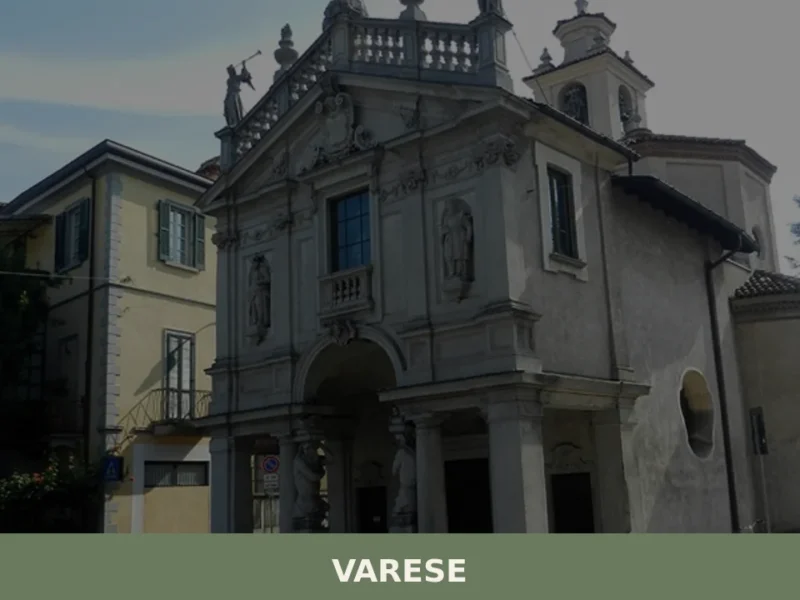
Varese
Varese, a Lombard city with a population of 78,409 inhabitants, stands at 382 m above sea level and is distinguished by its strategic position between lakes and pre-Alps. This locality, capital of the eponymous province, offers a rich historical and natural heritage that attracts numerous visitors every year. In this article History and Origins of […]
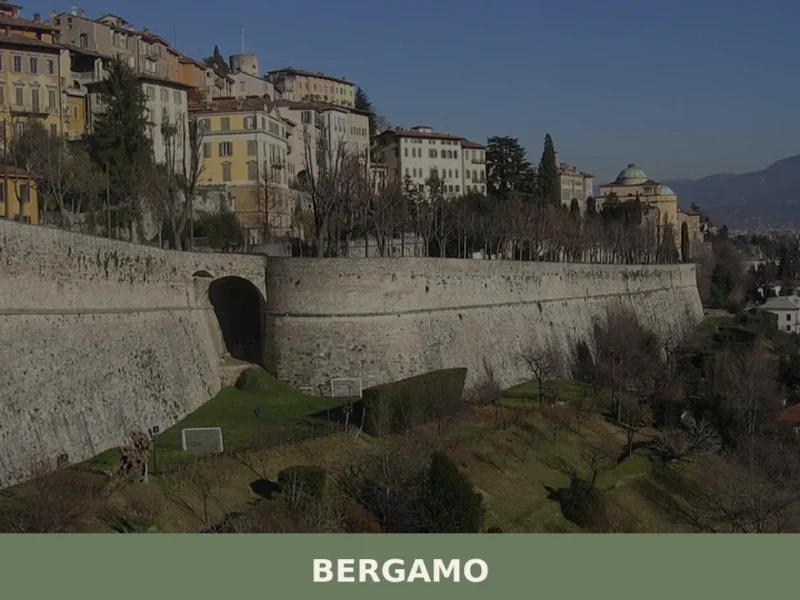
Bergamo
What to see in Bergamo? With 119,534 inhabitants, the city is famous for its Venetian Walls and Piazza Vecchia. Discover its rich history and typical dishes.
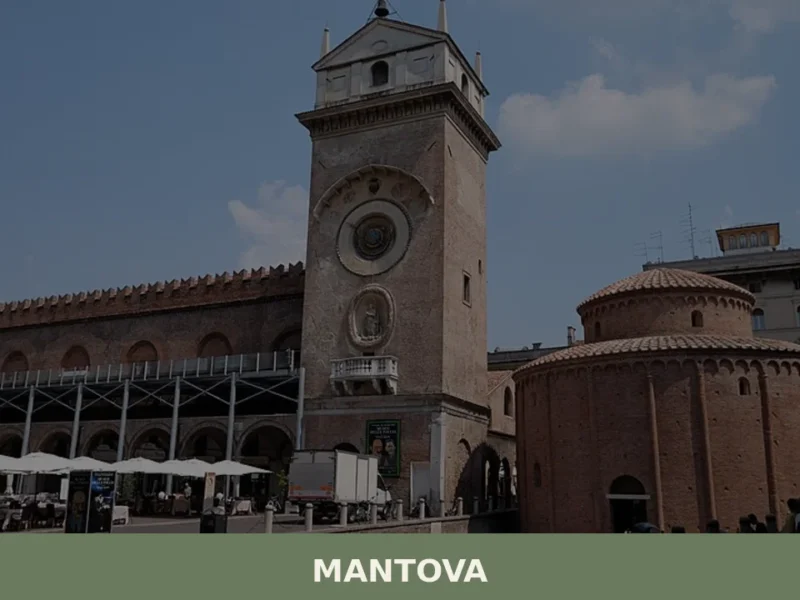
Mantova
what to see in mantova. A UNESCO heritage village with 48,653 inhabitants. Explore Palazzo Ducale and taste the famous Pumpkin Tortelli.
📝 Incorrect information or updates?
Help us keep the Pavia page accurate and up to date.