


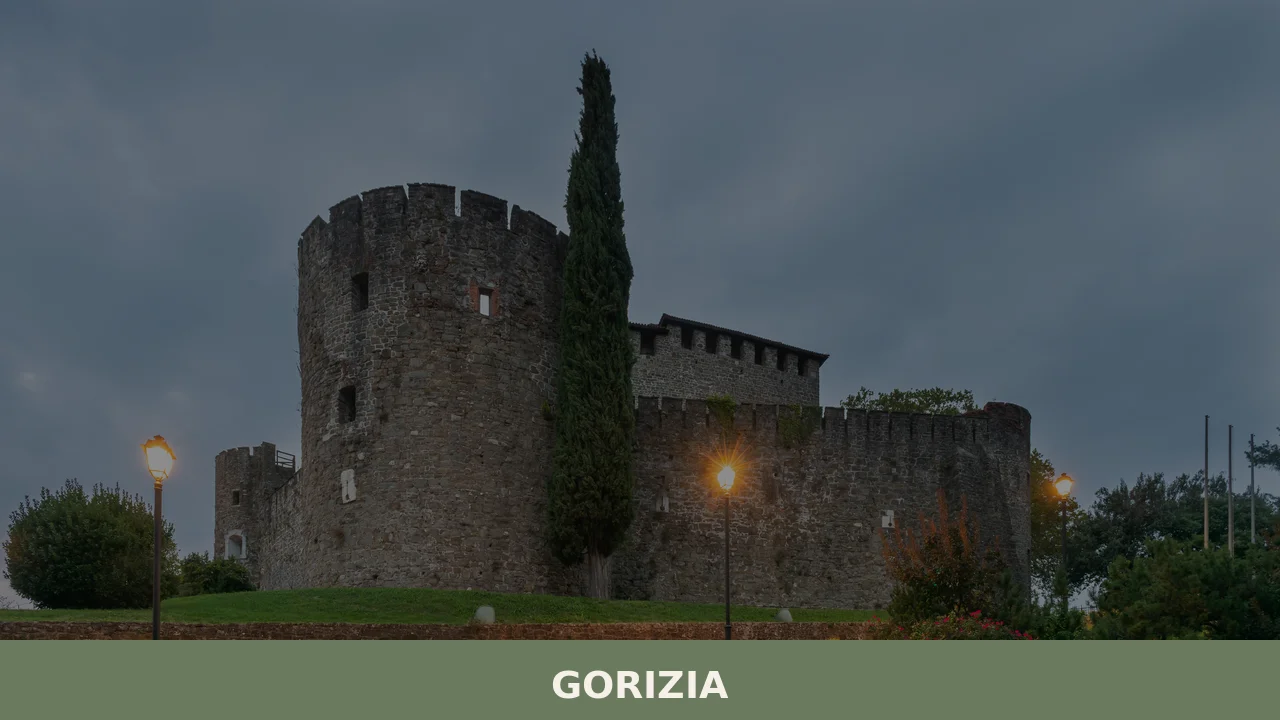
Gorizia
What to see in Gorizia, located at 84m. Discover 5 historic attractions, including its iconic Castle, and savor typical local cuisine. Explore your trip!
Discover Gorizia
The history of Gorizia is deeply intertwined with its geographical position, a crossroads of cultures and a strategic point along the routes leading from Friuli to Central Europe.
Founded in the 11th century, this city has witnessed a succession of different dominations, each leaving an indelible mark on its urban and cultural fabric.
For those wondering what to see in Gorizia, the town offers an itinerary ranging from imposing medieval architecture to refined Habsburg palaces, testaments to a glorious and, at times, troubled past.
With its 35,532 inhabitants and an altitude of 86 m above sea level, Gorizia today presents itself as a welcoming city, full of ideas for a journey of historical and gastronomic discovery.
History and Origins of Gorizia
The name Gorizia, first attested in a document dated April 28, 1001, derives from the Slovenian term “gorica”, meaning “small hill”.
This denomination is a clear reference to the morphology of the territory, dominated by the hill on which the castle stands, the focal point of the original settlement.
The city was donated in that year by Emperor Otto III to the Patriarchate of Aquileia, marking the beginning of its documented history.
During the 12th century, the Counts of Gorizia emerged as local lords, consolidating their power and giving rise to a dynasty that would govern the territory for over four centuries, expanding their domains and significantly influencing the region’s politics.
The County of Gorizia reached its apex between the 13th and 14th centuries, extending its influence over a vast territory that included parts of present-day Friuli, Carinthia, and Carniola.
The dynasty of the Counts of Gorizia died out in 1500 with the death of Leonardo, the last count, and the territory passed under Habsburg rule.
This transition marked the beginning of a long period under the Austrian crown, which would shape the city’s architectural and cultural identity.
During the modern era, Gorizia became an important administrative and cultural center of the Habsburg Empire, earning the moniker “Austrian Nice” for its mild climate and refined social life, attracting nobles and intellectuals.
The 20th century was particularly difficult for Gorizia, which found itself at the center of world conflicts.
During the First World War, the city was the scene of bloody battles, particularly those of the Isonzo, which caused severe destruction.
After the conflict, Gorizia passed to the Kingdom of Italy with the Treaty of Saint-Germain-en-Laye of 1919.
The Second World War saw new devastation, and with the post-war redefinition of borders, the city found itself divided by an international border that separated it from its eastern periphery, today part of Slovenia.
This division deeply marked Gorizia’s identity, making it a symbol of encounter and, at the same time, of separation between peoples and cultures, an aspect still reflected today in its unique atmosphere, similar in some respects to what can be found when visiting Buja, also characterized by a complex history and a layered identity.
What to see in Gorizia: main attractions
Gorizia offers a wealth of attractions that reflect its rich history and its position as a cultural crossroads.
For those wondering what to see in Gorizia, the journey can begin with its most iconic symbol, the Castle, and then extend to the historic palaces, museums, and green areas that characterize the city.
Each place tells a piece of Gorizia’s past, inviting visitors to an in-depth exploration.
Gorizia Castle
Gorizia Castle stands majestically on a hilltop, dominating the entire city and the surrounding plain.
Its origins date back to the 11th century, although the current structure is the result of numerous alterations and expansions over the centuries, particularly during the medieval and Habsburg periods.
The complex is made up of different sections, including the Palazzo dei Conti (Counts’ Palace), the ancient Court, and the Watchtower.
Inside the castle are housed the Provincial Museums, with exhibitions illustrating the history of the County of Gorizia and offering a glimpse into the daily life and traditions of the territory.
The visit also includes the rooms of the Palazzo dei Conti, where it is possible to admire historical furnishings and reconstructions that evoke the atmosphere of medieval courts.
Cathedral of Saints Hilarion and Tatian
Gorizia Cathedral, dedicated to Saints Hilarion and Tatian, is the city’s main church and an important example of religious architecture.
The building has ancient origins, with the first mention of a church dating back to the 14th century, but its current form is predominantly the result of a Baroque reconstruction after the destructions suffered during the First World War.
The facade is characterized by classical elements and an elaborate portal, while the three-nave interior houses works of art by local and regional artists.
Among the most significant elements are the wooden choir and the high altar, which contribute to creating an atmosphere of solemnity and beauty.
The church is the focal point of the patronal celebrations held on March 16th, the day dedicated to the patron saints.
Palazzo Attems Petzenstein
Palazzo Attems Petzenstein is one of Gorizia’s most elegant Baroque buildings, located in the heart of the historic center.
It was built in the 18th century for the noble Attems family and represents a significant example of aristocratic architecture from the Habsburg period.
The building stands out for its richly decorated facade and interiors that preserve original frescoes, stuccoes, and furnishings.
Currently, the palace houses the Modern Art Gallery of the Provincial Museums of Gorizia, which displays a vast collection of works by Friulian and Italian artists from the 19th century to the present day.
The visit allows appreciation not only of the artworks but also of the magnificence of the noble rooms, offering a glimpse into the cultural and social life of 18th-century Gorizia.
Borgo Castello
Borgo Castello represents the oldest and most charming core of Gorizia, developed around the medieval fortress.
This quarter preserves the atmosphere of a bygone era, with its narrow, winding streets, stone houses, and views opening onto the plain.
Walking through Borgo Castello means immersing oneself in the city’s history, observing the architecture that testifies to different eras and dominations.
Besides the castle itself, there are small churches, ancient residences, and remains of defensive walls.
The area has undergone restoration work that has preserved its original character, making it an ideal place for a relaxing stroll and for discovering lesser-known corners, offering an experience that stands out among the various opportunities on what to see in Gorizia.
Remembrance Park (or Piuma-Isonzo Park)
Remembrance Park, also known as Piuma-Isonzo Park, is a large green area stretching along the banks of the Isonzo River, a short distance from Gorizia’s historic center.
This park is not only a place for recreation and relaxation but also an important commemorative site, dedicated to those who fell in the First World War, an event that profoundly marked the city’s history.
Inside the park are monuments and plaques commemorating the soldiers who fought on the Isonzo Front.
Its location along the river offers the opportunity for panoramic walks and enjoying the tranquility of nature.
The park is equipped with pedestrian and cycling paths, representing an oasis of peace and reflection for citizens and visitors.
Its extent and variety of flora make it a popular spot for outdoor activities.
Typical Cuisine and Products of Gorizia
Gorizia’s cuisine reflects its complex history and border location, combining Friulian, Austrian, and Slovenian influences in a blend of robust flavors and ancient traditions.
Local gastronomy is characterized by the use of simple, genuine ingredients, often sourced from the surrounding agricultural territory and the nearby Collio hills.
The culinary tradition has developed over centuries, adapting to available products and the customs of the various cultures that have passed through the city, creating a repertoire of dishes that tell the story of this European crossroads.
Among the typical dishes, preparations influenced by Central European traditions stand out.
An example is Jota, a dense and flavorful soup made with beans, sauerkraut (or sour cabbage), potatoes, and smoked pork, often served with ribs or sausages.
Another robust dish is Goulash, a beef or pork stew slowly cooked with plenty of onions and paprika, which develops an intense and aromatic flavor.
Also noteworthy are Cjarsons, stuffed ravioli which, in the Gorizia variant, can feature a sweet and sour filling with ricotta, herbs, raisins, and cinnamon, seasoned with melted butter and smoked ricotta.
These dishes represent the essence of a cuisine that combines substance with the elegance of flavors.
Although there are no specific certified products for the city of Gorizia in the provided database, the area is renowned for the production of high-quality wines, particularly those from the Collio Goriziano.
This hilly area, located east of the city, is famous for its whites, such as Friulano, Ribolla Gialla, Pinot Bianco, and Sauvignon, but also for its robust reds.
Collio wines are appreciated for their structure, aromatic complexity, and minerality, deriving from the particular soil called “ponca,” an alternation of marl and sandstone.
In Gorizia’s trattorias and restaurants, it is possible to taste these wines paired with local dishes, completing the gastronomic experience, an opportunity that also extends to nearby villages like Corno di Rosazzo, also part of the regional wine excellences.
Festivals, Events, and Traditions of Gorizia
Gorizia’s cultural and social life is marked by various events rooted in local history and traditions.
The most significant celebration for the community is that of its patron saints, Hilary and Tatian, which falls on March 16th.
On this day, the city comes alive with religious and civil events, including solemn masses in the Cathedral and, at times, popular festivities that involve the city center streets.
The patron saint’s festival is a gathering moment for Gorizians, an occasion to honor their identity and historical and spiritual roots, keeping alive the memory of the patrons who, according to tradition, have protected the city over the centuries.
In addition to the patron saint’s festival, Gorizia hosts other events throughout the year that enrich its calendar.
Among these, events related to wine culture are particularly significant, given its proximity to the prestigious Collio wine regions.
During the harvest season or other specific periods, tastings, winery tours, and markets for typical products may be organized, showcasing the territory’s food and wine excellences.
The city is also home to cultural festivals, concerts, and exhibitions that reflect its vocation as a bridge between different cultures, offering a variety of opportunities for residents and visitors interested in exploring local traditions and artistic expressions.
When to visit Gorizia and how to get there
The best time to visit Gorizia is spring or autumn.
During these months, the climate is mild and pleasant, ideal for exploring the historic center, the Castle, and the green areas without the intense summer heat or winter cold.
Spring offers lush blooms and a lively atmosphere, while autumn provides the warm colors of the foliage, especially in the surrounding hilly areas, and the opportunity to participate in events related to the grape harvest and seasonal products.
Summer can be hot, but it is the period when many cultural events and outdoor evenings are concentrated, while winter, although colder, allows you to experience the Christmas atmosphere and enjoy local cuisine in a more intimate setting.
Reaching Gorizia is easy thanks to its strategic position.
Those arriving by car can take the A4 Venice-Trieste motorway, exiting at the Gorizia toll booth, which is a few kilometers from the city center.
The city is also well connected by the railway network: Gorizia Centrale station is served by regional trains that connect it with Udine, Trieste, and other locations in Friuli Venezia Giulia.
For those who prefer to fly, the nearest airport is Trieste-Ronchi dei Legionari Airport (TRS), located about 30 kilometers away, from which you can continue by bus or taxi.
The good transport network makes Gorizia an easily accessible destination for a weekend or a stop on a wider tour in Friuli Venezia Giulia, perhaps then continuing towards Colloredo di Monte Albano for further exploration of the region.
| Starting point | Distance | Estimated time |
|---|---|---|
| Trieste | 40 km | 40 minutes |
| Udine | 40 km | 40 minutes |
| Trieste Airport (TRS) | 30 km | 30 minutes |
Where to stay in Gorizia
Gorizia, being a city of significant size and an important tourist and commercial center, offers a wide range of accommodation options, suitable for different needs and budgets.
Visitors can choose between hotels located in the historic center, which allow walking distance to the main attractions, or more modern facilities in the peripheral areas.
Cozy bed & breakfasts and holiday homes are also available, ideal for those seeking a more authentic and independent experience.
Many establishments enhance local tradition, offering comfortable environments and services that meet the expectations of the contemporary traveler.
The presence of various types of accommodation, from more economical options to high-end ones, ensures that every visitor can find the most suitable solution for their stay.
Opting for a structure in the heart of the city allows you to fully experience the Gorizia atmosphere, facilitating the exploration of historic streets and access to restaurants and cafes.
Those who prefer tranquility can consider accommodations slightly outside the center, often surrounded by greenery, which still offer easy connection to the main communication routes.
It is always advisable to consult the official website of the Municipality of Gorizia or tourist portals to check availability and book in advance, especially during peak seasons or for specific events.
Those visiting Gorizia can extend their itinerary towards Cassacco, which shares a regional context rich in history and natural beauty, offering further insights for discovery in Friuli Venezia Giulia.
Photo Gallery of Gorizia
Do you have photos of Gorizia?
Share your photos of the village: the best ones will be added to the official gallery, with your credit.
Send your photosIn Friuli Venezia Giulia More villages to discover
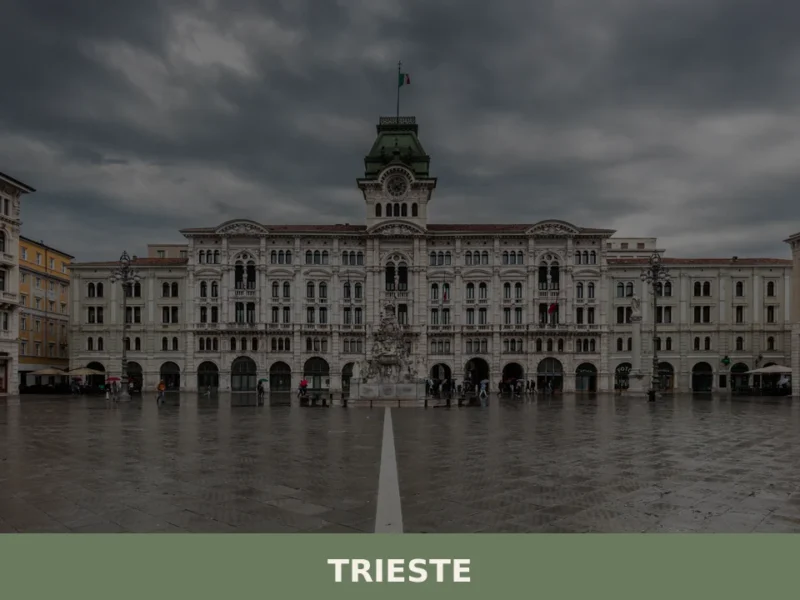
Trieste
What to see in Trieste, a city with over 200,000 inhabitants? Discover 5 main attractions and savor local cuisine like Jota and Presnitz. Explore its unique history.
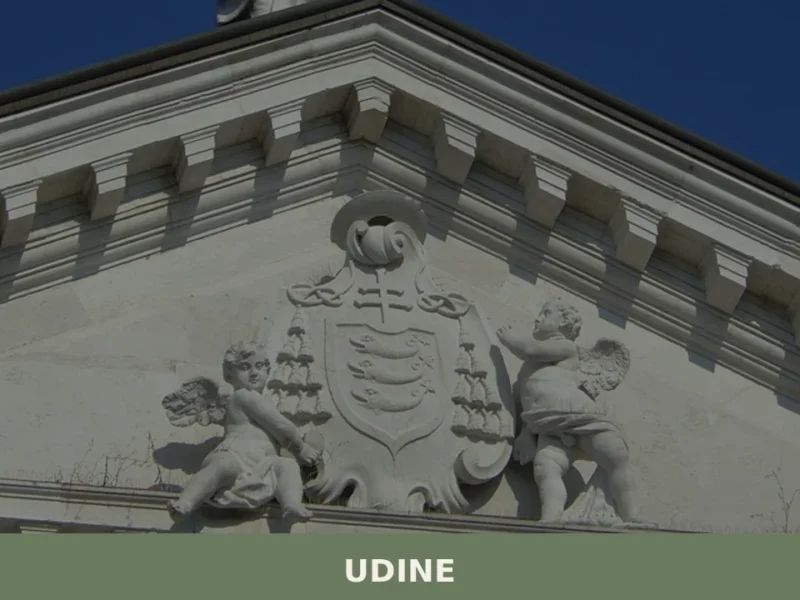
Udine
what to see in udine, home to 98,780 residents. Discover the historic Castle, Piazza della Libertu00e0, and Tiepolo Galleries. Explore its rich heritage.



📝 Incorrect information or updates?
Help us keep the Gorizia page accurate and up to date.