A 651-inhabitant hilltop village in Puglia’s Daunia hills, Motta Montecorvino rewards slow visitors with medieval lanes, long views over the Tavoliere plain, and robust mountain cooking.
Morning fog lifts off the Daunia hills in thin, slow sheets, revealing a cluster of stone rooftops at 662 metres above sea level. The bell tower of the mother church catches the first light before anything else — a vertical accent against a landscape of wheat fields and oak forest stretching toward the Tavoliere plain below. This is Motta Montecorvino, a village of 651 inhabitants in the province of Foggia, and the kind of place that rewards those who arrive without a schedule. Understanding what to see in Motta Montecorvino begins with this silence, and with the particular quality of altitude light that sharpens every façade.
The name itself is a composite archaeology. “Motta” derives from the medieval Latin motta, referring to an artificial mound or fortified elevation — a common feature of Norman defensive settlements across southern Italy. “Montecorvino” points to the ancient town of Montecorvino, a once-significant bishopric that stood nearby and whose population gradually migrated to surrounding hilltop sites after repeated destruction. The settlement consolidated during the Norman period, between the eleventh and twelfth centuries, when the Sub-Appennino Dauno was reorganised into a network of fortified borghi designed to control the passes between Campania and the Apulian plain.
Throughout the medieval period, Motta Montecorvino passed through the hands of various feudal families under the Kingdom of Naples. Its position — elevated, defensible, set along a ridge — made it a strategic point rather than a commercial centre. The village’s built fabric still reflects this military logic: narrow lanes that curve to break wind and line of sight, thick-walled houses with few ground-floor openings, and a compact urban nucleus oriented around the church and the remnants of its fortification. The decline of feudalism and the unification of Italy in 1861 brought administrative reorganisation but little economic transformation, and the village entered the twentieth century as a community shaped primarily by agro-pastoral life.
Emigration, particularly during the post-war decades, reduced the population significantly. Yet unlike many abandoned borghi in the Italian south, Motta Montecorvino retained a continuous residential presence. Its inhabitants maintained the seasonal rhythms of grain cultivation, sheep grazing, and forest management that had defined the settlement for centuries — rhythms that remain legible today in the calendar of local festivals and in the layout of the surrounding agricultural terraces.
The principal church dominates the village’s upper section, its bell tower serving as the settlement’s most recognisable vertical element. The structure dates in its current form to the medieval period, with subsequent modifications visible in the stonework — Romanesque proportions overlaid with Baroque interior additions. Inside, altarpieces and carved stone elements document the devotional life of a small agricultural community across several centuries.
The oldest quarter of Motta Montecorvino retains the dense, irregular street plan of a Norman-era hilltop settlement. Walls built from locally quarried limestone show the grey-gold tones characteristic of Daunia construction. Doorways are low and arched, stairways external, and many houses share party walls in a pattern designed for collective defence. Walking here is less about individual monuments than about reading an intact medieval spatial logic.
At 662 metres, the village’s western edges open to long views across the Tavoliere delle Puglie — the largest plain in southern Italy. On clear winter days, the Gargano promontory is visible to the northeast, and the line of the Apennines unfolds to the west. These vantage points contextualise the village’s role as a watchtower settlement, positioned to survey the flatlands below.
The hills around Motta Montecorvino are covered by mixed deciduous forest — primarily downy oak and, at higher elevations, beech. Marked trails connect the village to neighbouring ridgeline paths through the Sub-Appennino Dauno. In autumn, the canopy turns copper and amber, and the forest floor produces wild mushrooms, asparagus in spring, and a range of medicinal herbs historically gathered by local communities.
Within the broader municipal territory, traces of the lost settlement of Montecorvino — the bishopric that gave the village half its name — can still be found. Scattered masonry, fragments of a cathedral, and a ruined tower mark the location of a town that was significant enough to hold episcopal status before its gradual abandonment. The site requires local guidance to locate and interpret, but rewards the effort with a tangible sense of historical erasure and persistence.
The cuisine of Motta Montecorvino belongs to the tradition of the Daunia hill country: robust, grain-based, and shaped by the pastoral economy. Handmade pasta — orecchiette, cavatelli, and the local troccoli (a thick, rough spaghetti cut with a ridged rolling pin) — forms the base of most meals, dressed with ragù of lamb or pork, or simply with turnip greens and anchovy. Bread is still central: large, dense loaves baked from durum wheat semolina, with a thick crust that allows them to keep for days. Puglia’s regional food traditions are well represented here, though in a mountain dialect distinct from the coastal cooking further south.
Local products include extra virgin olive oil from groves on the lower slopes, aged cheeses — particularly caciocavallo and pecorino — from sheep and cow herds pastured on the hillsides, and cured meats prepared during the winter slaughter. Wild foraged ingredients such as lampascioni (wild hyacinth bulbs), cardoncelli mushrooms, and bitter chicory appear seasonally. Dining in the village itself is limited to small, family-run establishments; expect fixed menus built around whatever is current in the fields and forests rather than printed à la carte options.
The climate at 662 metres is noticeably cooler than the plains below. Summers are warm but rarely oppressive — daytime temperatures hover around 28°C in July and August, dropping sharply at night, making it a natural refuge from the fierce heat of the Tavoliere. Spring (April to early June) brings wildflowers to the surrounding meadows and the best conditions for walking. Autumn is marked by mushroom foraging and the amber-gold shift of the oak canopy — a quiet, photogenic season with few visitors.
Winter can be cold and occasionally snowy, which gives the village a stark, graphic quality against the white hillsides but limits accessibility on minor roads. Village festivals, typically tied to patron saint days and agricultural milestones, concentrate in the summer months and offer the closest look at communal life — processions through the narrow streets, outdoor tables, and music played in the small piazza. Check with the municipality’s official website for exact dates, as schedules are set annually.
The village is located in the western hills of the province of Foggia, approximately 35 kilometres from the provincial capital. By car from Foggia, follow the SS17 toward Lucera, then turn onto the SP10 or SP130 climbing into the Sub-Appennino Dauno — a drive of roughly 45 minutes through progressively steeper terrain. From Bari, the distance is approximately 170 kilometres (around two hours via the A14 motorway to Foggia, then local roads). From Naples, the approach via the A16 motorway takes approximately two hours, passing through the Irpinia hills before descending toward the Daunia range.
The nearest railway station is in Lucera or Foggia, both served by Trenitalia regional services. From either station, onward travel requires a car or infrequent local bus connections. The nearest airports are Bari Karol Wojtyła (BRI), approximately 180 kilometres southeast, and Naples Capodichino (NAP), roughly 190 kilometres west. A rental car is effectively essential for visiting Motta Montecorvino and exploring the surrounding hill villages at your own pace.
The Sub-Appennino Dauno and the Gargano promontory are home to a constellation of small, historically layered settlements that share Motta Montecorvino’s character of quiet persistence. To the north, the Franco-Provençal village of Faeto — one of two communities in Puglia where a medieval French dialect is still spoken — sits at an even higher elevation and offers a fascinating case study in linguistic survival. Its annual festival celebrating the minority language draws scholars and curious visitors from across Europe.
Further east, toward the coast, Cagnano Varano occupies a dramatically different landscape on the edge of the Gargano, overlooking the Varano lagoon and the Adriatic. The contrast between the inland hills and the coastal karst terrain illustrates the remarkable geographical diversity contained within a single province. Together, these villages trace a transect from the Apennine ridge to the sea — a journey that takes less than two hours by car but crosses several distinct worlds of terrain, dialect, and culinary tradition.
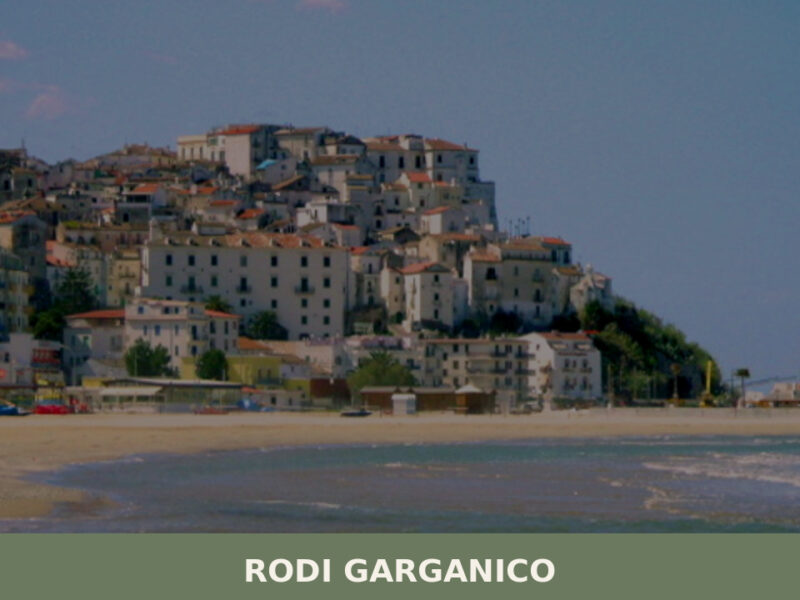
A coastal village of 3,302 inhabitants on the Gargano promontory, Rodi Garganico offers a medieval centre, IGP citrus groves, and an authentic Adriatic harbour life.
A working agricultural village on the Tavoliere plain near Foggia, Stornarella offers wheat-field panoramas, rural chapels, and the elemental cuisine of northern Puglia.
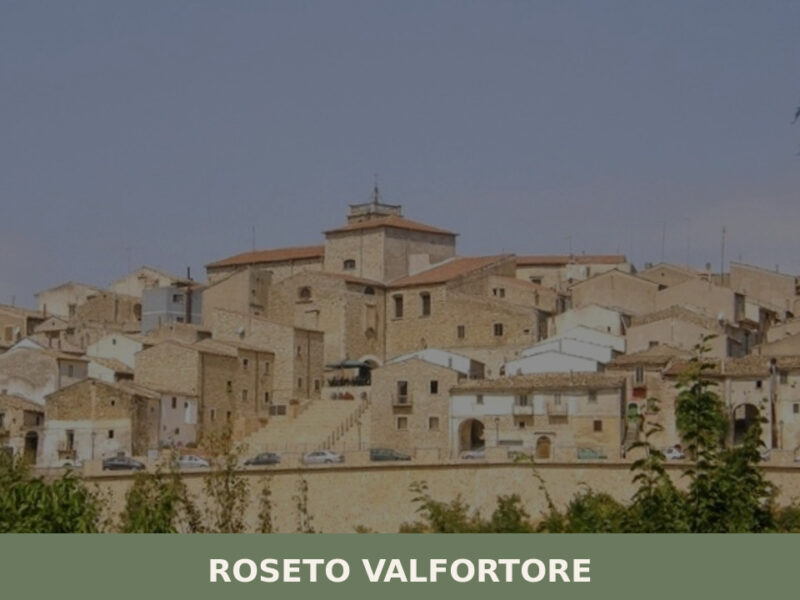
A stone village of 993 inhabitants at 658 metres in the Fortore valley. Roseto Valfortore preserves medieval architecture, mountain cooking traditions, and the quiet of inland Puglia.
📝 Incorrect information or updates?
Help us keep the Motta Montecorvino page accurate and up to date.