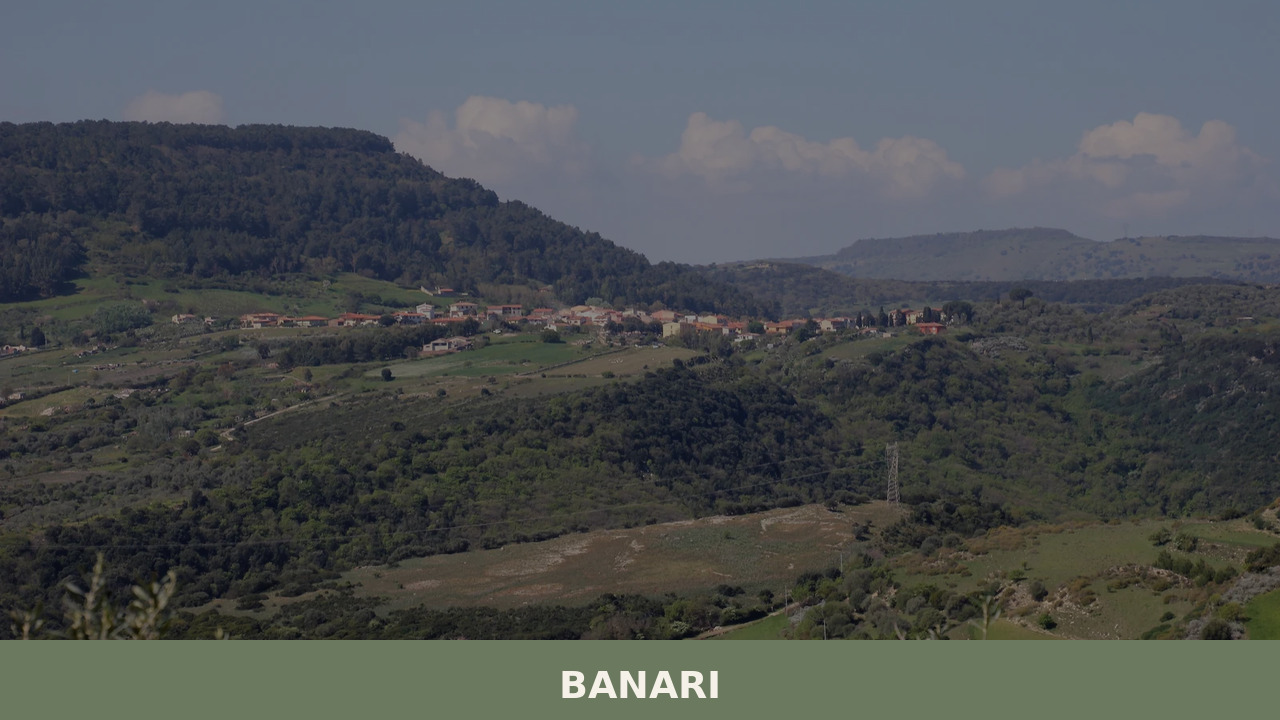
Morning light catches the limestone facades along Via Roma, turning them the colour of raw honey. A rooster calls from behind a courtyard wall. Somewhere below, the Meilogu plain stretches north toward Sassari, its patchwork of olive groves and grain fields still holding the night’s mist. Banari — population 516, perched at 419 metres above […]
Morning light catches the limestone facades along Via Roma, turning them the colour of raw honey. A rooster calls from behind a courtyard wall. Somewhere below, the Meilogu plain stretches north toward Sassari, its patchwork of olive groves and grain fields still holding the night’s mist. Banari — population 516, perched at 419 metres above sea level — is the kind of Sardinian village where the church bell still marks the hours for people who listen. If you’re wondering what to see in Banari, the answer begins with slowing down enough to notice what’s already in front of you.
Human settlement in the area around Banari predates written record by millennia. The territory sits within the historical sub-region of Meilogu, a zone of northern Sardinia rich in nuraghi — the Bronze Age stone towers that remain the island’s most distinctive archaeological signature. During the medieval period, Banari fell within the Giudicato di Torres, one of the four independent kingdoms that governed Sardinia between the ninth and fifteenth centuries. The village was part of the Curatoria di Meilogu, an administrative district whose boundaries roughly followed the watershed lines still visible from the village’s upper streets.
The origins of the name remain debated. Some scholars link it to the Latin vanarium, suggesting a connection to agricultural winnowing, while others propose a pre-Roman, possibly Nuragic, root. What is certain is that by the late medieval period, Banari had established itself as a modest agricultural settlement, its economy built on grain cultivation and livestock. The village passed through Aragonese and Spanish dominion before becoming part of the Kingdom of Sardinia under the House of Savoy in 1720, a transition that left its mark more in taxation records than in architecture.
Through the centuries of foreign rule, Banari’s population fluctuated but never vanished. The village endured the feudal system, periodic famine, and the slow depopulation that has defined Sardinia’s interior communities since the mid-twentieth century. Today, with just over five hundred residents, it carries the weight and the quiet dignity of a place that has outlasted its rulers.
The parish church of Santa Croce anchors the village centre with a façade of local stone and a bell tower visible from the approach road. Its interior, restructured over several centuries, retains elements of Romanesque and later Baroque craftsmanship. The nave is cool and dim even at midday — a functional mercy in the Sardinian summer. Pay attention to the carved stone details around the entrance, which speak to an earlier, more austere building campaign.
Set in the countryside outside the village proper, this small rural church was once the centre of a now-vanished settlement. The building dates to the medieval period and preserves a Romanesque plan of striking simplicity. The surrounding landscape — wild grasses, dry stone walls, scattered olive trees — frames it without competing. It remains a site for local devotion, particularly during its annual feast day celebrations.
The Meilogu sub-region is dense with Nuragic remains, and the territory surrounding Banari includes the ruins of nuraghi and related Bronze Age structures. These are not manicured museum sites — they emerge from the earth among scrub and pastureland, often requiring a walk along unpaved tracks. Their rough basalt blocks have weathered more than three thousand years. Local knowledge is essential for finding the less-documented examples.
Banari’s old quarter is built from the local pale limestone, its narrow streets following contour lines rather than any planned grid. Doorways are low and thick-walled, designed for insulation. Several houses retain traditional Sardinian architectural features: enclosed courtyards, external stone staircases, and wooden balconies now silvered by decades of weather. Walk it in the early evening, when residents bring chairs to their doorsteps.
This small museum documents a tradition central to Sardinian identity: the making of elaborately decorated bread for religious occasions, weddings, and feast days. The pieces on display — sculpted, incised, and shaped by hand — are objects of genuine artisanal skill, not mere curiosities. The museum reflects Banari’s specific contribution to a craft practice recognised across the island.
Banari’s culinary identity is inseparable from its bread-making tradition. The village is particularly known for su pane pintau — “painted bread” — the ritually decorated loaves crafted for religious holidays and celebrations. These are made from semolina flour and shaped into intricate forms using simple tools: scissors, combs, and knitting needles. Beyond the ceremonial, daily bread in Banari follows the classic Sardinian repertoire: pane carasau, the crisp, paper-thin flatbread, and pane frattau, a layered dish of carasau softened with broth, tomato, and a poached egg. The surrounding Meilogu plain yields durum wheat and olive oil, while local shepherds produce aged pecorino cheeses whose sharpness intensifies with the season.
Restaurants and agriturismi in the area serve dishes rooted in pastoral cooking: roast suckling pig (porceddu), malloreddus pasta with sausage ragù, and bean soups thickened with lard. Wine from the Logudoro zone, including Cannonau and Cagnulari reds, accompanies most meals. Dining options in a village of this size are limited, so planning ahead — and asking locally — is practical rather than optional.
Spring, from late March through May, brings the Meilogu countryside into its most vivid state: wildflowers carpet the fields, temperatures hover between 15 and 22 degrees Celsius, and the light has a clarity that the summer haze later steals. Autumn, particularly October, offers similar advantages, with the added dimension of olive harvest activity in the groves surrounding the village. Summer can push above 35°C, and the village, like much of interior Sardinia, enters a slower rhythm during the hottest hours.
The most compelling time to visit coincides with local feast days and events. Banari’s Festa di Santa Croce draws the community together around processions, communal meals, and — critically — the preparation and display of ritual bread. Check with the Comune di Banari for exact dates, which shift with the liturgical calendar. Arriving during a festa transforms the experience from architectural observation to something lived and participatory.
The nearest airport is Alghero-Fertilia (AHO), approximately 45 kilometres to the west — a drive of roughly 50 minutes via the SS291 and provincial roads. Olbia-Costa Smeralda airport (OLB) lies about 140 kilometres to the northeast. From Sassari, the provincial capital, Banari is a 25-kilometre drive south along the SP41 or connecting roads through the Meilogu district, taking approximately 30 minutes.
Public transport connections are limited and infrequent, as is typical for Sardinia’s interior villages. ARST regional buses link Banari to Sassari, but schedules are sparse, particularly on weekends. A rental car is, practically speaking, essential for reaching the village and for exploring the archaeological sites and countryside churches scattered across the surrounding territory. The roads are well-maintained but narrow, winding through terrain that rewards attentive driving.
The interior of Sardinia rewards the traveller who moves laterally, from village to village, rather than simply returning to the coast. Southeast of Banari, deep in the Gallura sub-region, the granite village of Aggius offers a striking counterpoint: where Banari is built from pale limestone on agricultural plains, Aggius rises among weathered granite boulders, its traditions rooted in textile weaving and polyphonic choral singing. The landscape shift between the two is dramatic enough to feel like crossing a border.
Further east, Alà dei Sardi occupies a high plateau at the edge of dense cork oak forests, a village whose identity is shaped by pastoral culture and the vast, sparsely populated territory of inner Sardinia. Together, these three villages — Banari, Aggius, Alà dei Sardi — trace a transect across the island’s northern interior, each distinct in stone, dialect, and tradition, yet bound by the shared condition of resilience in a landscape that has never made survival easy.
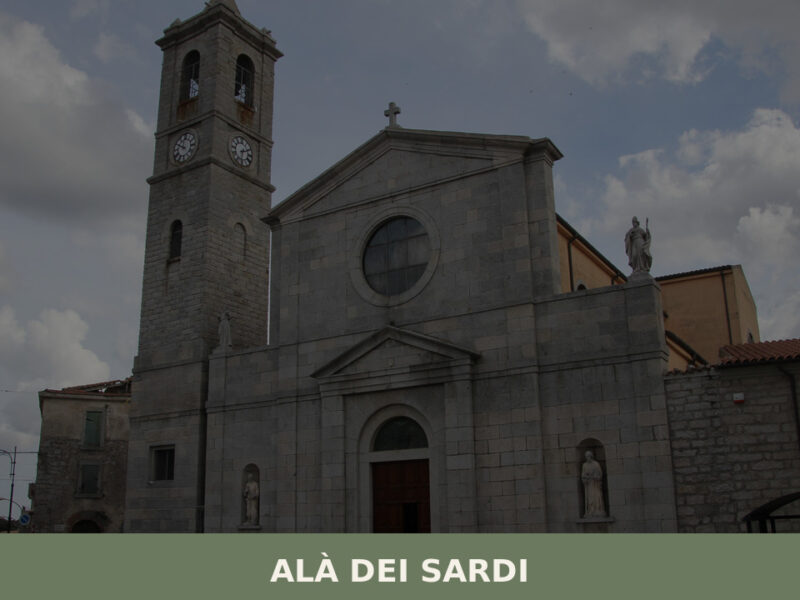
Morning mist rolls off the granite plateau and settles in the narrow streets, carrying the smell of woodsmoke and fresh bread from a communal oven that has not changed position in two centuries. At 663 metres above sea level, the air here is thinner, cooler, and quieter than on the coast below. Alà dei Sardi […]
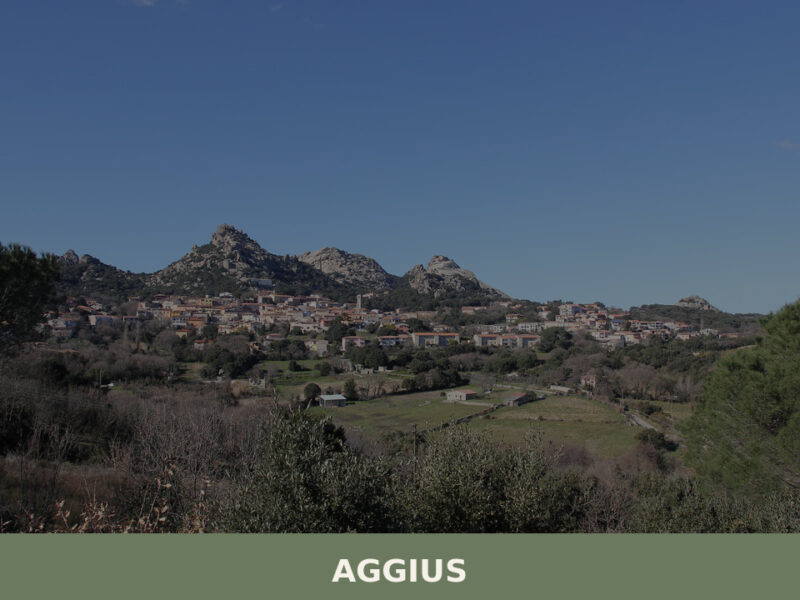
Granite boulders glow amber in the late afternoon, stacked like ancient sentinels across a valley floor that drops away toward the Gallura coast. Wind pushes through narrow lanes of grey stone houses, carrying the faint rhythm of a polyphonic chorus rehearsing behind closed shutters. At 514 metres above sea level, this village of just over […]
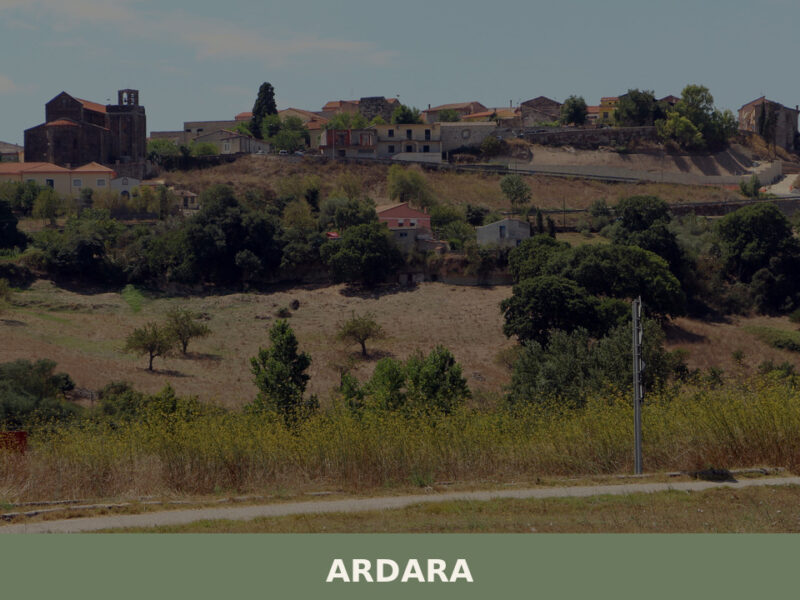
Morning light strikes the dark basalt walls of an old church, turning the stone the colour of wet coal. A rooster calls from somewhere behind the municipio. Ardara sits on a low rise at 296 metres above sea level in the province of Sassari, a village of 729 people that once served as the capital […]
📝 Incorrect information or updates?
Help us keep the Banari page accurate and up to date.


