


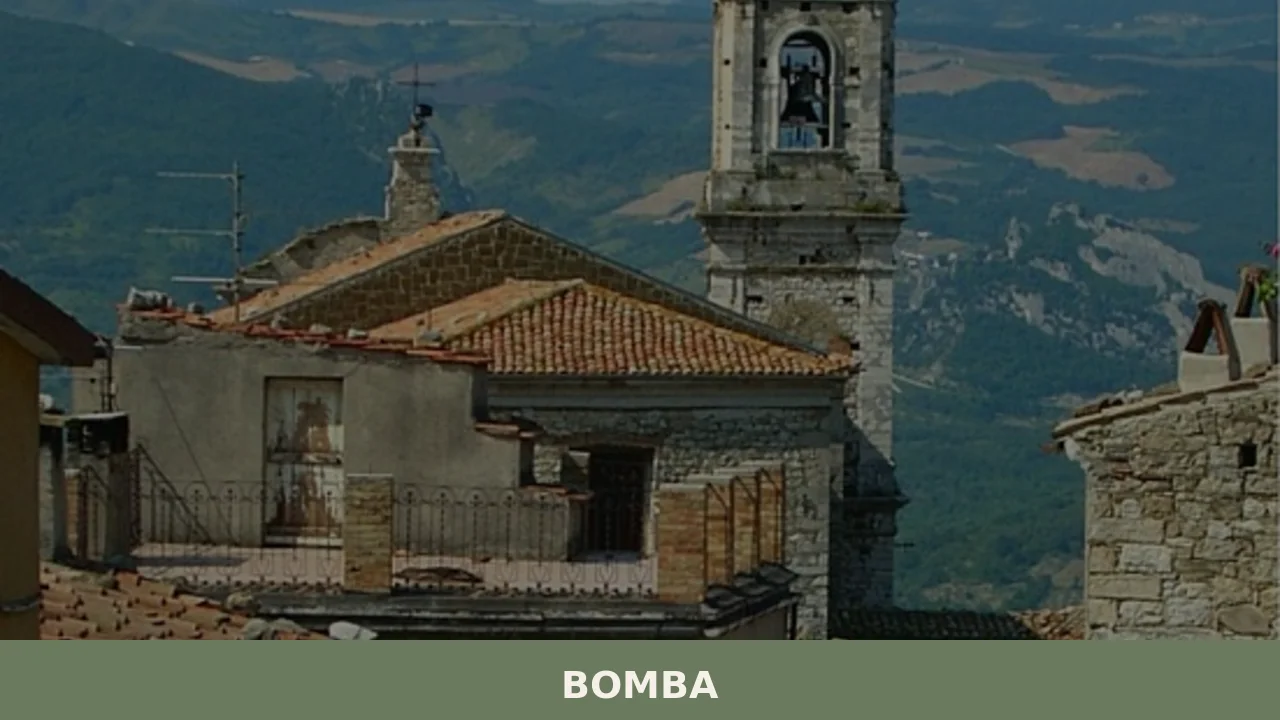
Bomba
The artificial lake that bears its name, created in 1958 by damming the River Sangro, redefined the geography and economy of Bomba, a municipality of 719 inhabitants in the province of Chieti, at 424 metres above sea level. The reservoir occupies the valley below and today represents one of the key points of interest for […]
Discover Bomba
The artificial lake that bears its name, created in 1958 by damming the River Sangro, redefined the geography and economy of Bomba, a municipality of 719 inhabitants in the province of Chieti, at 424 metres above sea level. The reservoir occupies the valley below and today represents one of the key points of interest for anyone wondering what to see in Bomba. The village extends along a hilltop ridge looking west towards the Maiella massif and east towards the Adriatic Sea, roughly thirty kilometres from the coast as the crow flies.
History and origins of Bomba
The earliest documentary records of the name date back to the Norman period: in the Catalogus Baronum, compiled around 1150 under Roger II of Sicily, the fief already appears with its current name. The etymology remains disputed. Some hypotheses link it to the Latin bombus, referring to the sound of the Sangro’s waters in the valley below; others point to a pre-Roman root connected to the shape of the terrain. No definitive evidence supports either theory.
During the Middle Ages the territory passed through the hands of several feudal families. In the fifteenth century the fief belonged to the Caldora, lords who controlled large stretches of the Sangro valley, and later to the d’Avalos. The urban layout of the old town preserves the typical structure of the fortified hilltop villages of the Chieti area, with narrow streets arranged in a herringbone pattern along the ridge and remnants of the defensive walls visible at several points.
During the Second World War, Bomba suffered heavy damage. The town lay on the Gustav Line, the German defensive belt that crossed Abruzzo from coast to coast. Between October and November 1943 the retreating German army mined several buildings and forced the population to evacuate. Post-war reconstruction and the subsequent creation of the lake in the 1950s radically transformed the face of the territory. For further reading, the dedicated Wikipedia entry can be consulted.
What to see in Bomba: 5 main attractions
1. Church of Santa Maria del Popolo
The main religious building in the village, rebuilt after wartime damage but with earlier architectural elements still legible on the façade. Inside, it houses sacred furnishings and processional statues linked to the cult of Saint Donatus of Arezzo, patron saint of the town, whose feast day falls on 7 August. The single-nave plan reflects a model widespread among the smaller centres of the Diocese of Chieti.
2. Lake Bomba
An artificial reservoir covering approximately 7.4 square kilometres, created by damming the Sangro by the Ente Autonomo del Volturno. The shores host equipped areas for sport fishing, kayaking and windsurfing. A pedestrian and cycling path runs along part of the perimeter, connecting several picnic areas. The fish population includes carp, tench, pike and perch.
3. Old town and remains of the defensive walls
The historic core retains sections of the medieval curtain wall, with at least two access gates still identifiable in the street layout. The local stone houses, many of which were restored after the war, line up along a longitudinal axis that follows the profile of the ridge. From the upper part of the village, on clear days, the outline of the Maiella massif is clearly visible.
4. Baronial Palace
A structure of sixteenth-century origin situated at the highest point of the settlement, associated with the period of feudal rule by the d’Avalos. The building underwent modifications in subsequent centuries and sustained damage during the war. Some portions of the original masonry are still visible, particularly in the base and the ground-floor openings, which feature squared limestone blocks.
5. Lake nature trail
A route of approximately six kilometres starts from the area below the village and reaches the shores of the lake through a zone of riparian vegetation including willows, poplars and alders. The trail is popular with birdwatchers thanks to the presence of grey herons, cormorants and, during the winter months, grebes. The difficulty level is minimal, suitable for families with children.
Local cuisine and regional products
The table in Bomba follows the agro-pastoral tradition of the Chieti hills. Sagne a pezze — fresh pasta cut into irregular rectangles and dressed with lamb ragù or with tomato and basil — is the most common first course in the trattorias of the area. The local pecorino, made from the milk of flocks grazing on the surrounding hillsides, is eaten fresh or aged. Among the meat dishes, pallotte cacio e ova (cheese and egg fritters, fried and then cooked in tomato sauce) appear regularly on menus.
The territory falls within the production zone of “Colline Teatine” DOP extra virgin olive oil, obtained predominantly from the Gentile di Chieti cultivar. The proximity to the Sangro valley also brings Montepulciano d’Abruzzo DOC to the table, with vineyards planted at hill elevations between 200 and 500 metres. For up-to-date information on producers and retail outlets, the official website of the Municipality periodically publishes useful details.
When to visit Bomba: the best time of year
The patron saint festival of Saint Donatus of Arezzo, on 7 August, is the main event of the year: a procession through the streets of the old town, market stalls and fireworks draw back emigrants returning for the summer. The lake is accessible from April to October, with peak water sports and swimming activity in June, July and August, when daytime temperatures range between 28 and 33 degrees.
Spring — particularly April and May — offers ideal conditions for hiking: temperatures between 15 and 22 degrees, broom flowers blooming on the slopes and low visitor numbers. Autumn, with the olive harvest between October and November, holds a different appeal, more closely tied to agricultural work and the colours of the hill landscape. Winter is the quietest period: minimum temperatures often drop below zero, but clear days provide excellent visibility of the snow-covered Maiella. Further details about the area can be found on the Touring Club Italiano platform.
Other villages to discover in Abruzzo
Anyone visiting Bomba is well placed to explore other centres in the region. Heading inland towards the Marsica, Aielli has earned an international reputation for its urban art project: dozens of murals by Italian and foreign artists cover the façades of the old town, turning a small municipality in the L’Aquila province into an open-air gallery. The initiative, launched in 2017, reversed the depopulation trend and brought new flows of visitors.
Closer to Bomba, about fifteen kilometres along the Sangro valley, lies Archi, a hilltop settlement with a medieval bridge over the river and a parish church that preserves sixteenth-century architectural elements. The short distance between the two villages makes them easy to combine in a single day, following the provincial roads that cut across the hills of the province of Chieti.
In Abruzzo More villages to discover
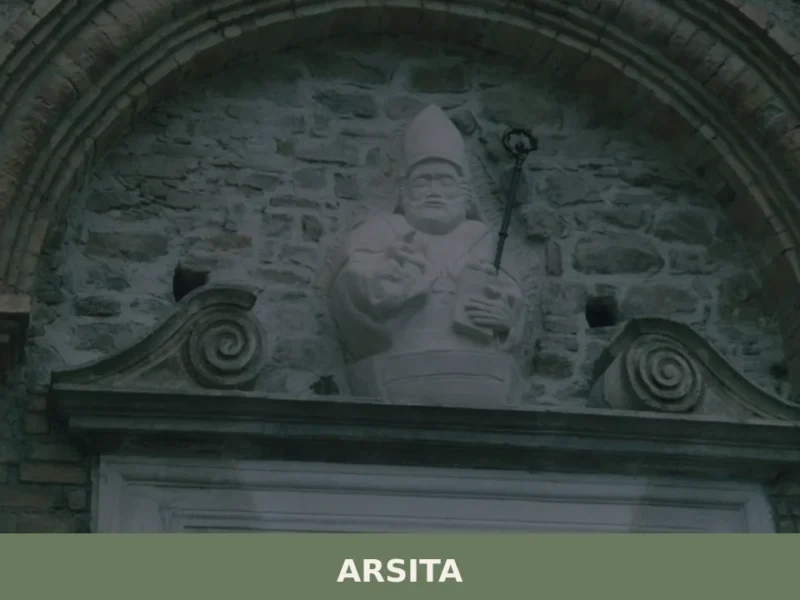
Arsita
Until 1905, this village was called Bacucco, a name likely derived from the Latin bacuca, which referred to olives that had fallen to the ground — a direct reference to the agricultural character of the area. Situated at 470 metres above sea level on the hills of the Teramo province, Arsita and its 733 inhabitants […]
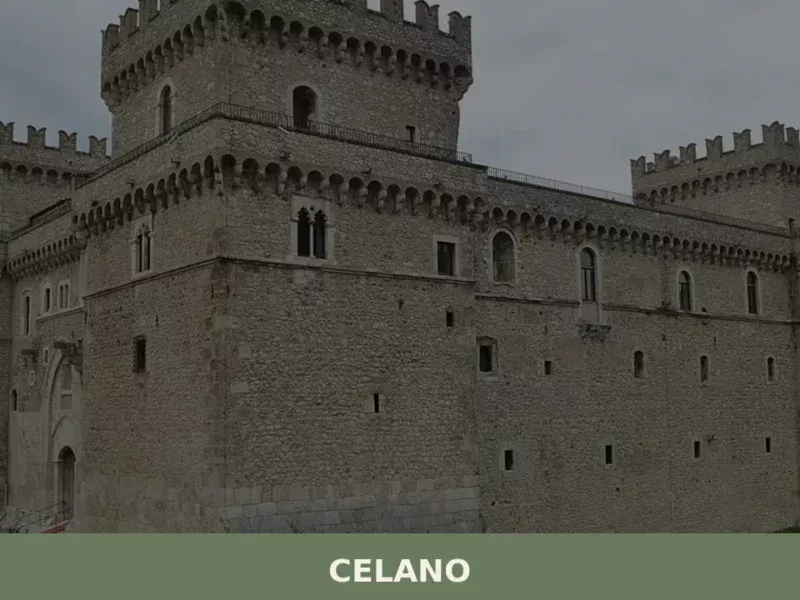
Celano
The Castello Piccolomini in Celano, with its four corner towers and curtain wall enclosing a perimeter of over one hundred metres, commands the Fucino plain from an altitude of 840 metres. Anyone wondering what to see in Celano will find an unequivocal starting point here: a fortress that has endured six centuries of history, earthquakes […]
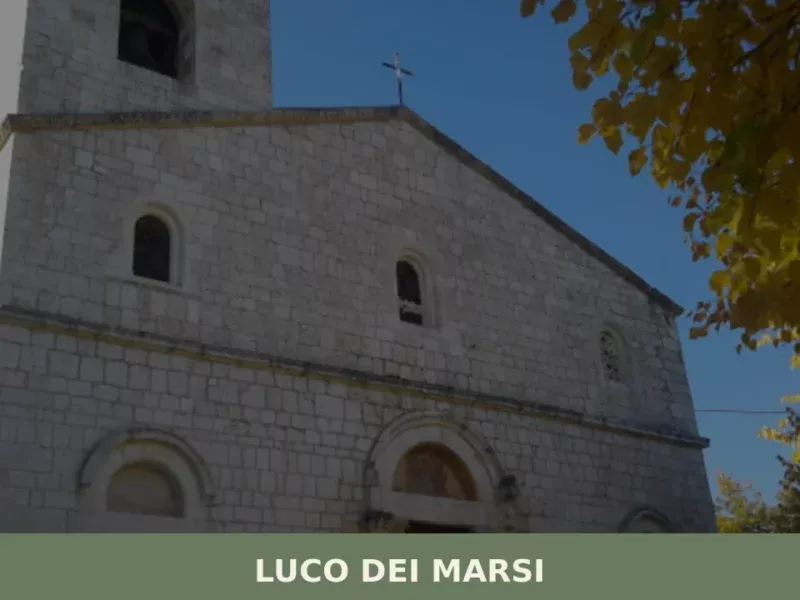
Luco dei Marsi
At 680 metres above sea level, on the eastern edge of what until 1875 was the surface of Lake Fucino — the largest lake in peninsular Italy, drained by Prince Alessandro Torlonia — stands Luco dei Marsi, a municipality of 5,857 inhabitants in the province of L’Aquila. The plain that today stretches as far as […]




📝 Incorrect information or updates?
Help us keep the Bomba page accurate and up to date.