A guide to Cansano in Abruzzo — its Roman archaeological site of Ocriticum, medieval stone centre, Majella trails, and pastoral food traditions at 835 metres.
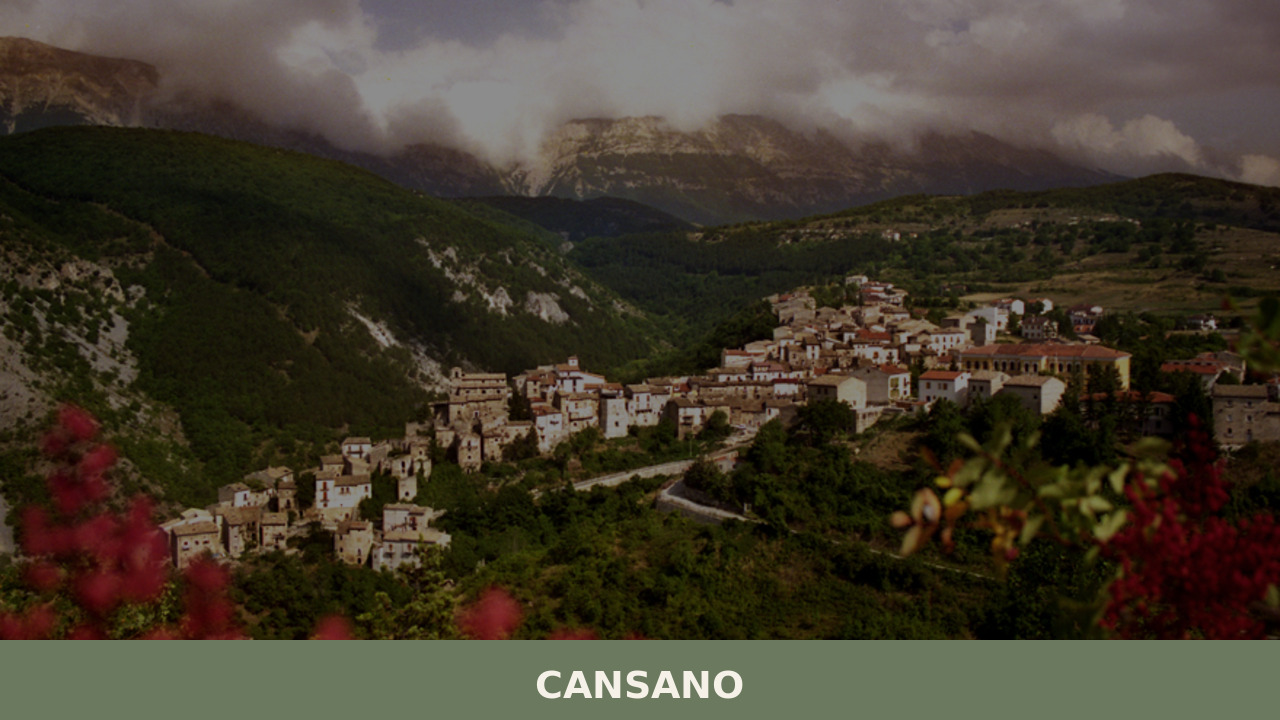
Morning light strikes the eastern face of the Majella massif and slides down into a valley where 218 people still keep time by church bells and the turning of seasons. At 835 metres above sea level, Cansano sits on a limestone shelf in the province of L’Aquila, a village whose roots reach back to a pre-Roman settlement buried just outside its walls. Knowing what to see in Cansano means looking past its modest size and into layers of history — Italic temples, medieval stone, and the quiet persistence of a community that has outlasted empires.
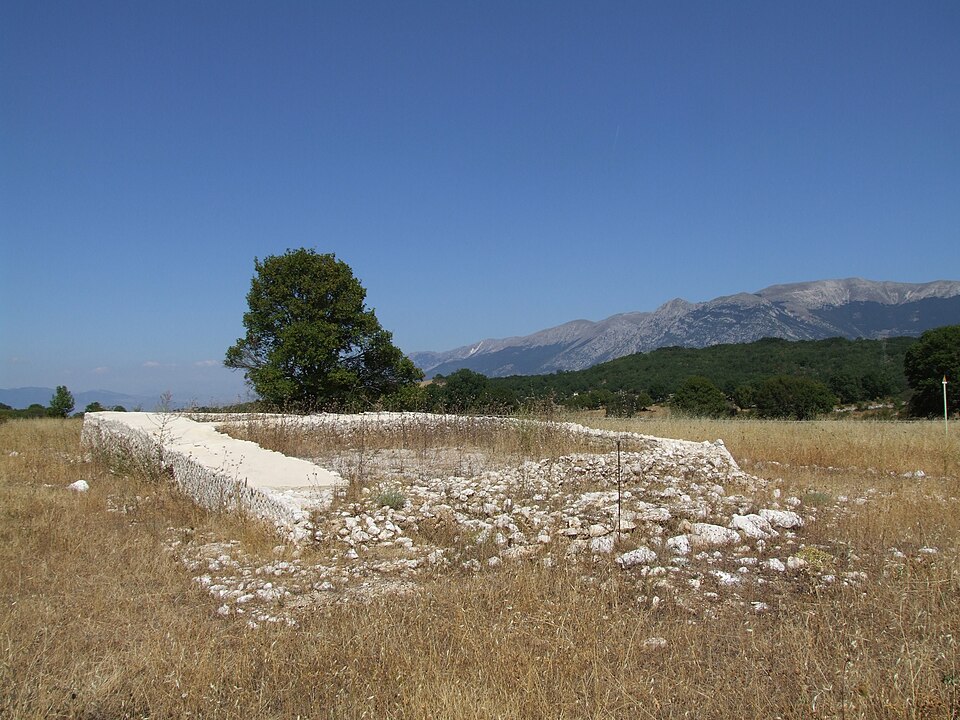
The earliest chapter of Cansano’s story is written not in the village itself but in the archaeological site of Ocriticum, a Peligni settlement and later a Roman sacred area located in the valley below. The Peligni were an Italic people who controlled these mountain corridors long before Rome absorbed them during the Social War in the first century BCE. Excavations at Ocriticum have uncovered temple foundations, votive deposits, and evidence of a religious complex dedicated to deities including Jupiter and Hercules — a site of pilgrimage for centuries in the ancient world.
The medieval village that became Cansano grew during the period of incastellamento, when dispersed populations gathered behind walls and around fortified towers for protection. The name itself likely derives from a local landowner or a Latin personal name, though its precise etymology remains debated among scholars. By the high Middle Ages, Cansano was a minor feudal holding, passing through the hands of various baronial families who administered the surrounding territory under the Kingdom of Naples. The village’s layout — tight alleys, stacked stone houses, and a central church — follows the typical pattern of Abruzzese hilltowns designed for defence and shared water sources.
Emigration hollowed out Cansano across the twentieth century, particularly in the decades following the Second World War, when thousands left Abruzzo’s mountain communities for North America, Australia, and the industrial cities of northern Italy. The village’s population, once numbering in the thousands, contracted to its present figure. Yet this depopulation preserved Cansano’s physical fabric — there was little incentive to demolish and rebuild. What stands today is substantially the village as it existed a century ago, a condition that now draws archaeologists, hikers, and those seeking a landscape unaltered by mass tourism.
The most significant reason to visit Cansano lies just outside the village. Ocriticum is a Peligni and Roman religious complex where temple foundations, a paved road, and votive objects have been unearthed across several excavation campaigns. The site sits in an open field with unobstructed views toward the Majella, and interpretive panels guide visitors through what was once a regional pilgrimage centre active from the fourth century BCE through the imperial period.
Standing at the heart of the old village, the Church of San Salvatore is a modest structure with a stone façade and a single nave typical of rural Abruzzese churches. Inside, the walls hold remnants of older construction phases, and a wooden ceiling frames the altar space. The church functioned as the spiritual and civic centre of Cansano’s medieval community, and its bell tower remains the tallest structure in the village.
Cansano’s centro storico is a compact network of narrow lanes, arched passageways, and houses built from local limestone. External staircases lead to upper floors, and doorways carry carved dates from the seventeenth and eighteenth centuries. Walking through these streets is an exercise in reading the material culture of a mountain community — every wall thickness, window placement, and shared courtyard reflects decisions made against cold winters and limited resources.
The old Cansano railway station sits along the now-disused Sulmona–Carpinone line, a narrow-gauge route that once connected the isolated mountain communities of central-southern Abruzzo to the broader rail network. The station building, still standing, is a relic of Italy’s post-unification infrastructure projects. Occasionally, heritage rail associations run special trains along restored sections of the line, offering a slow passage through scenery that roads cannot replicate.
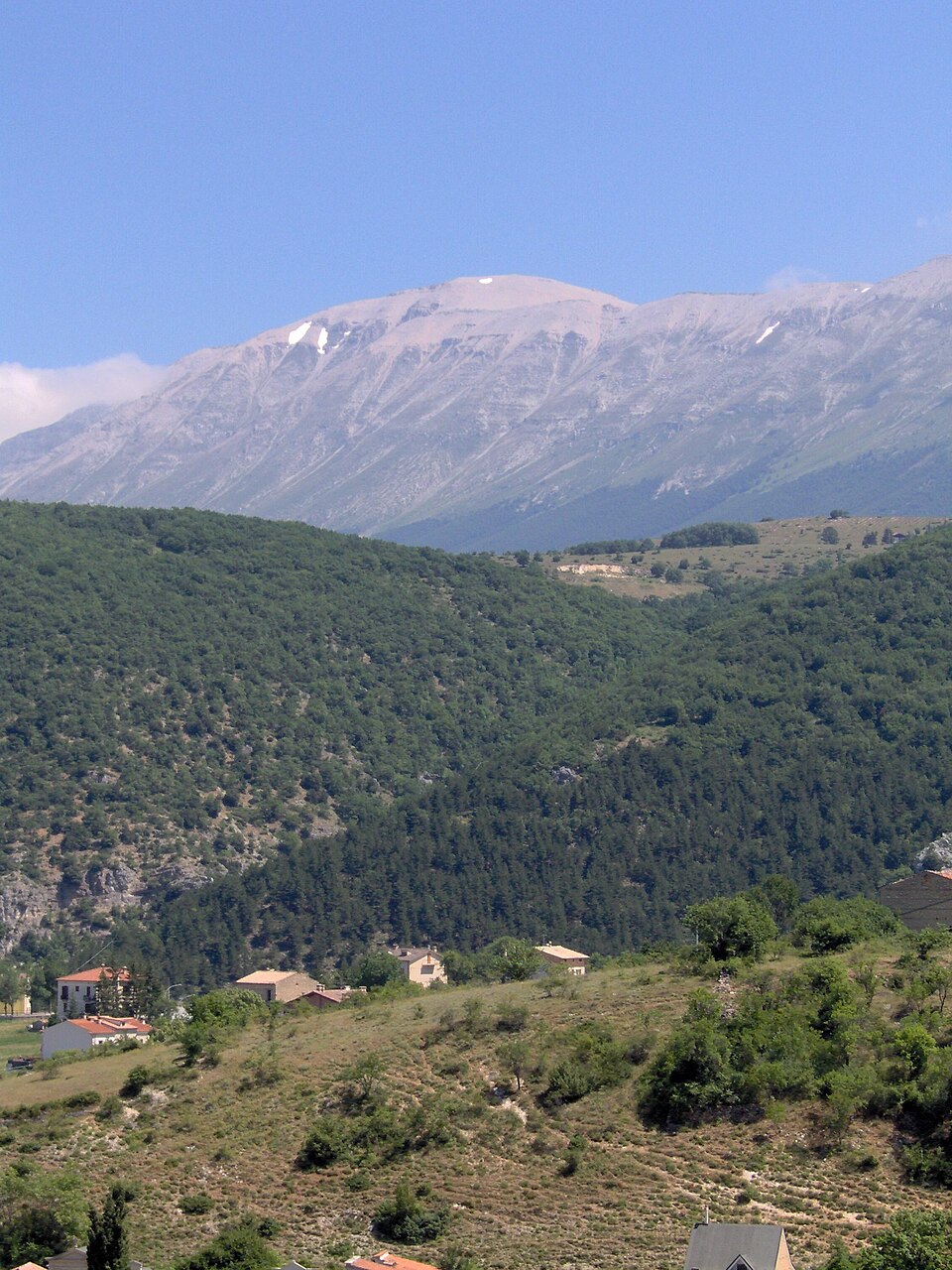
From Cansano, marked trails ascend toward the slopes of the Majella massif, the second-highest range in the Apennines. The terrain transitions from cultivated fields and pastureland to beech forests and exposed rock. These paths are working routes — historically used by shepherds moving flocks along transhumance corridors — and connect Cansano to a network of high-altitude shelters and hermitages that dot the mountain.
Cansano’s kitchen belongs to the pastoral and agricultural traditions of the Abruzzese interior. Lamb, prepared in various cuts and slow-cooked with herbs gathered from the surrounding slopes, is the principal meat. Arrosticini — small skewers of mutton grilled over a narrow charcoal brazier called a fornacella — are ubiquitous across this part of Abruzzo. Handmade pasta dominates first courses: maccheroni alla chitarra, cut on a frame of wire strings, served with a tomato-based ragù of lamb or pork. Lentils and chickpeas, cultivated on the high plains, appear in soups alongside foraged greens. Pecorino cheese, aged in various stages from soft to hard, is produced from the milk of sheep still grazed on nearby pastures.
In a village of this size, dining options are limited and often informal — a trattoria, an agriturismo in the surrounding countryside, or a community feast tied to a religious or seasonal celebration. Sulmona, the nearest town of significant size, offers a wider range of restaurants and is also the centre of confetti production — sugar-coated almonds crafted into elaborate shapes, a tradition documented since the fifteenth century. Visitors to Cansano should expect honest, ingredient-driven food rather than refined gastronomy: the flavour is in the altitude, the air-dried meats, and the saffron that grows on the nearby Navelli plateau.
Late spring — May through mid-June — brings wildflowers to the Majella’s lower slopes and comfortable daytime temperatures around 18–22°C, ideal for walking the trails that radiate from the village. Summer is warm but rarely oppressive at 835 metres; August draws back some of the diaspora for the feast of the patron saint, when the village temporarily doubles in population and the piazza fills with outdoor tables, music, and the smoke of grilling meat. Autumn turns the beech forests above Cansano into bands of copper and amber, and the harvest period brings fresh lentils and new-season olive oil to the table.
Winter is quiet, cold, and often snow-covered. The village can feel deserted midweek, though the surrounding landscape — white slopes, sharp light, the Majella’s summit ridge visible against a hard blue sky — has a stark clarity that rewards photographers and anyone seeking solitude. Practical consideration: services are minimal year-round, so visitors should arrange accommodation in advance, carry provisions, and be prepared for narrow mountain roads that may require chains or snow tyres between November and March.
Cansano is reached most practically by car. From Rome, take the A25 motorway east toward Pescara, exit at Pratola Peligna/Sulmona, and follow the SP62 south toward the village — a total journey of approximately 170 kilometres, taking around two hours. From Pescara and the Adriatic coast, the A25 runs west to the same exit; the drive is roughly 100 kilometres and ninety minutes. L’Aquila, the provincial capital, lies about 80 kilometres to the northwest via the A25.
The nearest active railway station is at Sulmona, a junction on the Rome–Pescara line served by Trenitalia regional services. From Sulmona, Cansano is roughly 15 kilometres by road, reachable by local bus (services are infrequent; check schedules with TUA Abruzzo) or by taxi. The nearest airports are Pescara (Abruzzo Airport), approximately 100 kilometres east, and Rome Fiumicino, approximately 210 kilometres west. A rental car is strongly recommended for exploring Cansano and the surrounding territory independently.
The mountain territory around Cansano connects to a constellation of small communities, each with its own character and history. To the south, in the Sagittario gorge, Anversa degli Abruzzi clings to the rim of a limestone canyon where peregrine falcons nest on the cliff faces. Its medieval core, compact and vertical, overlooks a protected nature reserve and has drawn writers and painters since the nineteenth century — a fitting pairing with Cansano for anyone tracing the Peligni’s ancient territory.
Further north, toward the Gran Sasso massif, Barete occupies a different register: a village on the high plain of L’Aquila’s hinterland, where the landscape opens into wide pastures beneath Italy’s highest Apennine peak. Together, these villages sketch an arc through Abruzzo’s interior — from the archaeological depths of Ocriticum to the vertical drama of the Sagittario, to the open horizons beneath the Gran Sasso. Each rewards the traveller who moves slowly and looks closely, which is, in the end, the only way to understand this part of Italy.
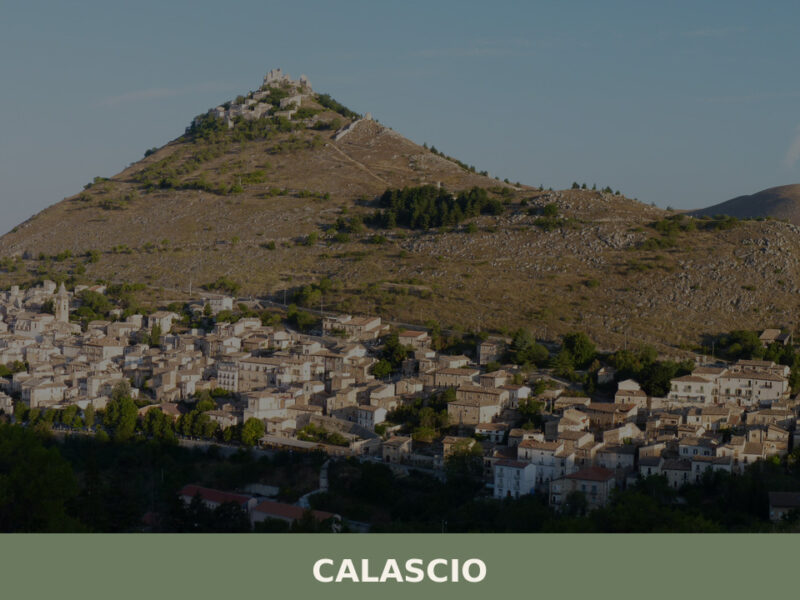
Morning light catches the limestone walls of Rocca Calascio before it reaches the village below, turning the fortress a pale gold against the dark mass of the Gran Sasso. At 1,210 metres above sea level, the air is thin and sharp, carrying the sound of wind through empty doorways. Only 127 people live here year-round, […]
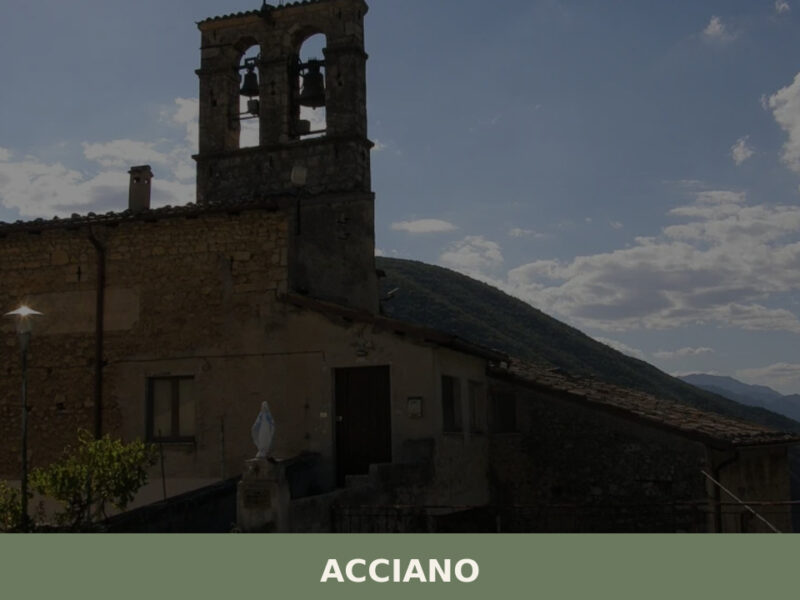
Morning light falls across stone walls the colour of dried wheat, and the only sound is water — a fountain somewhere below the main road, feeding a trough that has served this valley for centuries. Acciano sits in the Aterno Valley south of L’Aquila, a commune of just 339 inhabitants spread across a handful of […]
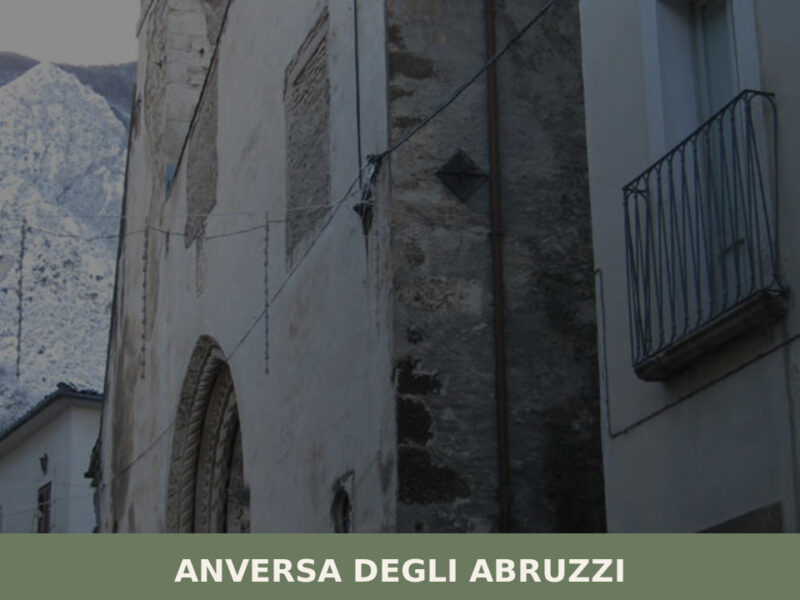
Morning light strikes the limestone walls of the old quarter at an angle that turns them the colour of raw honey. Below, the Sagittario Gorge drops away — a vertical wound in the rock that swallows sound. The air carries a faint mineral chill even in July. With only 368 residents, Anversa degli Abruzzi holds […]
📝 Incorrect information or updates?
Help us keep the Cansano page accurate and up to date.


