


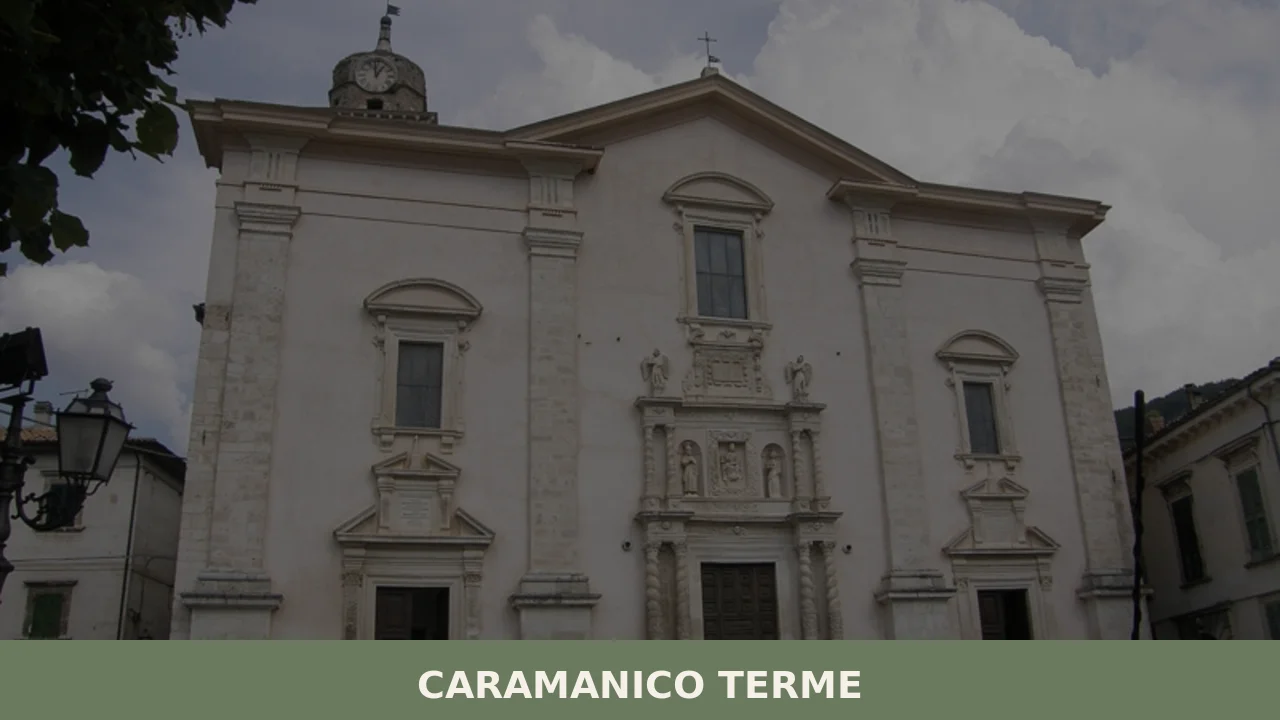
Caramanico Terme
The sulphurous waters of Caramanico have been documented since the 16th century, when the earliest medical treatises recorded their therapeutic properties. Today the village has 1,779 inhabitants and sits at 600 metres above sea level in the Orfento valley, a canyon carved into the eastern side of the Majella massif, in the province of Pescara. […]
Discover Caramanico Terme
The sulphurous waters of Caramanico have been documented since the 16th century, when the earliest medical treatises recorded their therapeutic properties. Today the village has 1,779 inhabitants and sits at 600 metres above sea level in the Orfento valley, a canyon carved into the eastern side of the Majella massif, in the province of Pescara. Asking what to see in Caramanico Terme means exploring a territory where geology has shaped every aspect of local life: from the sulphurous springs that feed the spa facilities, to the white limestone used to build the medieval churches of the old town.
History and origins of Caramanico Terme
The first document mentioning Caramanico dates to 1059, in a deed concerning the holdings of the Abbey of San Clemente a Casauria. The name may derive from the Latin “cara amnis” — dear river — referring to the Orfento watercourse that crosses the territory, although this etymology remains a matter of debate among scholars. In the 12th century the village was a Norman possession, incorporated into the feudal system of the Kingdom of Sicily. It subsequently passed to the D’Aquino family, then the Caldora, and finally the D’Avalos, who held it until the abolition of feudalism in 1806.
The growth of the settlement followed two main directions: a religious one, with the founding of churches and convents that still define the urban layout today, and one linked to the exploitation of natural resources. In the 18th century the sulphurous springs La Salute and Pisciarello began attracting visitors from across the Kingdom of Naples. In 1836 Ferdinand II of Bourbon funded the construction of the first purpose-built spa facility, transforming Caramanico from an agricultural and pastoral village into a centre for therapeutic treatments. The designation “Terme” was officially added to the municipality’s name in 1960.
During the Second World War, the area’s proximity to the Gustav Line made it a theatre of military operations. The town sustained damage, but the medieval structure of the old town largely survived, preserving its original layout with narrow streets arranged along the ridge.
What to see in Caramanico Terme: five main attractions
Church of Santa Maria Maggiore
Built between the 12th and 13th centuries, it retains a Romanesque-Gothic portal with a carved lunette depicting the Madonna and Child. The three-nave interior houses a 16th-century polyptych attributed to the school of Andrea De Litio. The limestone façade, built with stone from the Majella, shows architectural layers that document interventions from the Norman period through to the Baroque.
Orfento Valley Nature Reserve
Established in 1971, it was the first nature reserve in Abruzzo. The Orfento river has carved a canyon more than 500 metres deep into the Majella massif. The trails — the most accessible of which starts from the municipal visitor centre — pass through beech forests and areas where golden eagles nest.
Church of San Tommaso Becket
Dedicated to the Archbishop of Canterbury murdered in 1170, this 13th-century church features a portal with an archivolt decorated with vegetal motifs and zoomorphic figures of Burgundian workmanship. The twelve-rayed rose window and the small hanging arches along the right flank make it one of the most accomplished examples of Romanesque architecture in the province of Pescara.
Spa facility and sulphurous springs
The Caramanico baths draw on two main springs: La Salute, whose sulphurous waters are used for respiratory and dermatological conditions, and Pisciarello, with oligomineral waters. The chemical composition — a high concentration of hydrogen sulphide — has been the subject of studies published by the University of Chieti. The facility operates seasonally, generally from May to November.
“Paolo Barrasso” Nature Museum
Located in the old town, the museum is dedicated to the fauna and flora of the Majella National Park, of which Caramanico is one of the main access points. The rooms display taxidermied specimens of the Apennine wolf, Marsican brown bear and Abruzzo chamois, as well as a geological section on the limestone formations of the valley.
Local cuisine and regional products
Caramanico’s gastronomic tradition is that of the Pescara mountains, based on cereals, legumes and sheep meat. The dishes most deeply rooted in the local calendar are sagne e fagioli — irregular fresh pasta cooked with borlotti beans and pork rind — and arrosticini, skewers of sheep meat cut into small cubes, prepared here with animals raised on the Majella’s pastures. During winter, rintrocilo is made — a long pasta shaped with a knitting needle, dressed with a mutton ragù.
The area produces extra virgin olive oil from the Dritta and Intosso cultivars, olive varieties typical of the eastern slopes of the Majella. In autumn, black truffles — primarily Tuber mesentericum — are gathered in the woods of the Orfento valley. The cheeses belong to the pastoral tradition: raw-milk pecorino aged in caves and fresh ricotta. Restaurants in the old town and surrounding hamlets offer menus tied to seasonality, with a direct relationship between the kitchen and the availability of local ingredients.
When to visit Caramanico Terme: the best time of year
The spa season, from May to November, coincides with the period of greatest trail accessibility in the Orfento Valley, making these months the most suitable for those who want to combine hiking and spa treatments. In summer, temperatures at 600 metres remain moderate — July averages range between 18 and 28 degrees — and the village serves as a base for ascents of the Majella. The patron feast of Maria SS.ma Assunta, on 15 August, includes a procession through the streets of the centre and fireworks over the valley.
Autumn brings truffle season and a raking light that sharply defines the limestone walls of the canyon. Winter is the quietest period: some accommodation facilities close, but snowfall transforms the landscape, and those who snowshoe will find CAI-marked routes through the beech forests. Spring, between April and May, is the time of flowering in the reserve, with wild orchids recorded in over thirty species.
How to reach Caramanico Terme
By car, from the A25 Rome–Pescara motorway take the Scafa-Alanno exit and continue along the SP 487 for approximately 20 kilometres heading south. From Pescara the distance is 45 kilometres, covered in just under an hour. From Rome, allow around two and a half hours via the A25. From Naples the most direct route takes the A1 to Caianello, then the A25 to Scafa, for a total of approximately three hours.
There is no railway station in Caramanico: the nearest are Scafa and Alanno, both on the Pescara–Rome line operated by Trenitalia, from where you can continue by bus with the TUA Abruzzo company. The closest airport is Pescara (Abruzzo Airport), about 50 kilometres away. Bus connections from the coast are limited, especially outside the main season: having your own car remains the most practical solution for getting around the area.
What to see in Caramanico Terme and in the nearby villages of the Majella
The eastern slopes of the Majella are home to a network of settlements that share with Caramanico the same geological and pastoral origins. To the south-west, deep in the mountain, Cansano lies at around 850 metres above sea level, on the Cinquemiglia plateau. Its territory preserves the remains of a pre-Roman Italic settlement and serves as an access point to the southern side of the park, with an open, windswept landscape that contrasts with the narrow gorges of the Orfento valley.
To the north-east, towards the hilly belt that slopes down to the coast, Brittoli occupies a hinge position between the mountains and the Vestine hills, less than thirty kilometres from Caramanico. The village, smaller and more secluded than those on the main circuits, retains a compact urban layout and a mother church with Romanesque elements. Together, these centres form an itinerary that crosses three different altitude bands — valley, mountain, hill — within a radius of just a few dozen kilometres, illustrating the geographic density that defines this sector of inland Abruzzo.
In Abruzzo More villages to discover
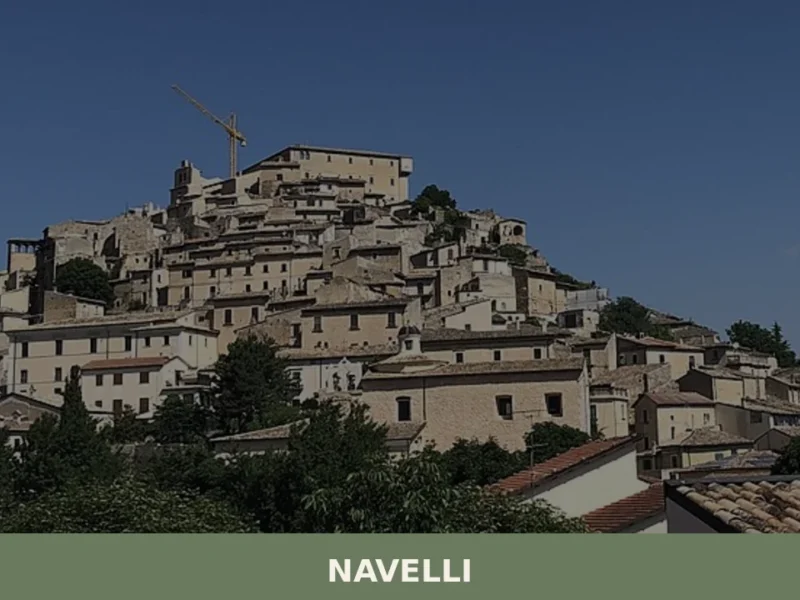
Navelli
Navelli has a current population of 537 and occupies a plateau at 760 metres above sea level on the homonymous highland, in the province of L’Aquila. Saffron cultivation in this area has been documented since at least the 13th century, when the spice became a trade commodity destined for the markets of Milan, Venice and […]
Colledimacine
One hundred and eighty-eight residents in the 2001 census, now down to 158: Colledimacine contracts with the regularity of a slow heartbeat, yet it holds on along the eastern ridge of the Majella massif, at 770 metres above sea level, in the province of Chieti. Anyone wondering what to see in Colledimacine should be prepared […]
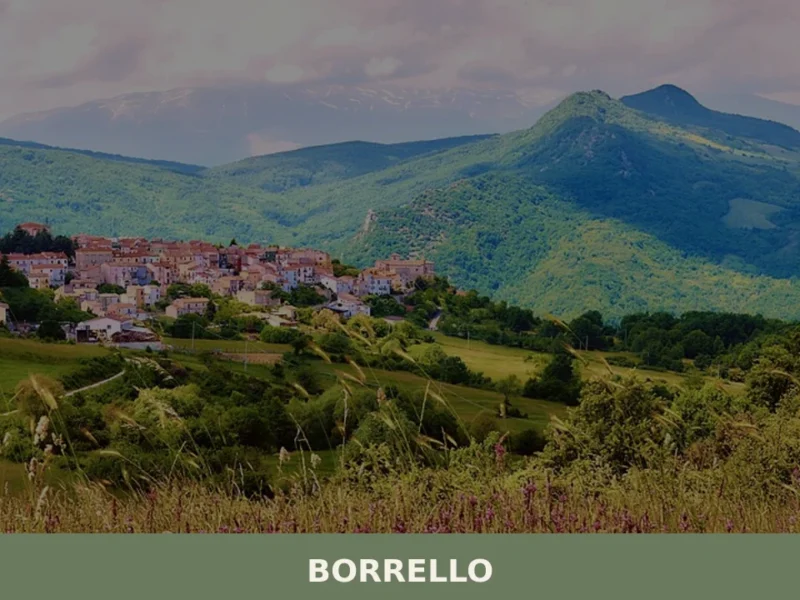
Borrello
At 804 metres above sea level, on the eastern slope of the Majella massif, 338 inhabitants watch over a settlement that in the eighteenth century counted more than two thousand residents. Anyone looking into what to see in Borrello will find a territory shaped more by geology than by human hands: the Cascate del Verde, […]
📝 Incorrect information or updates?
Help us keep the Caramanico Terme page accurate and up to date.