


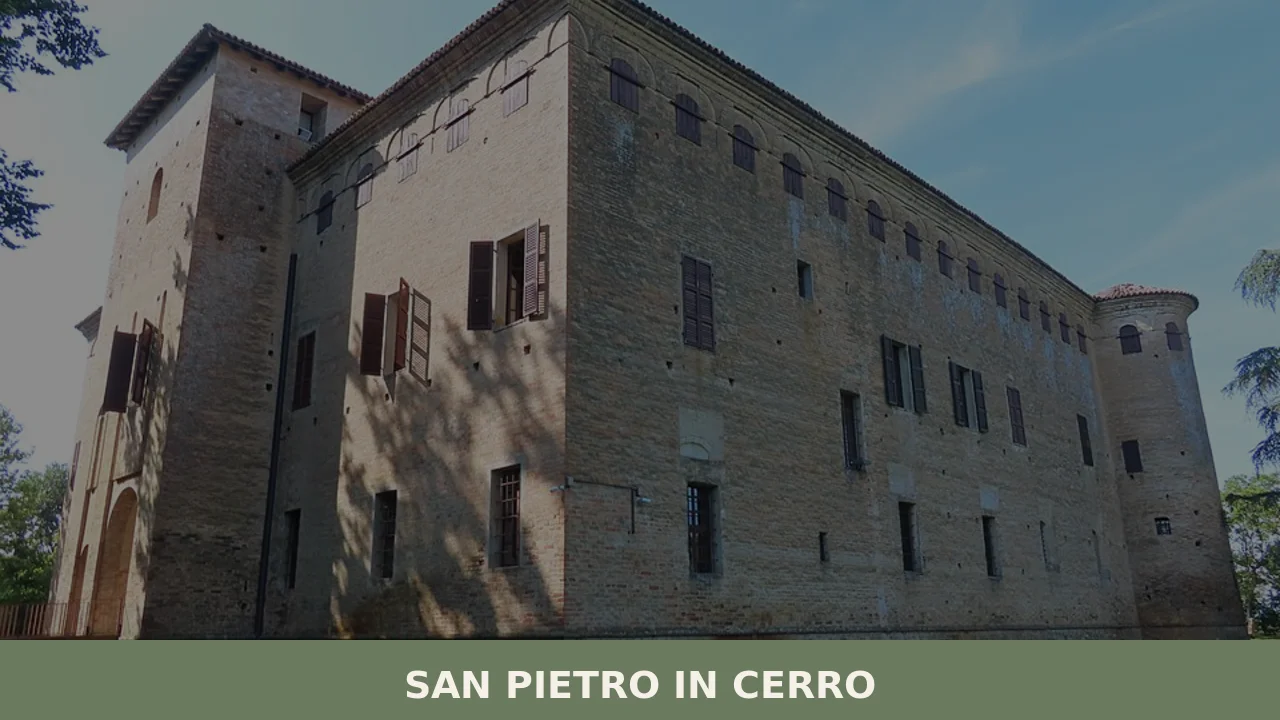
San Pietro in Cerro
With its 769 inhabitants and an elevation of just 44 metres above sea level, San Pietro in Cerro is one of the smallest municipalities in the province of Piacenza, spread across the alluvial plain between the Arda torrent and the Po river. The fifteenth-century castle of the Barattieri counts, still standing today with its square-plan […]
Discover San Pietro in Cerro
With its 769 inhabitants and an elevation of just 44 metres above sea level, San Pietro in Cerro is one of the smallest municipalities in the province of Piacenza, spread across the alluvial plain between the Arda torrent and the Po river. The fifteenth-century castle of the Barattieri counts, still standing today with its square-plan layout, serves as the visual and historical focal point of the entire settlement. Understanding what to see in San Pietro in Cerro means crossing a territory where the stately architecture of the Po Valley meets the surrounding agricultural landscape, defined by fields of wheat and tomatoes.
History and origins of San Pietro in Cerro
The place name “Cerro” most likely derives from Quercus cerris, the species of oak once widespread in the lowland areas of the Arda Valley. The first documented mention of the territory dates back to the medieval period, when the village fell within the orbit of the Piacenza feudal system. Control of the area passed through several noble families, until the Barattieri settled here and, from the fifteenth century onwards, built the castle that still dominates the town centre. The family retained possession of the fief for several centuries, exerting a direct influence on the agricultural and social organisation of the community.
During the Napoleonic period, San Pietro in Cerro was administratively reorganised, as were many small towns across Emilia. With the Unification of Italy, the municipality took on the territorial configuration it still maintains today. The local economy remained tied to sharecropping and cereal farming until the post-World War II years, when the exodus towards urban centres gradually reduced the resident population. Today the Municipality of San Pietro in Cerro retains a predominantly rural character, with a compact historic centre gathered around the main square.
What to see in San Pietro in Cerro: 5 main attractions
1. Castello Barattieri and MIM – Italian Mining Museum
The castle, built in the fifteenth century with a square plan and an entrance tower, houses the MIM – Museo Italiano della Miniera (Italian Mining Museum), a collection documenting the history of mining in Italy through original equipment, minerals, photographs and environmental reconstructions. The interior rooms also preserve ceilings with painted decorations from later periods.
2. Parish Church of Saints Peter and Paul
The main church of the village, dedicated to Saints Peter and Paul, has a façade that was reworked during the nineteenth century. Inside there are side altars with works from the Emilian school and a historic organ. The single nave leads to a raised presbytery, following the typical layout of parish churches in the lower Piacenza plain.
3. MIG – International Graphics Museum
Also within the Castello Barattieri complex is the MIG, which holds graphic works by Italian and international artists from the twentieth and twenty-first centuries. The collection includes engravings, lithographs and serigraphs, with a programme of temporary exhibitions that is renewed periodically. A lesser-known institution but one also documented by the Touring Club Italiano.
4. The agricultural landscape of the Arda Valley
The municipal territory extends across flat land irrigated by the Arda torrent, with crops of soft wheat, processing tomatoes and sugar beet. Rows of poplars along the drainage canals mark out the geometry of the fields. Cycling along the municipal roads allows you to observe up close the typical land structure of the Piacenza stretch of the Po Valley plain.
5. The rural courtyards of the historic centre
San Pietro in Cerro preserves several enclosed-plan agricultural courtyards, residential and productive structures dating from the eighteenth and nineteenth centuries. The brick entrance gates, the raised haylofts and the ground-floor stables document the settlement model of Emilian sharecropping. Some of these courtyards are visible along Via Roma and the streets adjacent to the central square.
Local cuisine and regional products
The cuisine of San Pietro in Cerro follows the repertoire of the lower Piacenza plain: anolini in meat broth — small ravioli filled with braised beef and Grana Padano — pisarei e fasö (small bread dumplings with beans), and tortelli con la coda stuffed with ricotta and spinach. The PDO cured meats of the Piacenza area — coppa, salame and pancetta — represent the most recognisable local production, protected by the Consorzio dei salumi piacentini DOP. Gutturnio, a DOC red wine made from Barbera and Bonarda grapes, is the key wine reference of the area.
Farms in the surrounding area also produce tomato preserves and flours from local grains. Dining options within the municipality are limited — just a few trattorias and agriturismos — but in the neighbouring towns along the Arda Valley there are restaurants with seasonal menus rooted in the farming tradition. The weekly market and the autumn fairs offer opportunities to buy directly from local producers.
When to visit San Pietro in Cerro: the best time
The climate is continental, with hot and humid summers (temperatures regularly exceeding 33 °C in July) and cold winters, often marked by thick fog between November and February. Spring — from mid-April to June — is the most favourable period for visiting the village and the surrounding territory: temperatures are moderate, the fields are in full growth and the light is good until evening. Autumn, from September to mid-October, brings more defined colours and coincides with the season of food festivals and agricultural fairs in the area.
For those planning to visit the museums housed in the castle, it is advisable to check opening hours on the Municipality’s website, as the facilities do not follow a fixed schedule and in winter may only be accessible by appointment. FAI open days and provincial cultural events provide additional visiting opportunities.
How to reach San Pietro in Cerro
San Pietro in Cerro can be reached from the A1 Milan–Bologna motorway, Fiorenzuola d’Arda exit, continuing for approximately 8 km northward along the SP6. From Piacenza the distance is around 30 km to the south-east. The nearest railway station is Fiorenzuola d’Arda, on the Milan–Bologna line, from where you can continue by car or local bus. The reference airports are Milan Linate (130 km), Parma (50 km) and Bologna (150 km). The flat terrain makes the village easily reachable by bicycle as well, via the Arda Valley cycle route.
Other villages to discover in Emilia-Romagna
Those visiting San Pietro in Cerro who wish to explore the opposite side of the Piacenza province — the Apennine side — can follow the Arda Valley up to Morfasso, a mountain municipality at over 600 metres above sea level. The contrast is striking: from the cereal-covered expanses of the plain you move to wooded slopes and highland pastures, with Monte Moria as the geographical reference point. Morfasso is a starting point for hikes towards the Stirone and Piacenziano Park.
Further west, in the narrow Trebbia Valley, Cerignale is one of the least populated municipalities in Italy, with just a few dozen permanent residents. The landscape is that of the Ligurian-Emilian mountains: chestnut forests, paths connecting scattered hamlet clusters, and streams with clear waters. Together, these three villages — San Pietro in Cerro, Morfasso, Cerignale — illustrate the geographical variety of the province of Piacenza, from the zero elevation of the Po all the way up to the Apennine ridge.
In Emilia-Romagna More villages to discover
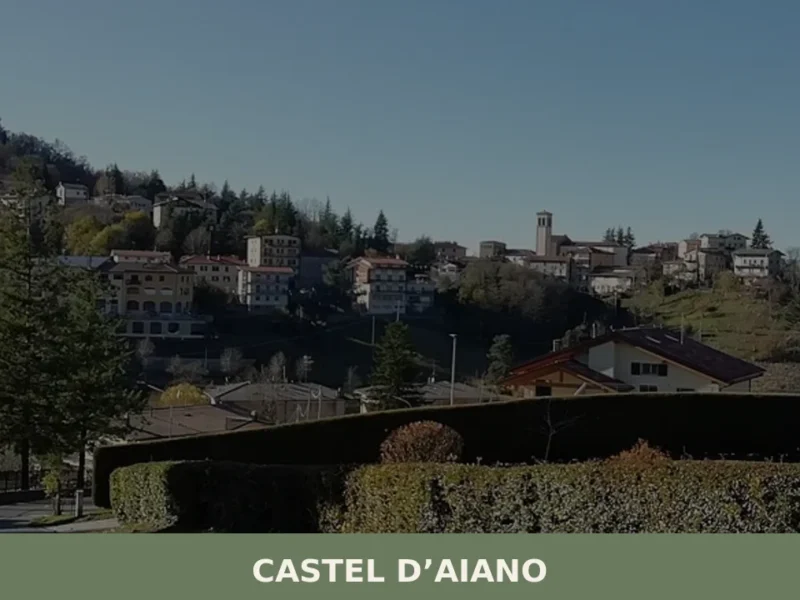
Castel d’Aiano
In 1944 the Gothic Line cut through these mountains, and Castel d’Aiano found itself at the centre of the clash between Allied forces and German troops: the hamlets of Villa d’Aiano, Sassomolare and Rocca di Roffeno still bear the marks of that period. Today the municipality has 1,916 inhabitants spread across a vast, hilly territory […]
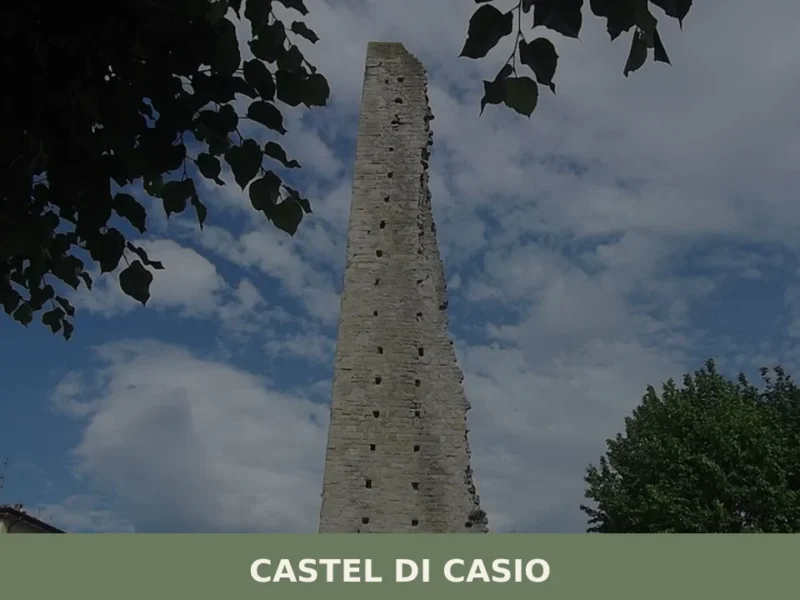
Castel di Casio
In February 1944, during the German retreat along the Gothic Line, the bridges over the Limentra di Treppio torrent were blown up one by one, cutting the territory of Castel di Casio in two. That act of destruction left a lasting mark on the collective memory of a mountain municipality that, as far back as […]
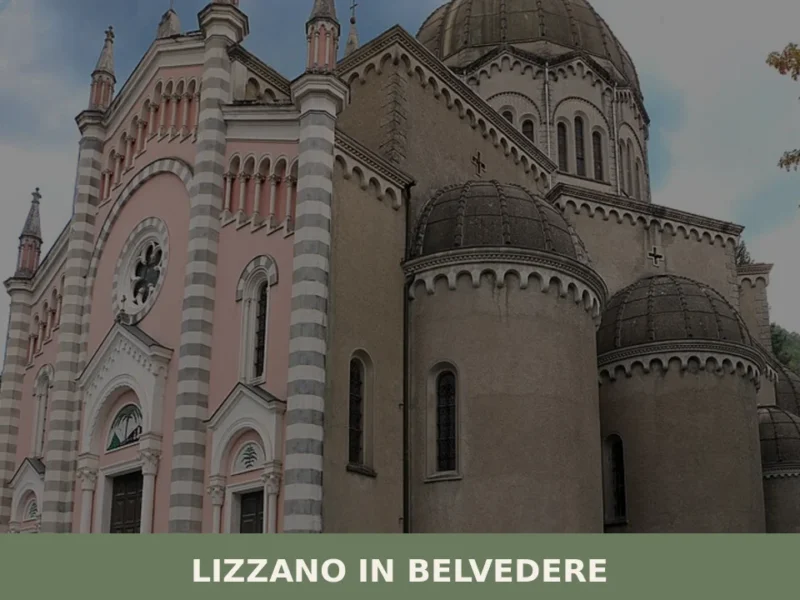
Lizzano in Belvedere
Every year, on 17 August, the procession in honour of Saint Mamante winds its way up the streets of Lizzano in Belvedere to the parish church, following a ritual that has been repeated since at least the 15th century. This municipality of 2,314 inhabitants, situated at 640 metres above sea level on the Bolognese Apennines, […]





📝 Incorrect information or updates?
Help us keep the San Pietro in Cerro page accurate and up to date.