


Abbateggio
With just 359 registered inhabitants, Abbateggio is one of the least populated municipalities in the province of Pescara, situated at 450 metres above sea level on the eastern slope of the Majella. Asking what to see in Abbateggio means preparing for an itinerary that covers sacred architecture built in Majella stone, farro and olive oil […]
Discover Abbateggio
With just 359 registered inhabitants, Abbateggio is one of the least populated municipalities in the province of Pescara, situated at 450 metres above sea level on the eastern slope of the Majella. Asking what to see in Abbateggio means preparing for an itinerary that covers sacred architecture built in Majella stone, farro and olive oil cultivation, and a network of trails connecting the village to the National Park. The settlement stretches along a hillside ridge overlooking the Lavino valley, with a compact historic centre of houses built from local limestone.
History and origins of Abbateggio
The place name “Abbateggio” most likely derives from the Latin abbas, a term indicating the figure of the abbot, suggesting a foundation or affiliation with a monastic institution. The village appears in medieval documents linked to the dependencies of the Abbey of San Clemente a Casauria, a powerful Benedictine centre founded in 871 by Emperor Louis II along the Pescara river. Through that monastic connection, Abbateggio became part of the Abruzzese feudal system that characterised the foothill area of the Majella for several centuries.
During the Middle Ages, the village followed the fortunes of the Pescara county, passing under various feudal lordships. The dedication of the parish church to San Lorenzo, patron saint of the village, reflects a devotion widespread in inland Abruzzo since the early medieval period. The local economy remained tied to transhumant pastoralism and subsistence farming until the twentieth century, when emigration drastically reduced the population — a phenomenon that Abbateggio shares with most of the smaller settlements on the eastern Majella.
The establishment of the Majella National Park in 1991 placed the municipal territory within a protected area of over 74,000 hectares, reshaping the village’s economic focus towards nature tourism and the promotion of local agricultural products.
What to see in Abbateggio: 5 main attractions
1. Church of San Lorenzo Martire
A sacred building dedicated to the village’s patron saint, the church retains a Majella stone structure with a flat-topped façade. The single-nave interior houses a masonry high altar and several devotional statues. Its position, at the highest point of the settlement, provides a direct view over the Lavino valley and the surrounding hills all the way to the Adriatic coastline.
2. Limestone historic centre
The old core of Abbateggio is built entirely from limestone blocks quarried from the Majella, a material that gives the façades a uniform light-grey tone. The houses, many of which have been renovated while preserving the original masonry, line narrow sloping streets with external staircases and connecting arches between buildings — structural elements designed for stability on sloping terrain.
3. Lavino River Waterfalls Trail
A few kilometres from the village centre, the course of the Lavino forms a series of waterfalls and pools with turquoise-coloured water, caused by the high sulphur and mineral content. The pedestrian path running alongside them extends for about 2 kilometres with limited elevation change and is accessible for most of the year. The site falls within the territory of the Majella National Park.
4. Dry-stone corbelled huts (tholos)
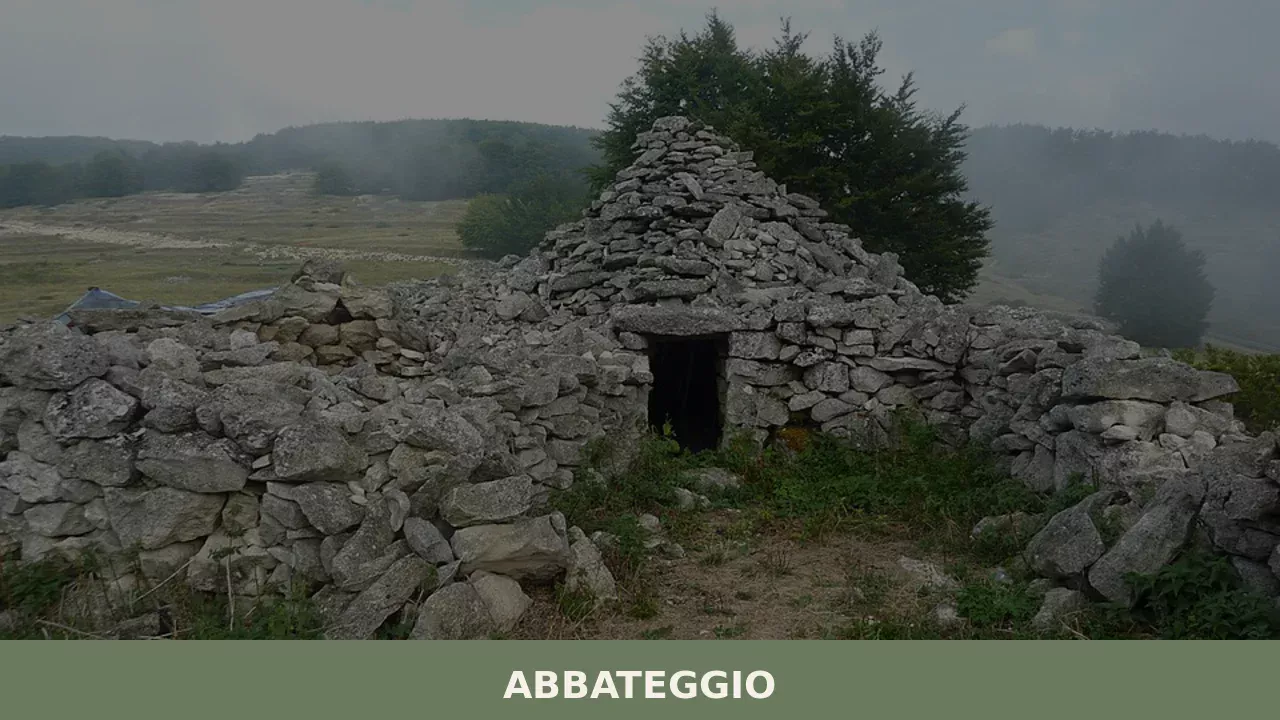
In the countryside around Abbateggio, several tholos structures can be found — rural dry-stone constructions with corbelled roofs used by shepherds and farmers as temporary shelters and tool stores. These structures, documented throughout the Majella foothill area, represent a building technique in use since at least the eighteenth century. Some have been restored and can be reached via marked trails.
5. Trails in the Majella National Park
Several hiking trails depart from the municipal territory, climbing the eastern slope of the Majella. The routes, marked by the CAI (Italian Alpine Club) and the park authority, pass through oak and beech forests, with opportunities to spot red deer, roe deer and, at higher altitudes, the Apennine chamois. Difficulty levels range from easy hiking to demanding, depending on the altitude reached.
Local cuisine and regional produce
The cooking of Abbateggio follows the tradition of the eastern Majella, based on cereals, pulses and sheep meat. Farro, grown in the surrounding hillside fields, is the key ingredient in soups prepared with beans and pork rind. Fresh pasta — particularly sagne and maccheroni alla chitarra — is dressed with lamb ragù or with tomato and chilli sauce. Extra virgin olive oil produced in the Pescara hill belt, protected by the Aprutino Pescarese DOP designation, accompanies the majority of dishes.
Every year in August, the village hosts the Sagra dei Fichi (Fig Festival), dedicated to the local variety grown on south-facing plots. The figs are served fresh, dried and stuffed with almonds — a preparation documented in the farming traditions of the area. The surrounding territory also produces raw-milk pecorino cheeses and sulla and wildflower honeys, linked to beekeeping practised in the park’s clearings.
When to visit Abbateggio: the best time
The hillside location at 450 metres ensures summers that are cooler than on the Adriatic coast, with average temperatures of 25–28 °C in July and August. This makes the summer period well suited to hikes towards the Lavino waterfalls and the park trails. The Fig Festival, usually scheduled for the second half of August, is the village’s main annual event. The feast of San Lorenzo, on 10 August, is the other notable date in the local calendar.
Spring, from April to June, is the period when wildflower blooming on the eastern Majella meadows reaches its peak intensity, and the Lavino waterfalls carry their highest water volume. Autumn brings the colours of the beech forests at higher elevations and the olive harvest in the lower fields. Winter, with temperatures that frequently drop below zero during the night, reduces access to some trails but offers visiting conditions with the village almost entirely free of tourist presence.
How to get to Abbateggio
By car, from the A25 Rome–Pescara motorway, take the Alanno-Scafa exit and continue for about 15 kilometres along the provincial road climbing towards the Majella. From Pescara the distance is 40 kilometres, reachable in approximately 45 minutes. From Rome the drive is around 200 kilometres, just under two and a half hours on the motorway.
The nearest railway station is Scafa, on the Rome–Pescara line, from which you need to continue by private transport or taxi for the final 12 kilometres. Pescara’s Abruzzo Airport is approximately 45 kilometres away. Public transport connections are limited: the regional bus service covers the route with only a few daily runs, making a car the most practical means of reaching the village. Updated information on timetables and services is available on the official website of the Municipality of Abbateggio.
Other villages to discover in Abruzzo
Visitors to Abbateggio who wish to continue exploring inland Abruzzo can head towards the province of L’Aquila, where the landscape changes dramatically. Anversa degli Abruzzi, in the Sagittario valley, rises above the gorges carved by the river into the Scanno plateau — a geological setting entirely different from the clay hills of the eastern Majella. The village preserves the remains of a Norman castle and a multi-level medieval urban layout that follows the profile of the cliff.
Further north, on the L’Aquila side of the Gran Sasso, Cagnano Amiterno offers an example of a mountain settlement linked to the plain of Amiternum, the ancient Sabine and later Roman city whose ruins lie just a few kilometres away. The connection between these villages and Abbateggio runs through itineraries that cross the three great massifs of the Abruzzo Apennines — Majella, Gran Sasso and Sirente-Velino — and document the variations in architecture, economy and food traditions that shift from one valley to the next over distances often shorter than fifty kilometres.
In Abruzzo More villages to discover
Fraine
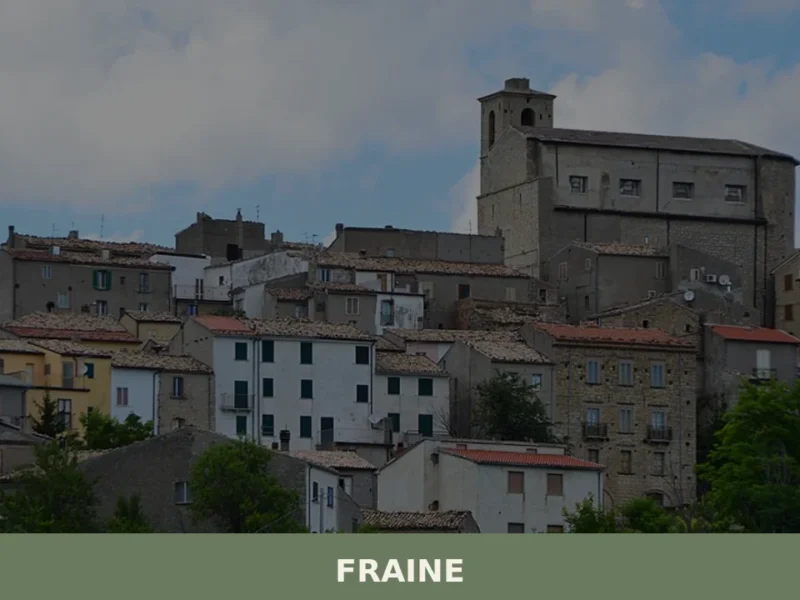
At 751 meters above sea level, in the Chieti area, lies Fraine, a municipality with a population of 261 inhabitants. This village, whose history dates back to the 10th-11th century, serves as an observation point over the Alto Vastese territory. For those wondering what to see in fraine, the town offers a journey through the […]
Corfinio
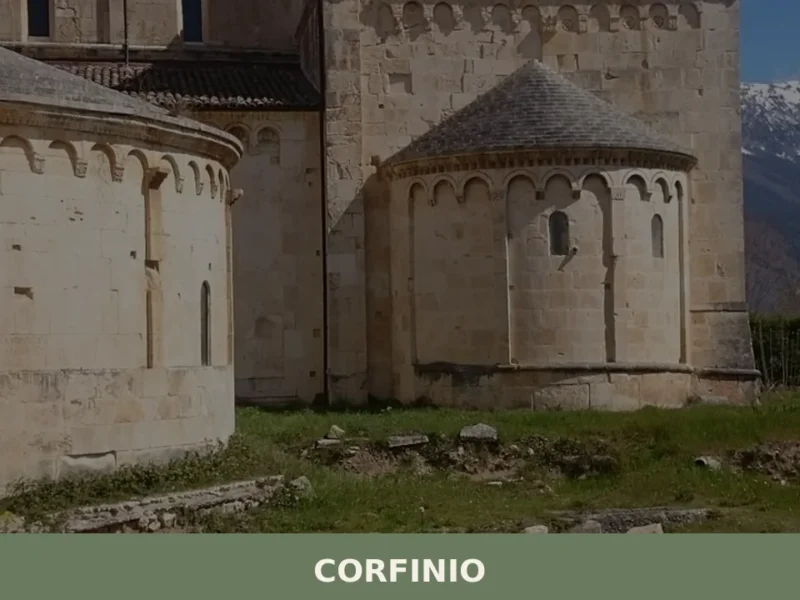
In 91 BC, the Italic peoples chose Corfinium as the capital of the Italic League during the Social War against Rome: for several months, this city in the Peligna Valley was renamed Italica and minted its own coins bearing the image of a bull trampling the Roman she-wolf. Today the village has 1,081 inhabitants, sits […]
Arsita
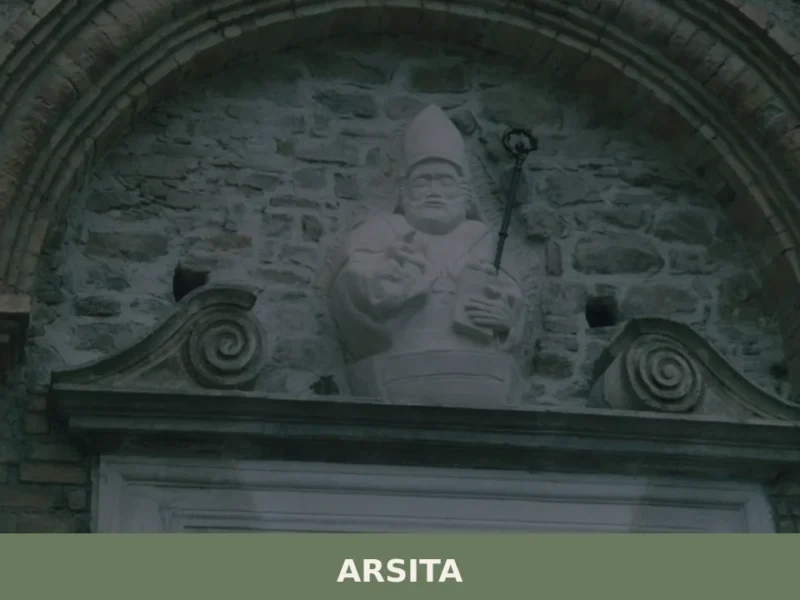
Until 1905, this village was called Bacucco, a name likely derived from the Latin bacuca, which referred to olives that had fallen to the ground — a direct reference to the agricultural character of the area. Situated at 470 metres above sea level on the hills of the Teramo province, Arsita and its 733 inhabitants […]
🧀 Italian traditional products




📝 Incorrect information or updates?
Help us keep the Abbateggio page accurate and up to date.