


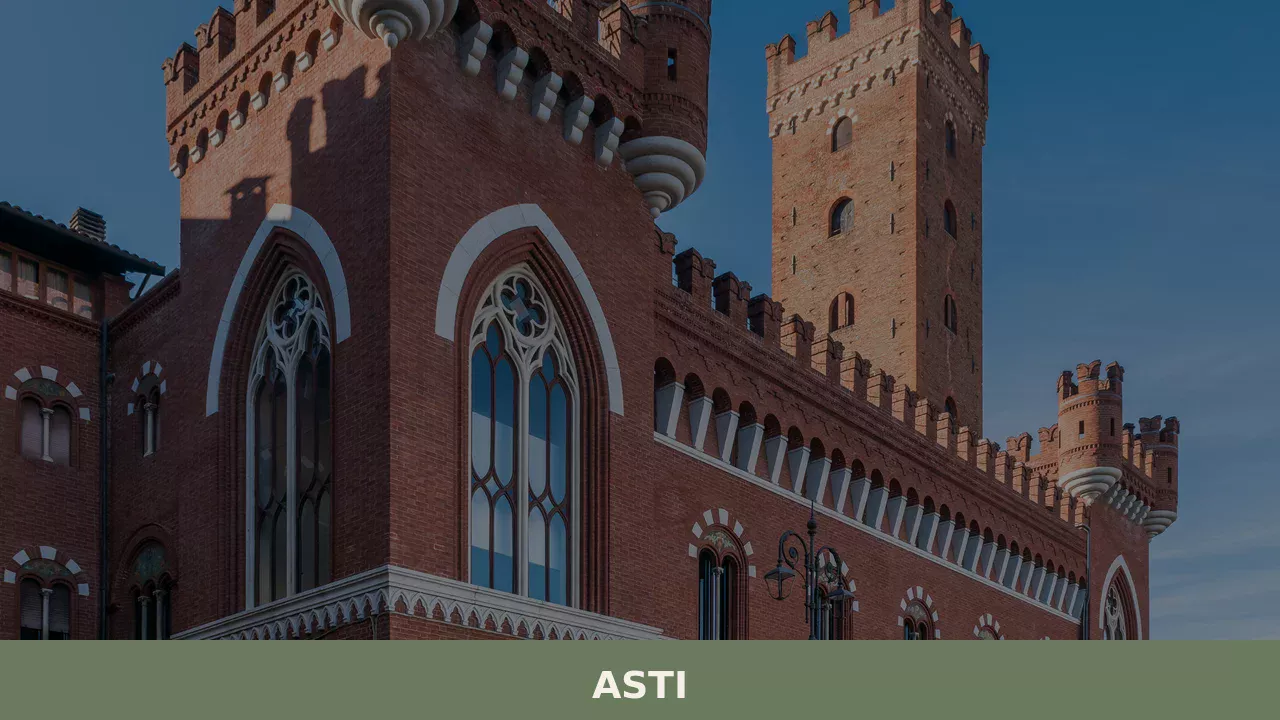
Asti
What to see in Asti: a city of 73,421 residents at 123m. Explore the Gothic Cathedral, Torre Rossa, Palazzo Alfieri and Barbera d’Asti DOCG. Plan your visit now.
Discover Asti
In south-eastern Piedmont, in a territory that was once a crossroads of empires and powers, stands Asti — a city that in the thirteenth century boasted more than a hundred noble towers, a tangible symbol of the economic power and political influence of its aristocratic families.
This architectural density, now reduced but still perceptible in the urban fabric, speaks of a past as the free Republic of Asti, a banking and commercial centre of European significance.
The modern city, with its 73,421 inhabitants and an altitude of 123 metres above sea level, retains traces of that greatness, offering visitors the opportunity to understand what to see in Asti through a journey that moves from Roman times through the Middle Ages and beyond. Its strategic position, at the centre of the Monferrato and a short distance from the Langhe, shaped its history and still defines its character today.
History and Origins of Asti
The origins of Asti stretch back to pre-Roman times, with settlements established by the Ligurian Statielli. The name itself, “Hasta”, of Latin derivation, may refer to a spear or lance, or alternatively to an ancient name for a nearby river or hill. The Roman foundation, which took place around 124 BC, saw it rise as “Hasta Pompeia”, an important castrum and later a colony along the Via Emilia Scauri, benefiting from the fertility of the soil and its strategic position.
The city grew as an agricultural and commercial centre, consolidating its importance within Cisalpine Gaul and leaving behind archaeological evidence — most notably the well-preserved Torre Rossa.
The medieval period represents the peak of Asti’s power.
Following the decline of the Roman Empire and the barbarian invasions, Asti became a Lombard duchy and subsequently a Carolingian county. In the twelfth century it emerged as a Free Municipality, extending its control over a vast territory that included parts of the modern provinces of Cuneo and Alessandria. Its wealth was built on flourishing agriculture and, above all, on a mercantile and banking activity that brought it into economic relations with the principal cities of Europe — from Avignon to Bruges — often anticipating modern financial techniques.
Asti’s ruling families, including the Guttuari, the Solaro and the Roero, accumulated immense fortunes, expressed outwardly through the construction of the celebrated towers.
The centuries that followed saw Asti contend with the expansionist ambitions of regional and international powers. After a period of autonomy and conflict with the Marquisates of Monferrato and Saluzzo, the city passed under the control of the Visconti of Milan, the House of Orléans and the House of Savoy, alternating periods of foreign domination with phases of relative independence.
In 1797, with the arrival of Napoleonic troops, Asti was proclaimed the capital of a Republic, but its brief existence was soon absorbed into the Kingdom of Sardinia, before eventually becoming part of the Kingdom of Italy. Despite these upheavals, the city maintained a strong cultural identity, tied to its glorious past and to figures such as the playwright Vittorio Alfieri, born here in 1749.
What to See in Asti: 5 Key Attractions
1. Cathedral of Santa Maria Assunta
The Cathedral of Santa Maria Assunta, located in the heart of Asti’s historic centre, is one of the most significant examples of Gothic architecture in Piedmont and a central reference point for anyone exploring what to see in Asti.
Its construction, begun in the thirteenth century and continuing for over a hundred years, features a terracotta façade enriched by three richly decorated portals and a central rose window. The interior, with three naves, is spacious and light-filled, marked by cross vaulting and a cycle of Baroque frescoes adorning the side chapels. Of particular note is the Romanesque bell tower, dating to the eleventh century, which rises impressively alongside the later Gothic structure.
2. Torre Rossa of Asti
The Torre Rossa, situated at the western edge of the historic centre, is one of the oldest and most striking survivors of Roman presence in Asti. Built during the Augustan period (first century BC), it was originally part of a gateway in the walls of the Roman city of Hasta Pompeia. The brick structure features a semicircular section on the exterior and a rectangular one on the interior, and still stands at its original height of approximately 24 metres. Over the centuries it was adapted as the bell tower of the nearby church of Santa Caterina. Its size and its long history make it a symbol of Asti’s urban continuity and an ideal starting point for exploring the city’s most distant past.
3. Palazzo Alfieri
Palazzo Alfieri, a Baroque building on Corso Alfieri, is the birthplace of the celebrated tragedian Vittorio Alfieri (1749–1803), a leading figure in Italian literature. The building, dating to the eighteenth century, is an example of Piedmontese civic architecture of the period, with a restrained yet elegant façade and a large internal courtyard. It now houses the Museo Alfieriano, which preserves manuscripts, portraits, memorabilia and documents relating to the poet’s life and work. A visit to the palazzo allows one to engage with the atmosphere of eighteenth-century Asti and trace the key stages in the life of an intellectual who profoundly influenced the thought and culture of his time.
4. Collegiata di San Secondo
The Collegiata di San Secondo, dedicated to the city’s patron saint, stands in the square of the same name, a focal point of daily life in Asti. The current building, in Gothic style, was erected between the thirteenth and fifteenth centuries on the remains of an earlier church and an early Christian burial area. The terracotta façade features a sculpted portal depicting scenes from the life of San Secondo and an elegant rose window. The interior holds notable works of art, including a polyptych by Gandolfino da Roreto. Of particular interest is the Romanesque crypt, where the relics of San Secondo of Asti, martyr and patron of the city, are preserved — making this a site of both devotion and historical significance.
5. Piazza Alfieri and the Palio di Asti
Piazza Alfieri, with its distinctive triangular shape, is the social centre of Asti and the setting for many of the city’s major events, first among them the Palio di Asti. The square is surrounded by elegant nineteenth-century buildings and flanked by important commercial streets. At its centre stands a monument to Vittorio Alfieri. Its layout makes it particularly well-suited to hosting the Palio race — a historical re-enactment held every year in September, in which jockeys representing the city’s various districts and neighbourhoods compete in a bareback horse race.
Attending the Palio in this square means taking part in an event that brings together history, tradition and popular passion, offering a genuine insight into Asti’s culture.
What to Eat in Asti: Traditional Cuisine and Local Products
The cuisine of Asti, deeply rooted in Piedmontese tradition, reflects the agricultural richness of the territory and the historical influences that have shaped the region.
It is a gastronomy that favours bold flavours and quality ingredients, often tied to the seasons and to the produce of the surrounding countryside — meat, vegetables, and of course the area’s celebrated wines. Its development has been shaped by the Savoy court and by rural traditions, producing dishes that range from elaborate and refined preparations to simple, hearty fare capable of satisfying both the most demanding palate and the most traditionally inclined.
Among the defining dishes of Asti and Piedmontese tradition, agnolotti del plin stand out — small pasta parcels filled with roasted meat (typically veal, pork and rabbit), served traditionally wrapped in a cloth napkin, with butter and sage, or in meat broth. Another distinctive first course is tajarin, very thin egg noodles, often dressed with a meat roasting sauce or with prized white truffle from Alba when in season.
Equally important is bagna càuda, a warm dipping sauce made from garlic, anchovies and olive oil, served with seasonal raw and cooked vegetables — a communal ritual that celebrates the produce of the land and the pleasure of eating together.
Among the main courses, finanziera is an ancient preparation with roots in the noble cuisine of the eighteenth century.
It is a complex stew made from veal offal (brains, sweetbreads, marrow), cockscombs, dried mushrooms and vinegar, requiring long and skilled cooking. Another classic is vitello tonnato — thin slices of poached veal served with a sauce of tuna, capers and mayonnaise, a dish that skilfully balances the delicacy of the meat with the sharpness of the sauce. These dishes, often served on special occasions, reflect the ingenuity and craftsmanship of local cooking.
Asti is also known for its desserts and wines.
Traditional sweets include bunet, a chocolate and amaretti pudding flavoured with rum, and panna cotta, a spoon dessert made from cream, sugar and vanilla, often served with berry or caramel sauces. These desserts, for all their apparent simplicity, express the quality of local ingredients and the refinement of Piedmontese pastry-making, rounding off a meal on a sweet note. Those wishing to buy local products will find Asti’s weekly market — held across several squares in the town centre — offering a wide selection of local specialities, from cheeses and cured meats to baked goods and wines direct from producers.
The province of Asti is one of Italy’s most important wine-producing territories.
Among its finest expressions, Asti Spumante DOCG stands out — a sweet, aromatic sparkling wine produced primarily from Moscato Bianco grapes, well-suited to desserts and celebrations. Alongside it, Moscato d’Asti DOCG offers a lighter, gently sparkling and lower-alcohol alternative. Equally significant is the production of red wines, notably Barbera d’Asti DOCG, a robust, fruit-forward wine that pairs well with meat dishes and aged cheeses, and stands as one of the most distinctive expressions of the Monferrato territory.
These wines are the product of a centuries-long tradition and a singular terroir.
When to Visit Asti: The Best Time of Year
The best time to visit Asti depends on the individual traveller’s interests. Spring, and in particular the months of April and May, brings mild temperatures and longer days, well-suited to exploring the historic centre and the surrounding hills before the summer heat arrives. At this time of year, the countryside fills with colour and the vines begin to bud, offering rewarding views of the landscape. On the first Tuesday of May, the Feast of San Secondo of Asti is celebrated with processions and religious events that bring the city to life, providing an opportunity to observe local traditions first-hand.
Autumn, and September in particular, is another highly recommended period — especially for those interested in food, wine and local traditions.
The weather is pleasant and the vineyards are in the midst of the harvest, offering opportunities for guided visits and tastings at local wineries. On the third Saturday and Sunday of September, Asti comes alive with the celebrated Palio di Asti — a historical re-enactment featuring costumed processions and a horse race that draws thousands of visitors.
This event, together with the Festival delle Sagre typically held on the second Sunday of September, makes autumn a period of considerable cultural and gastronomic activity in the city, albeit with higher visitor numbers.
How to Get to Asti
Asti is well connected to the Italian road and rail network, making it accessible from several directions. Travellers arriving by car can reach the city via the A21 motorway (Turin–Piacenza–Brescia), using either the “Asti Est” or “Asti Ovest” exits. From Turin, the distance is approximately 55 km, covered in around 45 minutes; from Milan, it is roughly 120 km, with a journey time of about 1 hour 30 minutes. From Liguria, the A26 motorway (Genoa–Gravellona Toce) can be used as far as Alessandria, then joining the A21.
It is advisable to check traffic conditions, particularly during peak periods or when major events are taking place.
Asti railway station is an important junction on the Turin–Genoa line and on the line to Alessandria, with frequent direct connections to the main cities of Piedmont and Liguria. From Turin Porta Nuova, the train journey takes approximately 30 to 45 minutes, while from Genoa Piazza Principe it takes around 1 hour 30 minutes. The nearest airport is Turin Caselle (TRN), located approximately 70 km away and reachable by car in about one hour. An alternative is Milan Malpensa Airport (MXP), around 140 km away, with a driving time of approximately 1 hour 45 minutes.
Both airports offer car hire services and public transport connections to Asti.
Other Villages to Explore in Piedmont
Piedmont offers a varied collection of villages, each with its own identity and history, well worth exploring alongside a visit to Asti. A short distance away, in the heart of the Monferrato, lies the village of Andezeno. This small centre, with its rural architecture and peaceful atmosphere, provides a contrast to the energy of Asti, allowing visitors to engage with a more intimate setting closely tied to agricultural tradition. The distance between Asti and Andezeno is approximately 30 kilometres, covered in around 40 minutes, making the two easily combined in a day itinerary focused on discovering different facets of Piedmont.
Continuing northwards, into the Canavese area, another worthwhile destination is Albiano d’Ivrea.
This village, dominated by an imposing medieval castle, offers a glimpse into Piedmont’s feudal history and provides views over Lake Viverone and the surrounding mountains. Its location, though further from Asti (approximately 80 km, covered in just over an hour), makes it a meaningful stop for those wishing to broaden their knowledge of the Piedmontese territory, combining the cultural richness of the Monferrato with the landscape appeal of the Canavese. Both villages, despite their differences, represent significant pieces of Piedmont’s wider heritage.
In Piedmont More villages to discover
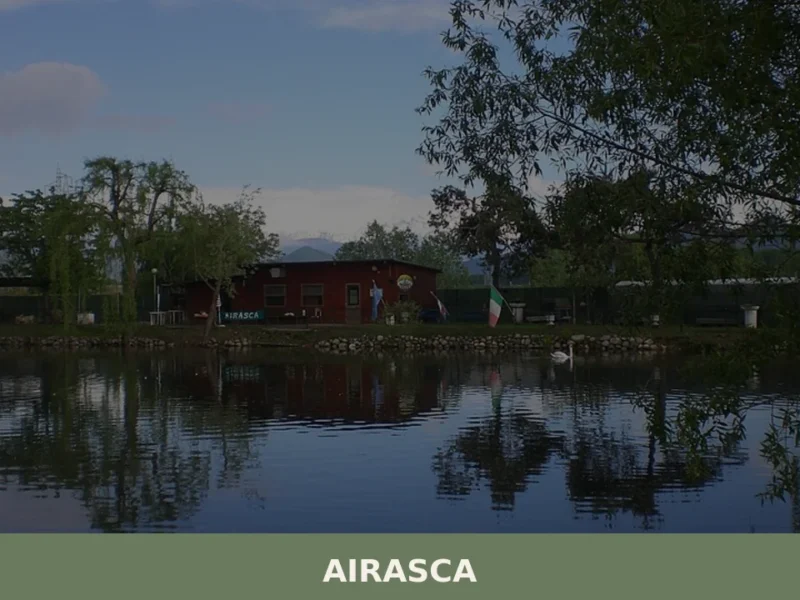
Airasca
Arriving in Airasca along the provincial road that connects Pinerolo to Turin, the first thing you notice is the bell tower of the parish church of San Bartolomeo, a vertical landmark in a horizontal landscape of cultivated fields and rows of poplars. The municipality, home to 3,842 inhabitants at 257 metres above sea level, occupies […]
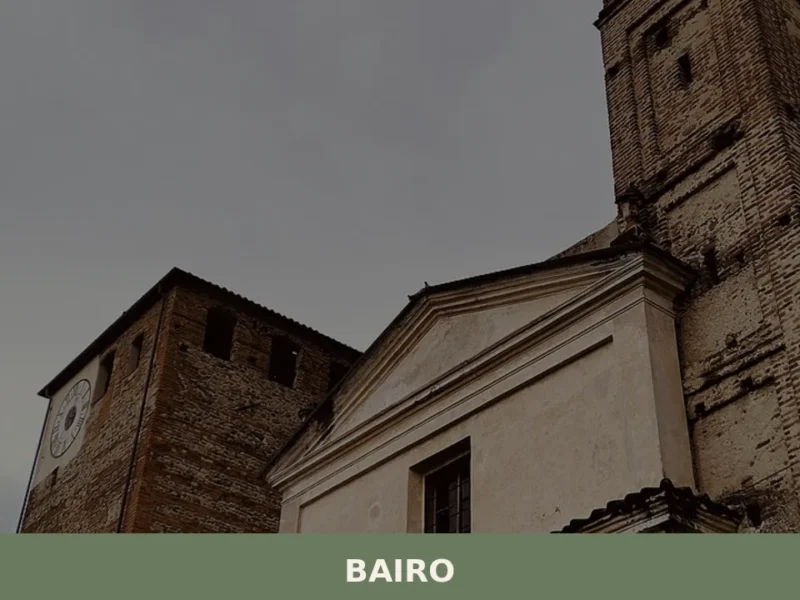
Bairo
The earliest confirmed record of Bairo dates to a document from 1003, when Marquess Arduino of Ivrea — who would shortly become King of Italy — confirmed landholdings in this portion of the Canavese between the moraine ridge and the foothills of the Graian Alps. Today the municipality has 806 inhabitants, spread across the historic […]
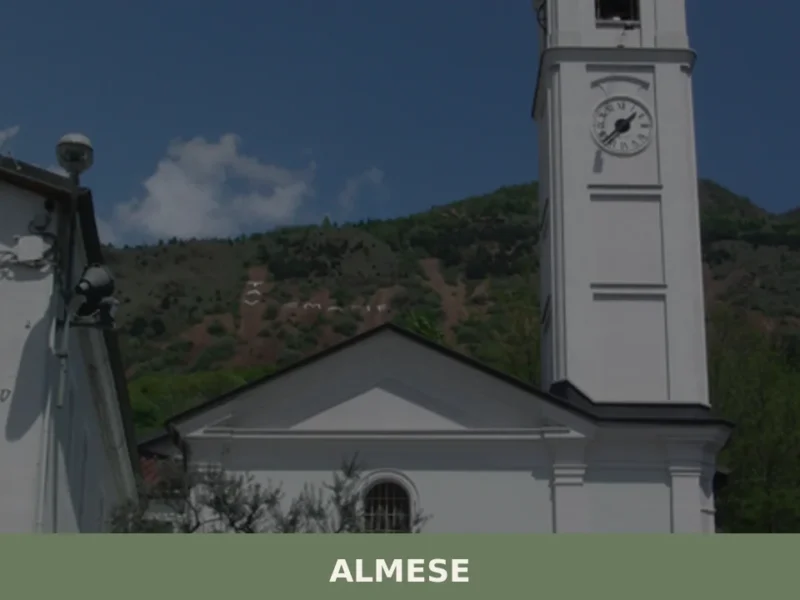
Almese
In 1029, a document from the Abbey of Novalesa recorded the name Almese for the first time, linked to a series of land holdings in the lower Val di Susa. That place name — probably derived from a Celtic or pre-Latin word connected to alpine pastures — appears in a territory that already served as […]



📝 Incorrect information or updates?
Help us keep the Asti page accurate and up to date.