


Brusimpiano
What to see in Brusimpiano: 1,229 inhabitants, 289m above Lake Lugano. Discover the Church of the Nativity, lakeside promenade and nature trails. Plan your visit now.
Discover Brusimpiano
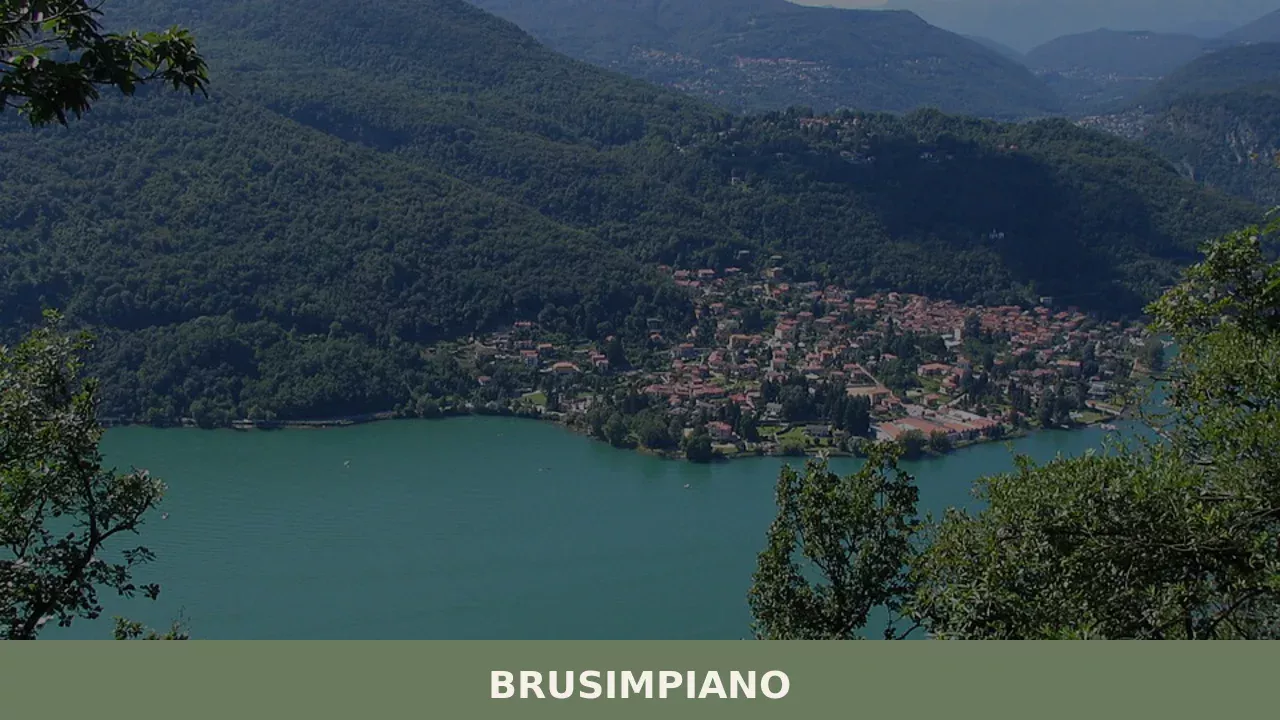
In the Valceresio area of Lombardy, where the Swiss border shapes the landscape and the pre-Alpine hills are reflected in the waters of Lake Lugano, lies Brusimpiano.
A small settlement, documented as far back as the 12th century as part of the Contado del Seprio, it has preserved its identity as a lakeside and hillside village.
Its strategic position at 289 metres above sea level made it, for centuries, a quiet crossroads for trade and tradition — distant from major routes yet close to the pulse of local history.
For those wondering about what to see in Brusimpiano, the village offers an itinerary that weaves together historical evidence and natural views, revealing a less conspicuous but deeply meaningful heritage for anyone seeking to understand the Varese territory.
History and Origins of Brusimpiano
The roots of Brusimpiano reach far back, with traces of pre-Roman and Roman settlements suggested by archaeological finds in the area.
The place name itself, according to various etymological interpretations, may derive from the Latin “Bruxianum”, indicating a place characterised by woodland or brambles, or from an ancient personal name.
During the Middle Ages, Brusimpiano developed as part of the Contado del Seprio, an important territorial entity within the orbit of the Duchy of Milan, maintaining its own administrative and religious autonomy.
The village experienced a period of relative stability under the rule of the Visconti and, later, the Sforza, though it was occasionally drawn into disputes between regional powers and neighbouring duchies.
Its position on Lake Lugano made it a point of control and trade — on a local scale — for the movement of goods and people between Lombardy and the Swiss cantons. The construction of the Church of the Nativity of the Blessed Virgin Mary, the village’s patron church, took place in several historical phases, with extensions and renovations altering its appearance over the centuries, reflecting the central role of faith in community life.
In the modern era, Brusimpiano followed the fortunes of Lombardy, passing under Spanish and then Austrian control, before becoming part of the Kingdom of Italy in 1859.
Its population, which today stands at 1,229 inhabitants, has maintained a strong connection with traditional activities such as lake fishing, subsistence agriculture and craftsmanship, while gradually opening up to lake tourism and the economic opportunities brought by proximity to Switzerland.
The history of Brusimpiano is that of a village which, without being the stage for landmark events, has managed to preserve its identity across the centuries, adapting to change while keeping alive the memory of its origins.
For further information on the village’s history, visit the dedicated page on Wikipedia.
What to See in Brusimpiano: 5 Key Attractions
1. Church of the Nativity of the Blessed Virgin Mary
The main place of worship in Brusimpiano, dedicated to the Nativity of the Blessed Virgin Mary, is a point of reference for the local community and an example of local religious architecture. Its current structure is the result of several building phases and extensions, with elements dating from different periods — from the original medieval core to later interventions in the 16th and 18th centuries. Inside, frescoes and works of art document the religious devotion and artistic sensibilities of past centuries, with particular attention to votive decorations and wooden furnishings.
2. Oratory of San Carlo Borromeo
Set in a panoramic position, the Oratory of San Carlo Borromeo is a small sacred building that offers a notable view over Lake Lugano.
Its construction is linked to the cult of the saint, widely observed across Lombardy following his canonisation. The oratory, despite its architectural simplicity, is an example of popular devotion and rural building tradition, with a sober façade and minimal interiors that invite quiet reflection. It is a worthwhile stop for anyone wishing to explore the spiritual heritage and everyday history of the village, well away from mainstream tourist circuits.
3. The Lakeside Promenade and the Landing Stage
The lakeside promenade of Brusimpiano offers a direct perspective onto Lake Lugano, also known as Ceresio. It is a place for walking and observation, where the water and mountains form a compelling natural backdrop. The landing stage, a departure and arrival point for small boats, is a central feature of the village’s lake life, bearing witness to its longstanding role as a harbour and connection point. From here, visitors can take in the Swiss shores and the villas dotting the landscape, gaining a clear sense of the lake’s historical function as both a communication route and a local resource.
4. The Lanes of the Historic Centre
Walking through the lanes of Brusimpiano’s historic centre means exploring an urban fabric that has, in part, retained its original layout.
The stone houses, some with ancient doorways and small internal courtyards, reflect the everyday life of past generations. Despite alterations and modernisation, it is still possible to spot traditional architectural features — wooden balconies, small votive shrines — that give the village a genuine sense of place.
Exploring these narrow streets allows visitors to appreciate the details of local vernacular architecture.
5. Nature Trails and Views over Lake Ceresio
The area around Brusimpiano offers a network of trails running between the hillside and the lake shore, allowing visitors to appreciate the local flora and fauna. These paths, suitable for walkers of varying levels, lead to viewpoints with wide-ranging views over Lake Ceresio and the surrounding mountains, including Monte San Giorgio, a UNESCO World Heritage Site.
The walks give a clear sense of the geographical setting in which the village sits — a pre-Alpine environment where the natural landscape meets the expanse of water, offering changing scenery throughout the seasons.
For more information on activities and services, visit the official website of the Municipality of Brusimpiano.
What to Eat in Brusimpiano: Local Cuisine and Traditional Products
The cuisine of Brusimpiano, like that of the wider province of Varese, belongs to the broader Lombard gastronomic tradition — characterised by hearty dishes and genuine ingredients, shaped by proximity to the lake, the mountains and the plain.
The straightforwardness of the cooking reflects the history of a territory where the availability of local raw materials has always guided culinary choices.
This is a food culture that favours bold flavours, with careful use of aromatic herbs and spices, and where the leading roles are played by produce from the land, local livestock and lake fish.
Among the signature dishes of the Lombard tradition that also appear on tables in Brusimpiano, polenta stands out — typically prepared with yellow maize flour and served alongside braised meats or local cheeses.
Brasato, beef slow-cooked in red wine with vegetables and aromatics, is a significant main course, traditionally associated with feast days and the colder months.
Risotto, in its many variations — with porcini mushrooms or saffron, for example — also features regularly, reflecting the influence of Milanese and Po Valley cooking on local food culture.
While no products with specific certifications (PDO/PGI/PAT) are tied directly to Brusimpiano, the area benefits from the wider agricultural richness of Lombardy.
Fresh and aged cheeses produced in the surrounding valleys are available locally, including formagella del Luinese, a soft cow’s milk cheese, and the better-known gorgonzola, a Lombard blue-veined cheese.
Lake fish — including whitefish, perch and tench — forms another important component of the local diet, often served fried or stewed, as in the case of missoltini, dried and pressed agone fish that are a classic of lake cuisine.
Those wishing to buy local products or sample traditional cooking are advised to visit the weekly markets in neighbouring municipalities or trattorias offering territory-based menus.
The feast day of the Nativity of the Blessed Virgin Mary, on 8 September, can be an opportunity to find stalls selling artisan and food products.While Brusimpiano is not a hub for large food and wine festivals, its proximity to larger centres provides opportunities to attend events dedicated to local flavours, particularly in spring and autumn, when seasonal produce is at its most plentiful.
When to Visit Brusimpiano: the Best Time of Year
The best time to visit Brusimpiano depends on personal preferences and the kind of experience you are looking for.
Spring, from April to June, suits those with an interest in nature: the mild climate makes it ideal for exploring the walking trails when vegetation is lush and wildflowers are in bloom. The days are long and temperatures are pleasant, making walks along the lake and on the surrounding hills enjoyable, with fewer visitors than in summer.
Summer, from July to August, is the peak period for lake tourism. The warm temperatures encourage water-based activities on Lake Lugano, such as swimming or hiring small boats.
However, this is also the busiest time, particularly at weekends. Autumn, from September to November, brings a quieter and more atmospheric mood, with the warm tones of the foliage across the landscape.
This is an excellent period for those seeking calm, leisurely walks and the pleasure of local seasonal food.The feast day of 8 September can be an interesting occasion to observe local traditions. Winter, from December to March, is the quietest season, when the village takes on a more intimate and still quality — well suited to those looking to get away from the rush and enjoy the lake in a more private setting.
How to Get to Brusimpiano
Brusimpiano can be reached by several means of transport, primarily by road given its location. Travellers arriving by car will find the motorway the most convenient option. From Milan, take the A8 motorway (dei Laghi) towards Varese, then continue along the SP233 (Varesina) or minor provincial roads towards Porto Ceresio, following signs for Brusimpiano.
Alternatively, from Como or Switzerland, take the A9 motorway (dei Laghi) to the Como Nord exit and then follow signs for Lake Lugano and the Valceresio.
Brusimpiano is approximately 70 km from Milan and around 15 km from Varese.
For public transport, the nearest railway station is Porto Ceresio, the terminus of the S50 TILO line (Bellinzona–Lugano–Varese–Malpensa Airport) and of the regional line (Milan Porta Garibaldi–Porto Ceresio).From Porto Ceresio, a few kilometres away, local bus services connect the villages of the Valceresio with Varese. The nearest airport is Milan Malpensa (MXP), approximately 45–50 km away, from which travellers can continue by train or bus to Varese and then use local services, or hire a car to reach the village directly.
Other Villages to Explore in Lombardy
Lombardy, with its varied landscape and history, offers a number of villages well worth visiting, many of them easily accessible from Brusimpiano and suited to building complementary itineraries. A few kilometres away lies Biandronno, a village on the shores of Lake Varese, known for its small island, Isolino Virginia, a prehistoric archaeological site.A visit to Biandronno can complement a nature-focused excursion, offering a different perspective on the Varese lakes, with a drive of around 30 minutes from Brusimpiano.
Continuing through the Varese area, other villages offer further historical and landscape interest.
Brenta, for example, is a village that retains traces of a rural and artisan past, with architecture typical of the Lombard tradition, about 40 minutes away by car.
Nearby is Bisuschio, known for its Palazzo Cicogna, a historic residence of considerable architectural and cultural interest, reachable in around 15 minutes from Brusimpiano.
Further south, Besnate offers an example of a Lombard lowland village, with its parish church and historic centre, around 50 minutes by car — rounding out a picture of the distinct identities that make up the mosaic of Lombardy.


📝 Incorrect information or updates?
Help us keep the Brusimpiano page accurate and up to date.