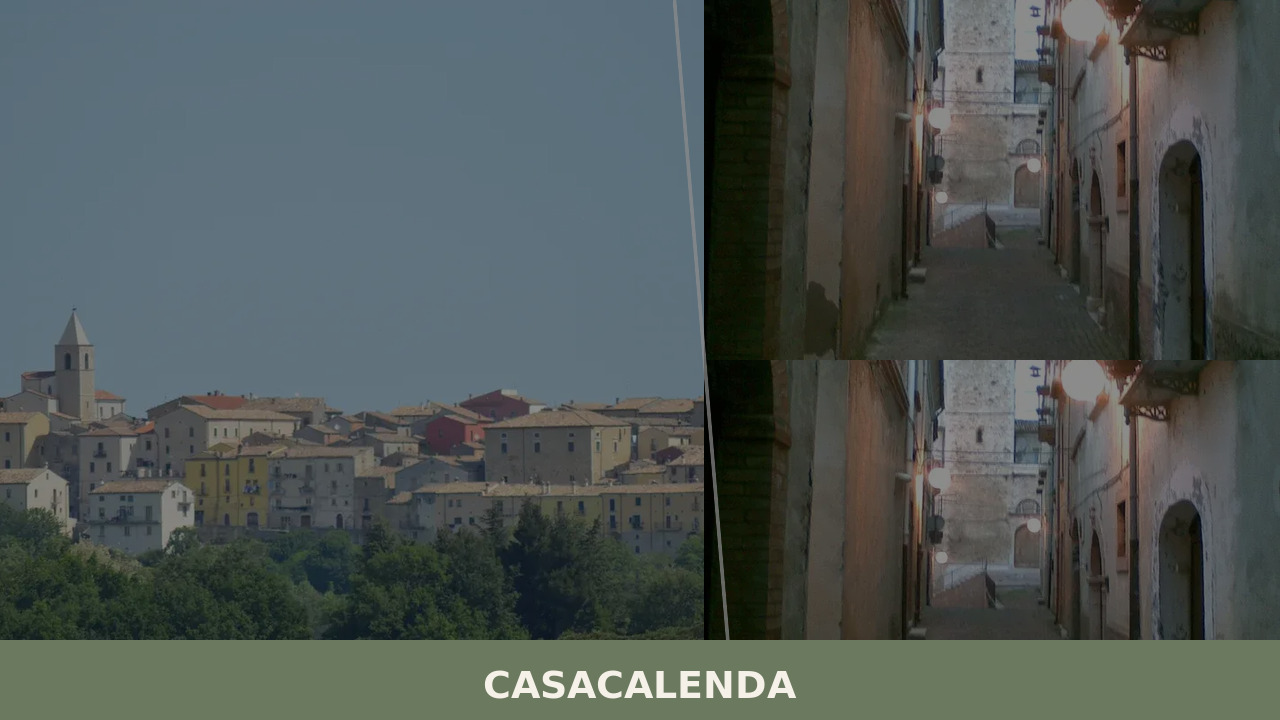
Morning light hits the limestone facades along Corso Roma and the sound is not silence but something close — a dog barking two streets away, the clatter of a shutter being folded back, the low idle of a Fiat Panda parked outside the only bar open before eight. Casacalenda sits at 631 metres above sea […]
Morning light hits the limestone facades along Corso Roma and the sound is not silence but something close — a dog barking two streets away, the clatter of a shutter being folded back, the low idle of a Fiat Panda parked outside the only bar open before eight. Casacalenda sits at 631 metres above sea level in the province of Campobasso, home to just over 1,200 people. Understanding what to see in Casacalenda requires slowing down to the rhythm of a place that has never tried to perform for visitors.
The origins of Casacalenda reach back at least to the early medieval period, when small fortified settlements dotted the hills of what is now Molise, Italy’s second-smallest and least populated region. The name itself has been debated by local historians: some trace it to a corruption of “Casa Calendi,” possibly referencing a Roman-era landowner or a Lombard settlement name. What is certain is that by the Norman period, the village had taken shape around a feudal nucleus — a castle, a church, and a cluster of stone houses arranged along the ridge for defensive advantage.
Like many settlements in inland Molise, Casacalenda passed through the hands of successive feudal families during the Angevin and Aragonese periods. The village’s fortunes were tied to agriculture and transhumance — the seasonal movement of livestock along the tratturi, the ancient grass-covered drove roads that connected Abruzzo’s mountain pastures with the plains of Puglia. These routes shaped the economy, architecture, and social fabric of Casacalenda for centuries.
The twentieth century brought the familiar trajectory of southern Italian rural communities: emigration hollowed out the population, particularly after the Second World War, as families left for northern Italian cities, Argentina, Canada, and the United States. What remains today is a village that carries its centuries quietly, without reconstruction or theme-park restoration — the buildings age in place, and the streetscape reads as an honest document of layered time.
The main parish church anchors the upper part of the village. Its structure dates to the medieval period, though successive renovations over the centuries have added Baroque and later elements to the interior. Inside, a series of altarpieces and devotional paintings reflect the modest but genuine artistic patronage of a small feudal centre. The stone portal at the entrance is worth pausing at — its proportions speak of an older, more austere building beneath the plaster.
Casacalenda maintains a small museum dedicated to preserving the material culture of its religious processions and rural traditions. The collection includes processional objects, costumes, and documentary photographs that record how communal rituals have changed — and persisted — across generations. It offers a window into the social architecture of a village where sacred and agricultural calendars once dictated every aspect of daily life.
The old quarter of Casacalenda is built along a ridge, its streets narrow and steeply inclined, with stone arches connecting buildings overhead. At its core stands the Palazzo Ducale, the former feudal residence, which has been partially adapted for civic use. Walking these streets is less about individual monuments and more about reading a settlement pattern that has barely changed since the seventeenth century — doorways scaled for mules, small gardens tucked behind walls, laundry drying above cobblestones.
Just outside the village, this nature reserve managed by LIPU (the Italian League for Bird Protection) protects a significant tract of deciduous woodland — predominantly oak — along with the wildlife corridors that connect it to the wider Molisan landscape. The reserve is home to several raptor species, woodpeckers, and a rich understory flora. Marked trails allow visitors to walk through forest that has been largely undisturbed by development, a rarity in southern Italy.
Since the early 1990s, Casacalenda has hosted Kalenarte, an initiative that has brought international contemporary artists to create site-specific installations in and around the village. Sculptures and interventions are placed along streets, in piazzas, and across the surrounding countryside, creating an unexpected dialogue between contemporary art and the vernacular architecture. It is one of the more unusual cultural projects in inland southern Italy, and several dozen permanent works can still be encountered on foot.
The cooking of Casacalenda belongs firmly to the tradition of inland Molise — robust, seasonal, and shaped by scarcity. Pasta made by hand is central: cavatelli, a short rolled pasta typically served with a slow-cooked pork ragù or with broccoli and anchovy, appears on nearly every table. Lamb, prepared simply with herbs or slow-roasted, reflects the region’s pastoral heritage. Olive oil produced from the Gentile di Larino cultivar, prevalent across this part of the province of Campobasso, is the cooking fat of choice and carries a green, grassy bitterness. Local cheeses include caciocavallo and fresh scamorza, and preserved meats — sopressata, ventricina — are made domestically as well as by small-scale producers.
Dining in Casacalenda is a matter of agriturismi and small trattorias rather than destination restaurants. Expect fixed menus that follow the season: wild greens and legume soups in spring, grilled meats and roasted peppers in summer, hearty bean and grain dishes through winter. The wine is most often Tintilia del Molise, the region’s only truly autochthonous red grape variety, producing a medium-bodied wine with dark fruit and a slightly tannic finish that pairs well with the local cuisine.
Casacalenda sits at an elevation where seasons are felt distinctly. Winters are cold, with temperatures regularly dropping below freezing from December through February, and occasional snowfall that blankets the village’s stone rooftops. Summers are warm but moderated by altitude — less oppressive than the plains of Puglia to the east. The best months for a visit are May through June and September through October, when the air is mild, the countryside is either in full bloom or turning gold, and the light has that particular clarity that makes the Molisan hills look like they were painted by a patient hand.
The village’s most notable event is its patron saint festival, which draws the community together in religious procession and communal feasting. Kalenarte events, when active, typically take place in summer. But the honest answer is that Casacalenda does not offer a packed calendar of tourist-oriented festivals — its appeal lies precisely in the ordinary texture of daily life, and any week of the year will yield that in full measure. Visitors should note that many services operate on reduced hours or close entirely on Sundays and during the afternoon riposo.
Casacalenda is located in the central-eastern part of Molise, roughly 30 kilometres from the provincial capital Campobasso. By car, the most common approach is via the SS647 (Bifernina), which connects the Adriatic coast at Termoli with the interior. From Naples, the drive takes approximately two and a half hours via the A1 motorway and then cross-country roads through the Molisan hills. From Rome, expect around three hours via the A1 and then the A14 or interior routes through Isernia or Campobasso.
The nearest railway stations with regular service are at Campobasso and Termoli, the latter on the main Adriatic line (Bologna–Lecce). From either station, reaching Casacalenda requires a local bus or a car — public transport connections to smaller villages are limited and schedules should be checked in advance. The closest airports are Naples Capodichino (approximately 180 km) and Pescara (approximately 150 km). A rental car is effectively essential for exploring Casacalenda and the surrounding area with any flexibility.
Casacalenda sits within a constellation of small, proud Molisan villages that share a common landscape but each carry a distinct character. To the south, Provvidenti is one of Italy’s smallest municipalities, a settlement of barely more than a hundred residents where the silence is almost physical and the views across the surrounding valleys extend for kilometres. It offers a concentrated experience of what depopulation and resilience look like in the Italian interior — a handful of families maintaining a village that has existed for centuries.
Further afield, the network of Molisan hill towns — each with its own church, its own palazzo, its own variation on cavatelli — rewards the kind of slow, attentive travel that this region demands. Morrone del Sannio, set on a neighbouring ridge, shares the same geological and cultural substrate as Casacalenda but has its own particular atmosphere, shaped by a slightly different elevation and orientation. Together, these villages compose a portrait of a part of Italy that has remained largely outside the tourist economy — not because it has nothing to offer, but because what it offers requires patience to see.
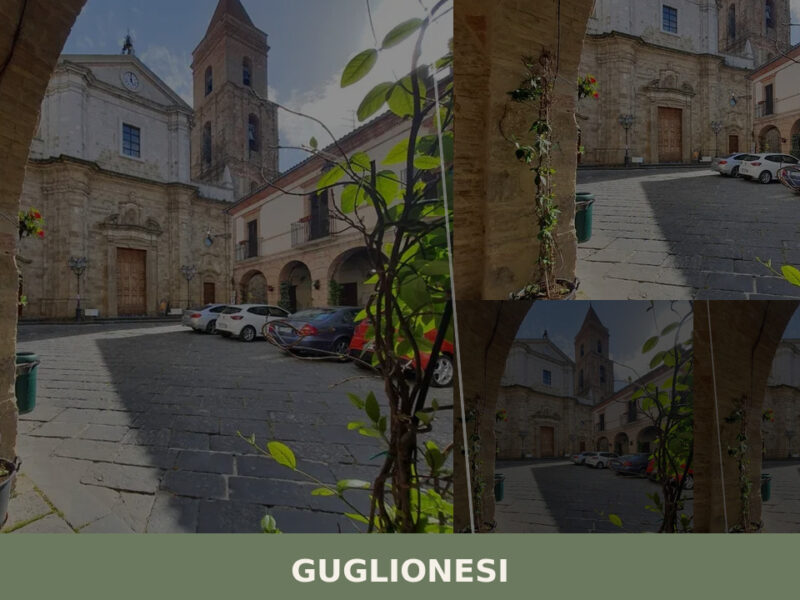
A hill town of nearly five thousand people in Campobasso province, Guglionesi offers Romanesque churches, Samnite archaeological traces, and wide Adriatic views across the Biferno valley.
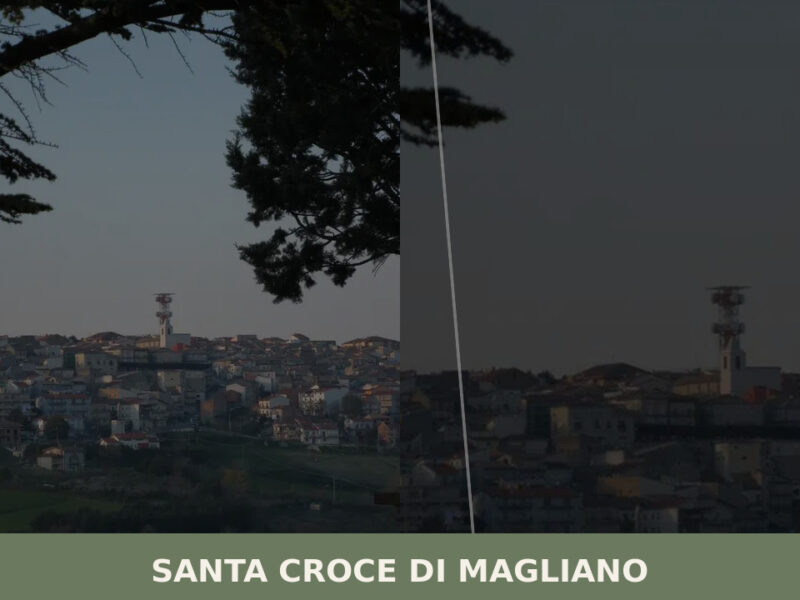
Morning light falls across a row of stone facades on Corso Vittorio Emanuele, and an elderly man drags a wooden chair onto the pavement, positioning it with the precision of someone who has done this for sixty years. The air at 608 metres carries a dry, herbal sharpness — rosemary and broom from the surrounding […]
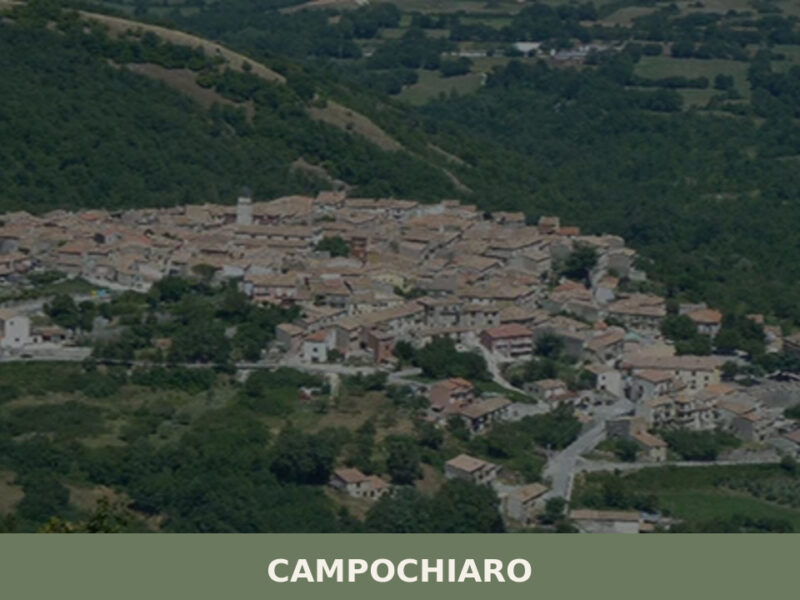
A mountain village of 594 inhabitants at the foot of the Matese massif, Campochiaro holds a Lombard necropolis, Samnite sanctuary, and karst landscapes that reveal Molise's deepest layers.
📝 Incorrect information or updates?
Help us keep the Casacalenda page accurate and up to date.


