


Fraine
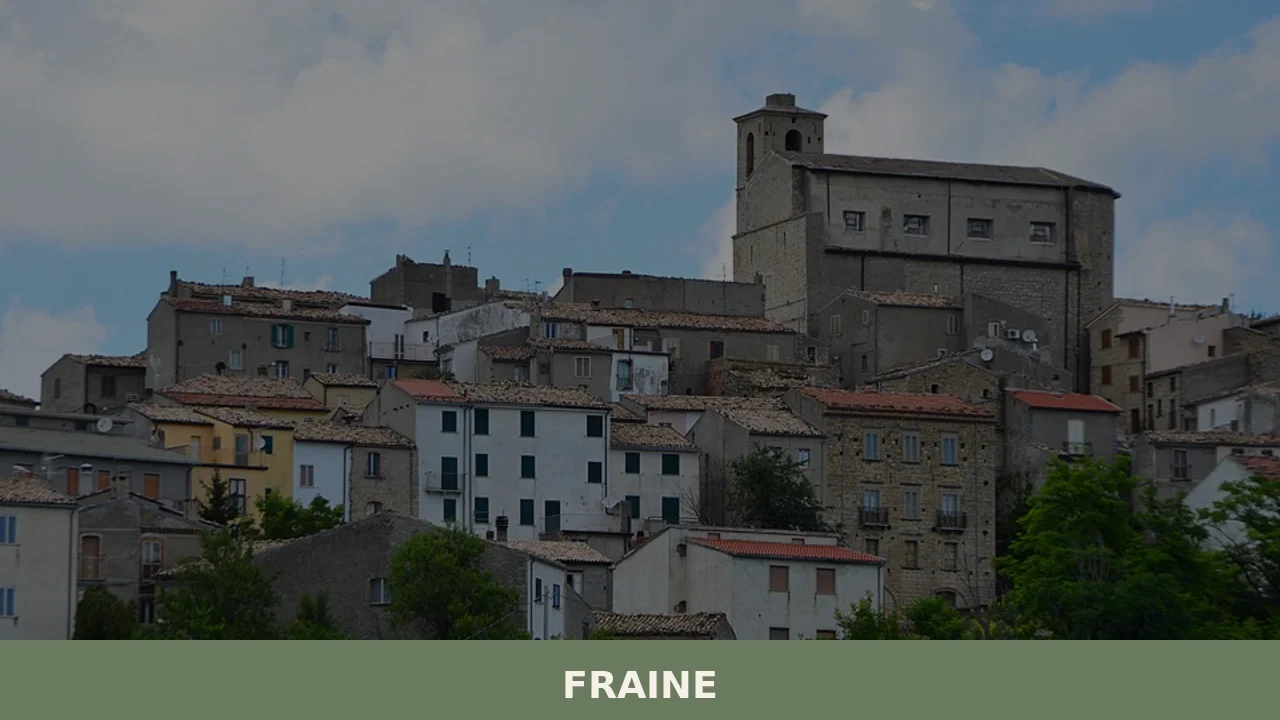
At 751 meters above sea level, in the Chieti area, lies Fraine, a municipality with a population of 261 inhabitants. This village, whose history dates back to the 10th-11th century, serves as an observation point over the Alto Vastese territory. For those wondering what to see in fraine, the town offers a journey through the […]
Discover Fraine
At 751 meters above sea level, in the Chieti area, lies Fraine, a municipality with a population of 261 inhabitants. This village, whose history dates back to the 10th-11th century, serves as an observation point over the Alto Vastese territory. For those wondering what to see in fraine, the town offers a journey through the traces of a feudal past and the tranquility of its mountain setting, elements that define the identity of this small Abruzzo center. Its elevated position allows for an expansive view of the surrounding landscape, characterized by hills and valleys that mark the region’s natural boundaries.
History and origins of Fraine
The first documented records concerning Fraine date back to the 10th-11th century, a period when the settlement began to take shape as a fortified center, dominated by a castle. Its strategic position, controlling communication routes and surrounding territories, made it a reference point for local populations. Over the centuries, the Fraine fief saw various noble families alternate in its command, including the Caracciolo and Valignani, who influenced its architectural and social development. These lordships, through the construction and maintenance of defensive and residential structures, left a visible mark on the village’s urban configuration.
The etymology of the name “Fraine” is subject to various interpretations, some of which link it to Latin or Lombard terms related to the presence of wooded areas or specific settlements. Its history, largely tied to feudal events and the territorial dynamics of the Kingdom of Naples, is marked by periods of relative prosperity and moments of difficulty, often due to conflicts or natural events. The local community has managed to preserve a connection to its origins over time, keeping traditions alive that are still reflected in the village’s life today.
For further details on the village’s history, you can consult the Fraine page on Wikipedia.
What to see in fraine: main attractions
Fraine, with its structure reflecting the past, offers several points of interest that allow visitors to understand the village’s evolution and appreciate its setting.
The Church of Santa Maria Mater Domini
The main religious building of the village, the Church of Santa Maria Mater Domini, is dedicated to the town’s patron saint. Its structure, although modified over the centuries, retains elements that attest to its antiquity. Inside, sacred works and furnishings tell the story of the community’s devotion. The facade and bell tower are integrated into the urban fabric, representing a focal point for residents and visitors.
The remains of Fraine Castle
Of the ancient castle that overlooked the village and the surrounding territory, traces remain today that allow one to infer its original grandeur. These ruins, located in the highest part of the inhabited center, evoke the medieval period, when the fortification played a crucial role in the defense and control of the valley. Walking among these remains allows one to perceive the historical layers of the place.
The Baronial Palace
Beside the castle’s vestiges, or integrated within its perimeter, stands the Baronial Palace. This building, which served as the residence for feudal families, features architectural elements that highlight its importance. Although it may have undergone transformations, its presence is a tangible sign of the power and history of the lordships that governed Fraine, offering a perspective on aristocratic life of the past.
The Main Square
As in many Italian villages, Fraine’s main square forms the core of social life. Buildings, though simple, face onto it, contributing to defining the historical center’s identity. It is a place for meeting and passage, from which one can observe views of the surrounding streets and architecture, and where the main civil and religious events take place, including the patron saint’s festival.
Mountain paths and landscapes
Given its altitude of 751 meters and the mountain theme that characterizes Fraine, the surrounding territory offers opportunities to explore Abruzzo’s nature. Paths diverging from the village lead through a landscape of woods and slopes, typical of the Chieti hinterland. These routes allow visitors to enjoy the local flora and fauna and to reach panoramic viewpoints from which to observe the territory’s formation.
Typical cuisine and local products
Fraine’s gastronomy, like that of much of the Abruzzo hinterland, is deeply connected to peasant tradition and local produce. The local diet is based on simple yet flavorful ingredients, often derived from mountain farming and agriculture. Among the most representative dishes are homemade pastas, such as “pasta alla chitarra,” often served with rich sauces based on lamb or castrated meat. Legumes, like lentils and chickpeas, cultivated in the surrounding fields and used in soups and stews, are also common.
Typical products include pecorino cheeses, made from flocks grazing in the mountains, and cured meats like ventricina, characteristic of the Vastese area but also found in these inland territories, with its local variations. Arrosticini, grilled skewers of sheep meat, are a symbol of Abruzzo cuisine and are always present at festive occasions. Everything is often accompanied by Montepulciano d’Abruzzo, a robust red wine that pairs well with the distinct flavors of the tradition. The patron saint’s festival on May 31st, dedicated to Santa Maria “Mater Domini,” can be an opportunity to taste some of these local preparations.
When to visit Fraine: the best period
The best period to visit Fraine depends on personal preferences, but some seasons offer more favorable conditions. Spring and early summer, from May to July, have a mild climate and allow visitors to appreciate the blooming vegetation and pleasant temperatures for walks. On May 31st, the patron saint’s festival of Santa Maria “Mater Domini
In Abruzzo More villages to discover
Carpineto della Nora
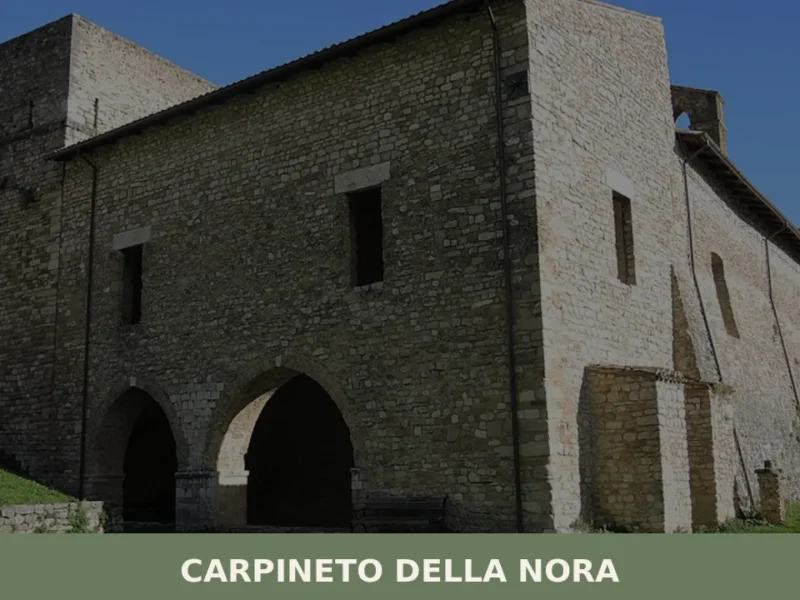
At 535 metres above sea level, on the ridge separating the Nora valley from the Pescara plain, Carpineto della Nora has a current population of 536 — a number that has halved since post-war censuses. Anyone looking into what to see in Carpineto della Nora will find a settlement built entirely from local stone, spread […]
Catignano
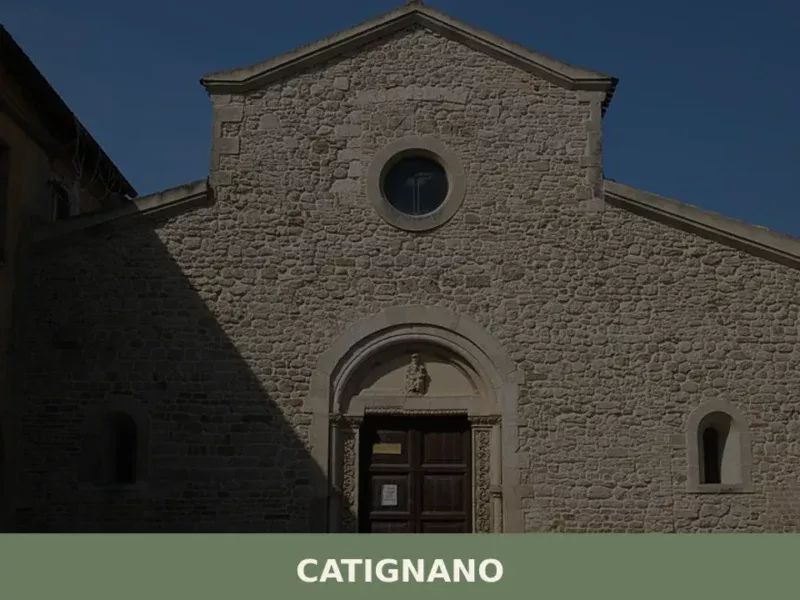
Catignano has a current population of 1,227, spread across a hilly territory at 365 metres above sea level in the province of Pescara. The municipality extends along a ridge separating the Nora and Cigno valleys, two watercourses that flow into the Pescara river. Those looking for what to see in Catignano will find a rural […]
Civitella Messer Raimondo
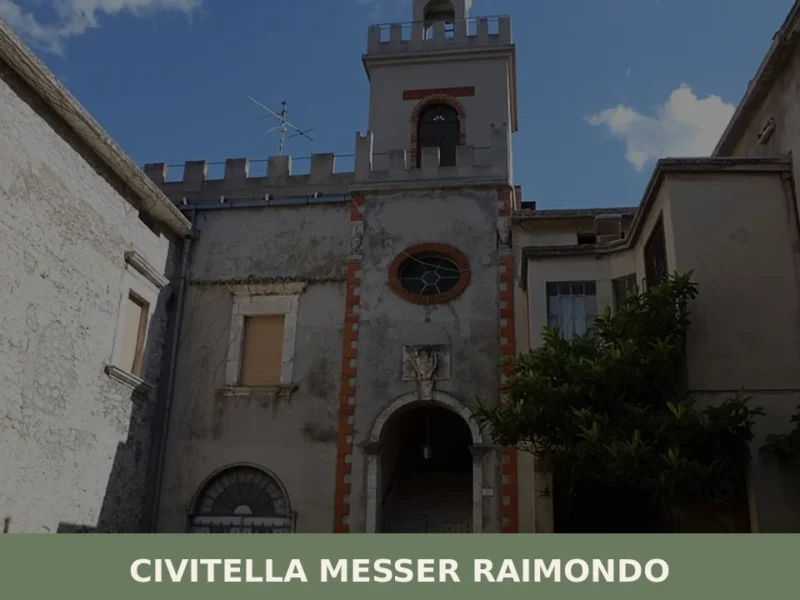
Civitella Messer Raimondo has 769 inhabitants and sits at 613 metres above sea level, on the eastern slope of the Maiella massif, in the province of Chieti. The village’s name still bears that of a medieval feudal lord — Raimondo — who shaped its political fortunes between the 13th and 14th centuries. Understanding what to […]
🧀 Italian traditional products




📝 Incorrect information or updates?
Help us keep the Fraine page accurate and up to date.