


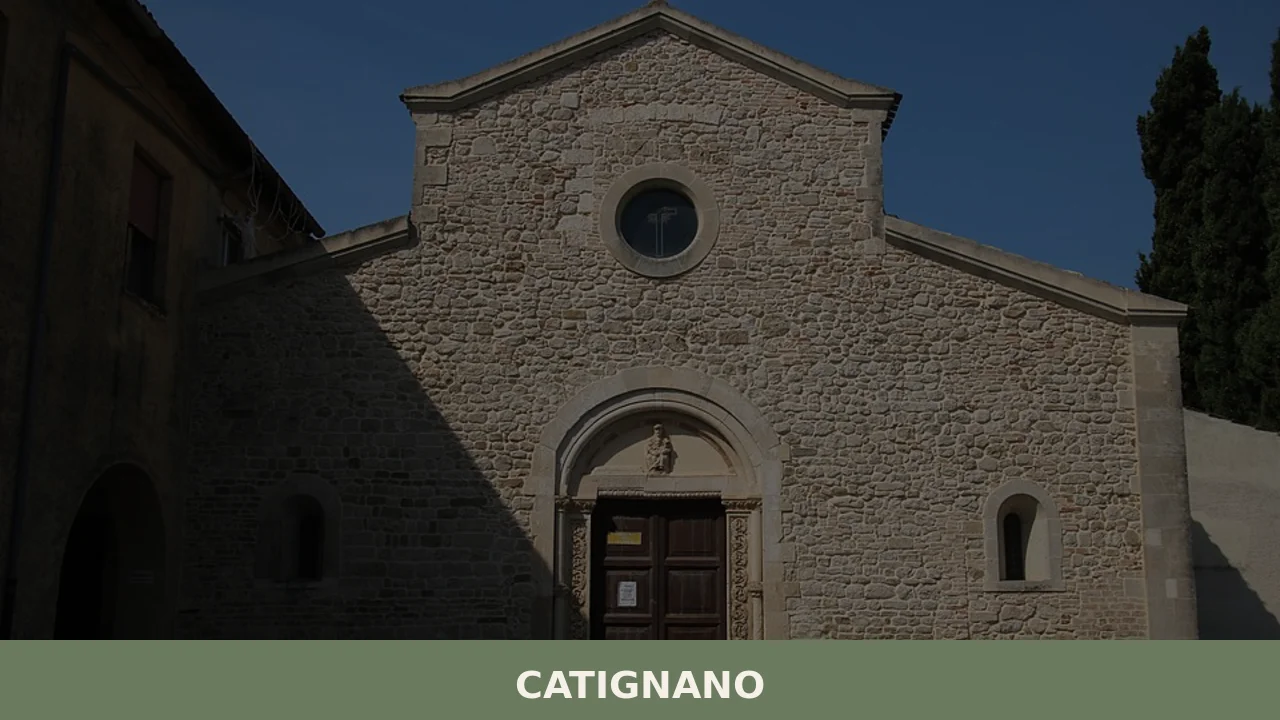
Catignano
 Hills
Hills
Catignano has a current population of 1,227, spread across a hilly territory at 365 metres above sea level in the province of Pescara. The municipality extends along a ridge separating the Nora and Cigno valleys, two watercourses that flow into the Pescara river. Those looking for what to see in Catignano will find a rural […]
Discover Catignano
Catignano has a current population of 1,227, spread across a hilly territory at 365 metres above sea level in the province of Pescara. The municipality extends along a ridge separating the Nora and Cigno valleys, two watercourses that flow into the Pescara river. Those looking for what to see in Catignano will find a rural settlement that has retained its medieval layout, with a compact building fabric and a mother church still at the centre of civic life. The Vera Croce (True Cross), patron of the village, is celebrated every year on 3 May with a procession that winds along the streets of the old town.
History and origins of Catignano
The place name Catignano most likely derives from the Latin gentile name Catinius, indicating a Roman-era agricultural estate — a praedium Catinianum — following a naming pattern common to many settlements in central Italy. The Roman presence in the middle Pescara valley is documented by scattered archaeological finds in the surrounding area, although no systematic excavations have been carried out in Catignano to confirm an exact date of origin.
The first written reference to the inhabited centre dates to the medieval period, when the village fell within the orbit of feudal holdings linked to the diocese of Chieti. Like most of the hilltop settlements along the Abruzzo foothills, Catignano passed through several lordships: Angevin registers from the 13th and 14th centuries record the existence of a small fortified centre that controlled the routes connecting the Adriatic coast with the Apennine interior. The fief later became part of the administrative system of the Kingdom of Naples, following the political fortunes of the region until Italian Unification.
During the 19th and 20th centuries, Catignano shared with neighbouring villages the phenomenon of emigration, which significantly reduced the resident population. The local economy remained tied for a long time to olive and vine cultivation, activities still visible today in the agricultural landscape surrounding the town centre. For further information on the municipality’s administrative history, consult the official website of the Municipality of Catignano.
What to see in Catignano: churches, architecture and landscape
1. Church of the Santa Croce
The main place of worship in the village, dedicated to the Vera Croce (True Cross), patron of Catignano. The current structure features elements attributable to 17th- and 18th-century interventions, with a simple masonry façade and a single-nave interior. Inside, liturgical furnishings and processional statues used during the patron saint’s feast on 3 May are preserved.
2. Historic centre and medieval urban fabric
The old core of Catignano retains a compact layout with local stone houses aligned along narrow streets running parallel to the ridge. The terraced houses, many of which still have carved stone doorways and external staircases, reflect a rural building typology widespread in the Vestina area. The absence of large-scale building interventions has preserved the legibility of the original layout.
3. Fountains and rural wash houses
Several public stone fountains survive across the municipal territory, once essential for water supply and clothes washing. These structures, also found in the outlying hamlets, are a recurring feature of the Abruzzo rural landscape and mark the points of social gathering for farming communities.
4. Olive-growing landscape of the Pescara hills
The hills around Catignano are covered with olive groves producing extra virgin olive oil according to methods long established in local farming tradition. The altitude of 365 metres and the aspect of the slopes create favourable conditions for growing the Dritta variety, widespread in the Vestina area. Terracing and dry-stone walls define the geometry of the fields.
5. Viewpoints over the Majella and Gran Sasso
From the upper part of the village and from the surrounding rural roads, on clear days the profiles of the Majella to the south-west and the Gran Sasso massif to the north-west are clearly visible. The ridgetop position offers a wide visual range that takes in the Pescara valley and the hilly belt extending to the Adriatic coastline.
What to see in Catignano: cuisine and local produce
The table in Catignano reflects the peasant tradition of the Pescara hills. Extra virgin olive oil is the cornerstone product: the province of Pescara falls within the production area of Aprutino Pescarese DOP oil, obtained mainly from Dritta olives harvested by hand or with mechanical aids. Among first courses, the local tradition includes sagne e fagioli, irregularly cut homemade pasta cooked with borlotti beans, garlic, oil and chilli pepper. Arrosticini, skewers of diced sheep meat grilled on a furnacella, remain the most popular dish at communal gatherings.
Local wine production falls within the DOC Abruzzo designation, with Montepulciano d’Abruzzo red and Trebbiano d’Abruzzo white as the main references. In the autumn months, the olive harvest sets the rhythm of the village’s agricultural calendar: local mills process the fruit within a few hours of picking, following production rules that favour cold extraction. Farms in the area sell oil and wine directly, often by appointment.
When to visit Catignano: the best time of year
Catignano’s hill climate brings hot but breezy summers and moderately cold winters, with average winter temperatures that rarely drop below zero for prolonged periods. Spring, between April and June, is the season when the countryside is most legible: the olive groves are in bloom, wheat fields colour the slopes, and daylight lasts well into the evening. Autumn, from October to November, coincides with the olive harvest and the production of new-season oil, a central moment in the local agricultural year.
The feast of the Vera Croce, on 3 May, is the main religious and community event. During the summer, as in many municipalities in the province of Pescara, food festivals and neighbourhood celebrations bring together residents and families who have emigrated. For up-to-date information on events and activities, the Touring Club Italiano includes Catignano in its regional guides to inland Abruzzo.
How to reach Catignano
Catignano is accessible from the A25 Roma-Pescara motorway, exiting at the Alanno-Scafa junction, from where you continue for approximately 15 kilometres south-east along provincial roads. From Pescara, the provincial capital, the distance is around 25 kilometres, covered in about thirty minutes via the main road that climbs the Nora valley.
- By car from Rome: A25 to Alanno-Scafa, then provincial roads to Catignano — approximately 2 hours and 15 minutes (190 km).
- By car from Pescara: SS 151 or inland provincial roads — approximately 30 minutes (25 km).
- By train: the nearest railway station is Scafa, on the Rome-Pescara line, from where you continue by car or local bus.
- By plane: Pescara’s Abruzzo Airport is approximately 30 kilometres away.
Other villages to discover in Abruzzo
Those visiting Catignano who wish to extend their exploration of inland Abruzzo may consider a detour to Fagnano Alto, in the province of L’Aquila. This scattered municipality, made up of several hamlets spread across the eastern slopes of the middle Aterno valley, presents a mountain landscape quite different from the Pescara hills and preserves rural churches with medieval-era frescoes. Comparing the two territories — the cereal and olive-growing hills of Catignano and the pastoral mountains of Fagnano Alto — reveals the geographical variety of Abruzzo across short distances.
In the opposite direction, towards the northern border of the region, Ancarano lies in the Val Vibrata, in the province of Teramo, close to the border with the Marche. The town is known for its agricultural production on the alluvial plain of the Tronto and for a landscape that anticipates the transition into Marche territory. Together with Catignano, these villages form an itinerary that crosses three Abruzzo provinces and three distinct environments: hills, mountains and valley floor.
Frequently asked questions about Catignano
What is the best time to visit Catignano?
The best time to visit Catignano is during spring, from April to June, when the Abruzzo countryside comes alive with olive groves in bloom and wheat fields coloring the hills, offering pleasant temperatures and longer daylight hours. Another excellent period is autumn, specifically October and November, which coincides with the olive harvest and the production of new-season extra virgin olive oil, a central event in the local agricultural calendar. Don't miss the Feast of the Vera Croce, the patron saint, celebrated annually on May 3rd with a traditional procession through the old town.
What are the historical origins of Catignano?
Catignano's origins likely trace back to a Roman-era agricultural estate, a 'praedium Catinianum', deriving its name from the Latin gentile name Catinius. While systematic archaeological excavations are yet to confirm an exact date, scattered Roman finds in the surrounding area support this theory. The village is first documented in the medieval period as a feudal holding within the orbit of the Chieti diocese. Angevin records from the 13th and 14th centuries describe it as a small fortified centre, strategically controlling routes between the Adriatic coast and the Apennine interior, before becoming part of the Kingdom of Naples.
What to see in Catignano? Main monuments and landmarks
In Catignano, you can explore the historic centre, which retains its medieval urban fabric with compact local stone houses aligned along narrow streets. The main landmark is the Church of the Santa Croce, dedicated to the village's patron, featuring 17th- and 18th-century elements and preserving liturgical furnishings. Beyond the architecture, discover rural stone fountains and wash houses scattered across the territory. The village's elevated position also offers stunning viewpoints over the surrounding olive-growing landscape of the Pescara hills, and on clear days, panoramic vistas of the distant Majella and Gran Sasso massifs.
What are the main natural or scenic attractions of Catignano?
Catignano's primary natural attractions are its extensive olive-growing landscapes and panoramic viewpoints. The hills surrounding the village are covered with ancient olive groves, characterized by terracing and dry-stone walls, which define the geometry of the fields and are crucial for the production of renowned extra virgin olive oil. From the upper parts of the village and the rural roads, visitors can enjoy breathtaking views on clear days, with the majestic profiles of the Majella massif to the south-west and the Gran Sasso massif to the north-west clearly visible, offering a wide visual range across the Pescara valley and towards the Adriatic coast.
Where to take the best photos in Catignano?
For the best photos in Catignano, head to the upper part of the village and the surrounding rural roads. From these elevated positions, especially on clear days, you can capture spectacular panoramic views of the Abruzzo landscape. Frame your shots to include the distant profiles of the Majella massif to the south-west and the Gran Sasso massif to the north-west. The ridgetop location provides a wide visual range that encompasses the Pescara valley and the hilly belt extending towards the Adriatic coastline, offering ideal opportunities for landscape photography, particularly during sunrise or sunset.
Are there museums, churches or historic buildings to visit in Catignano?
Yes, Catignano offers several historic sites. The most prominent is the Church of the Santa Croce, the main place of worship, which showcases architectural elements from the 17th and 18th centuries and houses liturgical furnishings and processional statues. The entire historic centre itself is a living museum, preserving a compact medieval urban fabric with local stone houses, often featuring carved stone doorways and external staircases, reflecting traditional rural building typologies. Additionally, you can find several public stone fountains and rural wash houses, which are historical remnants of community life and water supply.
What can you do in Catignano? Activities and experiences
In Catignano, you can immerse yourself in authentic rural Abruzzo life. Explore the well-preserved medieval historic centre, wander through its narrow streets, and admire the traditional stone architecture. Engage in culinary experiences by tasting local specialties like 'sagne e fagioli' and 'arrosticini', accompanied by regional wines such as Montepulciano d'Abruzzo. During autumn, participate in or observe the olive harvest and visit local farms to purchase fresh extra virgin olive oil. Don't miss the patron saint's feast on May 3rd, or the summer food festivals, for a taste of local community spirit and traditions.
Who is Catignano suitable for? Families, couples, hikers, solo travelers?
Catignano is ideal for travelers seeking an authentic, tranquil rural Italian experience. It's perfectly suited for culture enthusiasts and history buffs interested in medieval urban layouts and traditional village life. Foodies will appreciate the focus on local produce like olive oil, traditional pasta, and arrosticini. Couples looking for a quiet, romantic escape amidst scenic hills will find it charming. While not a hiking destination in itself, its surrounding landscape and panoramic views make it appealing for those who enjoy gentle walks and photography. Families can enjoy the village's calm atmosphere and participate in local festivals, experiencing genuine Abruzzo traditions.
What to eat in Catignano? Local products and specialties
Catignano's cuisine is deeply rooted in the peasant tradition of the Pescara hills. The cornerstone product is extra virgin olive oil, particularly the Aprutino Pescarese DOP, predominantly made from the local Dritta olive variety. Must-try first courses include 'sagne e fagioli', a hearty homemade pasta with borlotti beans, garlic, oil, and chilli. For a true Abruzzese experience, savor 'arrosticini', skewers of diced sheep meat grilled over coals. Local wine production falls under the DOC Abruzzo designation, featuring robust Montepulciano d'Abruzzo red and crisp Trebbiano d'Abruzzo white wines. Many local farms offer direct sales of oil and wine.
📷 Photo Gallery — Catignano
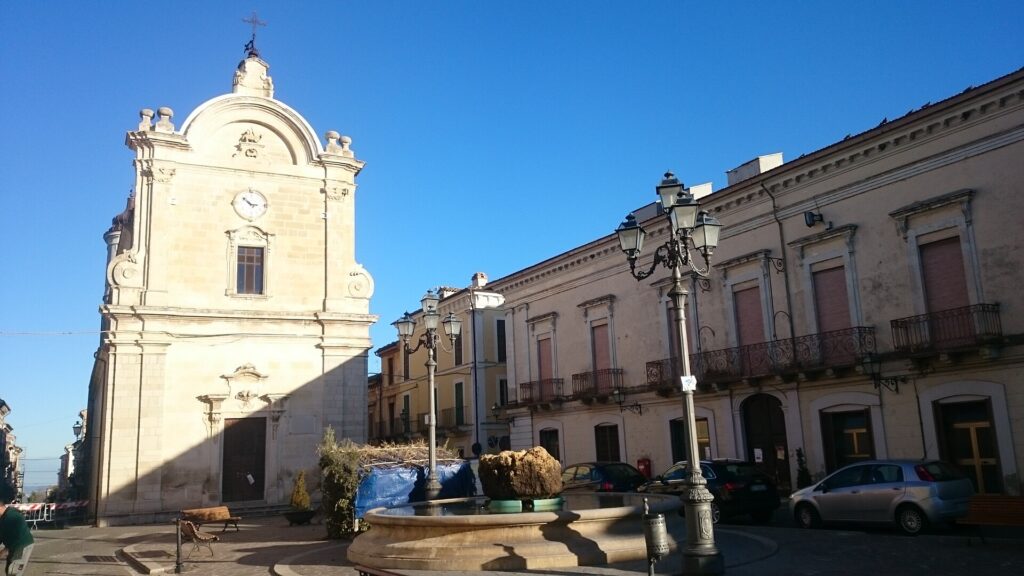
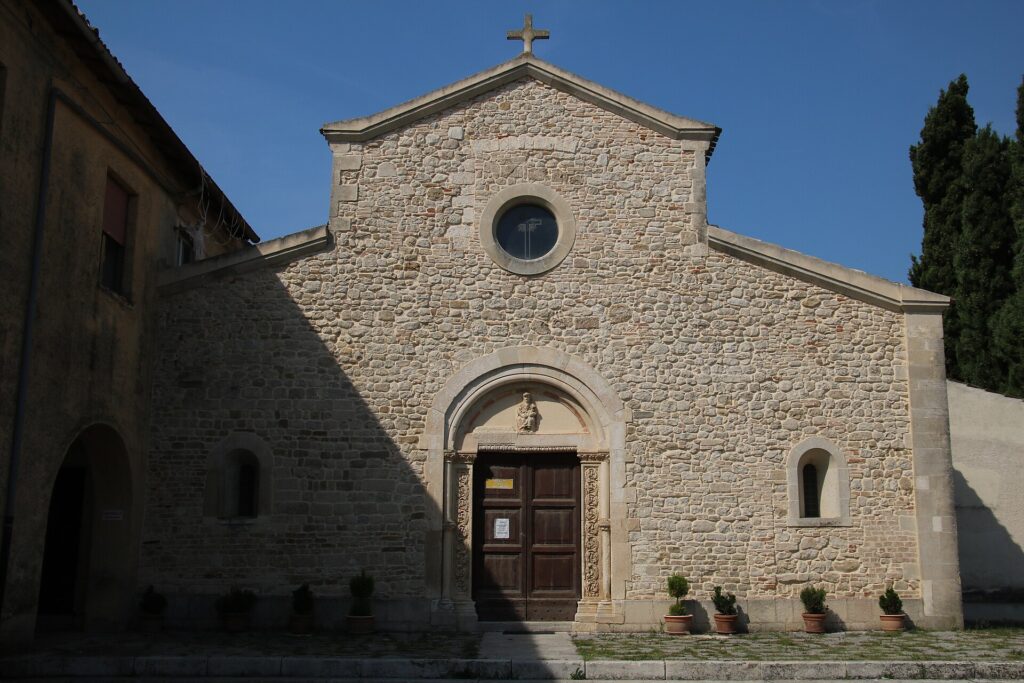
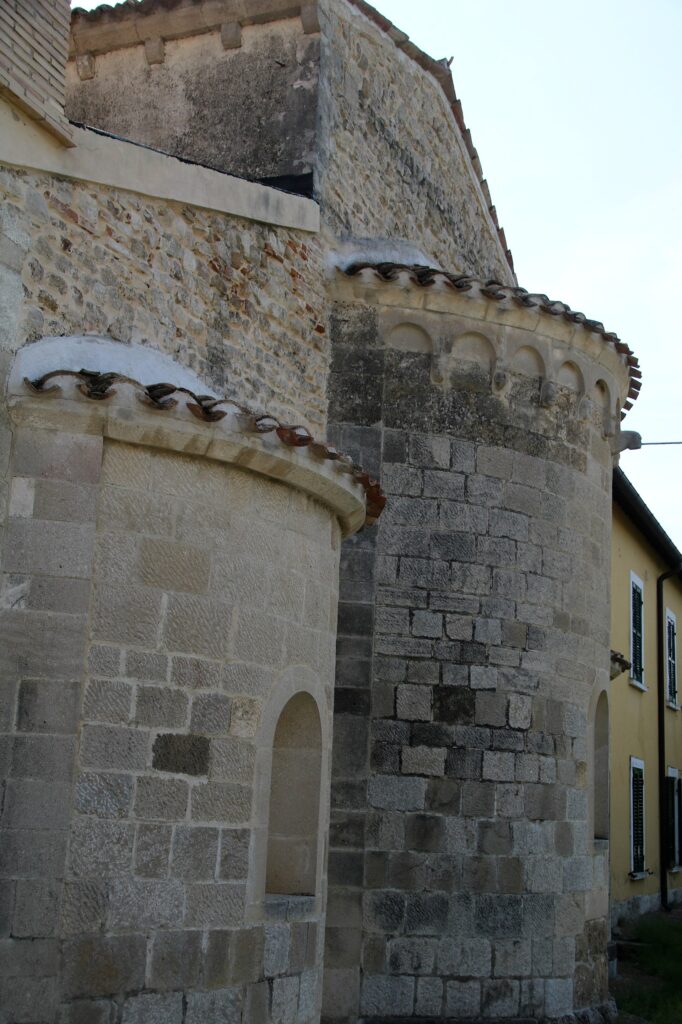
Nearby Villages near Catignano
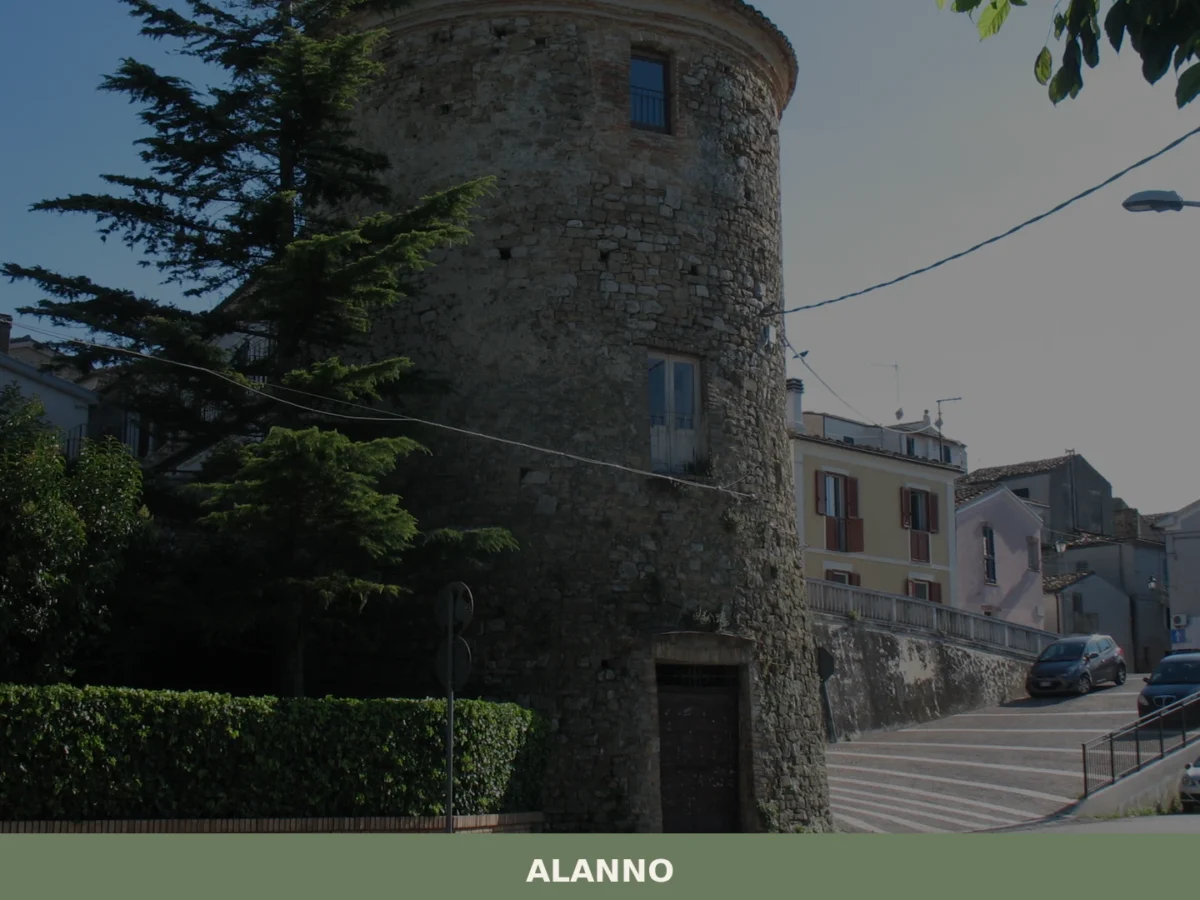
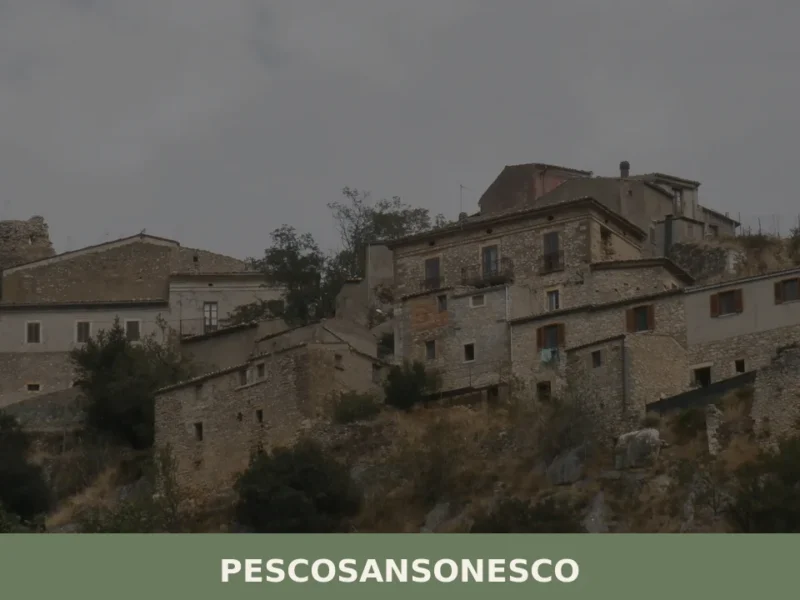
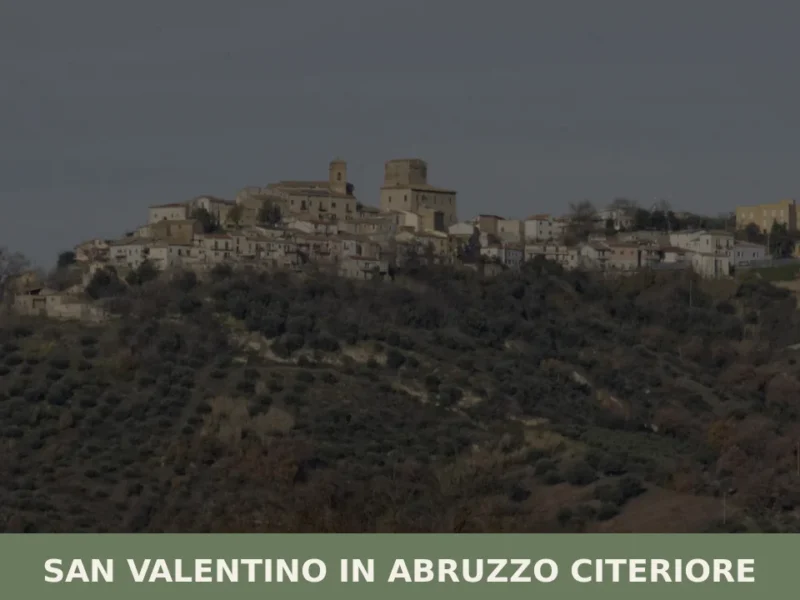
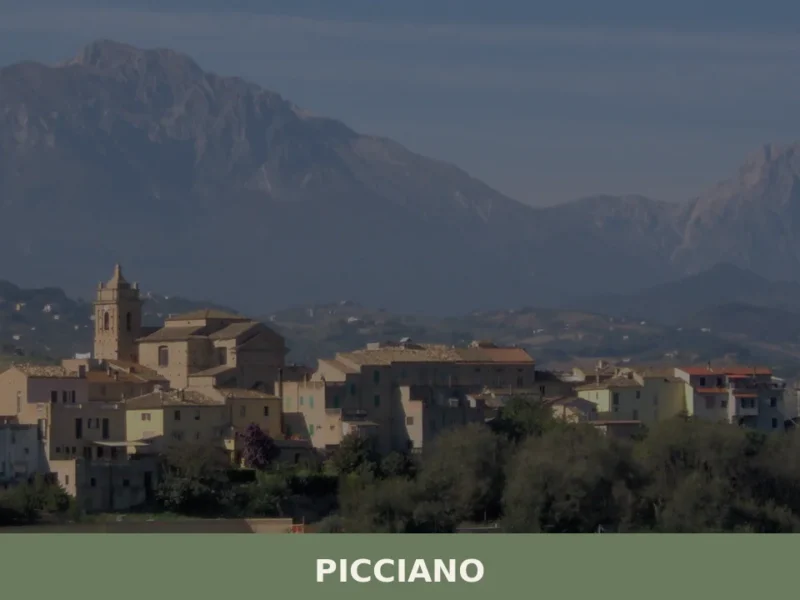

In Abruzzo More villages to discover
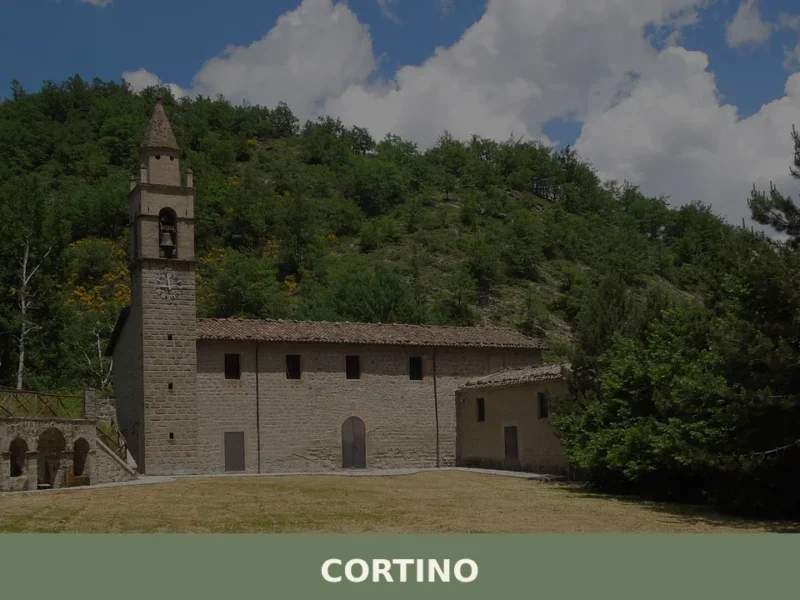
Cortino
 Mountain
Explore Cortino, a charming mountain village in Abruzzo, Italy. Discover its rich history, stunning landscapes, and authentic Italian culture off the beaten path.
Filetto
Hills
Filetto, a settlement of 854 inhabitants, is located at 403 meters above sea level in the heart of the province of Chieti. This settlement, documented in historical sources dating its presence back to the medieval era, extends across a hill overlooking the Foro Valley. Its urban layout reflects the layering of different periods, with buildings […]
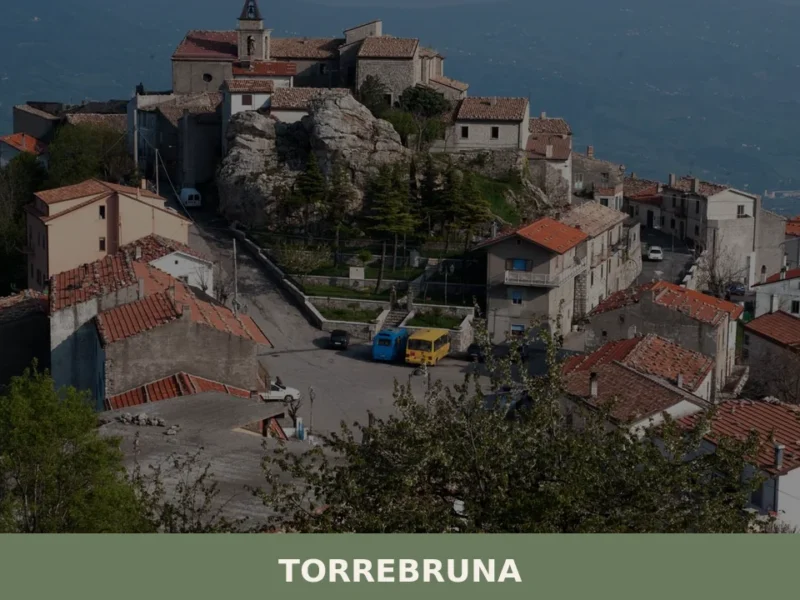
Torrebruna
Mountain
What to see in Torrebruna, Italy: 3 historic monuments, 879 inhabitants, fortified boroughs and a 17th-century church. Discover how to get there and when to visit.
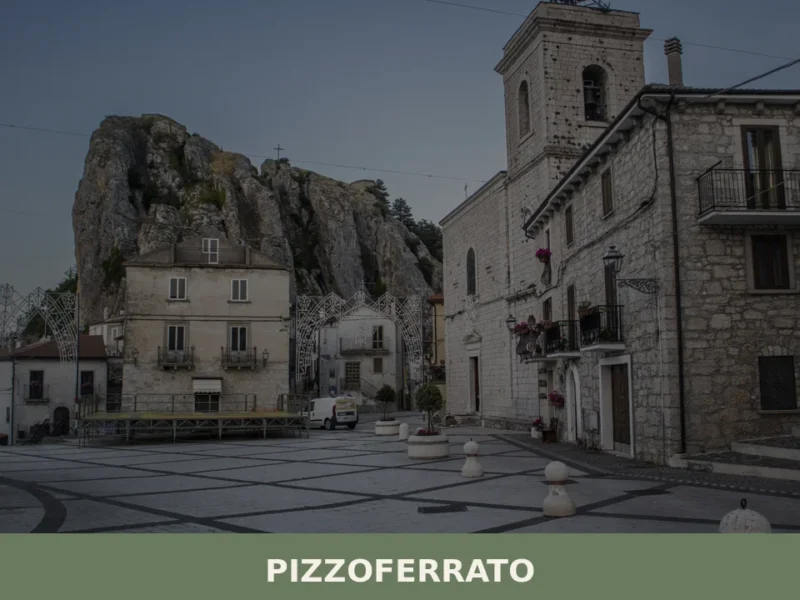
Pizzoferrato
Mountain
What to see in Pizzoferrato, Italy? Explore this mountain village at 1251 m (4104 ft) altitude. Discover ancient churches and Majella National Park. Read our guide!
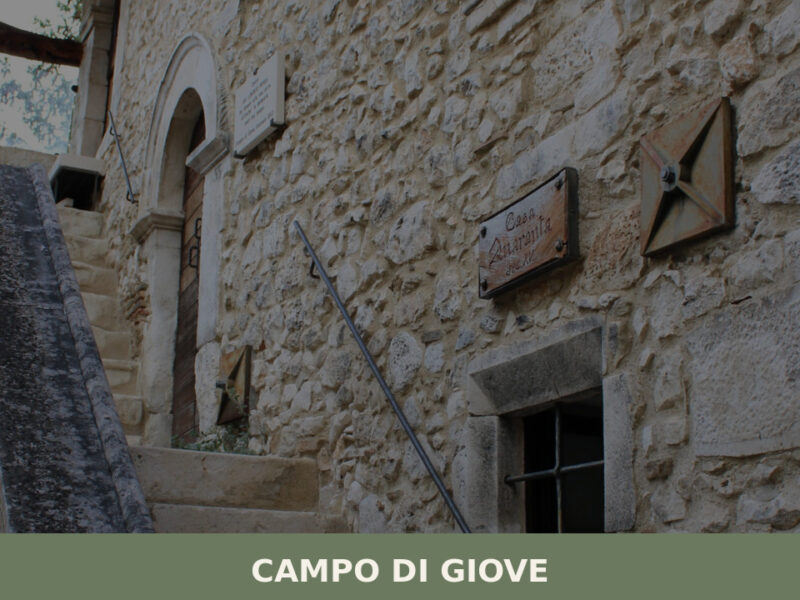
Campo di Giove
Mountain
A mountain village at 1,064 metres beneath the Majella massif. Discover what to see in Campo di Giove — medieval stone houses, highland pastures, and quiet trails.
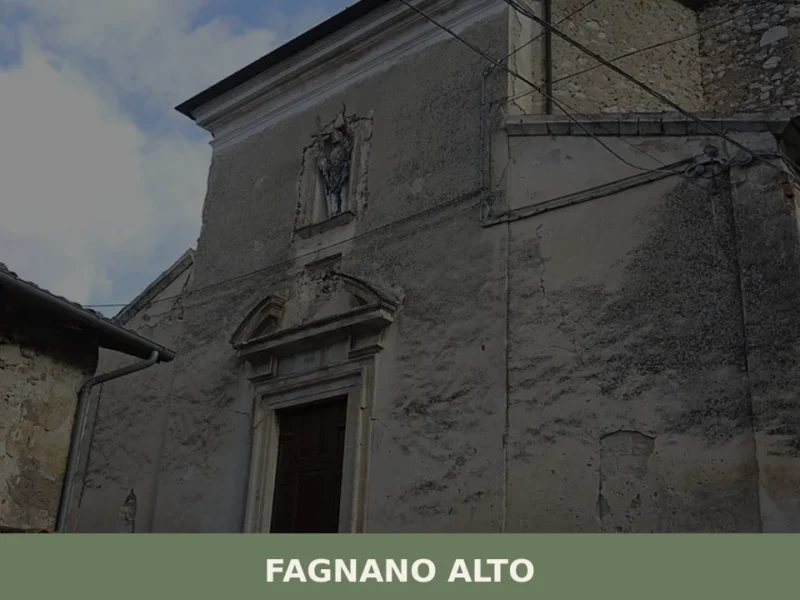
Fagnano Alto
Mountain
Fagnano Alto is not a single village but a scattered municipality: 363 inhabitants spread across twelve hamlets between 560 and 900 metres above sea level, on the eastern slope of the middle Aterno valley, in the province of L’Aquila. The administrative centre is Vallecupa, dedicated to San Donato, but each hamlet has its own patron […]
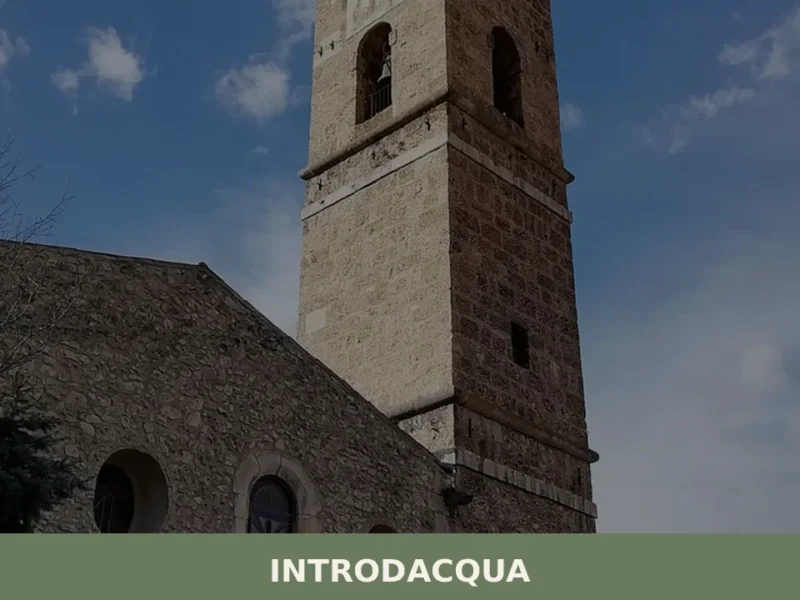
Introdacqua
Mountain
At 642 metres above sea level, at the exact point where three watercourses — the Gizio, the Nera and the San Callisto — converge in the Peligna valley, stands Introdacqua, whose Latin name Intro Acquas records this confluence of waters. The village has a current population of 2,117 and retains an urban layout reflecting at […]
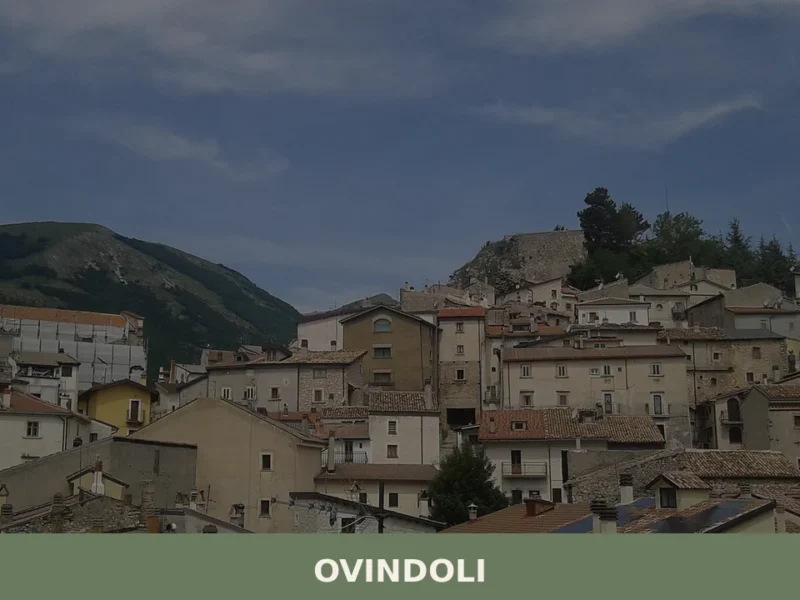
Ovindoli
Mountain
What to see in Ovindoli, Italy: ski slopes on Monte Magnola, hiking in Sirente-Velino park, 1,203 inhabitants. Discover top attractions and how to get there.
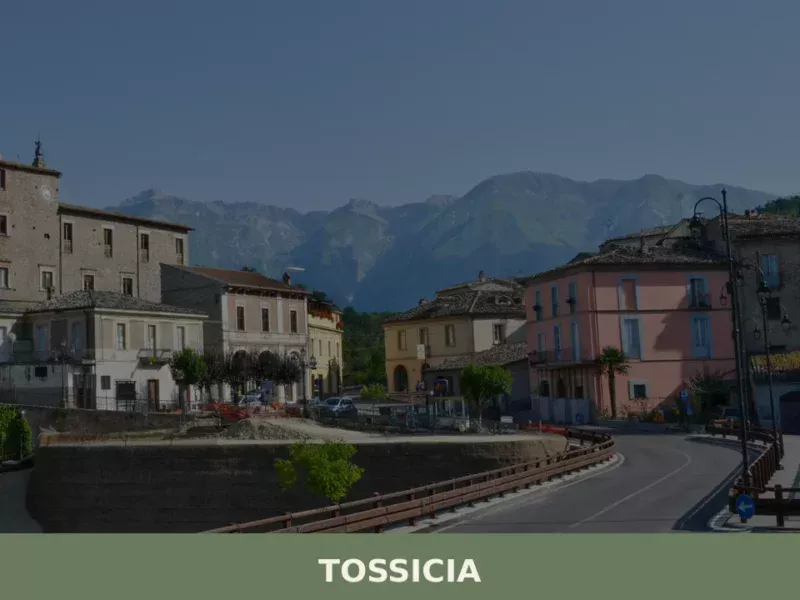
Tossicia
Mountain
what to see in tossicia: Explore Italy's Abruzzo region. This village of 1,397 offers access to Gran Sasso e Monti della Laga National Park and mountain trails. Discover more.
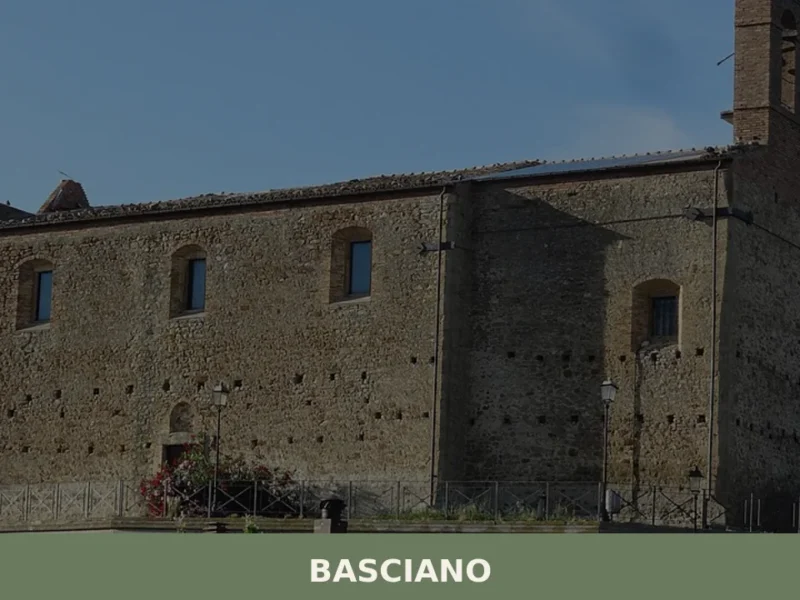
Basciano
Hills
What to see in Basciano (Italy) at an altitude of 400m. Explore the historic church and medieval tower. Discover local traditions and festivals.
🧀 Italian traditional products




🏡 Know Catignano better than we do?
If you’re a local or have been there, your knowledge matters: add what’s missing or fix a detail on this page.