


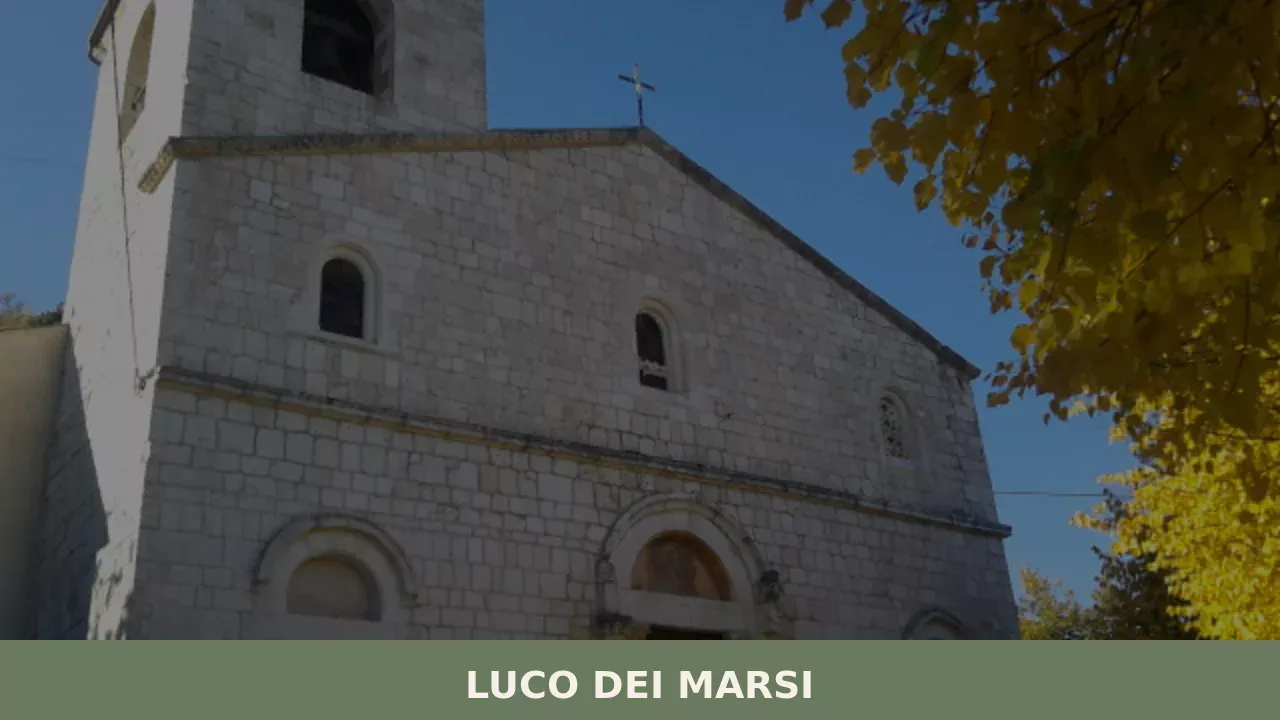
Luco dei Marsi
At 680 metres above sea level, on the eastern edge of what until 1875 was the surface of Lake Fucino — the largest lake in peninsular Italy, drained by Prince Alessandro Torlonia — stands Luco dei Marsi, a municipality of 5,857 inhabitants in the province of L’Aquila. The plain that today stretches as far as […]
Discover Luco dei Marsi
At 680 metres above sea level, on the eastern edge of what until 1875 was the surface of Lake Fucino — the largest lake in peninsular Italy, drained by Prince Alessandro Torlonia — stands Luco dei Marsi, a municipality of 5,857 inhabitants in the province of L’Aquila. The plain that today stretches as far as the eye can see below the town was, until a century and a half ago, water. Understanding what to see in Luco dei Marsi means reading the traces of this radical transformation of the landscape, which reshaped the economy, urban planning and daily life of an entire territory in the Marsica region.
History and origins of Luco dei Marsi
The place name “Luco” most likely derives from the Latin lucus, meaning a sacred grove, a place of worship associated with the pre-Roman Italic peoples. The Marsi, a people of Osco-Umbrian stock known in Roman sources for their resistance during the Social War (91–88 BC), occupied the shores of Lake Fucino on a permanent basis. The specification “dei Marsi” was added in 1863, by royal decree, to distinguish the village from other Italian towns with the same name and to affirm its belonging to the Marsican territory that had given its name to an entire Apennine civilisation.
In the Middle Ages, Luco followed the feudal fortunes of the Marsica, passing under the control of the Berardi, Counts of the Marsi, and subsequently the Colonna and Orsini families. The village held a strategic role due to its position along the routes connecting the Fucino basin with the Roveto Valley and, from there, with southern Lazio. Pope Boniface IV, born in Valeria — the ancient name for the Marsican settlement identified with the area of Luco — and pontiff from 608 to 615 AD, is the patron saint of the town: a fact that links this Apennine centre directly to the history of the early medieval Church.
The draining of the Fucino, completed in 1875, transformed Luco from a village of fishermen and shepherds into an agricultural centre. The land reclamation created thousands of hectares of farmland on the plain below, but it also redrew social tensions: the peasant struggles for the redistribution of the Torlonia lands marked the twentieth century in the Marsica, and Luco was among the municipalities involved in the occupations and demands that led to the agrarian reform of 1950.
What to see in Luco dei Marsi: churches, necropolis and the Fucino landscape
Church of Santa Maria delle Grazie
The main religious building in the old town, the church preserves a structure that was extensively reworked after the damage caused by the Marsica earthquake of 13 January 1915, which devastated the entire Fucino area and killed more than 30,000 people. The reconstruction retained the single-nave layout. Inside, there are elements of sacred art linked to the Marian devotion of the community.
Italic necropolis of Lucus Angitiae
In the area between Luco and nearby Angizia lies an archaeological zone associated with the sanctuary of the goddess Angitia, a Marsian deity connected to the cult of serpents and herbal medicine. Excavation campaigns have unearthed funerary goods, ceramics and votive objects dating from the 6th to the 3rd century BC, now partly housed in the museums of the Marsica.
Grotte di Luppa Regional Nature Reserve
A few kilometres from the town centre lies a karst system with underground cavities that are still the subject of speleological research. The area is part of the Abruzzo network of protected areas and represents an example of calcareous Apennine landscape, with rock formations and high-altitude vegetation including beech and oak woods.
The viewpoint over the Fucino Plain
From the highest points of the village, the view opens onto the Fucino plain: a rectangle of cultivated fields roughly 16 kilometres wide, geometric and flat, occupying the bed of what was once the third-largest lake basin in Europe by surface area. The visual perception of the lake’s absence is itself an element of geographical and historical interest.
Old town and post-earthquake architecture
The built-up area of Luco retains the layering typical of Marsican villages struck by the 1915 earthquake: alongside a few older elements — stone doorways, wall fragments — the twentieth-century reconstruction interventions are clearly visible, with orderly masonry buildings and redesigned squares. The urban fabric documents a community’s response to seismic destruction.
What to see in Luco dei Marsi: the table and the products of the Fucino
The Fucino plain is today one of the most productive agricultural basins in central Italy. The dominant crop is the Patata del Fucino IGP, a yellow-fleshed potato grown in the clayey soils of the former lake, which reaches considerable sizes thanks to the mineral composition of the soil. Alongside the potato, the plain produces significant quantities of the Carota dell’Altopiano del Fucino IGP — a Nantaise variety, with a regular cylindrical shape and an intense orange colour — exported throughout Europe. These two products with Protected Geographical Indication define the agricultural identity of the territory. On Luco’s tables you will also find arrosticini, skewers of mutton cut into small cubes and cooked on an elongated brazier (fornacella), and sagne e fagioli, irregular fresh pasta dressed with borlotti beans, garlic, extra virgin olive oil and chilli pepper. Pecora alla cottora — slow-cooked in a copper vessel with mountain herbs, tomato and peppers — is a dish for communal occasions, linked to patron saint festivals and family gatherings.
Among the products of the Marsica, also worth noting are Lenticchia di Fucino, raw-milk pecorino cheeses produced in the pastures between the plain and the slopes of the Abruzzo National Park, and sulla honey, harvested from the spring blooms on the plain. Zafferano dell’Aquila DOP, cultivated on the nearby Navelli plain, appears on the menus of local restaurants as a condiment for risottos and desserts. During the summer, festivals dedicated to the potato and the carrot enliven the Fucino municipalities, with food stands where you can taste Fucino potato gnocchi dressed with lamb ragù and dishes based on carrots in various preparations.
When to visit Luco dei Marsi: the best time
The patron saint festival of San Bonifacio IV falls on 25 May and is the most significant event in the community calendar: procession, religious rites and a market in the old town. Summer, from June to September, is the most practical season for those who want to combine a visit to the village with excursions across the Fucino plain and the surrounding nature areas. Summer temperatures at 680 metres remain lower than on the Lazio lowlands — average highs around 28–30 °C in July — while winters are harsh, with frequent overnight frosts and occasional snowfalls between December and February.
Autumn, particularly October, offers the chance to observe the potato and carrot harvest on the plain: an agricultural landscape in full activity, with machinery and workers on the geometric fields of the former lake. For those interested in the archaeological dimension, it is advisable to check the opening hours of the Lucus Angitiae site in advance, as they may vary by season.
How to reach Luco dei Marsi
By car, Luco dei Marsi is reached from the A25 Roma–Pescara motorway, Avezzano exit, continuing for about 10 kilometres along the Circonfucense regional road heading south. From Rome the distance is approximately 110 kilometres, covered in about one hour and twenty minutes. From Pescara, along the A25 in the opposite direction, the journey is approximately 105 kilometres. From Naples, take the A1 as far as Caianello or Cassino and then head up towards the Marsica through the Roveto Valley, for a total of approximately 180 kilometres.
The nearest railway station is Avezzano, on the Rome–Pescara line, served by regional trains at regular intervals. From Avezzano, local buses connect to Luco dei Marsi in about 15 minutes. The closest airport is Rome Fiumicino Leonardo da Vinci, approximately 150 kilometres away; Pescara’s Abruzzo Airport is approximately 120 kilometres away.
Other villages to discover in Abruzzo
Those visiting the Marsica and looking for itineraries in inland Abruzzo can head north to Lucoli, a scattered municipality in the L’Aquila area spread across more than twenty hamlets between 700 and 1,200 metres above sea level. Lucoli preserves a heritage of rural religious architecture — hermitages, hamlet churches, monastic remains — that documents the pervasive ecclesiastical presence in the Abruzzo Apennines between the Middle Ages and the early modern period. The distance from Luco is about 60 kilometres, largely on mountain roads.
Heading south-east, towards the Peligna Valley, you encounter Bugnara, a compact village on a hill overlooking the Sulmona plain. Bugnara’s urban layout, with houses built tight against one another along the slope, represents a well-preserved example of feudal-era Abruzzo town planning. The church of Santa Maria della Neve and the castle remains offer precise chronological references for the evolution of the settlement. From Luco dei Marsi, Bugnara is about 45 kilometres away via the Forca Caruso pass or the Sagittario valley road.
In Abruzzo More villages to discover
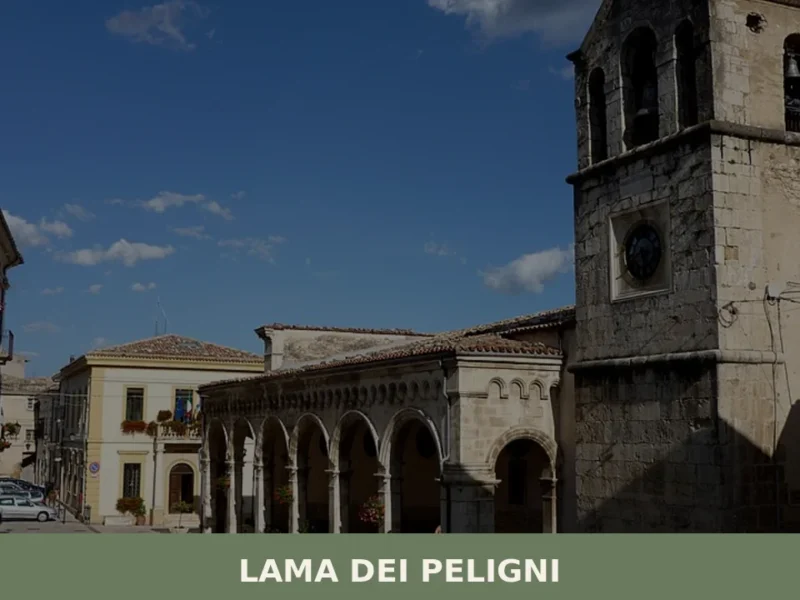
Lama dei Peligni
What to see in Lama dei Peligni: village at 669 m, Grotta del Cavallone, Majella National Park trails and arrosticini PAT. Plan your visit with this complete guide.
Frisa
At 237 metres above sea level, on the plain that connects the Chieti hills to the Adriatic coast, Frisa has a current population of 1,620 and a territory dominated by olive groves and arable land. The municipality, in the province of Chieti, retains in its urban layout the marks of an almost total reconstruction following […]
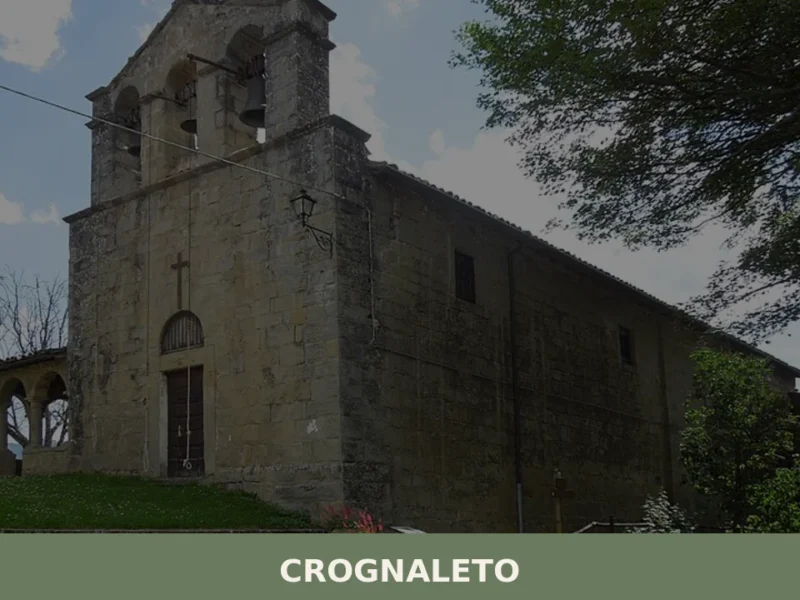
Crognaleto
Crognaleto, a scattered municipality in the province of Teramo, stands out for its average altitude of 1094 meters above sea level, positioning itself as one of the highest centers in the Gran Sasso d’Italia massif. Its territory, extensive and fragmented into over twenty hamlets, offers a diverse panorama of mountain landscapes and rural views that […]



📝 Incorrect information or updates?
Help us keep the Luco dei Marsi page accurate and up to date.