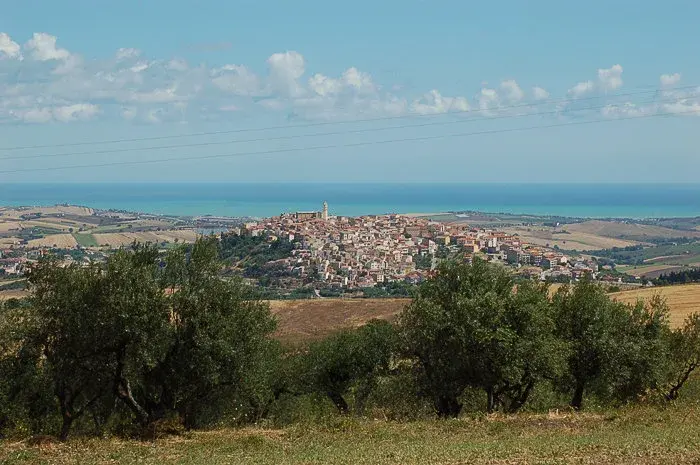
Morning light moves across the rooftops in a slow wave, catching the sandstone walls of old houses before spilling into the main piazza. At 273 metres above sea level, Montenero di Bisaccia sits on a hill that commands views stretching from the Apennine ridgeline to the Adriatic coast — a rare double horizon. With just […]
Morning light moves across the rooftops in a slow wave, catching the sandstone walls of old houses before spilling into the main piazza. At 273 metres above sea level, Montenero di Bisaccia sits on a hill that commands views stretching from the Apennine ridgeline to the Adriatic coast — a rare double horizon. With just over six thousand residents, the village carries the rhythms of a place still shaped by agriculture and seasonal ritual. This guide to what to see in Montenero di Bisaccia covers its layered history, its food traditions, and the specific landmarks worth your time in this often-overlooked corner of Molise.
The name itself is a composite story. “Montenero” — black mountain — likely refers to the dark, dense woodland that once covered the hill. “Bisaccia,” appended later, may derive from the Latin bisaccium (saddlebag) or from a Norman-era feudal designation, distinguishing this settlement from other Monteneros scattered across southern Italy. The earliest documentary evidence of habitation here dates to the medieval period, when the village formed part of the feudal system that fragmented the Molisan countryside into small, contested lordships under Norman and later Swabian rule.
Throughout the centuries, Montenero di Bisaccia changed hands among noble families who controlled much of the province of Campobasso. The village’s position — elevated enough for defence, close enough to the coast for trade — gave it strategic value disproportionate to its size. Like many settlements in the southern Apennines, it endured cycles of earthquakes, feudal taxation, and emigration, the latter accelerating sharply in the late nineteenth and early twentieth centuries when thousands left for the Americas.
Perhaps the most notable figure associated with Montenero di Bisaccia in the modern era is the broader cultural milieu of Molise, which produced writers, politicians, and artisans whose work reflected the particular tensions of a region long caught between the Kingdom of Naples and the Papal States. The village’s built environment — its churches, its narrow streets, its surviving fragments of older fortifications — reads as a physical record of those centuries of negotiation between local life and distant power.
The principal parish church, dedicated to Saint Paul the Apostle, anchors the village’s spiritual and architectural identity. Its facade is restrained, typical of southern Italian rural churches, but the interior holds altarpieces and devotional objects accumulated over several centuries. The bell tower, visible from the surrounding countryside, serves as the village’s most recognisable vertical landmark.
Walking through Montenero’s old quarter means navigating a tight grid of stone-paved alleys, external staircases, and arched passageways. Many houses retain their original sandstone construction, with doors and window frames cut from local stone. The spatial logic is defensive and communal — buildings lean toward each other, creating shade in summer and wind breaks in winter.
The ducal palace, once the seat of the feudal lords who governed the village, stands as the most substantial secular building in the centre. Its proportions reflect the administrative ambitions of its builders. Though not always open to the public, its exterior — with its portal and upper-floor loggia — repays close attention for the carved details that survive.
From several points along the village’s eastern edge, the land drops away toward the coastal plain, and on clear days the Adriatic Sea is visible as a thin band of silver on the horizon. This vantage point, roughly thirty kilometres from the shore, explains the village’s historical role as a lookout and its connection to the coastal economy of Termoli and beyond.
Outside the built centre, scattered rural chapels mark the boundaries of old agricultural estates. These small structures — often single-room, whitewashed, with a simple cross above the door — dot the landscape along unpaved tracks that follow ridgelines and stream valleys. Walking these paths in spring, when wildflowers cover the fields, connects you to the agrarian world that still defines daily life here.
The cuisine of Montenero di Bisaccia belongs to the broader Molisan tradition, which favours handmade pasta, cured pork, and olive oil pressed from local groves. Cavatelli — small, elongated shells of flour-and-water dough, rolled by hand — appear on nearly every table, dressed with ragù of pork or lamb, or with broccoli rabe and garlic. Sausages seasoned with fennel seed and dried chilli are produced domestically and by small butchers. The olive oil of this area, pressed from cultivars adapted to the region’s clay-heavy soils, tends toward a peppery, slightly bitter profile.
Seasonal eating remains the norm. In autumn, foraged mushrooms and chestnuts appear in markets and kitchens. Winter brings preserved vegetables — sun-dried tomatoes, pickled peppers, jarred artichokes. The village’s proximity to the coast means fresh fish from Termoli occasionally appears alongside the mountain staples. Local trattorias, modest in decor but serious about ingredients, serve these dishes in the straightforward, unembellished style characteristic of Molise’s interior towns.
Late spring — May and early June — offers the most favourable combination of mild temperatures, long daylight, and green landscapes. The surrounding fields are at their most colourful before the summer heat bakes the clay soils hard and brown. Summer brings warmth that can exceed 35°C in July and August, though the village’s elevation provides modest relief compared to the coast. Autumn, particularly October, is appealing for the harvest atmosphere: olive pressing begins, and the village’s agricultural calendar becomes visible in the movement of tractors and the scent of wood smoke.
The patron saint’s feast and other local celebrations typically concentrate in summer months, drawing emigrants back and filling the piazza with temporary stages, food stalls, and evening processions. These events offer the most concentrated view of communal life. Winter is quiet, sometimes sharply cold with wind off the Apennines, and some services reduce their hours — but the village takes on a stark, photogenic quality under low grey skies.
By car, Montenero di Bisaccia is reached from the A14 Adriatic motorway, exiting at Montenero di Bisaccia–Vasto Sud and following provincial roads inland for approximately ten kilometres. From Campobasso, the regional capital, the drive covers roughly 80 kilometres northeast along the SS647 (Bifernina) and then connecting roads — a journey of about one hour and fifteen minutes. From Termoli, the nearest coastal town with a train station, the village is about 30 kilometres, or roughly 35 minutes by car.
The nearest railway station with regular service is Termoli, on the Adriatic main line connecting Bologna, Pescara, and Bari. From Termoli, local bus services operated by regional companies connect to Montenero, though schedules are limited and should be checked in advance. The nearest airports are Pescara (Abruzzo Airport), approximately 120 kilometres north, and Naples Capodichino, roughly 230 kilometres southwest. Renting a car is strongly recommended for exploring the village and its surroundings with any flexibility.
Montenero di Bisaccia sits within a constellation of small hill towns that together define the character of the Campobasso province. To the south, the landscape folds into deeper valleys and higher ridges, where settlements cling to slopes above rivers that cut through limestone and clay. Each village has its own dialect inflections, its own patron saint, its own version of the region’s shared culinary grammar. Exploring even two or three of these places reveals how much variety exists within a territory that most Italian travellers dismiss with the joke that “Molise doesn’t exist.”
Consider continuing your journey to Termoli, the fortified fishing town on the Adriatic coast whose medieval borgo vecchio and Romanesque cathedral offer a striking contrast to Montenero’s inland character. Alternatively, head deeper into the region’s mountainous interior to discover Agnone, a town famous for its thousand-year-old bell foundry — one of the oldest in the world — and a centro storico that preserves an unusually intact medieval street plan. Together, these villages sketch the full range of what Molise offers: coast, hill, and mountain, each with its own light and logic.
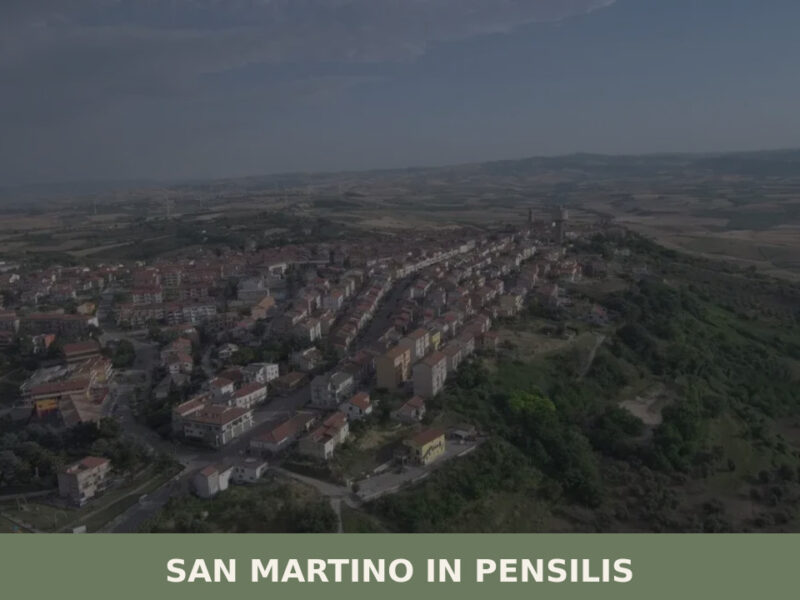
Morning light catches the pale stone of a church bell tower, and below it, the long main street empties into a piazza where a handful of men stand with espresso cups, talking over one another. San Martino in Pensilis sits at 281 metres above sea level in the province of Campobasso, a settlement of roughly […]
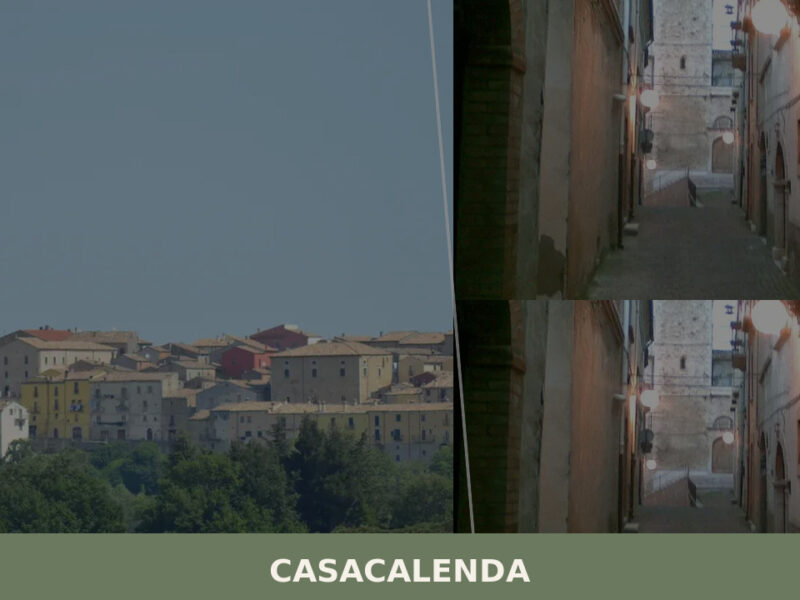
Morning light hits the limestone facades along Corso Roma and the sound is not silence but something close — a dog barking two streets away, the clatter of a shutter being folded back, the low idle of a Fiat Panda parked outside the only bar open before eight. Casacalenda sits at 631 metres above sea […]
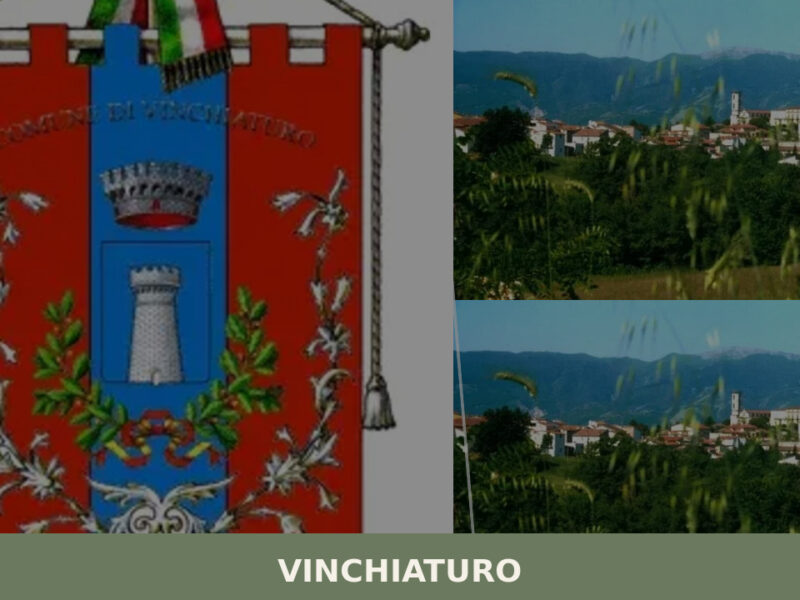
Morning mist settles into the valley below as church bells mark the hour from somewhere above the rooftops. At 620 metres above sea level, the air in Vinchiaturo carries a sharpness that cuts through the warmth of Molise’s interior hills. With just over 3,300 inhabitants, this is a village where the rhythm of daily life […]
📝 Incorrect information or updates?
Help us keep the Montenero di Bisaccia page accurate and up to date.