


Rutigliano
What to see in Rutigliano, a town at 125 m in Puglia. Terracotta whistle museum, Norman tower, Peucetian necropolis and PAT cuisine. Plan your visit now.
Discover Rutigliano
The potter’s hands sink into fresh clay, shaping curves and features on a terracotta whistle: the rooster of Rutigliano, a symbol of fertility and good luck, takes form through gestures passed down for centuries in the workshops of the old town.
Every year on 17 January, during the feast of Sant’Antonio Abate, hundreds of these whistles are displayed and sold along the streets, in one of the most deeply rooted artisan traditions in southern Italy.
Asking what to see in Rutigliano means starting right here, from this clay-rich land between the Murgia plateau and the Adriatic Sea, where a town of 18,293 inhabitants at 125 metres above sea level preserves across its neighbourhoods a heritage that weaves together Messapian archaeology, Norman architecture, and everyday practices tied to the land.
History and origins of Rutigliano
The origin of the name Rutigliano has long been debated among scholars. The most widely accepted theory traces it to the Latin gentile name Rutilius, indicating an ancient fundus Rutilianus — a Roman landed estate belonging to a family of that name. Other theories, less supported by documentation, have proposed derivations from the Latin rutilus (red, golden), perhaps referring to the colour of the clay soil that characterises the area.
The territory, however, was already frequented well before Roman colonisation: archaeological finds have brought to light materials from the Peucetian and Messapian periods, confirming a stable human presence in the area from as early as the 5th–4th century BC.
The first certain documentary mention of the settlement dates to the Norman period.
In 1098, a diploma references the church of Santa Maria della Colonna, a sign of an already organised settlement equipped with religious structures. Under Norman-Swabian rule, Rutigliano gained strategic importance thanks to its position along the routes connecting Bari to the Murgian hinterland. In the 13th century, during the reign of Frederick II of Swabia, the territory saw the construction of a watchtower and defensive works that reinforced its role as an outpost. The transition to Angevin and then Aragonese rule marked alternating phases of growth and crisis, with the town suffering raids and plagues but always managing to reorganise itself around its original urban layout.
Between the 16th and 18th centuries, Rutigliano came under the control of various feudal families, including the De Mauro and the Carafa.
It was during this period that the artisan traditions linked to clay working became firmly established: archival documents attest to the presence of numerous active figuli (potters) in the town. The 19th century brought the abolition of feudalism and entry into the modern administrative framework of the newly unified state. The population, which numbered around 6,000 inhabitants in the 1861 census, grew progressively to surpass the current 18,000 residents, maintaining a close bond with agriculture — particularly olive and vine cultivation — and with the ceramic production that still identifies Rutigliano within the Apulian landscape today.
What to see in Rutigliano: 5 essential attractions
1. Chiesa Matrice di Santa Maria della Colonna
The Chiesa Matrice di Santa Maria della Colonna is the main religious building in Rutigliano, situated in the centre of the old town. The original structure dates to the 11th century, as attested by Norman sources from 1098, but its current appearance is the result of successive alterations carried out between the 15th and 18th centuries.
The façade features a rose window and portals in local stone. Inside, Baroque altars, Neapolitan-school paintings, and a 16th-century baptismal font are preserved. The church is dedicated to the Madonna della Colonna, whose cult is deeply rooted in the local community. It is here that the main liturgical functions related to the patronal feast of San Nicola di Mira, celebrated on 6 December, take place.
2. Norman Tower
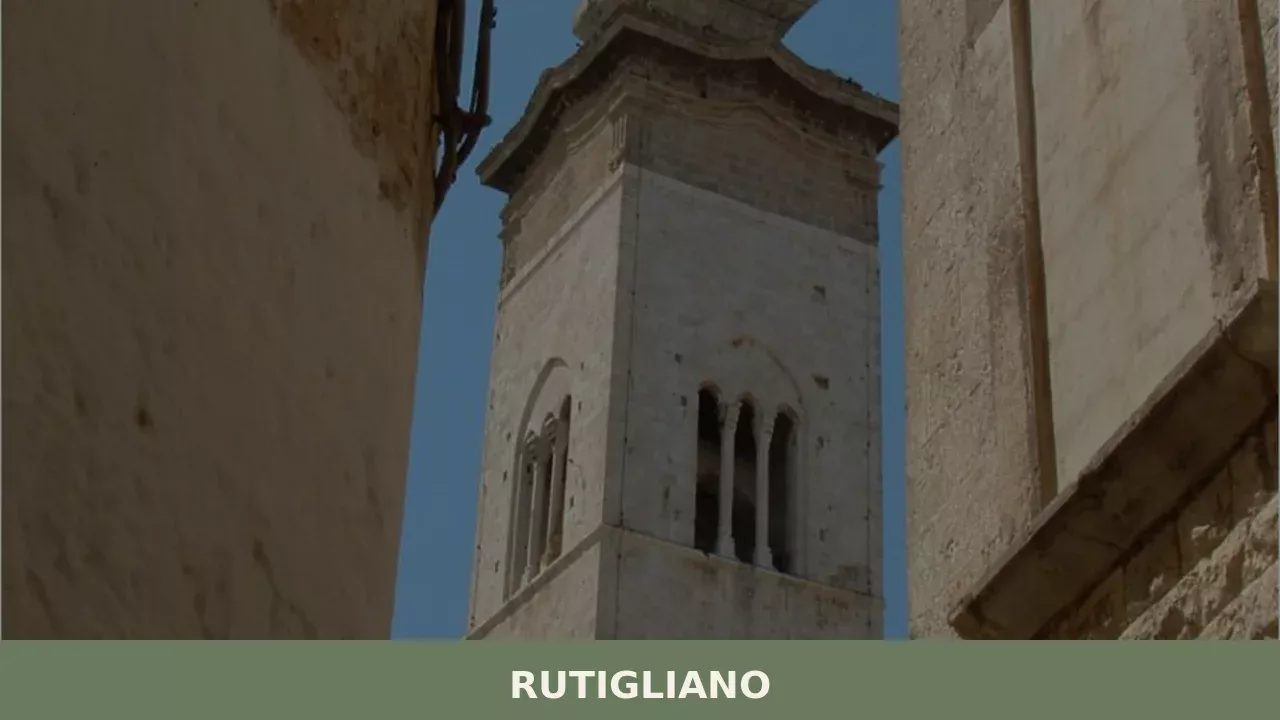
The Norman Tower dominates the town’s skyline and is what remains of the ancient medieval defensive system. Erected between the 11th and 12th centuries during Norman rule, the tower rises with a quadrangular plan and masonry of local limestone ashlar blocks. The building underwent modifications during the Swabian period and was later incorporated into subsequent structures, but its lower section preserves the original wall fabric. From its top, the view extends from the Murgia plateau to the Adriatic coastline.
The monument has been the subject of restoration and consolidation work and today serves as the most recognisable visual landmark for anyone arriving in Rutigliano along the provincial road.
3. Civic Museum of the Terracotta Whistle
Rutigliano is home to the only Civic Museum of the Terracotta Whistle in Italy, established to document and preserve a tradition dating back at least to the 17th century. The collections display hundreds of pieces from local workshops and private donations: ranging from traditional rooster-shaped whistles — the symbol of Rutigliano — to satirical ones depicting political figures, trades, and scenes of daily life. The museum, housed in a palazzo in the old town, also includes potters’ working tools and panels illustrating the stages of clay processing, from extraction to kiln firing. It is an essential stop for understanding the cultural identity of the town.
4. Church and Convent of San Francesco da Paola
The complex of the Church and Convent of San Francesco da Paola is located in the southern part of the town centre. Founded in the 16th century by the Order of the Minims, the convent preserves a cloister with stone-columned arcades and a central well. The adjoining church features a single nave with stucco decorations and 18th-century paintings.
The convent’s refectory, partially open to visitors, shows traces of frescoes. After the suppression of religious orders in the 19th century, the complex was repurposed for various civic uses. In recent decades it has been partially restored and now hosts cultural initiatives and temporary exhibitions, as well as serving as a venue for events during patronal festivities.
5. Peucetian necropolis and archaeological sites
The territory of Rutigliano has yielded significant evidence of Peucetian civilisation, an Italic people settled in central Puglia between the 6th and 3rd centuries BC. Excavation campaigns carried out from the 1970s onwards have uncovered a vast necropolis with grave goods including red-figure ceramics, bronze weapons, and jewellery. Some of these artefacts are held at the National Archaeological Museum of Bari, while informational panels within the municipal territory mark the discovery areas.
For those visiting Rutigliano with a historical and archaeological interest, these sites offer a concrete perspective on the cultural layering of an area inhabited continuously for over two millennia.
What to eat in Rutigliano: local cuisine and traditional products
Rutigliano’s cuisine is rooted in the peasant tradition of central Puglia, an area where the availability of extra virgin olive oil, durum wheat, vegetables, and legumes has shaped over the centuries a gastronomic repertoire that is plain and substantial. The proximity to the Adriatic Sea, barely twenty kilometres away, introduces oily fish into the local diet, but it is the land — the red of the clay, the green of the olive groves, the yellow of ripe wheat — that sets the rhythm of the table. Recipes handed down within families follow the agricultural and liturgical calendar: different dishes for feast days, for work in the fields, for days of abstinence.
Among the dishes most commonly found in homes and trattorias in the town, Acquasale (PAT) holds a prominent place.
It is a humble preparation based on stale bread soaked in water, dressed with fresh cherry tomatoes, onion, oregano, and extra virgin olive oil, sometimes enriched with eggs. It was the meal of farmers during the hot months, when work in the fields left no time for cooking.
Alongside Acquasale, the local tradition includes orecchiette with turnip tops — a signature dish of the entire region — and fava beans with chicory, eaten especially in spring when wild greens abound in the surrounding countryside.
The gastronomy of the Bari area includes several products recognised as Traditional Agri-Food Products (PAT) by the Ministry of Agricultural Policies. Among these, Africani (PAT) are small almond-paste and cocoa confections coated in dark chocolate, widespread across the province of Bari and also found in Rutigliano’s pastry shops, especially during the Christmas period. Wild asparagus (PAT), gathered between March and April in the Murgian countryside, is eaten in frittatas or boiled and dressed with oil and lemon.
Asparagus preserved in oil (PAT) represents the traditional preservation technique that extends their consumption beyond the brief harvesting season, using local extra virgin olive oil and wine vinegar.
The most important gastronomic event is the Feast of Sant’Antonio Abate, held on 17 January, which, alongside the famous terracotta whistle exhibition, features stalls selling local food products: cheeses, taralli, preserves in oil, and new-season oil.
In spring and summer, food festivals dedicated to specific dishes enliven the rural districts of the territory. Rutigliano’s weekly market is a good source for those seeking extra virgin olive oil of the Coratina and Ogliarola varieties, table olives, and seasonal vegetables grown in the surrounding fields.
Rutigliano’s territory falls within the production area of Gioia del Colle DOC, a denomination that encompasses red, rosé, and white wines. The red, based on the Primitivo grape, presents a deep ruby colour with notes of dark fruit and spices. The rosé, obtained from the same grape variety with a brief maceration, is dry and fresh, suited to fish dishes and raw vegetables served with olive oil dip.
Wineries in the area, some open for visits by appointment, offer tastings that allow visitors to appreciate the differences between various vintages and vineyard plots, in an area where viticulture has been documented since the medieval period.
When to visit Rutigliano: the best time
17 January, the feast of Sant’Antonio Abate, is the time of year when Rutigliano expresses its identity to the fullest: the terracotta whistle fair draws visitors from across Puglia and beyond, turning the streets of the centre into an open-air market where artisans and collectors meet.
The celebrations for the patron saint San Nicola di Mira fall on 6 December, with a procession and fireworks, but the second Sunday of May, 16 July, and 14 September also host religious observances worth attending for their ethnographic and participatory value. Spring, from April to June, is the best period for those who prefer to explore the territory on foot or by bicycle, with mild temperatures and fields in bloom.
Summer can be hot and crowded along the nearby coastline, but the town, at 125 metres of altitude, benefits from slightly better ventilation than the coast.
September and October offer still-long days, golden light, and the chance to witness the grape harvest and olive picking. Winter, mild compared to northern Italy, is the season of festivities and local markets. Those seeking quiet and wanting to visit the museum and churches without crowds will find ideal conditions in February, March, and November: few tourists, artisan workshops open, and unhurried daily rhythms.
How to reach Rutigliano
Rutigliano is located approximately 25 kilometres south-east of Bari.
By car, from the A14 Bologna–Taranto motorway, take the Bari Sud exit and continue on the provincial road 240 heading south for about 15 kilometres. From Taranto, travelling along the SS 100 towards Bari, the exit for Rutigliano is signposted after Gioia del Colle, with a total journey of about 70 kilometres.
Bari-Karol Wojtyła Airport is approximately 35 kilometres away, and the drive takes 30–40 minutes via the Bari ring road.
Rutigliano railway station is served by the Ferrovie del Sud Est (FSE) line, which connects the town to Bari Centrale with a travel time of approximately 30–40 minutes and several daily services. For those arriving by train in Bari via the Trenitalia or Italo network, transferring to the FSE line is straightforward from the central station. Bus services operated by FSE and other regional companies connect Rutigliano to neighbouring municipalities and the provincial capital.
The local road network, flat and well maintained, also makes the town easily accessible by bicycle from Rutigliano and its surroundings.
Other villages to explore in Puglia
Those visiting Rutigliano who wish to continue exploring inland Puglia can head towards Ascoli Satriano, in the province of Foggia, reachable in about an hour and a half by car via the SS 96 and then the SS 655.
Ascoli Satriano shares with Rutigliano a remarkable archaeological layering — the marble Griffins displayed in its local museum are famous — but it offers a completely different landscape, hilly and dry, marked by the Carapelle river and the wheat fields of the southern Tavoliere plain. Pairing these two towns reveals the variety of Puglia, from the coastal and clay-rich Bari area to the cereal-growing and mountainous Daunia.
Another itinerary leads to Rignano Garganico, known as the “balcony of Puglia” for the view that opens from its belvedere over the Tavoliere plain. From Rutigliano it can be reached in about two hours by taking the A14 motorway northwards to Foggia and then climbing towards the Gargano.
Rignano, with its population of just a few hundred residents, is the demographic opposite of Rutigliano, but shares with it a history linked to territorial control and transhumance routes.
A three- or four-day trip taking in Rutigliano, Ascoli Satriano, and Rignano Garganico allows you to cross three distinct Puglias: the Bari coastal strip, the Daunia sub-Apennine area, and the Gargano promontory, with landscapes, dialects, and cuisines that change at every stop. For further reading on the history and regional context, you can consult the Wikipedia page dedicated to Rutigliano and the Italia.it portal.
In Apulia More villages to discover
Castelluccio dei Sauri
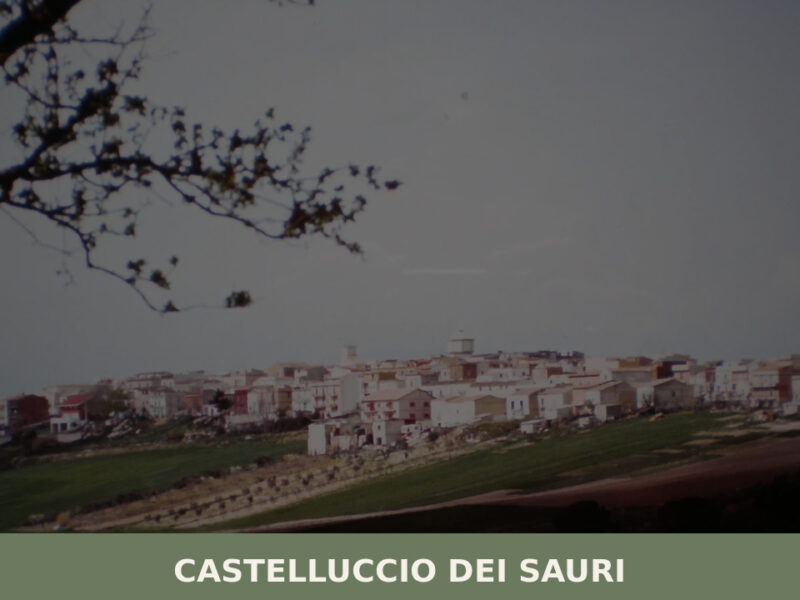
A hilltop village of 2,024 inhabitants overlooking Puglia's Tavoliere plain. Castelluccio dei Sauri offers ancient tratturi routes, quiet stone lanes, and the deep agricultural traditions of the Capitanata.
Gravina in Puglia
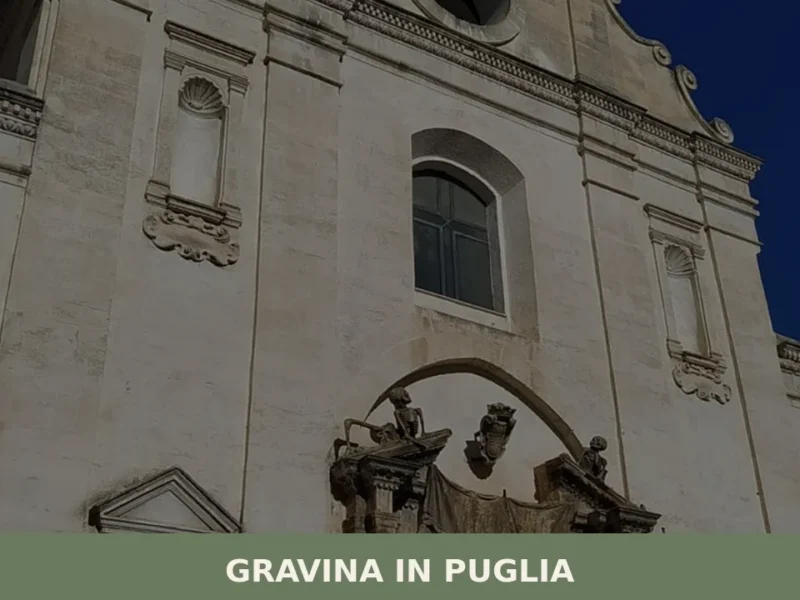
In 1092, Humfred of Hauteville confirmed the privileges of the cathedral dedicated to Santa Maria Assunta, a document that fixes in the historical record the ecclesiastical rank of Gravina in Puglia well before Frederick II chose it as an imperial hunting reserve. Today, anyone walking along the edge of the gravina — the karstic canyon […]
Brindisi
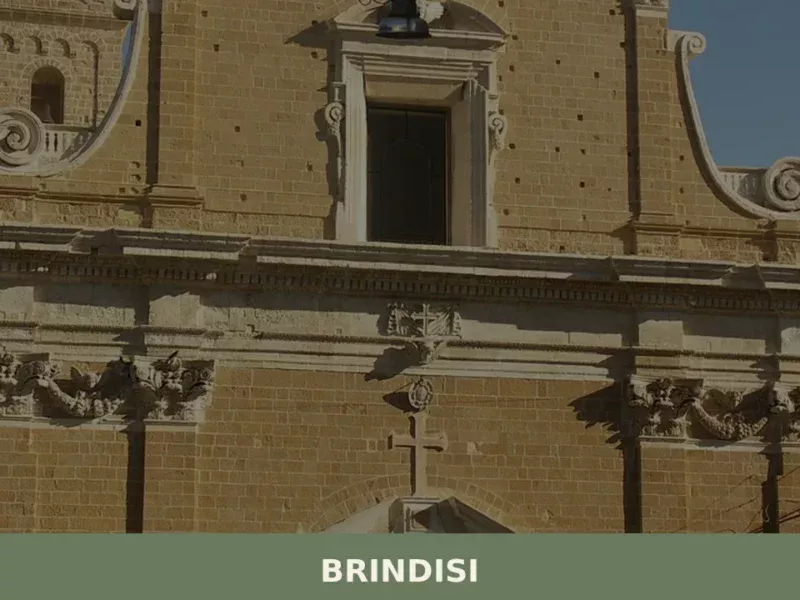
From the port of Brindisi, at a strategic point where the Adriatic opens towards the East, stands the Monument to the Italian Sailor, an imposing structure that since 1933 has watched over the city and its maritime routes. This city, overlooking a natural inlet that for centuries has welcomed fleets and trade, has historically been […]

📝 Incorrect information or updates?
Help us keep the Rutigliano page accurate and up to date.