


Bitonto
 Plains
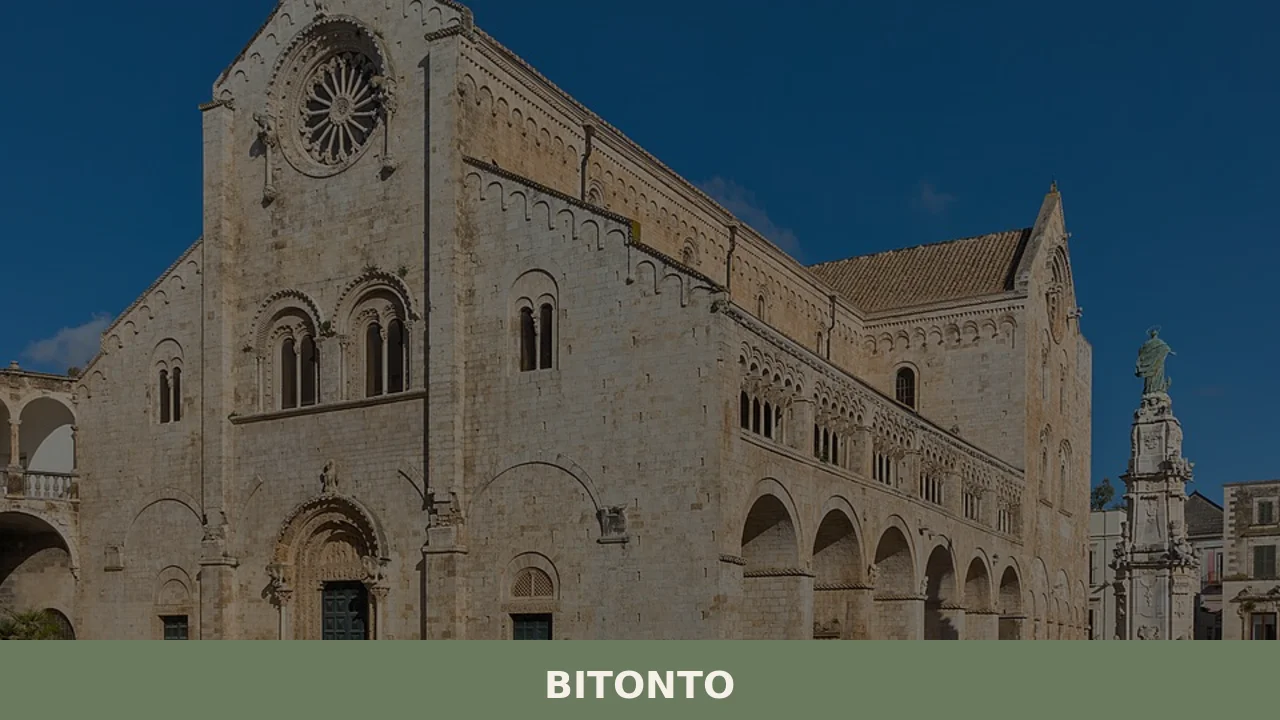
In 1089, Pope Urban II consecrated the cathedral of Bitonto, a building in local limestone that still dominates Piazza Cattedrale today with its sixteen-spoke rose window and its sculpted portal. That ceremony marked the city’s definitive entry into the network of major Apulian episcopal seats, confirming a political and religious role that Bitonto had maintained […]
Discover Bitonto
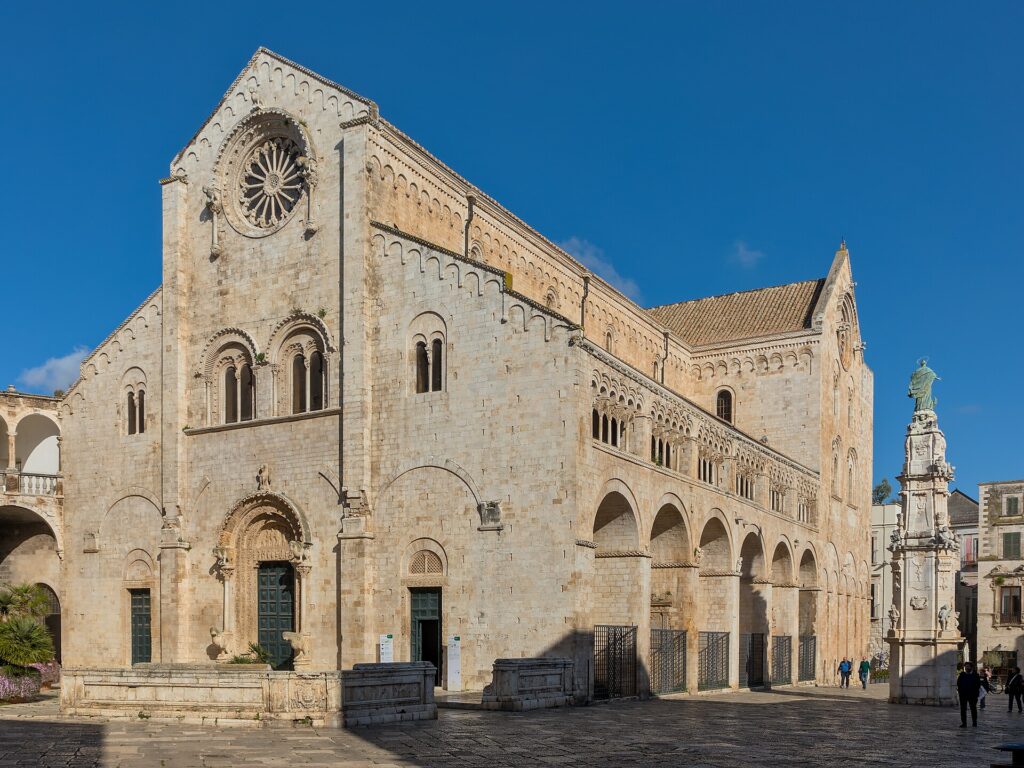
In 1089, Pope Urban II consecrated the cathedral of Bitonto, a building in local limestone that still dominates Piazza Cattedrale today with its sixteen-spoke rose window and its sculpted portal. That ceremony marked the city’s definitive entry into the network of major Apulian episcopal seats, confirming a political and religious role that Bitonto had maintained for centuries.
Located at 118 metres above sea level in the province of Bari, with a population of 53,168, this city preserves one of the most layered historic centres in the entire region. Understanding what to see in Bitonto means crossing twenty-five centuries of history concentrated within a few hundred square metres, from Peucetian hypogea to Renaissance loggias and underground olive mills carved into the rock.
History and origins of Bitonto
The name Bitonto most likely derives from Messapian or Peucetian, the languages of the Iapygian peoples who inhabited central Puglia before Romanisation. The most widely accepted hypothesis traces it to the pre-Latin root butunton or bytontinon, attested on coins dating to the 4th–3rd century BC found within the municipal territory.
These autonomous mintings — in bronze, bearing the image of Athena and a grain of wheat — demonstrate that even in the pre-Roman era Bitonto was an economically active centre, integrated into the trade routes between the Greek colonies on the coast and the settlements of the Peucetian hinterland. Romanisation, which took place during the 3rd century BC, transformed the settlement into a municipium connected to the Via Traiana, the arterial road linking Benevento to Brindisi.
The medieval period marked the phase of greatest urban expansion. Under the Normans, between the 11th and 12th centuries, Bitonto gained recognition as an autonomous episcopal seat and began construction of its Romanesque cathedral, completed during the 13th century with contributions attributed to the school of Nicola Pisano. Frederick II of Swabia included the city in the defensive system of the Kingdom of Sicily, and in 1229 Bitonto endured a siege during the conflict between the emperor and papal forces.
In 1734, the Battle of Bitonto was fought near the city, in which the Spanish troops of Charles of Bourbon defeated the Austrian army — an event that led to the creation of an independent Kingdom of Naples under the Bourbon dynasty. A commemorative column, erected at the site of the battle, still marks that historical turning point today.
Among the notable figures linked to the city is Tommaso Traetta, an opera composer born in Bitonto in 1727 and active at the courts of Parma and Saint Petersburg, considered one of the reformers of 18th-century opera. In the 20th century, Bitonto underwent a significant economic transformation linked to olive oil production: the medieval underground olive mills, carved into the limestone subsoil of the historic centre, were gradually replaced by modern facilities, but they remain open to visitors as examples of industrial archaeology.
The population, stable at around 50,000–55,000 inhabitants since the 1970s, reflects the character of a city that has maintained an agricultural productive base — above all linked to extra virgin olive oil — alongside a growing cultural and academic vocation, thanks to the presence of a satellite campus of the University of Bari.
What to see in Bitonto: 5 essential attractions
1. Cathedral of San Valentino
Built between the 11th and 13th centuries, the Cathedral of San Valentino is the most representative monument of Apulian Romanesque architecture outside Bari. The main façade features three sculpted portals; the central one, datable to around 1200, displays Old Testament scenes with a narrative detail comparable to the reliefs of Modena and Ferrara.
The rose window with sixteen small columns, supported by zoomorphic figures, filters light into the central nave, which is punctuated by columns with figured capitals. The crypt, accessible from the right nave, preserves remains of 11th-century floor mosaics. The hexagonal ambo, signed by the master Nicolaus in 1229, is decorated with a lectern eagle carved with almost goldsmith-like precision. The cathedral stands in Piazza Cattedrale, at the highest point of the historic centre.
2. National Gallery “Girolamo e Rosaria Devanna”
Housed inside Palazzo Sylos-Calò, a 16th-century Renaissance building with a first-floor loggia attributed to the school of Giulio Romano, the National Gallery holds works from the 15th to the 18th century. The core collection includes paintings from the Neapolitan and Venetian schools, among them canvases attributed to Paolo Veronese and Carlo Rosa. The palazzo itself is an integral part of the visit: the internal courtyard, with its double order of arcades and busts sculpted in medallions, represents one of the best-preserved examples of Renaissance civic architecture in Puglia. The gallery is accessible from Via Planelli, a few steps from the cathedral, and constitutes one of the main reasons for anyone wondering what to see in Bitonto beyond its religious buildings.
3.
Church of Purgatorio
Built in 1690 on commission from the Archconfraternity of Death, the Church of Purgatorio is distinguished by its Baroque façade dominated by skulls and crossed tibias carved in local stone. This funerary iconographic programme, widespread across Puglia and Campania, reaches here a rare level of elaboration: the two lateral statues flanking the portal depict draped skeletons in theatrical poses. The interior, with a single nave, preserves 17th-century canvases and a high altar in polychrome marble. The church stands on Via Ferrante Aporti, in the southern sector of the historic centre, and the contrast between the severity of the decorative theme and the exuberance of the Baroque execution makes it an essential stop for understanding 17th-century popular religiosity in Puglia.
4. Angevin Tower and the medieval walls
Of Bitonto’s medieval defensive system, significant stretches of the walls survive along with the Angevin Tower, a cylindrical tower dating to the 14th century, visible along the south-eastern perimeter of the historic centre. The structure, with a diameter of approximately ten metres and walls over two metres thick, formed part of a circuit that included twenty-seven towers documented in 15th-century sources.
Several sections of the walls, built with squared limestone blocks, are visible along Via Porta La Maya and Via Mura del Carmine. The tower was restored in the 2000s and is now open to visitors during cultural events. From this position, the settlement logic of the city becomes clear, with the religious centre at the top and the walls following the morphology of the lama (ravine) below.
5. Underground olive mills of the historic centre
Beneath the streets and palazzi of Bitonto’s historic centre, dozens of underground olive mills open up — spaces carved into the limestone rock and used for crushing olives from the Middle Ages until the 19th century. The best known, open to visitors by reservation, is located beneath Palazzo Vulpano-Sylos on Via Santi Medici. Inside, the original stone millstones, wooden screw presses and decanting basins are preserved. The constant underground temperature — around 15–18 degrees — ensured ideal conditions for processing. These mills document the importance of olive cultivation to Bitonto’s economy: in the 18th century the city had over one hundred milling facilities, a number that made it one of the leading olive oil centres in southern Italy.
What to eat in Bitonto: local cuisine and traditional products
The cuisine of Bitonto is rooted in the peasant tradition of central Puglia, where extra virgin olive oil is not a condiment but the very foundation of the daily diet.
The Cima di Bitonto cultivar, an indigenous olive variety widespread throughout the municipal territory, produces an oil with an intense fruity character and an almond-like aftertaste that accompanies every dish, from raw bruschetta to cooked soups. Durum wheat, grown on the plains south of the city, provides the raw material for handmade fresh pasta — orecchiette, cavatelli, strascinati — which remains the most common first course on family tables. The influence of the sea, just fifteen kilometres away, arrives in the form of anchovies, octopus and mussels, which alternate with lamb from the Murgia hinterland.
Among the dishes that best define the Bitonto table is Acquasale (PAT), an essential preparation that originated as a farmer’s breakfast: stale bread soaked in water, dressed with raw olive oil, fresh tomato, oregano and onion, sometimes enriched with a beaten egg. The simplicity of the ingredients should not deceive: the quality of the oil and the bread — baked in wood-fired ovens with durum wheat flour — determines the success of the dish.
Oven-roasted lamb with potatoes in the Lecce style, also known as Auniceddhru allu furnu (PAT), is the dish of celebrations: local lamb, thickly cut potatoes, cherry tomatoes, onions and grated pecorino, slow-roasted in the oven until a golden crust forms. It is traditionally prepared for Easter and patron saint festivals, when neighbourhood bakery ovens were made available to local families.
The Bitonto area and the wider Apulian territory boast several products recognised as Traditional Agri-Food Products (PAT). Lamb alla gravinese (PAT), braised with seasonal vegetables, represents another variation of the sheep-rearing tradition common to inland Puglia.
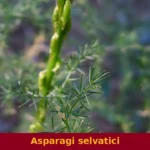
Wild asparagus (PAT), gathered between March and April in the countryside along the edges of the Lama Balice, is eaten in frittatas, boiled with oil and lemon, or preserved as Asparagus in oil (PAT), a practice that ensures its availability throughout the year. Among confectionery preparations are Africani (PAT), small almond-paste pastries coated in dark chocolate whose name refers to the dark colour of the glaze, widely sold in pastry shops across the province of Bari.
The gastronomic calendar of Bitonto revolves around the feast of the Immaculate Conception and the patron saint’s feast on 26 May, during which the streets of the historic centre host stalls selling local products, including new-season oil, fennel-seed taralli and Bari-style focaccia. In autumn, between October and November, the olive harvest brings the surrounding countryside to life, and several mills open their doors for tastings of freshly pressed oil.
The weekly market, held on Tuesday mornings in the area of the municipal sports ground, offers seasonal fruit and vegetables from local farms.
On the drinks front, the Bitonto area falls within the production zone of Gioia del Colle DOC and Castel del Monte DOC, denominations that include reds based on Primitivo and Nero di Troia. Amaro del Gargano (PAT), made with medicinal herbs gathered on the Gargano promontory, is a digestif widespread across Puglia and available in Bitonto’s bars and restaurants as well. Anisetta (PAT), a liqueur based on green anise, traditionally accompanies the after-meal coffee, especially on convivial occasions.
When to visit Bitonto: the best time of year
Spring, from April to June, is the most favourable period to visit Bitonto. Temperatures range between 15 and 25 degrees, the light is sharp, and the surrounding countryside is covered with almond blossoms and wild asparagus. On 26 May, the day of the patron saint’s feast dedicated to the Immaculate Conception, the city organises religious processions, brass band concerts and a fair that occupies the historic centre for three days. It is the best time to observe Bitonto’s community life at its most collective. Between May and June, music festivals linked to the figure of Tommaso Traetta also take place, with Baroque and operatic concerts staged in the cathedral and in the noble palazzi.
Autumn, particularly October and November, offers a different and complementary experience.
The olive harvest season transforms the rural landscape: the olive groves around the city, with trees that in some cases exceed five hundred years of age, are beaten and harvested using methods that combine traditional and modern techniques. Several local producers organise visits to their mills during the pressing season. Summer, from July to August, brings temperatures above 30 degrees and tourist flows concentrated along the coast; those who choose this period will find a quieter historic centre but with reduced opening hours for some monuments. Winter is mild — rarely below 5 degrees — and well suited to cultural visits without crowds, especially in January and February.
How to reach Bitonto
Bitonto lies 17 kilometres west of Bari, connected to the regional capital by the state road 98 and the A14 Bologna–Taranto motorway, with an exit at the Bitonto toll station. From Taranto the distance is approximately 95 kilometres (one hour and fifteen minutes), from Foggia approximately 130 kilometres (one hour and thirty minutes). Bitonto railway station, on the Ferrotramviaria Bari–Barletta line, offers frequent connections with Bari Centrale (approximately 20 minutes’ travel time) and with the coastal towns northward as far as Barletta.
Trains depart at intervals of 20–30 minutes during peak hours.
Bari-Karol Wojtyła Airport is 12 kilometres from Bitonto, reachable in approximately 15 minutes by car. There is no direct public transport link between the airport and Bitonto, but it is possible to reach Bari Centrale by shuttle bus or train and continue from there on the Ferrotramviaria. For those arriving from the Gargano or the northern Adriatic coast, the provincial road 231 offers an alternative route to the motorway, passing through the olive-grove landscape of the Bari hinterland. The city has several free parking areas along the perimeter of the walls, from which the historic centre can be reached on foot in five minutes.
Other villages to explore in Puglia
Those visiting Bitonto who wish to deepen their knowledge of inland Puglia can combine their trip with a stop at Casalvecchio di Puglia, a small centre in the province of Foggia founded by Albanian communities in the 15th century. In Casalvecchio, the Byzantine rite survives and variants of Arbëreshë, the Albanian language of Italy, are still spoken.
The contrast with Bitonto is stark: on one hand a Latin episcopal city, on the other a village of Eastern origin. The distance between the two centres is approximately 120 kilometres, covered in about one hour and forty minutes via the A14 and the provincial roads of the Daunia Sub-Apennines. The pairing allows visitors to observe two radically different settlement models within the same region.
For an itinerary that also includes the sea, Mattinata, on the southern Gargano, offers a landscape opposite to that of the Bitonto plain: limestone cliffs, bays accessible only by sea, and dense Mediterranean vegetation of Aleppo pines and mastic trees. Mattinata is approximately 170 kilometres from Bitonto (two hours by car), but the combination of the two locations — the olive-grove hinterland and the Gargano coast — captures the geographical variety of Puglia better than any route limited to a single area.
For updated information on the opening hours of Bitonto’s monuments, consult the official website of the Municipality of Bitonto, while historical details are available on the Wikipedia page dedicated to Bitonto and on the Touring Club Italiano portal.
Frequently asked questions about Bitonto
What is the best time to visit Bitonto?
Spring (April–June) and autumn (September–October) offer the most pleasant conditions, with mild temperatures ideal for exploring the historic centre on foot. The feast of the patron Immacolata Concezione falls on 26 May, animating Piazza Cattedrale and the surrounding streets with processions and local events. October is particularly atmospheric during the olive harvest season, when the territory's Cima di Bitonto cultivar is pressed and the connection between city and countryside becomes tangible. Summer is hot but manageable given Bitonto's position at 118 metres above sea level.
What are the historical origins of Bitonto?
Bitonto was settled by the Peucetians, an Iapygian people of pre-Roman central Puglia, who minted autonomous bronze coins bearing Athena and a grain of wheat as early as the 4th–3rd century BC. The city's name derives from the pre-Latin root butunton or bytontinon, attested on those very coins. Romanisation in the 3rd century BC transformed it into a municipium on the Via Traiana. Under the Normans it became an episcopal seat, and in 1734 the Battle of Bitonto established Bourbon rule over the Kingdom of Naples — a turning point marked by a commemorative column still visible today.
What to see in Bitonto? Main monuments and landmarks
The Cathedral of San Valentino in Piazza Cattedrale is unmissable: its 16-spoke rose window, three sculpted portals and the 1229 ambo signed by master Nicolaus represent the peak of Apulian Romanesque outside Bari. The National Gallery Devanna inside Palazzo Sylos-Calò displays 15th–18th century paintings including works attributed to Veronese. The Baroque Church of Purgatorio on Via Ferrante Aporti features an extraordinary façade carved with skulls and draped skeletons. The 14th-century Angevin Tower and stretches of medieval walls complete the circuit. Underground olive mills beneath Palazzo Vulpano-Sylos on Via Santi Medici are visitable by reservation.
Are there museums, churches or historic buildings to visit in Bitonto?
Yes. The National Gallery 'Girolamo e Rosaria Devanna', housed in the Renaissance Palazzo Sylos-Calò on Via Planelli, holds paintings from the Neapolitan and Venetian schools and a double-order arcaded courtyard that is itself a highlight. The Cathedral of San Valentino preserves 11th-century crypt mosaics and the signed ambo of 1229. The Church of Purgatorio (1690) on Via Ferrante Aporti is notable for its elaborate funerary Baroque decoration. The underground olive mills beneath Palazzo Vulpano-Sylos require advance booking. For current opening hours and admission prices, check the Comune di Bitonto official website or contact the local pro loco.
Where to take the best photos in Bitonto?
The façade of the Cathedral of San Valentino in Piazza Cattedrale, best photographed in morning light when the rose window faces east, is Bitonto's most iconic shot. The internal courtyard of Palazzo Sylos-Calò, with its double arcade and sculpted medallion busts, offers an intimate Renaissance composition. The Baroque façade of the Church of Purgatorio, with its carved skulls and skeletal statues, rewards close-up detail photography. The Angevin Tower along the south-eastern walls provides a wider urban view, showing how the city's limestone fabric follows the morphology of the surrounding lama ravine.
What can you do in Bitonto? Activities and experiences
Bitonto rewards slow, on-foot exploration of its stratified historic centre. Guided tours of the underground olive mills beneath Palazzo Vulpano-Sylos offer a rare industrial archaeology experience (booking required). The National Gallery Devanna combines art history with a Renaissance palazzo visit. The feast of the Immacolata Concezione on 26 May provides an opportunity to witness authentic local religious and civic traditions. Food and wine enthusiasts can seek out local producers of Cima di Bitonto extra virgin olive oil, one of Puglia's most documented indigenous cultivars, and sample traditional dishes such as acquasale and lamb roasted with potatoes in local restaurants.
Who is Bitonto suitable for? Families, couples, hikers, solo travelers?
Bitonto suits culturally curious travellers of all kinds. Art and architecture lovers will find exceptional Romanesque and Baroque heritage concentrated within a walkable historic centre. Couples and solo travellers drawn to authentic, non-touristy Puglia will appreciate the city's depth without the crowds of Alberobello or Ostuni. Families with older children can engage with the underground olive mills and the vivid skull-carved façade of the Church of Purgatorio. Food enthusiasts focused on olive oil culture and traditional Apulian cuisine will find Bitonto one of the most substantive destinations in the province of Bari.
What to eat in Bitonto? Local products and specialties
Bitonto's table is built around extra virgin olive oil from the indigenous Cima di Bitonto cultivar, characterised by an intense fruity flavour with an almond aftertaste. Acquasale (PAT) — stale bread soaked in water, dressed with raw oil, fresh tomato, oregano and onion — is the essential peasant dish. Handmade pasta (orecchiette, cavatelli, strascinati) made from local durum wheat forms the backbone of first courses. Auniceddhru allu furnu (PAT), oven-roasted lamb with potatoes, cherry tomatoes and pecorino, is the celebration dish. Wild asparagus (PAT), gathered in spring, and lamb alla gravinese (PAT) braised with vegetables complete the local repertoire.
📷 Photo Gallery — Bitonto
Nearby Villages near Bitonto
In Apulia More villages to discover
Corato
 Hills
Hills
What to see in Corato, a city at 232 m in Puglia. 5 attractions, underground olive presses, Castel del Monte 18 km away, PAT dishes. Plan your visit now.

Cagnano Varano
 Sea
Sea
6,579 residents live between a brackish lagoon and the Gargano hills. Stone lanes, patron saints Michele and Cataldo, and a shoreline unlike anywhere else in Foggia province.
Gravina in Puglia
Hills
In 1092, Humfred of Hauteville confirmed the privileges of the cathedral dedicated to Santa Maria Assunta, a document that fixes in the historical record the ecclesiastical rank of Gravina in Puglia well before Frederick II chose it as an imperial hunting reserve. Today, anyone walking along the edge of the gravina — the karstic canyon […]
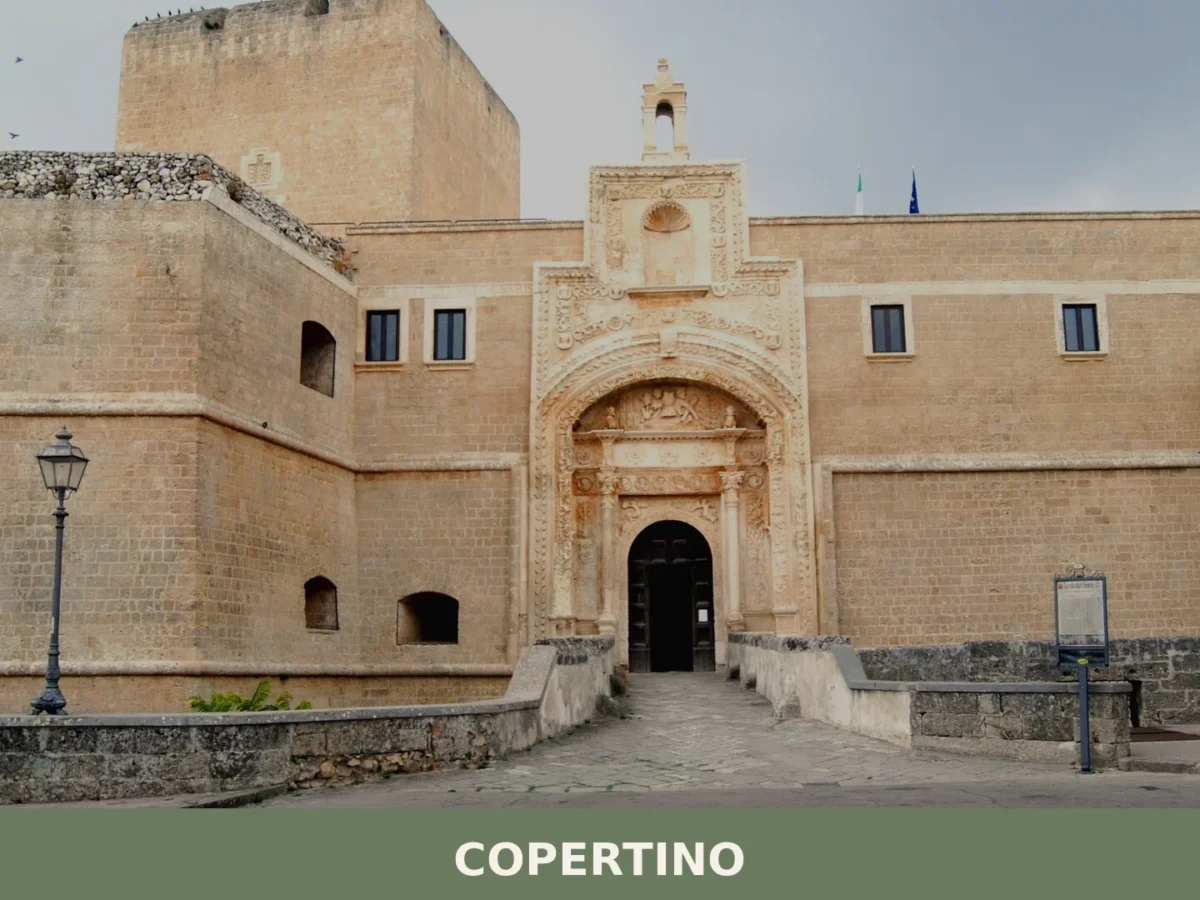
Copertino
Plains
Population 22,827. A fortified medieval settlement transformed by Renaissance merchant wealth, with six convents and the birthplace of a Franciscan mystic.
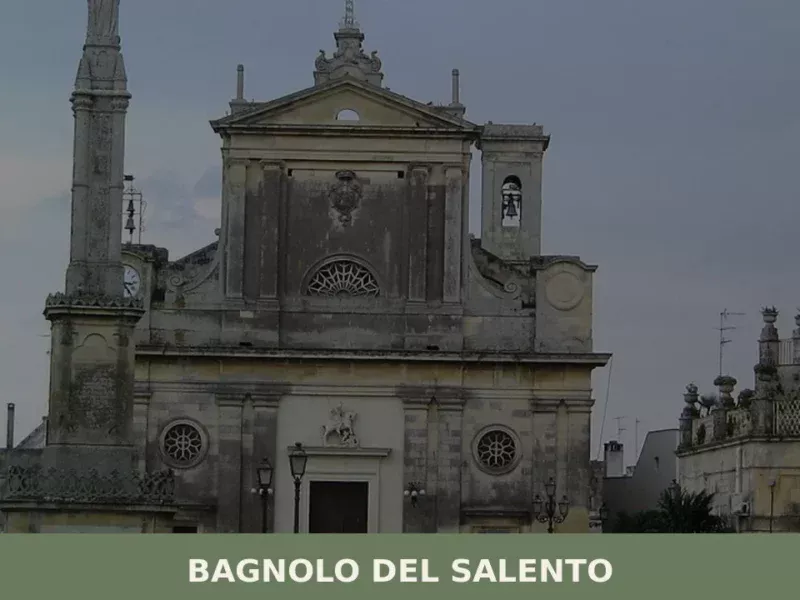
Bagnolo del Salento
Plains
Bagnolo del Salento: discover the village, visit historic churches, and taste traditional cuisine. Plan your trip now!
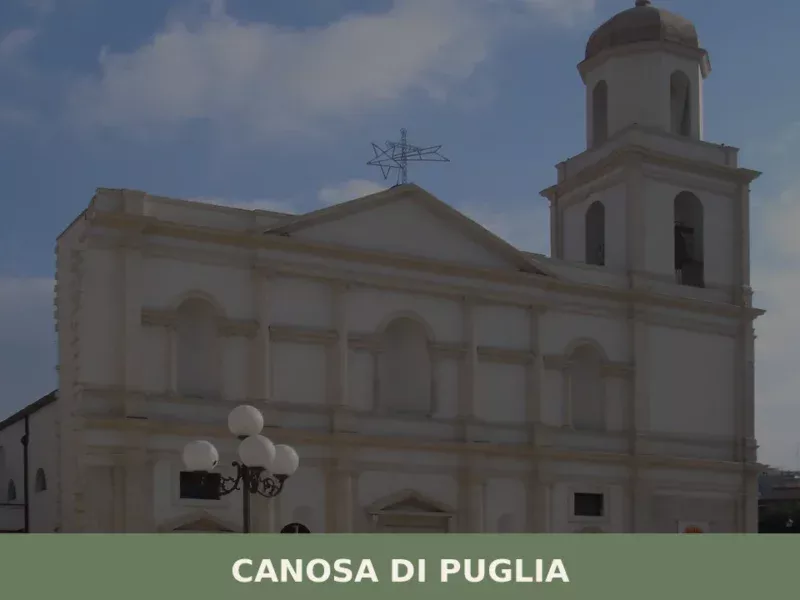
Canosa di Puglia
Hills
Discover what to see in Canosa di Puglia: Roman hypogea, Norman mausoleum, cathedral, archaeology museum and local food in northern Puglia.
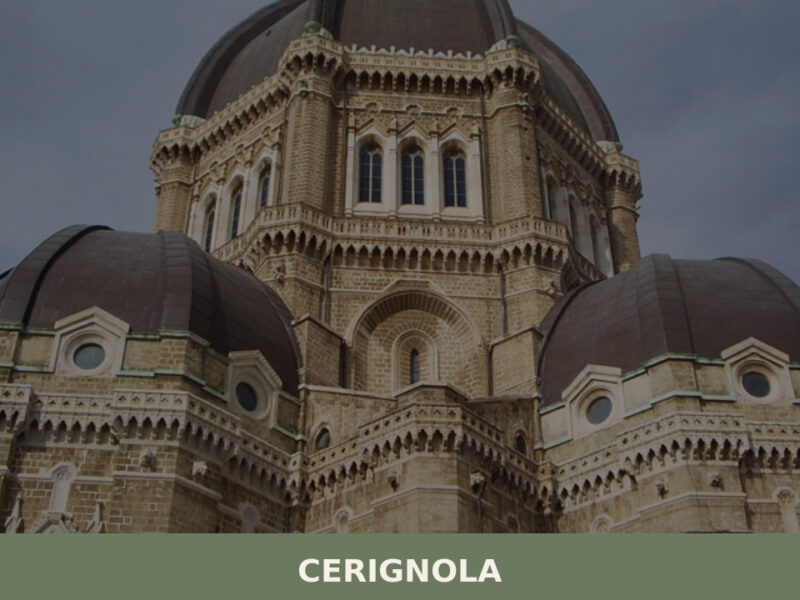
Cerignola
Plains
A complete guide to Cerignola in Puglia's Tavoliere plain — its medieval quarter, cathedral, Teutonic tower, renowned olives, and the deep agricultural heritage of the province of Foggia.
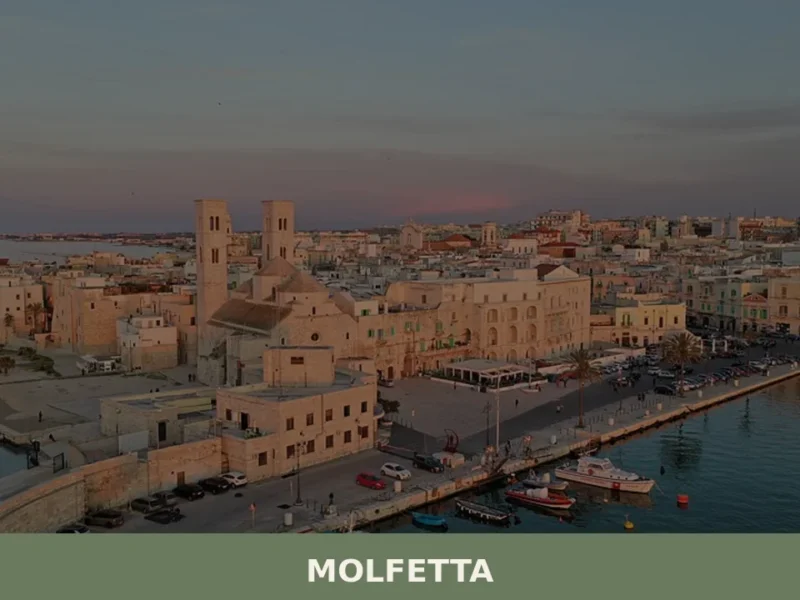
Molfetta
Sea
What to see in Molfetta: Adriatic port town at 15m elevation with 57,329 residents. Explore the Cathedral of San Corrado and Pulo sinkhole. Plan your visit now.
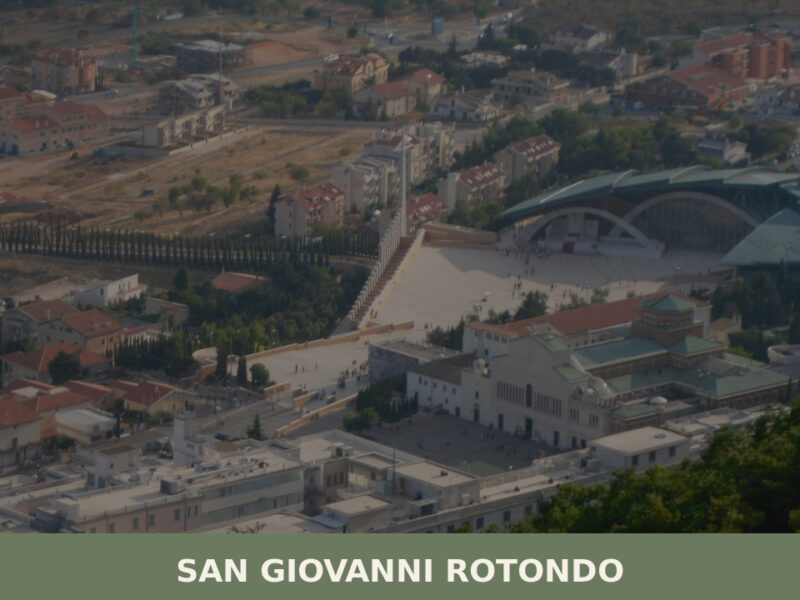
San Giovanni Rotondo
Hills
San Giovanni Rotondo, in the Apulian Gargano, combines faith, medieval history, and nature. Discover the must-see attractions, traditional dishes, and tips for visiting Padre Pio's hometown.
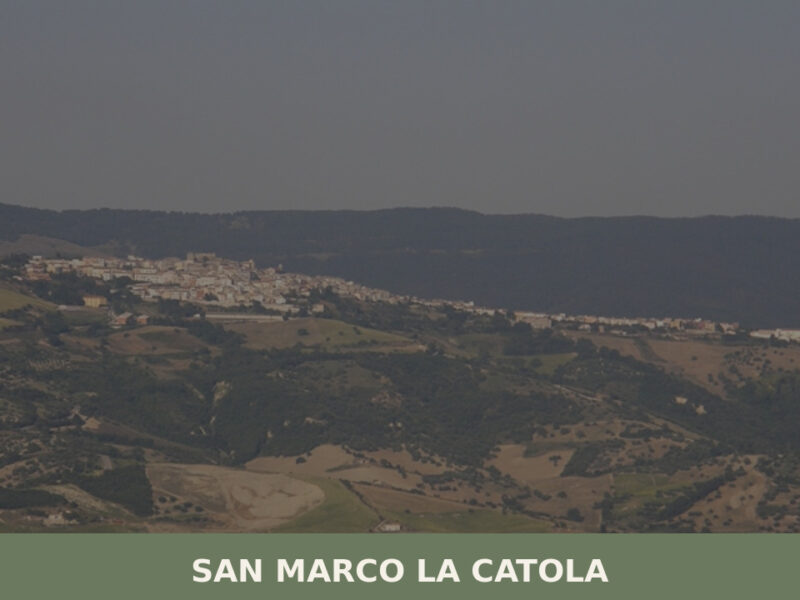
San Marco la Catola
 Mountain
A quiet hill village at 683 metres in the Daunia mountains of Puglia. Discover what to see in San Marco la Catola, from its medieval core to the Fortore valley.

🏡 Know Bitonto better than we do?
If you’re a local or have been there, your knowledge matters: add what’s missing or fix a detail on this page.