


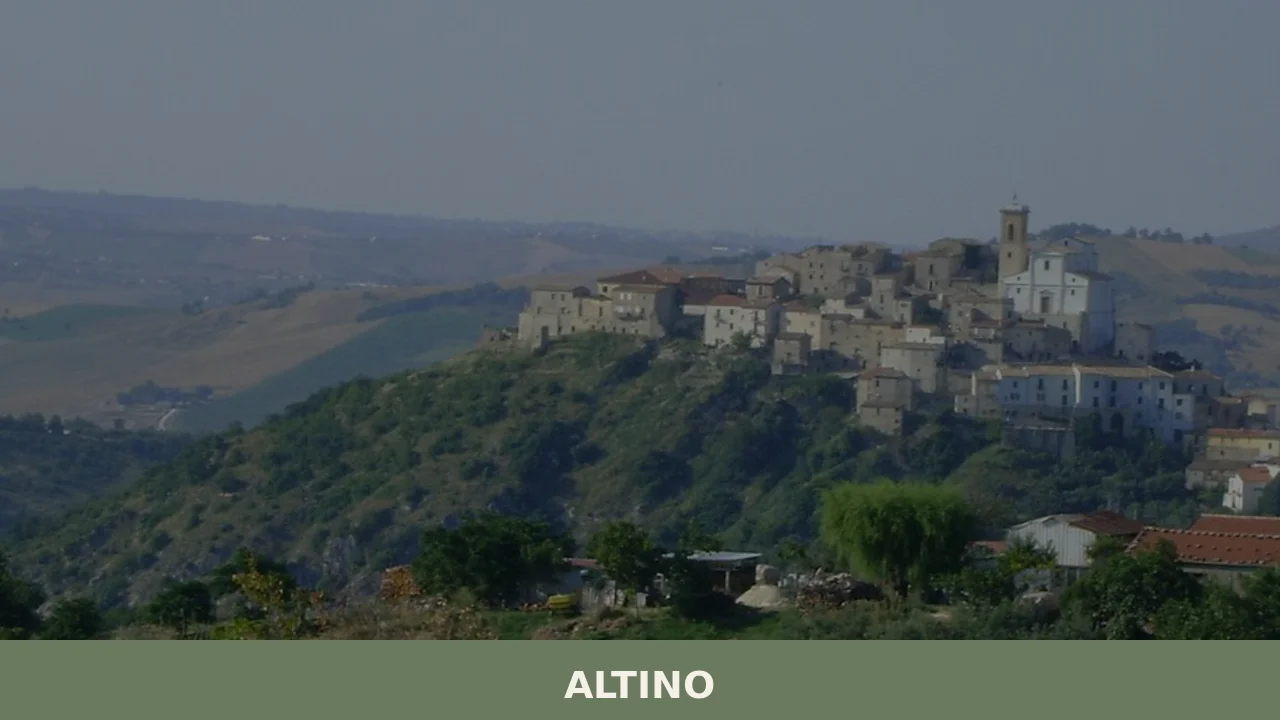
Altino
What to see in Altino? Explore the 5 main attractions of this village with 3,067 inhabitants, from the Sweet Pepper Museum to the Mother Church. Plan your visit!
Discover Altino
Situated at 345 meters above sea level, Altino is an Abruzzese municipality in the province of Chieti, with a population of 3,067, offering a privileged perspective over the Sangro Valley and, on clear days, all the way to the Adriatic coast.
This hilltop village, with its dominant position, has maintained a strong connection to the region’s agricultural and culinary traditions, distinguished by the cultivation of the famous sweet pepper.
For those wondering what to see in Altino, the locality offers various attractions ranging from its historical religious architecture to panoramic viewpoints, not forgetting the peculiar museum dedicated to its most iconic product.
History and Origins of Altino
The origins of Altino are rooted in a remote past, presumably linked to Italic and subsequently Roman settlements, as suggested by the toponymy which often indicates elevated places or ancient outposts.
Its strategic position, on a hill overlooking the Sangro Valley, made it a point of interest for various populations over the centuries, helping to shape its identity. Despite the absence of a specific Wikipedia entry for the village, general historical sources for the Abruzzese area indicate a progressive structuring of inhabited centers in the medieval era, often around fortifications or places of worship.
In the Middle Ages, Altino, like many centers in the Abruzzese hinterland, fell within the feudal dynamics that characterized the Kingdom of Naples and later the Kingdom of the Two Sicilies.
The village likely saw the alternation of various lordships that influenced its urban and social development, leaving visible traces in the layout of the historic center. Community life was closely tied to agriculture and pastoralism, activities that defined the surrounding landscape and local traditions for generations.
The modern age consolidated Altino’s agricultural role, with an economy based on the production of olive oil, wine, and vegetables, among which the sweet pepper stands out.
The village has experienced periods of growth and difficulty, but has always maintained its distinctive character as a hardworking community deeply connected to its land.
Its history, although not marked by major events of national resonance, reflects the tenacity and adaptability of the Abruzzese hillside populations, similar to what can be found by visiting villages like Castelvecchio Calvisio, which is also a custodian of a significant agrarian past.
What to see in Altino: main attractions
Mother Church of Santa Maria del Popolo
The Mother Church of Santa Maria del Popolo is Altino’s main place of worship and a landmark for the community.
Its architecture, despite having undergone alterations over the centuries, features elements that bear witness to its long history, with a stone facade that often conceals richly decorated Baroque interiors, typical of Abruzzese churches.
The building is located in the heart of the historic center, in an elevated position that gives it an aura of solemnity and visibility from various points of the village. Inside, visitors can admire sacred artworks, carved altars, and frescoes that tell the story of local devotion.
The Historic Center and its streets
Walking through Altino’s historic center means immersing yourself in a labyrinth of narrow streets and small squares that preserve the atmosphere of Abruzzese hill villages.
The houses, often built with local stone, follow one another along paths that trace the terrain, offering unexpected glimpses and charming corners.
This ancient core, although lacking specific monumental fortifications, is characterized by an urban layout that reflects its evolution over time, with elements that can recall the structure of other villages in the region such as Bolognano. It’s worth climbing to the highest points to enjoy panoramic views of the surrounding valley.
Museum of Altino Sweet Pepper
One of Altino’s most unique and identity-defining attractions is the Museum of the Sweet Pepper, dedicated to the territory’s symbolic product.
This museum is a place where the history, cultivation, and cultural importance of the local sweet pepper are celebrated, a variety that has received recognition for its organoleptic qualities. Visitors can learn traditional cultivation techniques, preservation methods, and the use of the pepper in local gastronomy through educational exhibits and, sometimes, tastings.
The museum is an excellent example of how an agricultural product can become the focal point of a cultural and tourist experience, allowing visitors to fully understand what to see in Altino from a unique perspective.
Belvedere and Panoramic Viewpoints
Given its altitude of 345 m above sea level, Altino offers several natural belvederes from which breathtaking landscapes can be admired.
From its heights, the gaze sweeps across the green Val di Sangro, interrupted by the river’s course, and extends to the majestic peaks of the Majella, which delineate the horizon. On clearer days, it’s also possible to glimpse the sparkle of the Adriatic Sea and the coastline of the trabocchi. These panoramic viewpoints are ideal for photography enthusiasts and for those who simply wish to enjoy the tranquility of the Abruzzese landscape. The view is a distinctive element that enriches every visit to Altino.
Naturalistic Areas of the Val di Sangro
Altino is situated in a valuable naturalistic context, that of the Val di Sangro, which offers opportunities for excursions and outdoor activities.
The territory surrounding the village is characterized by typical Mediterranean hill vegetation, with olive groves, vineyards, and wooded areas.
Trails and nature paths, although not always precisely marked, allow visitors to explore the local flora and fauna, offering a different perspective on the beauty of the place. The environment is particularly suitable for those seeking a slow tourism experience in contact with nature, away from the more beaten paths. Those wondering what to see in Altino and its surroundings will find in nature another valid reason for their visit.
Typical cuisine and products of Altino
Altino’s cuisine is an authentic expression of Abruzzo’s gastronomic tradition, deeply rooted in peasant culture and the abundance of local produce. The village’s hilly position, between the mountains and the coast, has fostered the development of dishes that skilfully combine plant-based ingredients, such as vegetables and legumes, with local meats and cheeses.
Olive oil, produced from the extensive olive groves in the area, is a fundamental element that enriches almost every dish, giving preparations a robust and genuine flavour.
This culinary tradition is a pillar of Altino’s identity, also celebrated in various local events.
Among the typical dishes that can be savoured in Altino, preparations based on vegetables and legumes stand out, often enriched with garden produce.
A significant example is Pallotte cacio e uova, fried meatballs or meatballs in sauce, made with grated pecorino cheese, eggs, and stale bread, a classic of traditional Abruzzese peasant cuisine. There are also robust first courses, such as Pasta alla trappitara, seasoned with fresh tomato, olive oil, garlic, and chili pepper, sometimes enriched with seasonal vegetables. Lamb and pork, raised locally, are often the stars of roasts and stews that follow ancient recipes.
Altino and its area are also associated with various typical products that reflect the region’s agricultural and livestock richness.
Among these, certified products stand out as mainstays of Abruzzese gastronomy.
The Abruzzese Caciocavallo (PAT) — municipalities: Pescara, Chieti, Teramo, L’Aquila, and the Frentana cow’s milk Caciotta, Cow’s cheese, Casce d’vacc (PAT) — municipalities: Lanciano, Ortona, Vasto, Guardiagrele, are examples of cheeses that bear witness to a long dairy tradition.
The Sulmona Red Garlic (PAT) — municipalities: Sulmona, Pratola Peligna, Introdacqua, and the Trabocchi Coast Citrus Fruits (PAT) — municipalities: Ortona, Fossacesia, San Vito Chietino, Vasto, represent horticultural excellences that benefit from the local climate and soil.
One cannot forget the Arrosticini (PAT) — municipalities: Pescara, Chieti, Teramo, L’Aquila, sheep meat skewers, an icon of Abruzzese cuisine, prepared and consumed throughout the region, including Altino.
For desserts, the Bocconotti di Castel Frentano (PAT) — municipalities: Castel Frentano, Lanciano, Ortona, are small filled pastries that represent the local confectionery tradition. These products not only delight the palate but also tell the story and the deep connection between the community and its environment.
To purchase them, it is advisable to visit weekly markets or local producers, especially during village festivals.
This variety of products makes a visit to Altino a complete culinary experience.
Festivals, events, and traditions of Altino
Altino’s traditions and events are deeply linked to its religious and agricultural identity, reflecting the rhythm of the seasons and the community’s devotion.
The village’s patron saint is Gilbert of Sempringham, whose feast day is celebrated with particular solemnity on June 1st each year. This occasion is a moment of strong community gathering for the inhabitants, who participate in religious processions, solemn masses, and civil events that enliven the historic centre. The celebrations often include traditional music concerts, stalls, and fireworks, creating a festive and engaging atmosphere that also attracts visitors from neighbouring towns.
An event of great significance for Altino is the Sweet Pepper Festival (Sagra del Peperone Dolce), traditionally held between late August and early September. This festival is a unique opportunity to celebrate the territory’s most representative product, offering tastings, markets for typical products, and folkloristic performances. During the festival, visitors can savour the sweet pepper in numerous preparations, from preserves to traditional dishes, and discover its different varieties.
The event not only promotes the local economy but also keeps culinary and agricultural traditions alive, offering an authentic experience of village life and its specialties.
When to visit Altino and how to get there
The best time to visit Altino extends from spring to early autumn, when the climate is mild and the landscape is at its most splendid.
In spring, the surrounding countryside is lush and flowery, ideal for walks and excursions, while summer offers long, warm days, perfect for exploring the village and enjoying the views. Early autumn, particularly September, is the season for festivals and grape harvests, offering the opportunity to participate in traditional events and taste fresh local produce.
Avoiding the winter months may be advisable for those who do not like the cold and the possibility of snow, although the village maintains a discreet charm even in this season.
To reach Altino, a car is the most convenient means.
Those arriving from the north or south can take the A14 Adriatica motorway and exit at the Val di Sangro toll booth, from which Altino is about 15-20 kilometers away. The provincial road offers an easy and panoramic route to the town center. For those who prefer the train, the nearest railway station is Fossacesia-Torino di Sangro, located on the Adriatic line, but from there it is necessary to continue by bus or taxi.
The reference airport is Abruzzo Airport (Pescara), about 60 kilometers away, which offers connections to various Italian and European cities. It is always advisable to consult the official website of the Province of Chieti or transport portals for updated bus and train schedules.
| Starting point | Distance | Estimated time |
|---|---|---|
| A14 Val di Sangro toll booth | 15 km | 20 minutes |
| Fossacesia-Torino di Sangro Station | 20 km | 25 minutes |
| Abruzzo Airport (Pescara) | 60 km | 50 minutes |
Where to stay in Altino
In Altino and its immediate surroundings, visitors can find various accommodation options that reflect the typical hospitality of the area.
Accommodation facilities primarily include farmhouses immersed in the surrounding countryside, offering the opportunity to stay in contact with nature and taste local products.
Many of these farmhouses are ancient renovated masserias, capable of combining modern comfort with respect for architectural traditions.
There are also some Bed & Breakfasts in the historic center or nearby hamlets, ideal for those seeking a more intimate atmosphere and direct contact with the village inhabitants. For a wider choice, you can consider the neighboring localities of Val di Sangro or the Trabocchi coast, such as Giulianova, which offers a different type of accommodation.
Photo Gallery of Altino
In Abruzzo More villages to discover
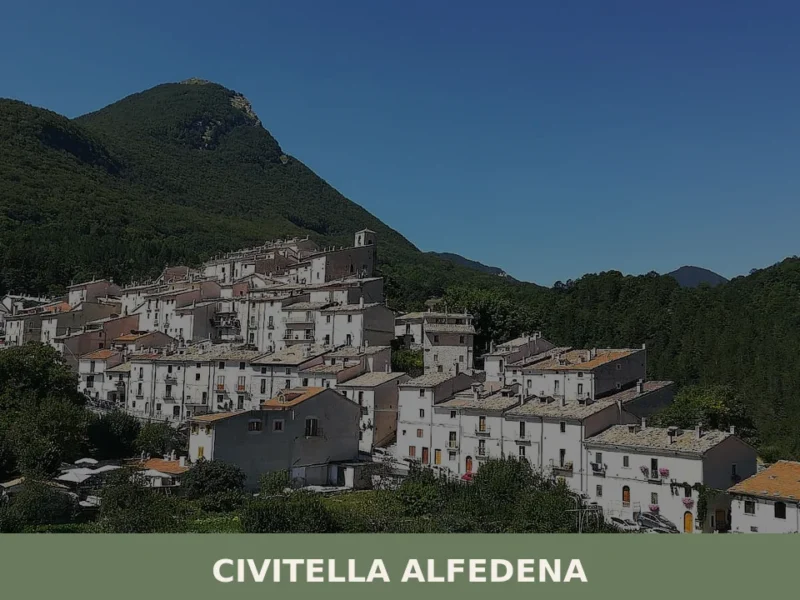
Civitella Alfedena
At 1123 metres above sea level, on the southern slopes of the Abruzzo, Lazio and Molise National Park, Civitella Alfedena is home to just 285 residents — fewer than a single apartment block in Rome — spread along an urban core that retains its medieval defensive layout, complete with stone portals and covered passageways. Asking […]
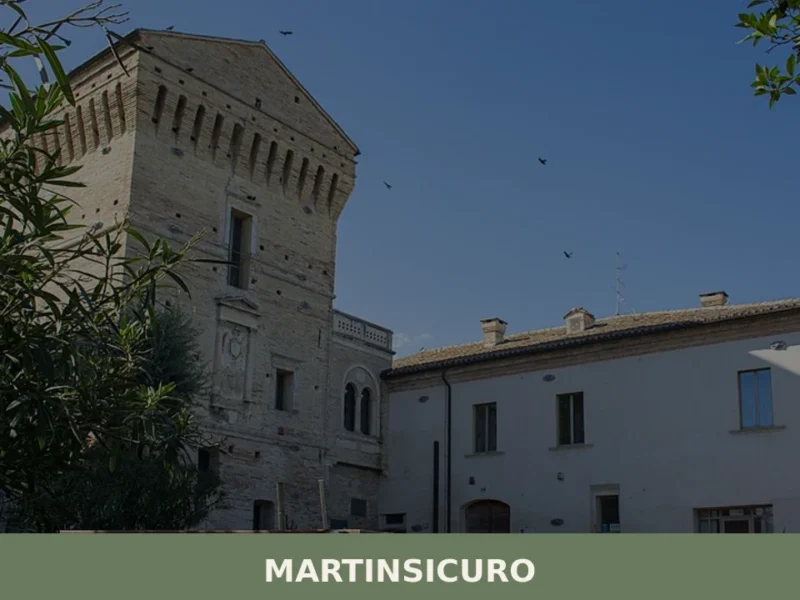
Martinsicuro
Martinsicuro, located 2 meters above sea level in the province of Teramo, has a population of 16,270 inhabitants. Its development is directly linked to the Adriatic coast and the presence of the Tronto river mouth. For those wondering **what to see in Martinsicuro**, the core interest lies in its identity as a seaside town that […]
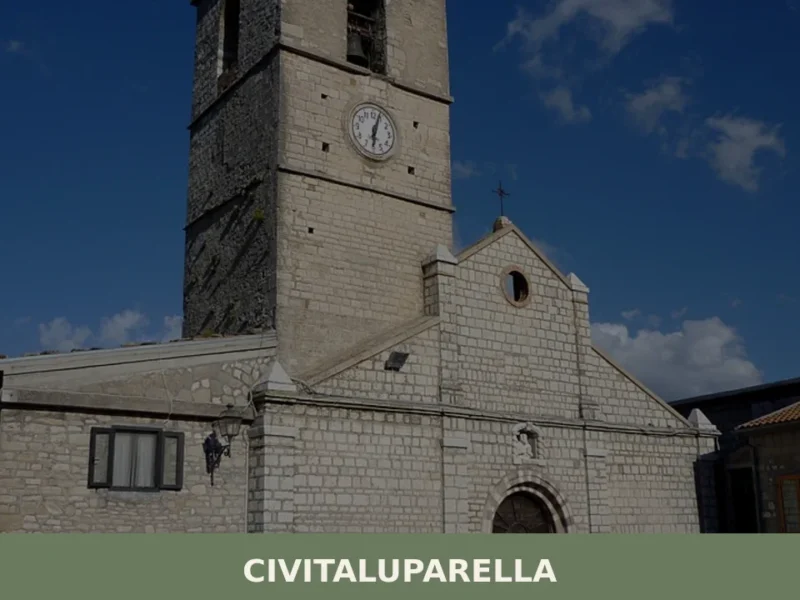
Civitaluparella
At 903 metres above sea level, on the eastern slope of the Majella descending towards the Aventino river, Civitaluparella has 281 inhabitants spread across a compact urban core of medieval origin. The place name most likely derives from “Civitas Luparella”, a direct reference to the historical presence of wolves in the dense surrounding woodlands. Anyone […]
🧀 Italian traditional products

📝 Incorrect information or updates?
Help us keep the Altino page accurate and up to date.