


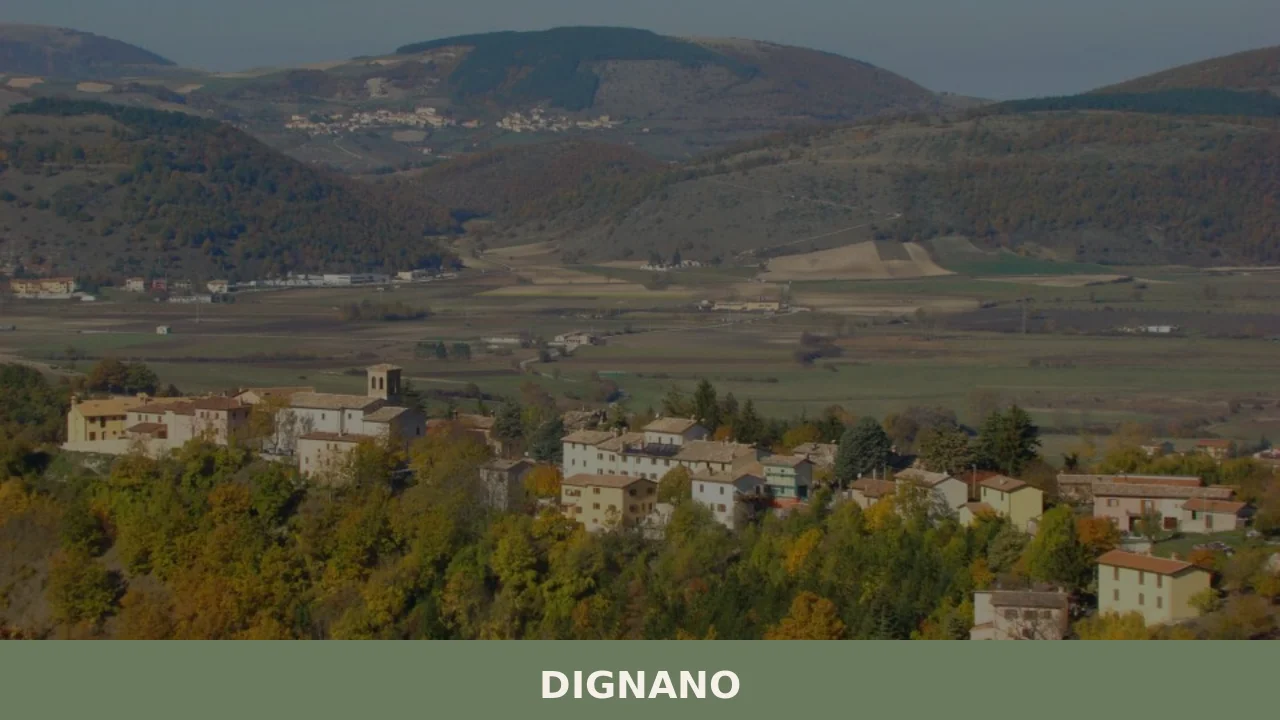
Dignano
In the cadastral register of 1296, the name Dignano appears among the possessions of the Patriarchate of Aquileia, a rural community closely tied to ecclesiastical control and cereal production on the Friulian plain. Today the municipality has approximately 2,380 inhabitants spread across the main centre and several hamlets, in a flat territory northwest of Udine […]
Discover Dignano
In the cadastral register of 1296, the name Dignano appears among the possessions of the Patriarchate of Aquileia, a rural community closely tied to ecclesiastical control and cereal production on the Friulian plain. Today the municipality has approximately 2,380 inhabitants spread across the main centre and several hamlets, in a flat territory northwest of Udine where the countryside preserves a land organisation dating back to the Middle Ages. Anyone wondering what to see in Dignano will find a place where religious architecture, traces of Venetian rule, and Friulian farming culture overlap without interruption, offering a layered reading of the rural landscape of central Friuli.
History and origins of Dignano
The place name Dignano most likely derives from the Latin Tillianum or Dignanum, a form that points to the name of a Roman landowner — a Dignanus or Tillius — following the pattern of praedia (landed estates) typical of Roman centuriation in Friuli.
The plain between the Tagliamento and the Torre was indeed subject to extensive agricultural colonisation during the Augustan era, and several place names in the area retain this Latin landowning origin. The earliest certain documentary attestation of the name dates to the 13th century, when Dignano appears in patriarchal records as a villa subject to the temporal jurisdiction of the Patriarchate of Aquileia, which governed much of Friuli from the 11th century onward with authority that was religious, civil, and military in equal measure.
The medieval history of Dignano is intertwined with the events of the Patriarchate and the feudal system that characterised the region. In 1420, with the Venetian conquest of Friuli, the territory came under the rule of the Serenissima, which maintained local administrative structures but introduced a new political order that would last nearly four centuries, until the fall of the Republic in 1797.
During the Venetian period, Dignano remained a modest agricultural centre, tied to cereal cultivation and animal husbandry, without developing the manufacturing or commercial activities that characterised villages along the main communication routes. The transition to Habsburg rule after the Treaty of Campoformido marked the beginning of an era of administrative transformations that continued with annexation to the Kingdom of Italy in 1866, following the Third Italian War of Independence.
The 20th century left deep scars on the social fabric of Dignano. During the First World War, the proximity to the Isonzo front exposed the territory to requisitions, evacuations, and devastation. The Second World War brought further destruction and, in the post-war period, the rural exodus toward the industrial centres of Udine and the Triveneto significantly reduced the resident population.
Despite this, the community has maintained a strong linguistic identity linked to Friulian, the local Romance language protected by the Italian state and still spoken today in family and community settings. The municipality of Dignano, in its current configuration, comprises several hamlets scattered across the flat territory, each with its own church and historic core, reflecting a dispersed and polycentric settlement pattern typical of the Friulian countryside.
What to see in Dignano: 5 essential attractions
Exploring what to see in Dignano means following an itinerary where sacred architecture and the agrarian landscape merge into a coherent narrative. The five stops that follow represent the points of greatest historical and environmental interest in the municipality, all accessible in a visit that can fill half a day or a full day for those who wish to venture into the hamlets as well.
1. Parish Church of Saints Hermagoras and Fortunatus
The Church of Saints Hermagoras and Fortunatus, dedicated to the two patron martyrs of the Diocese of Aquileia, stands in the centre of Dignano and is the main religious building in the municipality.
The dedication to the Aquileian saints reveals the deep bond with the patriarchal tradition that shaped the ecclesiastical identity of Friuli for over a millennium. The current building, the result of successive interventions between the 17th and 18th centuries, has a single nave with side altars decorated in the Baroque style that spread through the region during Venetian rule. Inside, it houses sacred furnishings and paintings from the Friulian school that document the religious patronage of small rural communities. The bell tower, visible from several kilometres across the surrounding plain, serves as the visual reference point for the entire settlement.
2. Rural hamlet of Carpacco
The hamlet of Carpacco, a few kilometres from the centre of Dignano, preserves a core of traditional Friulian rural architecture with enclosed courtyards, stone-and-brick barns, and houses that follow the terraced farmhouse typology. The urban layout reflects the communal organisation of Friulian villas, where farming families shared spaces and resources according to customary rules codified in the Middle Ages. Walking through the lanes of Carpacco allows visitors to observe traditional building techniques — walls of river cobblestones bound with mortar, clay tile roofing, solid wooden gates — and to understand how the form of each dwelling responded to the demands of agricultural work and animal husbandry.
3. Votive churches of the hamlets
The municipal territory of Dignano is dotted with small votive churches and chapels distributed across the various hamlets, each with its own distinctive features. These buildings, often dating from the 15th to 17th centuries, represent the identity core of individual rural communities and in some cases preserve frescoes and decorations of historical and artistic interest. The tradition of votive churches in Friuli is linked both to popular devotion and to the practical need for a place of worship reachable without covering the distances that separated hamlets from the parish church. Visiting them one by one offers a route through the minor sacred art of Friuli, often overlooked by guidebooks yet rich in significant details for those who know how to look carefully.
4. Irrigation channels and waterways of the plain
The system of rogge — artificial channels diverted from the region’s rivers — crosses the territory of Dignano and represents a hydraulic infrastructure of medieval origin, fundamental for field irrigation and for powering mills. These channels, managed by the Consorzio di bonifica della Bassa Friulana, shape the agrarian landscape with rows of trees and grassy embankments that function as ecological corridors. Walking or cycling the unpaved roads along the rogge allows visitors to observe an ecosystem rich in birdlife, including grey herons, moorhens, and kingfishers. It is a landscape that resists any rhetoric of the sublime yet possesses its own precise functional and geometric beauty.
5. Landscape of the Roman centuriation
Viewing the territory of Dignano from an aerial or satellite map, one can recognise the regular grid of the Roman centuriation, the ancient system of agrarian division that Roman colonists imposed on the Friulian plain from the 2nd–1st century BC onward. Country roads, field boundaries, and ditches still follow the original orientation of the cardines and decumani in many places, with modules of approximately 710 metres per side. This agrarian palimpsest, one of the best preserved in northeastern Italy, is not a monument visible in the traditional sense, but a structure legible to those who possess the interpretive keys for reading the landscape. The centurial system of Friuli is studied by archaeologists and geographers as an example of the millennial persistence of Roman territorial organisation.
What to eat in Dignano: traditional cuisine and local products
The cuisine of Dignano belongs to the gastronomic tradition of the Friulian plain, a repertoire built over centuries around the availability of cereals, legumes, garden produce, and pork. Unlike Carnic or mountain cooking, here the flat and fertile landscape favoured the cultivation of maize after its introduction in the 17th century, radically transforming the peasant diet. The proximity to the centres of Codroipo and Udine also facilitated commercial exchanges, enriching the local pantry with influences arriving from both the Alpine area and the Adriatic coast, creating a crossroads of flavours that reflects Friuli’s geographic position between the Mediterranean world and Central Europe.
At the centre of the table there is almost always polenta, prepared with stone-ground cornmeal and served soft or grilled as an accompaniment to cheeses, cured meats, and meat dishes.
Frico, the signature dish of Friulian cooking documented since the 15th century, is made with Montasio cheese sliced or grated and cooked in a pan until it forms a crispy crust, sometimes enriched with potatoes and onion in the softer version. Another fundamental element is brovada, made from turnips left to macerate in grape pomace for at least sixty days and then grated and slowly cooked: a preservation method dating back to the medieval period that gives the dish a sharp, intense flavour, typically paired with musèt, the Friulian cotechino spiced with cinnamon and coriander.
Among the local products, Montasio cheese — which holds PDO designation recognised at European level — is the most representative, with a production that spans the entire regional territory and that in Dignano is used both as a table cheese and as the main ingredient in frico.
The cultivation of maize on the Udine plain still feeds the production of polenta flours today, while the Friulian pork-butchering tradition finds expression in the aforementioned musèt and in a variety of smoked and aged cured meats. Family vegetable gardens produce beans, radicchio, and seasonal vegetables that go into soups — the minestrone alla friulana with barley and beans is a winter dish common throughout the plain — while the surrounding fields supply the turnips used in preparing brovada.
Gastronomic events in the Dignano area follow the agricultural calendar and religious observances. The village festivals, concentrated between June and September, provide the opportunity to taste traditional dishes prepared in communal kitchens set up by pro loco volunteers. In autumn, the slaughtering of the pig and the production of cured meats mark a moment of sociality that has maintained its importance in Friulian rural communities. For purchasing local products, the weekly markets in nearby centres — Codroipo and San Daniele del Friuli — are the most accessible reference points, with stalls selling cheeses, cured meats, and regional fruit and vegetables.
Friuli Venezia Giulia is one of Italy’s most important wine regions, and the territory around Dignano falls within the Friuli Grave DOC appellation, the largest in the region by vineyard area.
The principal grape varieties are Merlot, Cabernet Franc, and Refosco dal Peduncolo Rosso among the reds, and Friulano (formerly Tocai), Pinot Grigio, and Sauvignon among the whites. The Friuli Grave DOC produces well-structured wines on alluvial and gravelly soils that favour drainage and aromatic concentration, particularly notable in the white versions, which express freshness and minerality.
When to visit Dignano: the best time of year
The Friulian plain has a continental climate with hot summers and harsh winters, and the choice of when to visit Dignano depends on the kind of experience you are looking for. From April to June the agrarian landscape is at its best: the maize and cereal fields are in full growth, temperatures range between 15 and 25 degrees, and the light is ideal for cycling the country roads along the irrigation channels. Summer brings the heat of the plain — with peaks exceeding 30 degrees in July and August — but also the village festivals that enliven the hamlets with music, open-air cooking, and traditional games.
September and October bring the grape harvest and autumn colours, with still-mild days and a golden light that enhances the rural landscape.
Winter, from December to February, is the least visited period: temperatures frequently drop below zero, fog envelops the plain for days on end, and life retreats indoors. However, it is precisely in these months that Friulian cuisine is at its finest, with warm and substantial dishes such as brovada with musèt, traditionally eaten during the Christmas festivities. For those more interested in the cultural and gastronomic dimension than the scenic one, winter can be a deliberate choice, free from the competition of the warmer months. The Carnival celebrations, deeply felt in Friuli, offer an additional reason to visit between February and March.
How to reach Dignano
Dignano is located on the Friulian plain approximately 20 kilometres northwest of Udine. By car, the most direct route from the A23 Udine–Tarvisio motorway involves exiting at the Udine Nord toll station, then following ordinary roads toward Codroipo along the SR 463 or secondary provincial roads. From Trieste the distance is approximately 100 kilometres, covered in just over an hour via the A4 and A23. From Venice the journey is approximately 140 kilometres, with a travel time of around one hour and thirty minutes following the A4 to Palmanova and continuing northward.
The nearest railway station is Codroipo, on the Venice–Udine line, from which Dignano is approximately 10 kilometres away, reachable by TPL FVG regional bus service or by taxi.
Trieste-Ronchi dei Legionari airport is approximately 70 kilometres away and offers domestic and international connections. Venice Marco Polo airport, approximately 150 kilometres away, is the alternative for those arriving from abroad. Once in the area, a car is the most practical means of getting around between the hamlets and the surrounding territory, where distances are short but public transport runs on limited schedules.
Other villages to discover in Friuli Venezia Giulia
Friuli Venezia Giulia offers a network of small centres that, taken individually, might seem marginal, but together compose a mosaic of great historical and cultural value. Approximately 15 kilometres east of Dignano, Basiliano shares with Dignano the rural character of the Udine plain, with a territory marked by Roman centuriation and agricultural buildings that preserve the forms of the Friulian tradition. Visiting both centres on the same day allows you to compare two variants of the same settlement model, observing how each community developed its own characteristics while sharing a common cultural and linguistic substrate.
For a sharper contrast, it is worth heading north to Artegna, approximately 30 kilometres from Dignano, where the plain gives way to the first moraine hills and the landscape changes dramatically.
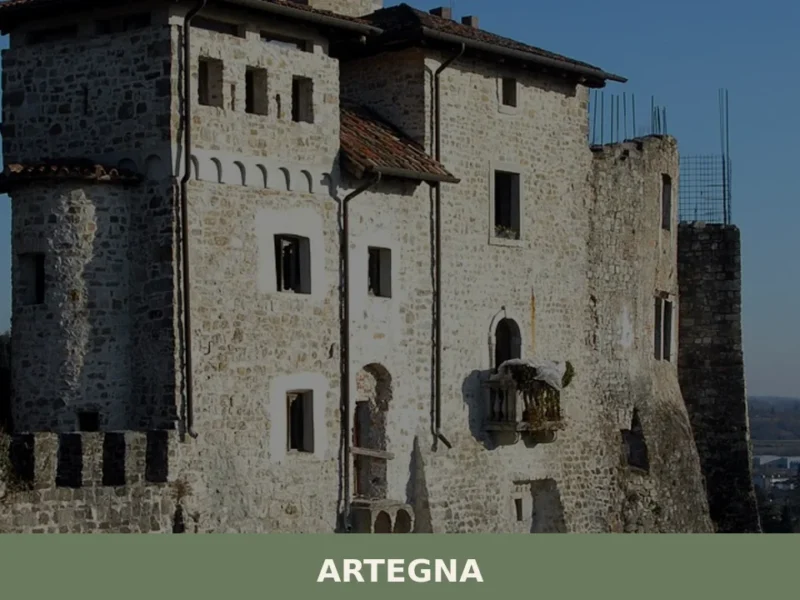
Artegna, dominated by the castle hill, offers a completely different perspective on Friuli: the verticality of the fortified hill against the horizontality of Dignano’s countryside, the stone of medieval walls against the brick and cobble of farmhouses. An itinerary linking Dignano, Basiliano, and Artegna in a single day — covering roughly fifty kilometres in total — delivers a complete portrait of central Friuli, from the irrigated plain to the threshold of the Julian Pre-Alps, through at least ten centuries of history readable in the landscape.
In Friuli Venezia Giulia More villages to discover
Chiopris-Viscone
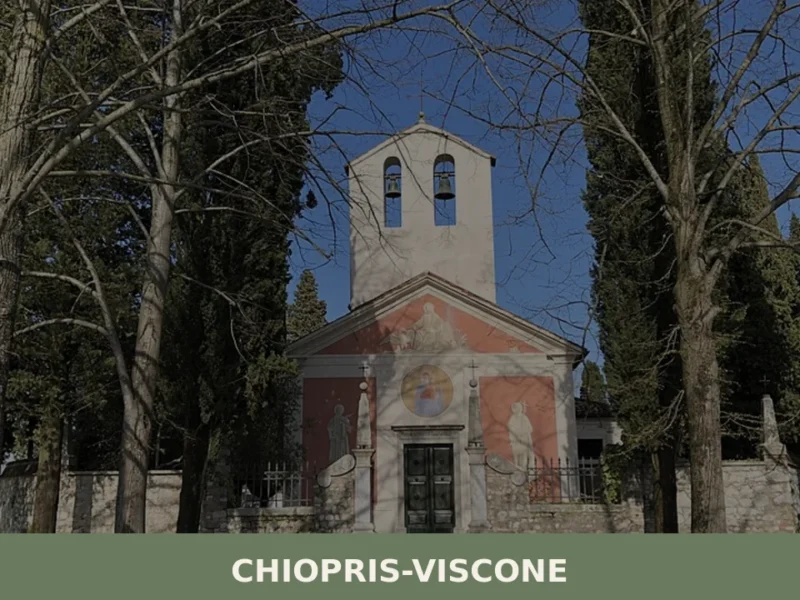
Two hamlets, two bell towers, two patron saints — and a single road running through both, the provincial route from Palmanova towards the Slovenian border. Anyone arriving in Chiopris-Viscone for the first time immediately notices this duality: the municipality, created in 1928 through the administrative merger of two distinct settlements, still retains a twin-centre layout, […]
Bagnaria Arsa
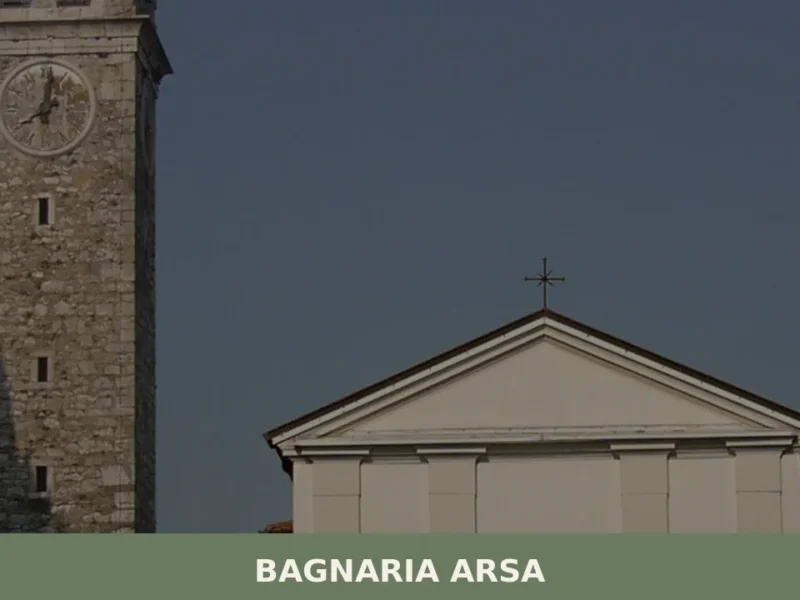
In 1420, when the Venetian Republic extended its dominion over Friuli, the territory of Bagnaria Arsa came firmly into the Venetian orbit: the Republic’s cadastral records document a rural settlement structured around two distinct centres — Bagnaria and Sevegliano — separated by fields planted with cereals and crossed by drainage channels. Today, anyone wondering what […]
Artegna
In 1976, two violent earthquakes devastated Friuli, and Artegna was among the hardest-hit communities. The reconstruction that followed did not simply raise walls again: it redesigned the very identity of the town, bringing to light archaeological layers buried beneath the rubble of the San Martino hill. Today, anyone wondering what to see in Artegna will […]

📝 Incorrect information or updates?
Help us keep the Dignano page accurate and up to date.