


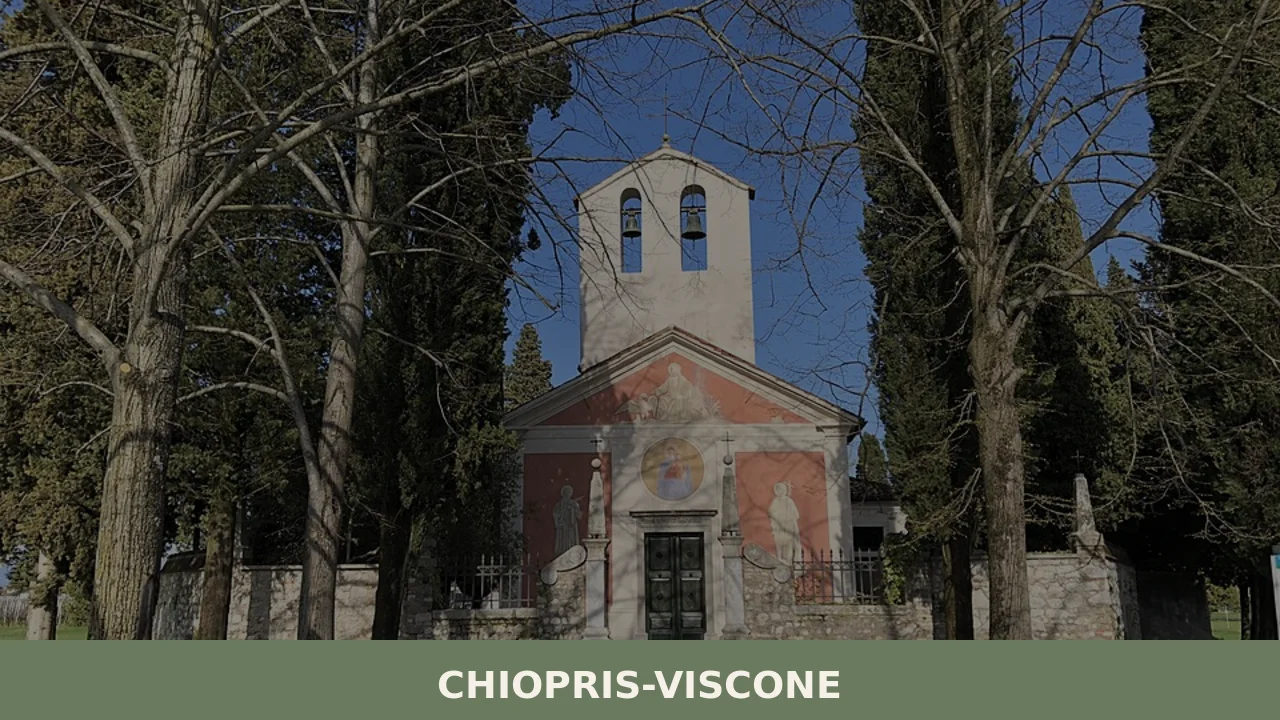
Chiopris-Viscone
 Plains
Two hamlets, two bell towers, two patron saints — and a single road running through both, the provincial route from Palmanova towards the Slovenian border. Anyone arriving in Chiopris-Viscone for the first time immediately notices this duality: the municipality, created in 1928 through the administrative merger of two distinct settlements, still retains a twin-centre layout, […]
Discover Chiopris-Viscone
Two hamlets, two bell towers, two patron saints — and a single road running through both, the provincial route from Palmanova towards the Slovenian border. Anyone arriving in Chiopris-Viscone for the first time immediately notices this duality: the municipality, created in 1928 through the administrative merger of two distinct settlements, still retains a twin-centre layout, with separate squares and independent parishes.
To the west lies Chiopris, dedicated to Saint Michael the Archangel; to the east, Viscone, under the protection of Saint Zeno. Understanding what to see in Chiopris-Viscone means embracing this dual identity and following it across open fields, irrigation channels and rows of vines that define the lower Friulian plain at thirty-three metres above sea level, where just over six hundred people reside.
History and origins of Chiopris-Viscone
The place name Chiopris most likely derives from the Latin clusa or from a Slavic root connected to the concept of enclosure or closure — a plausible hypothesis given the settlement’s position along a transit route between the Udine plain and the Collio hills of Gorizia. Viscone, on the other hand, traces back to a Roman personal name — Visconius or Viscus — indicating the owner of a farming estate in the late Imperial period.
The area was certainly inhabited during Roman times: the municipal territory lies just a few kilometres from Palmanova, the star-shaped fortress founded in 1593 by the Republic of Venice, but the Roman centuriation of the surrounding plain demonstrates that land occupation dates back many centuries earlier. Burial remains and ceramic materials found in the area confirm continuous settlement from at least the 1st century AD.
In the Middle Ages, both villages fell under the jurisdiction of the Patriarchate of Aquileia, the ecclesiastical and political entity that governed much of Friuli until 1420, the year the Most Serene Republic of Venice took control of the region. A 13th-century document contains references to landed properties near Viscone, linked to local noble families who managed small agricultural fiefs. Venetian rule lasted nearly four centuries, until the fall of the Republic in 1797, followed by a brief Napoleonic period and then the long Habsburg dominion that continued until 1866, when western Friuli was annexed to the Kingdom of Italy. Chiopris and Viscone, however, remained separate municipalities for another sixty years.
The administrative merger took place by royal decree in 1928, during the Fascist period, when many small Italian municipalities were consolidated for reasons of bureaucratic efficiency.
During the First World War, the proximity to the Isonzo front exposed the territory to requisitions, evacuations and material damage. In the Second World War, the area experienced German occupation and the tensions of the eastern border. In the post-war years, the population underwent a steady demographic decline, dropping from around a thousand inhabitants in the 1950s to the current 637 residents, reflecting the exodus towards larger urban centres — Udine, Gorizia, Trieste — that affected the entire lower Friulian plain in the second half of the twentieth century. The municipality nevertheless maintains an active agricultural structure, with wine-producing and cereal-farming businesses that still form the backbone of the local economy.
What to see in Chiopris-Viscone: 5 essential attractions
1. Parish Church of San Michele Arcangelo
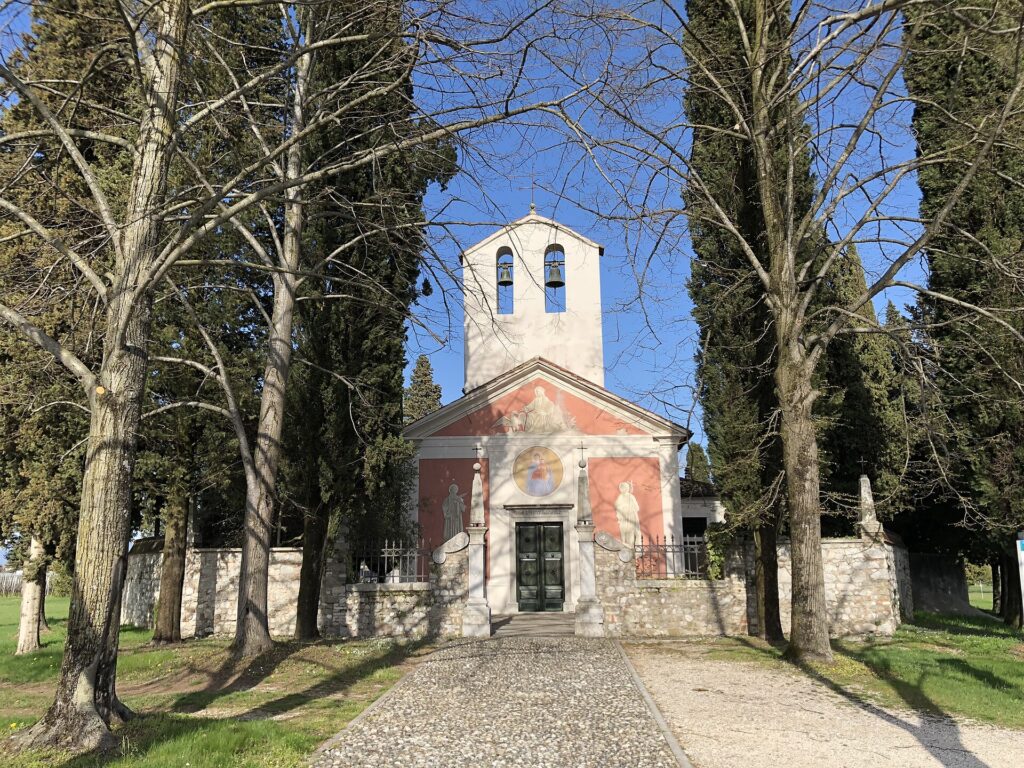
The church dedicated to the patron saint of Chiopris stands at the centre of the western hamlet, along the main road. The current building is the result of successive interventions that reshaped its structure between the 18th and 19th centuries, but the dedication to Saint Michael the Archangel points to a cult rooted in the early Middle Ages, when the warrior archangel was a favoured protector of the Lombards and of border villages. The single-nave interior houses a stone high altar and several devotional paintings of local craftsmanship. The simple, plastered façade looks onto a small square that serves as the community’s gathering point during the patron saint festivities in September.
2. Parish Church of San Zenone
In Viscone, the parish church is dedicated to Saint Zeno, bishop of Verona in the 4th century, whose cult spread across Friuli through ecclesiastical ties with the Veneto area during the Patriarchate of Aquileia. The church, located in the historic core of the eastern hamlet, features a sober structure with a stone bell tower visible from various points across the surrounding plain. Inside, it preserves liturgical furnishings from the 19th and early 20th centuries and a baptismal font that marks Viscone’s spiritual autonomy from neighbouring Chiopris. The separation between the two parishes has never been abolished, and to this day each hamlet celebrates its own patron saint feast on distinct dates.
3. Agricultural landscape of the lower Friulian plain
Anyone wondering what to see in Chiopris-Viscone beyond the sacred buildings will find the answer in the landscape itself. The municipal territory extends across flat alluvial land, crossed by irrigation channels and canals that branch off from the Torre river system and its tributaries. This water network has shaped the agricultural landscape for centuries: arable fields — maize, soybean, wheat — alternate with trellised vineyards, following the viticultural tradition of the eastern Udine plain. The country lanes between Chiopris and Viscone lend themselves to cycling routes and flat walks, with open views of the Julian Pre-Alps to the north and the flat horizon line to the south.
4. Rural architecture and farmhouses
Both hamlets preserve examples of Friulian rural building from the 18th and 19th centuries: farmhouses built in stone and brick, arched gateways for cart access, stables and barns integrated into the residential structure following the enclosed courtyard model typical of the lower plain. Some buildings still feature the fogolâr, the open-hearth fireplaces that formed the centre of Friulian domestic life. Walking along the inner lanes of the two settlements, one can observe exposed stonework walls, wooden balconies and fenced vegetable gardens that document an organisation of domestic space designed for agricultural life, which remained essentially unchanged until the mechanisation of the post-war period.
5. Surroundings: Palmanova and the Collio area
Chiopris-Viscone’s position midway between Palmanova and the Slovenian border makes the municipality a starting point for two excursions of considerable interest. Around eight kilometres to the west lies Palmanova, the nine-pointed star-shaped fortress, designated a UNESCO World Heritage Site in 2017. To the east, in fewer than twenty kilometres, one enters the hilly area of the Collio Goriziano, one of Italy’s most renowned wine-producing zones.
This dual proximity — to grand military architecture and to a hilly viticultural landscape — gives the village a strategic value for anyone planning itineraries through eastern Friuli.
What to eat in Chiopris-Viscone: traditional cuisine and local produce
The cuisine of Chiopris-Viscone belongs to the gastronomic tradition of the lower Friulian plain, a tradition born from the land and from water: cereals grown in the fields, vegetables from family gardens, pork preserved for winter and freshwater fish from the irrigation channels and nearby rivers. The influences are multiple — Venetian, Habsburg, Slavic — and they overlap in a culinary repertoire where the simplicity of ingredients is matched by the skill of preparation. The domestic hearth, the fogolâr, was historically the main cooking place: over the wood fire, soups, polenta and grilled meats were prepared.
At the centre of the Friulian table sits polenta, made with stone-ground maize flour and served as an accompaniment to nearly every main dish. Frico is another emblematic preparation: it is a cheese fritter — traditionally made with aged Montasio — cooked in a pan until it forms a crisp crust, sometimes enriched with thinly sliced potatoes. On cold days, jota is the dish of choice: a thick soup of beans, sauerkraut and potatoes, slow-cooked and flavoured with smoked pork. This dish, widespread throughout Friuli and Venezia Giulia, represents the meeting point between Italian and Central European culinary traditions.
Among the Friulian products documented in historical sources, Montasio cheese is the best known: it is a cooked-paste cheese made from cow’s milk, recognised with PDO status.
Its production covers the entire Friuli Venezia Giulia region and part of the Veneto, and it is an essential ingredient in frico. Processed pork — cured meats, salami, musetto — belongs to the Friulian butchering tradition, practised domestically until just a few decades ago through the communal ritual of the purcitade, the winter slaughter of the pig. Maize, extensively cultivated in the surrounding plain, provides the raw material for polenta, which in its Friulian version is often softer than its Veneto counterpart and is served on a wooden board.
Village festivals are the main occasion to taste the dishes of local tradition. The patron saint feasts of Saint Michael the Archangel in Chiopris, in autumn, and of Saint Zeno in Viscone traditionally feature food stalls serving polenta, frico and local wine. In neighbouring municipalities, seasonal agricultural fairs are held where one can purchase local products: honey, cheeses, cured meats and preserves. The weekly market in Palmanova, just a few kilometres away, offers a wider supply point with stalls run by local producers.
The eastern Friulian plain falls within the production area of the Friuli Grave DOC designation and lies in the immediate vicinity of the Collio DOC and Friuli Isonzo DOC zones.
White grape varieties — Friulano (formerly Tocai), Pinot Grigio, Sauvignon, Ribolla Gialla — dominate local production and are complemented by red wines such as Merlot and Cabernet Franc. Several wineries operate within a few kilometres of Chiopris-Viscone, and the proximity to the Collio Goriziano makes it possible to include a winery visit in a broader itinerary dedicated to Friulian winemaking.
When to visit Chiopris-Viscone: the best time of year
Spring, between April and June, offers the most favourable weather conditions: mild temperatures, long days and countryside in full growth. It is the ideal period for cycling routes across the plain and for visiting the local wine cellars, which often hold open-door days during this season. Autumn, particularly between September and October, coincides with the grape harvest and the patron saint festivals: the celebration of Saint Michael the Archangel falls on 29 September and represents the most important community event of the year in Chiopris, with religious services, convivial gatherings and food stalls.
Summer can be hot and humid, as throughout the lower Friulian plain, with temperatures often exceeding thirty degrees in July and August.
Winter is cold, with frequent fogs and occasional frosts, but it offers in return a sparse and silent atmosphere that allows one to appreciate the architectural layout of the two settlements without the distraction of foliage. Those planning to combine the visit with Palmanova and the Collio will find autumn the best compromise: pleasant weather, a chromatically intense landscape and a concentrated calendar of events. For those who prefer complete solitude, the working months between November and March guarantee an experience of solitary exploration in a territory inhabited by just over six hundred people.
How to reach Chiopris-Viscone
By car, Chiopris-Viscone is reached from the A4 Venice–Trieste motorway by exiting at the Palmanova toll station and continuing east on the provincial road for approximately eight kilometres. From Udine, the distance is around thirty kilometres heading south-east, drivable in under forty minutes. From Gorizia, the drive takes roughly twenty minutes, following state road 351 to the turn-off for Chiopris. From Trieste, the motorway route takes approximately one hour and twenty minutes, passing through the Villesse–Gorizia motorway link or continuing on the A4 to Palmanova.
The nearest railway station is Cervignano del Friuli, located on the Venice–Trieste line, approximately twelve kilometres away.
From Cervignano, one must continue by private vehicle or by local buses operated by TPL FVG, although services are infrequent. The closest airport is Trieste Airport at Ronchi dei Legionari, around twenty-five kilometres away and reachable in half an hour by car. Venice Marco Polo Airport is approximately one hundred and forty kilometres away. For those arriving from abroad via Slovenia, the Gorizia border crossing is less than twenty kilometres away.
Other villages to explore in Friuli Venezia Giulia
Those visiting Chiopris-Viscone who wish to extend their exploration of Friuli can head north to Artegna, a hilltop village at the foot of the Julian Pre-Alps, approximately fifty kilometres away. Artegna offers a sharp landscape contrast compared to the plain of Chiopris-Viscone: its medieval castle commands the Torre valley from a rocky height, and the panorama stretches from the mountains to the flatlands. The drive takes around forty-five minutes and crosses the heart of the Province of Udine, with the option of a detour to Cividale del Friuli, the ancient Lombard Forum Iulii.
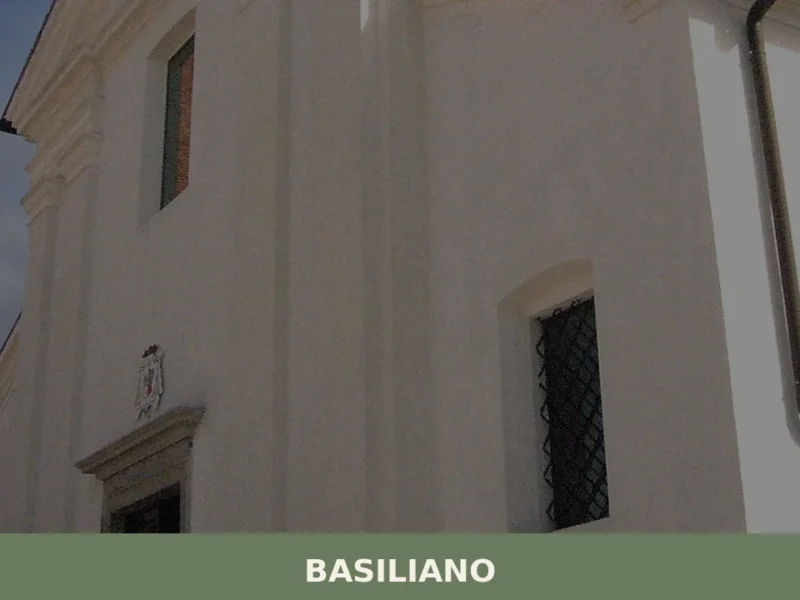
Another worthwhile stop is Basiliano, a municipality on the mid-Friulian plain located roughly twenty-five kilometres north-west of Chiopris-Viscone.
Basiliano shares with Chiopris-Viscone its polycentric layout — its territory includes several hamlets — and its agricultural vocation, but it sits closer to the motorway axis and to the provincial capital. An itinerary covering all three villages allows one to read the different expressions of Friulian rural settlement: the dry plain of Basiliano, the irrigated lowlands of Chiopris-Viscone, the foothills of Artegna. Three different landscapes, one shared farming culture that has defined the identity of this region for centuries.
Frequently asked questions about Chiopris-Viscone
What is the best time to visit Chiopris-Viscone?
Spring (April–June) and early autumn (September–October) are the ideal seasons. In spring, the lower Friulian plain is green and the irrigation channels are full, making cycling and walking routes particularly pleasant. Autumn brings the grape harvest across the surrounding vineyards and the patron saint festivities: the feast of Saint Michael the Archangel in Chiopris is celebrated in September, while Saint Zeno's feast in Viscone follows its own liturgical calendar. Both occasions feature local food stalls and community gatherings. Summer is warm but humid on the plain; winter is cold and often foggy.
What are the historical origins of Chiopris-Viscone?
The two settlements have distinct origins. Chiopris likely derives from the Latin clusa or a Slavic root meaning enclosure, reflecting its position on a transit route. Viscone traces back to the Roman personal name Visconius, suggesting a late Imperial farming estate. The area shows continuous settlement from at least the 1st century AD, confirmed by burial remains and ceramics. Both villages fell under the Patriarchate of Aquileia in the Middle Ages, then passed to Venice in 1420, to Napoleon after 1797, and to Habsburg rule until 1866. The two municipalities were administratively merged by royal decree in 1928.
What to see in Chiopris-Viscone? Main monuments and landmarks
The two parish churches are the principal landmarks. In the western hamlet, the Church of San Michele Arcangelo stands on the main square with a single-nave interior featuring a stone high altar and devotional paintings. In the eastern hamlet, the Church of San Zenone displays a sober façade and a stone bell tower visible across the plain, with 19th-century liturgical furnishings and a historic baptismal font inside. Both churches are generally accessible during morning hours and before Sunday Mass. The rural farmhouses along the inner lanes, with their arched gateways and enclosed courtyards, also merit a slow walk.
What are the main natural or scenic attractions of Chiopris-Viscone?
The agricultural landscape of the lower Friulian plain is itself the main natural attraction. The municipal territory is crossed by irrigation channels fed by the Torre river system, flanked by arable fields of maize, soybean and wheat alternating with trellised vineyards. Country lanes between the two hamlets are flat and well-suited to cycling, offering open views of the Julian Pre-Alps to the north. Within twenty kilometres lie the hilly Collio Goriziano wine zone to the east. The landscape is best appreciated in early morning light, when mist still sits over the fields and the mountain profile is clearly visible.
Where to take the best photos in Chiopris-Viscone?
The most photogenic spots are the two bell towers seen simultaneously from the provincial road that cuts through both hamlets — a composition that captures the village's distinctive dual identity in a single frame. The inner lanes of Viscone, lined with stone-and-brick farmhouses, arched gateways and wooden balconies, offer strong architectural detail. At dawn or dusk, the flat plain between the two settlements provides wide-angle views with the Julian Pre-Alps as a backdrop. During autumn harvest season, the vineyards surrounding the municipality add warm colour to the landscape.
What can you do in Chiopris-Viscone? Activities and experiences
The village lends itself to slow, low-impact tourism. The flat country lanes are ideal for cycling excursions through the lower Friulian plain, with routes easily extended towards Palmanova (approximately eight kilometres west), a UNESCO World Heritage star-shaped fortress, or eastward towards the Collio Goriziano wine hills within twenty kilometres. Local patron saint feasts in Chiopris (September, San Michele) and Viscone (San Zenone) are community events with food stalls serving polenta, frico and local wine. The Palmanova weekly market nearby provides access to local producers selling cheeses, cured meats, honey and seasonal preserves.
Who is Chiopris-Viscone suitable for?
Chiopris-Viscone suits travellers who appreciate quiet, unhurried rural tourism far from mass-tourist circuits. Cyclists will find flat, well-connected routes across the lower Friulian plain. History and architecture enthusiasts can explore the two parish churches and the surviving examples of traditional Friulian farmhouse construction. Food and wine lovers benefit from the village's proximity to the Collio Goriziano wine zone and from local festivals serving regional specialities. Photographers drawn to agricultural landscapes and vernacular architecture will also find rewarding subjects. Families with young children can enjoy easy cycling and open countryside without traffic pressure.
What to eat in Chiopris-Viscone? Local products and specialties
The local table belongs to the lower Friulian plain tradition. Polenta made from stone-ground maize flour is the staple, served alongside most main dishes. Frico — a crisp pan-fried fritter made with aged Montasio PDO cheese, sometimes combined with sliced potatoes — is the most emblematic Friulian preparation. Jota, a thick slow-cooked soup of beans, sauerkraut and potatoes flavoured with smoked pork, is the cold-weather dish of choice. Montasio PDO, a cooked-paste cow's-milk cheese produced across the entire region, is the best-known local dairy product. Traditional pork cured meats including musetto and salami belong to the Friulian butchering heritage.
📷 Photo Gallery — Chiopris-Viscone
Nearby Villages near Chiopris-Viscone
In Friuli-Venezia Giulia More villages to discover
Buja
 Hills
Hills
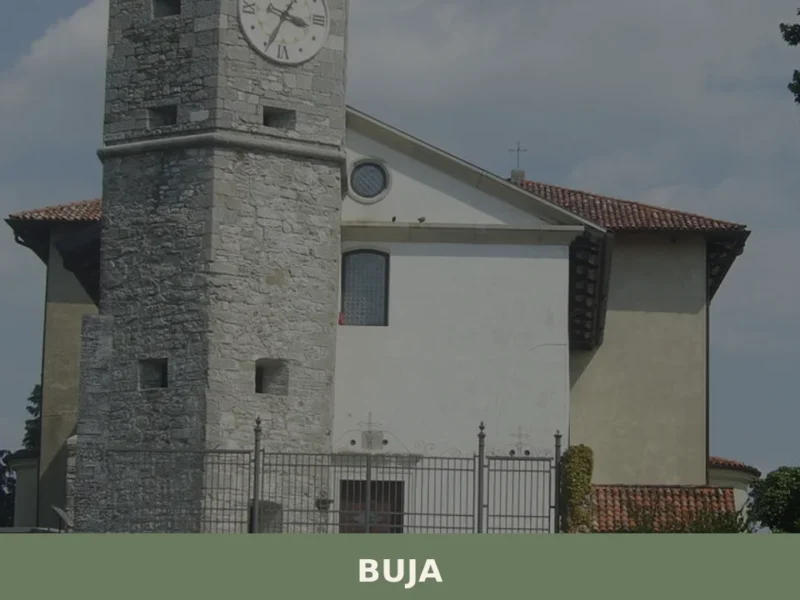
In 1976, two earthquakes devastated Friuli, and Buja was among the hardest-hit municipalities: more than seventy per cent of its buildings suffered serious damage. The reconstruction, which lasted nearly two decades, reshaped the appearance of this hilltop settlement without erasing the scattered layout of hamlets and small villages that has defined it since the Middle […]
Latisana
Plains
Latisana shaped medieval trade along the Tagliamento River for centuries. Visit for its Venetian architecture, ancient port history, and the lagoon at Aprilia Marittima.
Bicinicco
Plains
A commune of 1,801 inhabitants on the Friulian plain south of Udine. Discover the churches, hamlets, and agricultural landscape of Bicinicco.
Gorizia
Plains
What to see in Gorizia, located at 84m. Discover 5 historic attractions, including its iconic Castle, and savor typical local cuisine. Explore your trip!
Caneva
Plains
What to see in Caneva, Italy: explore a 42 km² comune near Pordenone. Discover top attractions, local food and travel tips. Read the complete guide.
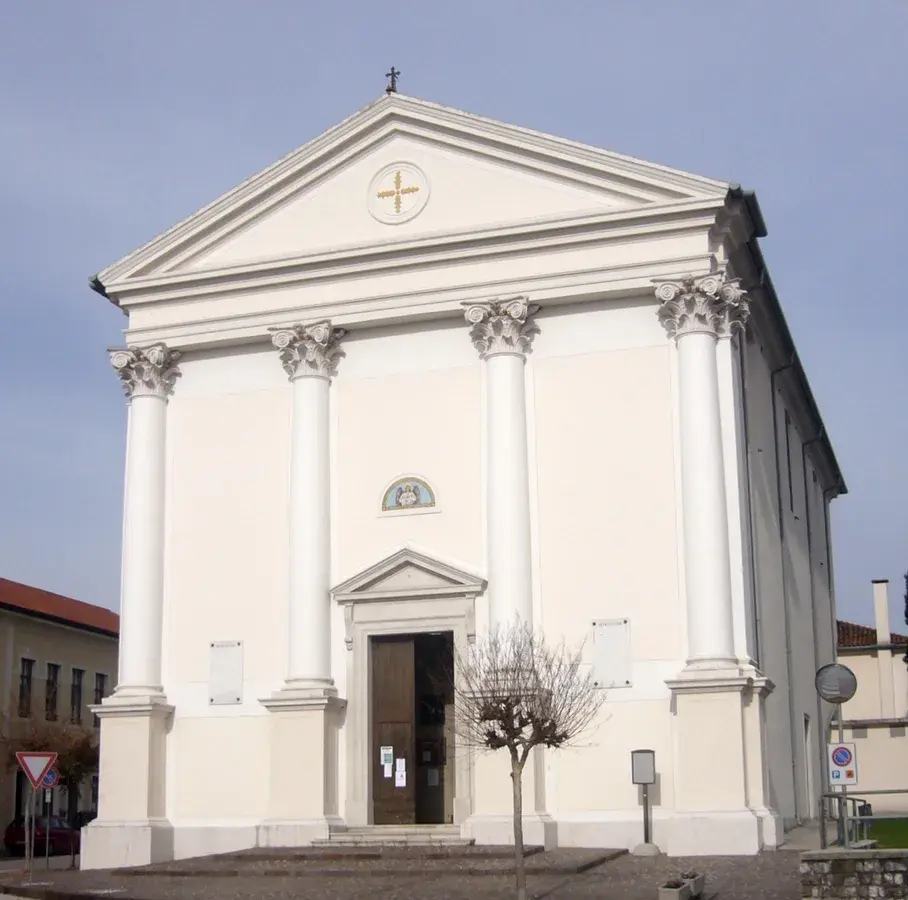
Arba
Plains
What to see in Arba: Explore Italy's Arba, a village at 210 meters altitude. Discover its historic church and vibrant patron saint festival on September 29. Read more.
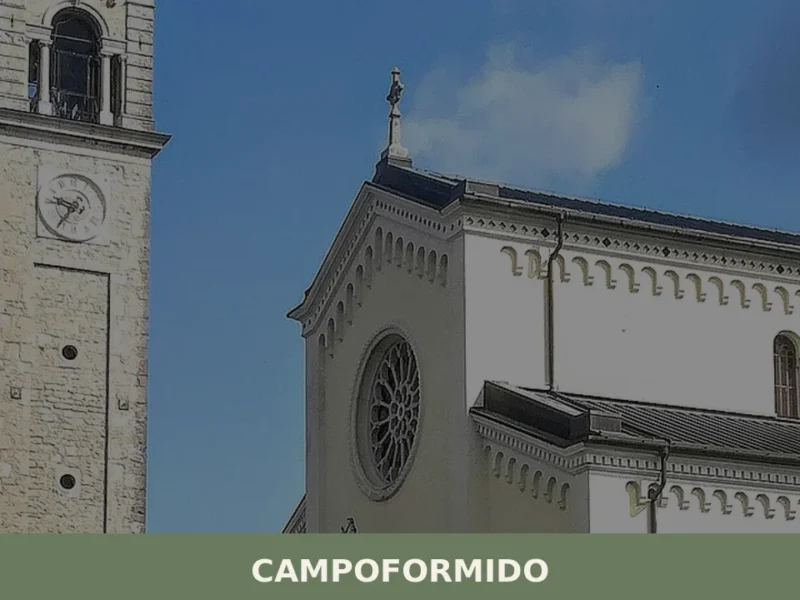
Campoformido
Plains
On 17 October 1797, in a country villa on the Friulian plain, plenipotentiaries representing Napoleon Bonaparte and the Austrian Empire signed the treaty that redrew the political map of Europe, erasing the Republic of Venice after more than a millennium of existence. That document bears the name of this place: Campoformido, a municipality of 7,799 […]
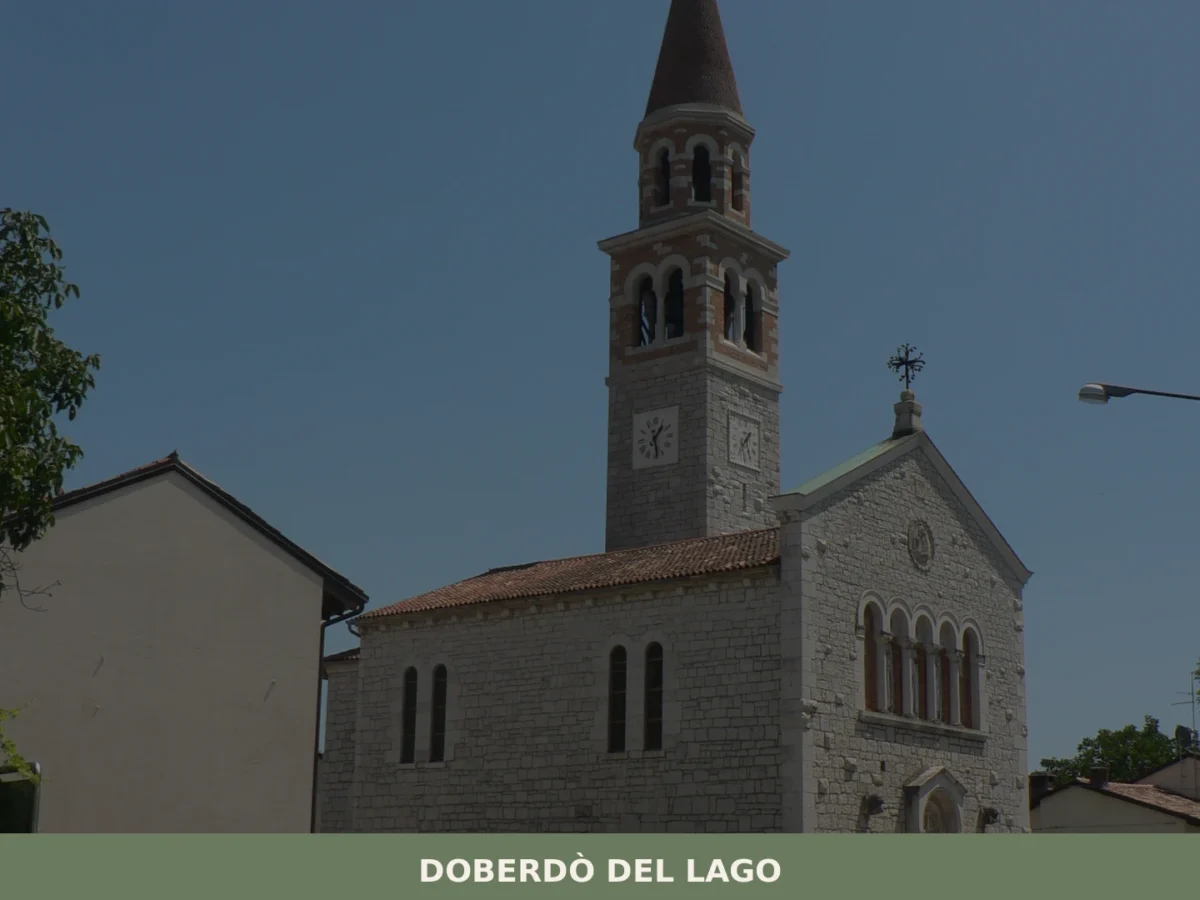
Doberdò del Lago
Plains
What to see in Doberdò del Lago, Italy, a village with 1,340 inhabitants. Discover the unique Karst Plateau and explore significant WWI sites. Plan your visit to Friuli-Venezia Giulia.
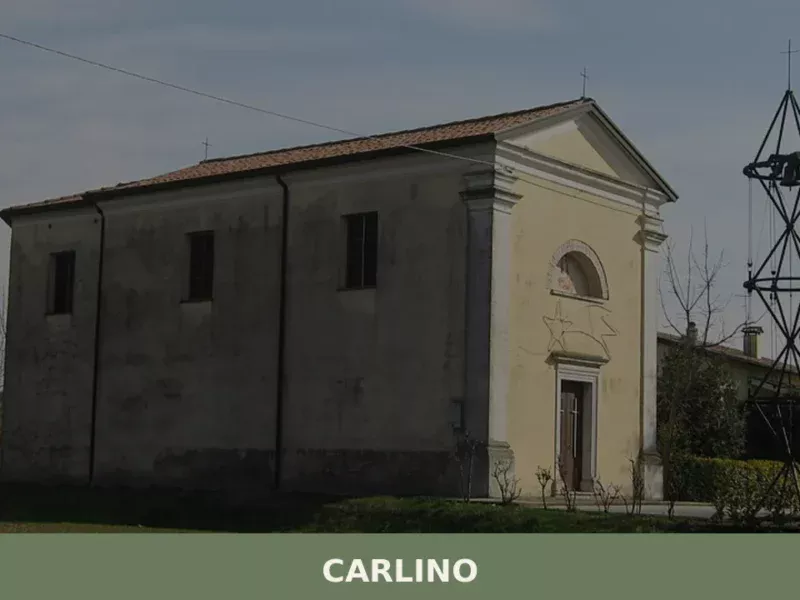
Carlino
Plains
The first thing you notice arriving in Carlino is the industrious silence of the Friulian plain, broken only by the rustle of water flowing through the drainage canals that cross the municipal territory. We are in the Bassa Friulana, province of Udine, just a few kilometres from the Marano Lagoon, in a land where agriculture […]
Aquileia
Plains
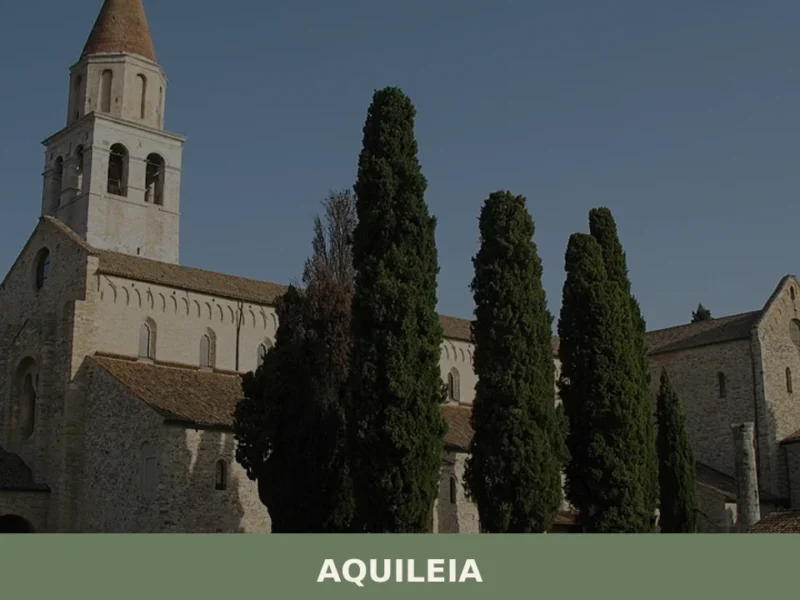
What to see in Aquileia: early Christian basilica, UNESCO mosaics, Roman forum, archaeological museum. Guide with history, cuisine and how to get there.


🏡 Know Chiopris-Viscone better than we do?
If you’re a local or have been there, your knowledge matters: add what’s missing or fix a detail on this page.