


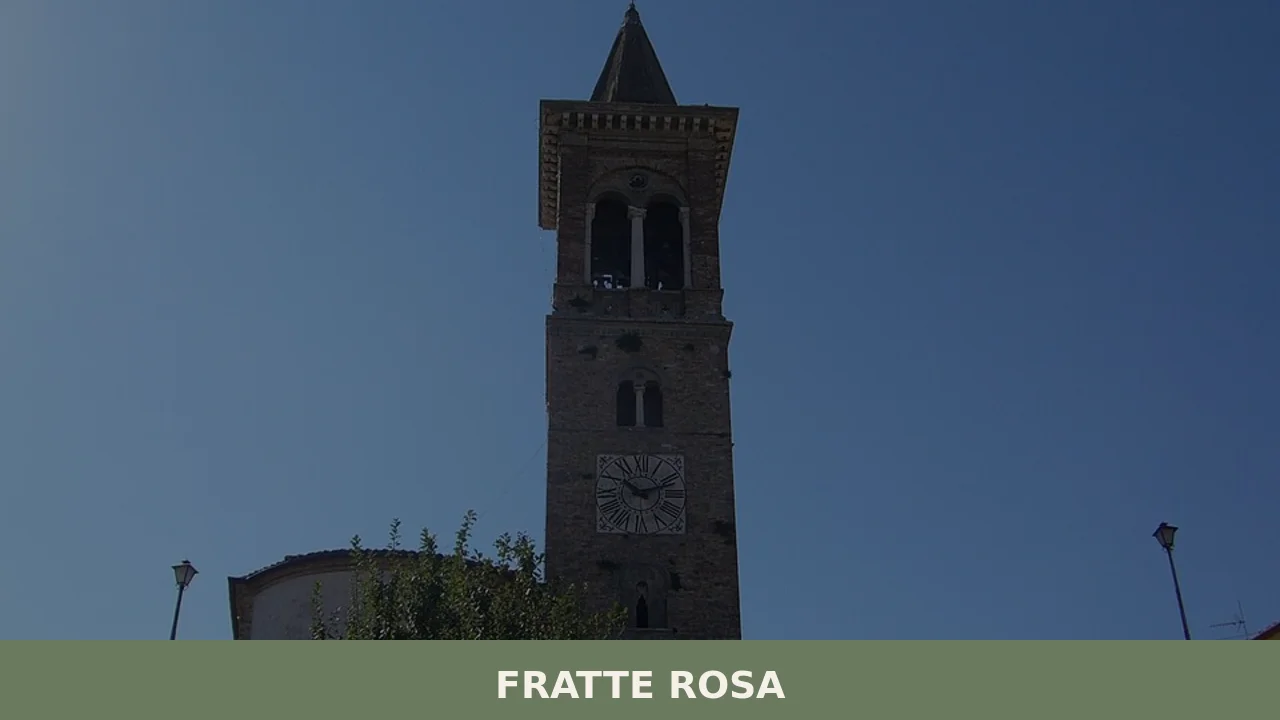
Fratte Rosa
With its 847 inhabitants and an altitude of 419 meters above sea level, Fratte Rosa is located in the province of Pesaro and Urbino, a hilly area of the Marche region. The village’s name “Rosa” is historically linked to the color of a local clay, an essential component for the practice of pottery, documented in […]
Discover Fratte Rosa
With its 847 inhabitants and an altitude of 419 meters above sea level, Fratte Rosa is located in the province of Pesaro and Urbino, a hilly area of the Marche region. The village’s name “Rosa” is historically linked to the color of a local clay, an essential component for the practice of pottery, documented in this area as early as the 15th century. This artisanal calling has shaped its development, making the center a reference point for terracotta production. Those wishing to understand what to see in Fratte Rosa will find a historic center that integrates elements of the ceramic tradition with architecture documenting the area’s history.
History and Origins of Fratte Rosa
The origin of the toponym Fratte Rosa comes from two distinct elements: “Fratte,” which recalls the Latin term fracta, indicating broken land or scrubland, and “Rosa,” which refers to the reddish clay abundant in the local subsoil. For centuries, this clay has been the raw material for pottery, an activity that has characterized the village’s economy and identity. The first documented records of the center date back to the Middle Ages, with references to a Castrum Fractarum indicating a fortified structure.
The territory of Fratte Rosa shows signs of settlements dating back to the Roman era, thanks to its proximity to important communication routes like the Via Flaminia. Over the centuries, the village developed as an agricultural and artisanal center, maintaining a strong connection with terracotta processing, which saw significant expansion from the 15th century onwards. The production of pottery and common use objects made from red clay became a distinctive activity, passed down through generations and still present today.
What to see in Fratte Rosa: 5 essential attractions
1. The Church of San Michele Arcangelo
Dedicated to the village’s patron saint, the Church of San Michele Arcangelo is the main place of worship in Fratte Rosa. Its current structure is the result of successive interventions over time, which modified the original layout. Inside, sacred artworks are preserved, including canvases and wooden furnishings that illustrate local devotion. The building is located in the historic core of the village, indicating the centrality of faith in the community.
2. The Historic Center
The oldest part of Fratte Rosa retains its medieval urban layout, with streets that follow the terrain’s contours. Here, stone and brick buildings can be seen, testifying to different construction phases. While walking, architectural elements such as doorways and windows can be observed, reflecting different styles and periods. The historic center constitutes an example of a Marche hillside settlement, adapted to the local morphology.
3. The Terracotta Museum
Fratte Rosa’s connection with terracotta art is documented in the Terracotta Museum, an exhibition space that collects historical and contemporary artifacts. The museum presents the tools and techniques used by local potters over the centuries, illustrating the evolution of production. Vases, pitchers, and decorative objects demonstrate the variety and quality of the craftsmanship, providing insight into the village’s ceramic tradition. To learn more, you can consult the website of the Municipality of Fratte Rosa.
4. Palazzo del Popolo
Located in the heart of the historic center, the Palazzo del Popolo is a building of civic importance. Its architecture reflects the public functions it has served over time. The facade features elements that date its construction and subsequent modifications. It currently houses municipal offices and spaces for cultural events, maintaining its role as a reference point for the administrative and social life of the village.
5. The Convent of Santa Vittoria
Outside the inhabited center, but connected to the history of Fratte Rosa, stands the Convent of Santa Vittoria. This religious complex, with its church and conventual spaces, represents an example of the area’s monastic architecture. Although it has undergone modifications over the centuries, it retains elements that indicate its origin and function. The convent is a place that reflects the presence of religious orders and their influence on the local context.
Traditional Cuisine and Local Products
The cuisine of Fratte Rosa and its territory is based on ingredients from local agricultural production. Among the typical products of the Marche, dishes are prepared here that highlight the raw materials of the land. Fresh pasta, such as vincisgrassi, a layered version of lasagna, is a recurring item on tables. Pork is the base for cured meats like Ciauscolo IGP, a spreadable salami recognized at a European level, and Salame di Fabriano, with a more distinct flavor. These products are often accompanied by crescia sfogliata, a thin, traditionally baked flatbread.
The area surrounding Fratte Rosa also produces cereals, vegetables, and legumes, which are used in the preparation of soups and broths. Among the local produce, the presence of truffles is also notable, particularly in the inland area of the Marche region. The winemaking tradition is represented by labels such as Bianchello del Metauro DOC, a fresh and flavorful white wine, and Pergola DOC, a red wine made from Aleatico. These productions contribute to defining a gastronomic profile closely tied to the agricultural context and local culinary customs. Further details on Marche gastronomy can be found on Wikipedia Italy.
When to Visit Fratte Rosa: The Best Time
The best time to visit Fratte Rosa is spring or early autumn. During these seasons, the hilly climate of the Marche is mild, with pleasant temperatures that allow exploration of the village and its surroundings without the excessive summer heat. Days are often sunny, encouraging walks and the enjoyment of open spaces. The surrounding vegetation displays varying colors, from the bright green of spring to the warm hues of autumn.
A specific time for a visit could be September 29th, the day of the patron saint’s festival dedicated to San Michele Arcangelo. On this occasion, the village celebrates with events and manifestations that involve the community. Summer can be an option for those who prefer higher temperatures, but it is advisable to consider the cooler hours of the day for outdoor activities. Winter, though colder, offers a different atmosphere, with the possibility of observing the landscape under a veil of frost or snow.
How to Get to Fratte Rosa
Fratte Rosa is located in the province of Pesaro and Urbino, in the Marche hinterland. To reach it by car, you can take the A14 motorway (Bologna-Taranto) and exit at Fano or Pesaro. From Fano, Fratte Rosa is about 30 kilometers away, reachable via the SP45 and other provincial roads. From Pesaro, the distance is about 40 kilometers, following signs for the hinterland.
Those traveling by train can reach the Fano or Pesaro stations, served by the Adriatic railway line. From there, it is necessary to continue with a public bus service or a taxi to Fratte Rosa. The nearest airport is Ancona-Falconara (Marche Airport), located about 60 kilometers away, offering connections to various Italian and European cities. From the airport, it is possible to rent a car or use public transport services to reach the destination.
Other Villages to Discover in Marche
The Marche region offers a network of villages that preserve regional histories and traditions. Not far from Fratte Rosa, in the hinterland of the province of Pesaro and Urbino, is Auditore. This center, also of medieval origin, features a fortified structure that testifies to a past linked to territorial control. Its walls and castle are elements that recall the defensive architecture of the era, offering a further perspective on Marche settlement systems.
Continuing inland in the region, another village of interest is Apecchio, situated in a mountainous setting, known for its craft beer production and the presence of truffles. These centers, despite their geographical and cultural specificity, contribute to defining the mosaic of small Marche settlements, each with its own historical and productive peculiarities, which deserve to be explored for an in-depth analysis of the regional territory.
{ “seo_title”: “What to see in Fratte Rosa: the clay village in the Marche region”, “seo_description”: “Discover what to see in Fratte Rosa, a Marche village known for its historic tradition in terracotta processing and its medieval architecture.”, “focus_keyword”: “what to see in fratte rosa”, “excerpt”: “Fratte Rosa, a Marche village of 847 inhabitants, is known for its terracotta art. Its name ‘Rosa’ comes from the local red clay, used since the 15th century.”, “prodotti_citati”: [“Vincisgrassi”, “Ciauscolo IGP”, “Salame di Fabriano”, “Crescia sfogliata”, “Bianchello del Metauro DOC”, “Per
In Marche More villages to discover
Monteciccardo
Monteciccardo first appears in a document from 1233 under the name Mons Sicardi, referring to a Lombard lord of whom no other trace survives. Standing at 384 metres above sea level, with its 1,643 inhabitants spread between the historic centre and scattered hamlets, the village commands a stretch of the Pesaro hills sloping down towards […]
Frontino
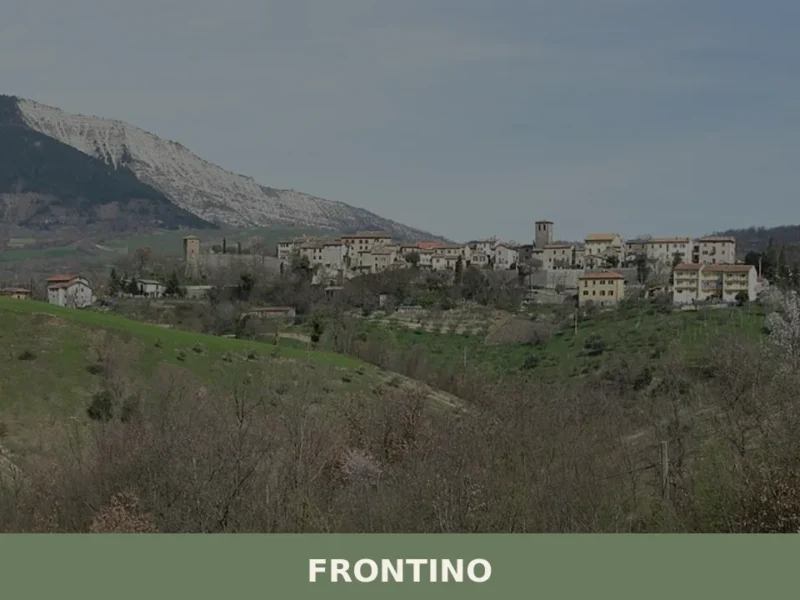
Frontino has around 300 inhabitants today, spread across a hilly area in the province of Pesaro and Urbino at 519 metres above sea level, along the eastern slope of the Apennines separating the Marche from Tuscany and Romagna. The municipality, one of the least populated in the entire region, retains a compact and legible urban […]
Auditore
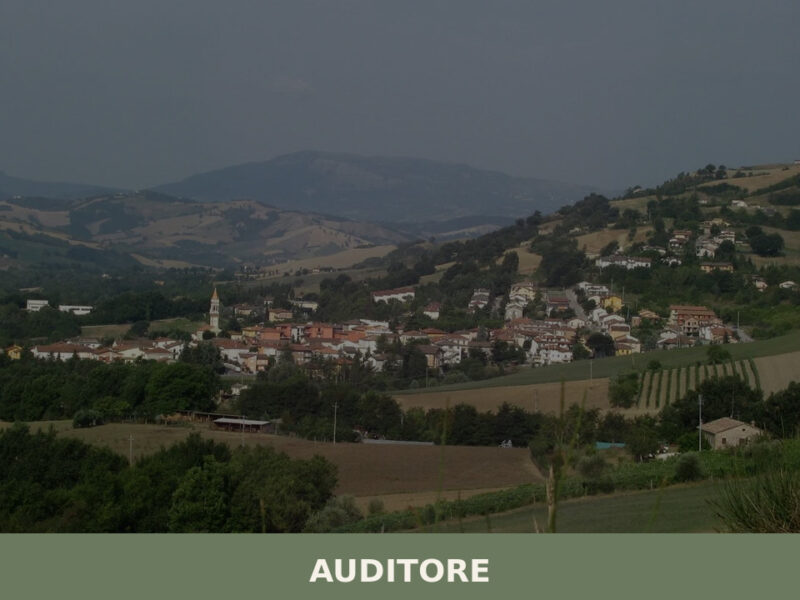
Morning light falls across a line of stone houses the colour of dry wheat, and somewhere below the rooftops a church bell marks the hour with a single, unhurried stroke. Auditore sits in the hill country of the province of Pesaro e Urbino, a settlement of 1,631 people where the Foglia river valley opens toward […]
📝 Incorrect information or updates?
Help us keep the Fratte Rosa page accurate and up to date.