


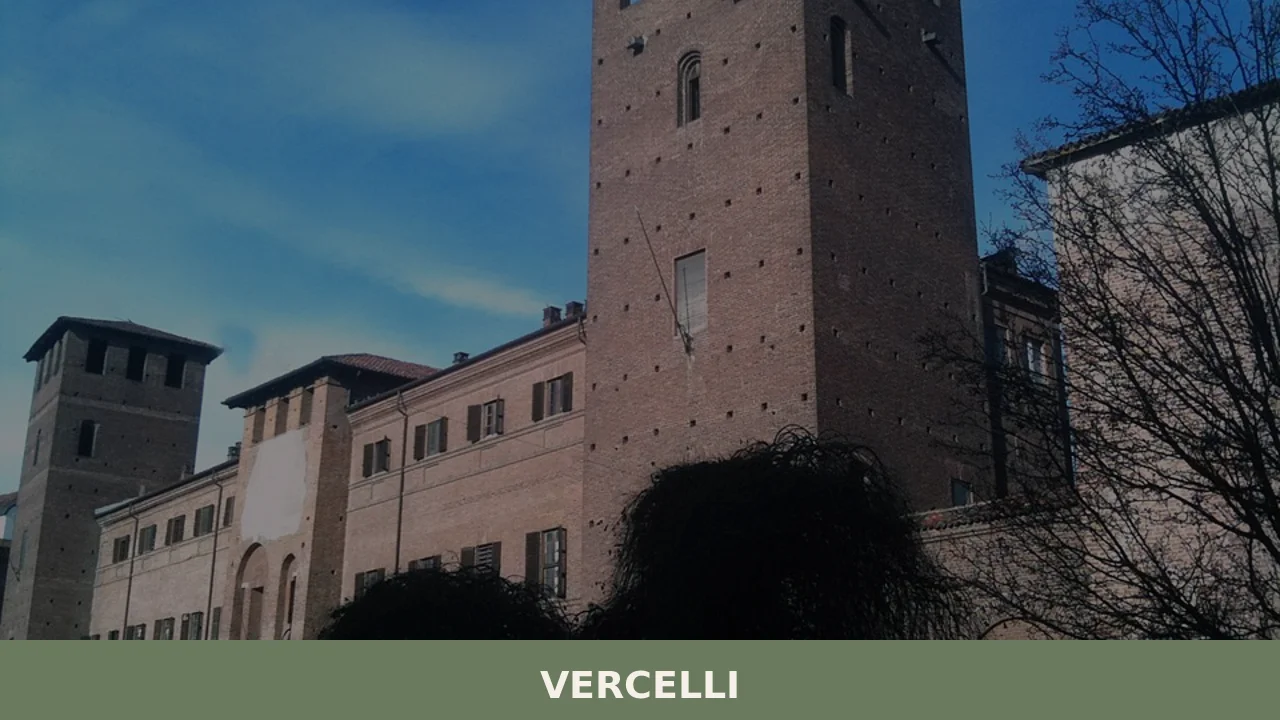
Vercelli
What to see in Vercelli: rice capital at 130 m in Piedmont. Basilica di Sant’Andrea, Museo Borgogna, panissa and flooded paddies. Plan your visit now.
Discover Vercelli
A grain of rice hits boiling water with a dry sound, almost a metallic click. In the kitchens of Vercelli, that gesture has been repeated identically for generations: the hand pouring rice into the pot, the wooden ladle turning slowly, the broth gradually absorbed until it becomes a thick, fragrant cream.
Panissa, the cornerstone dish of local gastronomy, tells the story of a city that grew among the rice paddies of the western Po Plain more vividly than any document could.
The city sits at 130 metres above sea level. Understanding what to see in Vercelli means starting here, from this direct link between land, water and table, and then raising your gaze toward towers, basilicas and cloisters that punctuate a layered historic centre dense with meaning.
History and Origins of Vercelli
The Latin name Vercellae already appears in Roman sources, although its etymology remains debated among scholars. Some linguists connect the root to the Celtic ver-, indicating a watercourse or a place near a river — a hypothesis consistent with the city’s position between the Cervo torrent and the Sesia river. The territory was inhabited by the Libui, a Celto-Ligurian tribe, before the Roman conquest during the 2nd century BC.
Under Rome, Vercellae became a municipium within Regio XI Transpadana, crossed by important road routes — including the road linking Mediolanum to Augusta Praetoria — consolidating its role as a commercial hub in the Piedmontese plain.
The late antiquity period marked a decisive turning point for Vercelli with the figure of Eusebius of Vercelli, the city’s first bishop, appointed around 345 AD, now recognised as patron saint with his feast day set on 1 August.
Eusebius introduced communal life among the clergy, a monastic-episcopal model that influenced the ecclesiastical organisation of northern Italy. During the Middle Ages, the city became a prominent free commune: the founding of the University in 1228, one of the earliest in Europe, attested to Vercelli’s cultural weight.
The university, established with the support of the Commune and the local Church, attracted students and teachers from across the peninsula, functioning for about a century before its decline.
Between the 14th and 16th centuries, the city passed under the control of the Visconti and then the Savoy, who definitively acquired dominion in 1427. The Franco-Spanish wars of the 16th century left deep marks: Vercelli was besieged multiple times, and its fortifications were reinforced and then dismantled in successive cycles. With the modern era, the agricultural vocation took precedence.
The systematic expansion of rice cultivation, initiated between the 15th and 16th centuries thanks to the network of irrigation canals drawn from the Sesia and the Cavour Canal (completed in 1866), transformed both the landscape and the economy. Today Vercelli has 45,206 inhabitants and remains the nerve centre of Europe’s most extensive rice-growing district, a productive identity that continues to define its character and daily life.
What to See in Vercelli: 5 Top Attractions
1. Basilica of Sant’Andrea
Built between 1219 and 1227 at the behest of Cardinal Guala Bicchieri, the Basilica of Sant’Andrea stands at the northern edge of the historic centre, near the railway station. The building represents one of the earliest examples of Gothic architecture in Italy, with elements grafted onto a still-Romanesque structure: the cylindrical towers on the façade, the flying buttress counterforces and the deep splayed portal make it a case study for art historians. The three-nave interior retains an austere elegance, with sculpted capitals and an adjacent cloister that belonged to the Lateran abbey. The two-tone pattern of red brick and pale stone makes the façade recognisable from a distance.
2. Cathedral of Sant’Eusebio
Vercelli’s cathedral, dedicated to patron saint Sant’Eusebio, rises in Piazza Sant’Eusebio with a neoclassical façade designed by Benedetto Alfieri in the second half of the 18th century. Beneath the current appearance lie far older foundations: the site has housed a place of worship since at least the 4th century, and the Romanesque bell tower — visible on the flank of the building — dates to the 12th century. Inside, a wooden crucifix from the Ottonian period, dated to the 10th–11th century, is considered among the oldest in Piedmont. The crypt, brought to light during 20th-century restorations, contains early medieval architectural elements that document the continuous use of this sacred space.
3. Museo Borgogna
Founded in 1882 by collector Antonio Borgogna, this museum occupies a 19th-century palazzo on Via Antonio Borgogna, a few steps from Piazza Cavour. It is the second most important art gallery in Piedmont after the Galleria Sabauda in Turin and houses a collection of paintings from the Renaissance to the 19th century, with works by Piedmontese and Flemish artists. Among the most notable canvases are works by Bernardino Lanino, a pupil of Gaudenzio Ferrari, and a section dedicated to decorative arts with majolica, porcelain and furnishings. The collection reflects the taste of a cultivated provincial bourgeois who invested his wealth in building a public legacy, donating everything to the city.
4. Church of San Cristoforo
Along Corso Libertà, the Church of San Cristoforo holds one of the most important pictorial cycles of the Piedmontese Renaissance. The Madonna of the Oranges and the Stories of Mary Magdalene, frescoed by Gaudenzio Ferrari between 1529 and 1534, cover the walls of the side chapel with scenes of intense naturalism and vibrant colours. The altarpiece of the Madonna with Child and Saints, also by Gaudenzio, dominates the high altar. The building, of 16th-century layout, has a sober brick façade that gives no hint of the decorative richness inside. For those arriving in the city along the main avenue, this church is often the first revelation of Vercelli’s artistic density.
5. Piazza Cavour and Torre dell’Angelo
Piazza Cavour is the focal point of civic life in Vercelli, a rectangular arcaded space that functions as an urban living room, marketplace and meeting place. Along its sides stand buildings with 15th- and 16th-century porticoes, now occupied by cafés and shops. A short distance away rises the Torre dell’Angelo, a medieval structure that takes its name from the angel-shaped weathervane on its summit, a visual landmark in the city’s low skyline. The tower, originally part of the centre’s defensive structures, marks the intersection of the two main axes of the old urban fabric. From here, streets branch out toward the other historic squares, following a layout that traces the Roman grid.
What to Eat in Vercelli: Local Cuisine and Regional Products
Vercelli’s gastronomic tradition is born from two elements: water and rice.
The extensive canal network irrigating the plain between the Sesia and the Dora Baltea has made this area Italy’s leading rice-growing hub since the 15th century. Local cuisine revolves around this cereal with a variety of preparations that go well beyond simple risotto, incorporating legumes, cured meats and vegetables from the Po Valley garden. The influences come from the lower Piedmontese plain, with Monferrato touches in the management of soffritto bases and the generous use of red wine as a cooking liquid.
The dishes are tied to the agricultural calendar: substantial and rich in fat during winter, lighter in the months of the rice weeding season.
The city’s signature dish is panissa vercellese, a dense risotto made with Saluggia borlotti beans, salam d’la duja (salami preserved under fat in a traditional terracotta jar) and a soffritto of lard and onion, deglazed with red Barbera wine. The cooking is slow and the final result should have a compact consistency, almost firm enough to be sliced the next day and pan-fried — a version known as panissa fritta, eaten as a leftover dish. Another first course rooted in tradition is riso e rane (rice and frogs), a preparation linked to the landscape of flooded paddies, where frogs were collected directly by farmers and cooked with butter, garlic and parsley alongside local rice.
The undisputed star of the table is rice, cultivated in the historic varieties of the Vercelli plain.
Among these, Arborio takes its name from the town of the same name in the Vercelli area and has a large, pearly grain ideal for creamy risottos thanks to its high starch content. Maratelli, selected in 1914 by agronomist Mario Maratelli in the Vercelli countryside, was widely grown until the 1960s and is now the subject of a rediscovery by small local producers.
Saluggia beans, grown in a commune just a few kilometres from the city, complete the picture of fundamental ingredients in Vercelli’s cuisine and appear in numerous regional recipes beyond panissa.
The most direct way to encounter these products is the market held in Piazza Cavour on Tuesday and Friday mornings, where local producers sell rice, cheeses and cured meats from the area. Among gastronomic events, the Sagra della Panissa is traditionally held in autumn and sees city districts compete in preparing the dish according to family recipes passed down with meticulous jealousy. During the patron saint feast on 1 August, trattorias in the centre offer menus dedicated to tradition.
Historic shops under the porticoes sell loose rice from local production, often in cloth bags bearing the farm’s brand.
On the wine front, Vercelli falls within the production area of Gattinara DOCG and Bramaterra DOC, reds based on Nebbiolo (locally called Spanna) from the hills north of the city, in the Alto Piemonte territory. These wines, structured and tannic, with notes of violet and undergrowth, pair naturally with panissa and meat dishes.
In the osterias of the centre you will also find Erbaluce di Caluso, a white produced further west but common on wine lists in the area, and Coste della Sesia DOC, a denomination covering red and white varieties from the province.
When to Visit Vercelli: The Best Time of Year
Spring, between April and May, offers one of Italy’s most singular landscape spectacles: the flooded rice paddies surrounding the city transform into a continuous mirror of water, broken only by embankments and rows of poplars, creating a visual effect reminiscent of Southeast Asian landscapes. It is the ideal period for those who want to combine a visit to the historic centre with bicycle rides along farm roads. Summer brings the intense green of growing rice and culminates with the feast of Sant’Eusebio on 1 August, an occasion to experience the city with processions, markets and outdoor dinners.
September and October coincide with the rice harvest and gastronomic festivals, including the Sagra della Panissa.
Winter in Vercelli is cold and often shrouded in Po Valley fog, a weather condition that reduces visibility but gives the historic centre a dense, intimate atmosphere appreciated by photographers and those who prefer visiting museums and churches without the tourist competition of warmer months.
In general, Vercelli is not a mass-tourism destination: it can be visited comfortably at any time of year, always finding parking in the centre and free tables in the trattorias. For those seeking cultural events, the Viotti Festival, a classical music series named after Vercelli-born violinist Giovanni Battista Viotti, runs between autumn and spring with concerts in the hall of the Teatro Civico.
How to Get to Vercelli
Vercelli enjoys a favourable position within the transport network of the North-West. The A26 motorway (Genova Voltri–Gravellona Toce) has a dedicated exit for the city, while the A4 (Turin–Milan) passes a few kilometres to the south, with exits at Carisio or Santhià. Turin is about 80 km away (50 minutes), Milan about 100 km (one hour and ten minutes), Genoa about 150 km.
Vercelli railway station, situated right next to the historic centre and the Basilica of Sant’Andrea, is served by regional trains on the Turin–Milan line, with high frequencies and journey times of around 35 minutes from Torino Porta Nuova and 55 minutes from Milano Centrale.
The nearest airport is Milan Malpensa (T1 and T2), reachable in about one hour by car via the A26.
Turin Caselle airport is at a similar distance, about 90 km to the west. From both airports, rail connections pass through the Novara or Turin junctions, from which you continue to Vercelli with a change. The Municipality of Vercelli provides updated information on its website regarding urban public transport and available parking in the centre.
The city is easily walkable: from the cathedral to the Basilica of Sant’Andrea, the distance is less than one kilometre.
Other Villages to Discover in Piedmont
Those visiting Vercelli who wish to explore eastern Piedmont and the Canavese can build an itinerary touching smaller centres of considerable interest. About 70 km to the west, in the Lake Viverone area, lies Albiano d’Ivrea, a village in the Eporedia morainic amphitheatre known for its Roman bridge over the Dora and for its panoramic position over the morainic hills.
The route from Vercelli takes about an hour by car through the rice-growing plain and then the Canavese hills, a sharp change of landscape that takes you from the flat expanse of paddies to the glacier-shaped ridges.
Continuing north-west, you reach Agliè, dominated by the imposing Ducal Castle — a Savoy residence included in the UNESCO circuit of Piedmont’s Savoy Residences — with its Italian-style gardens and park sloping down toward the Orco torrent.
From Vercelli to Agliè the distance is about 80 km, one hour and fifteen minutes of driving. Pairing Vercelli with these two centres creates a coherent thematic triangle: the great rice city, the morainic village with Roman traces and the ducal residence surrounded by Canavese greenery. Three different expressions of Piedmont, all reachable as day trips and complementary to one another in content and atmosphere.
In Piedmont More villages to discover
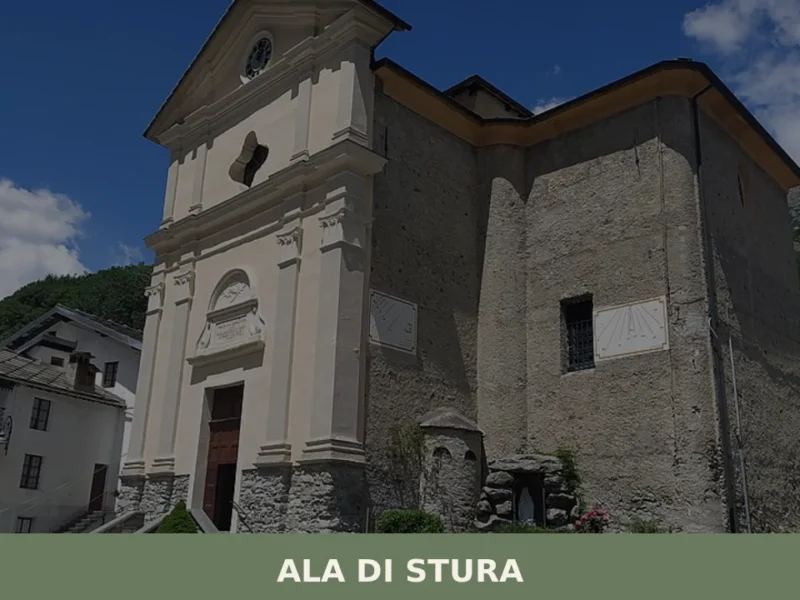
Ala di Stura
Every year on 4 September, in Ala di Stura, the bells of the Parish Church of San Grato ring out with special fervour, announcing the patron saint’s feast day. This annual ritual, rooted in centuries of mountain history, is more than a simple religious celebration: it is a call to a community that, at 1,080 […]
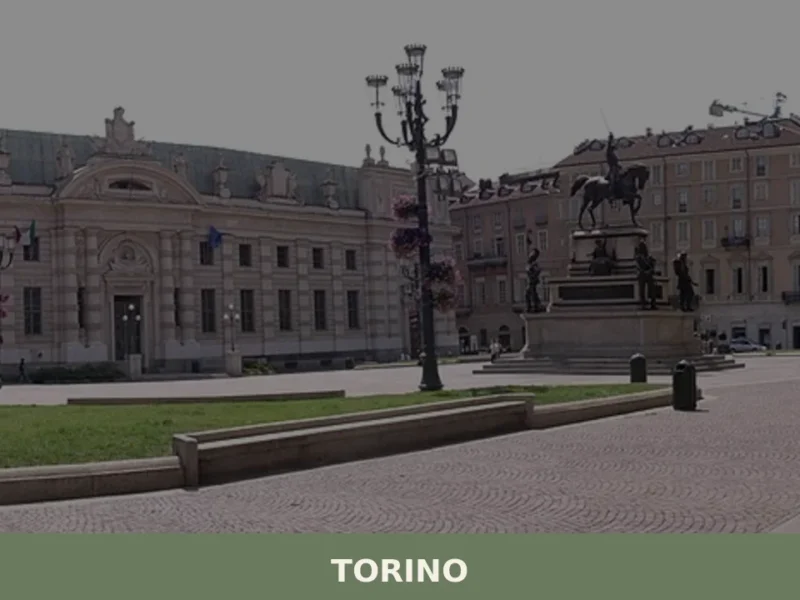
Torino
What to see in Torino: the city at 239m altitude with 841,600 residents. Explore 5 key attractions and Piedmontese cuisine. Read the full guide now.
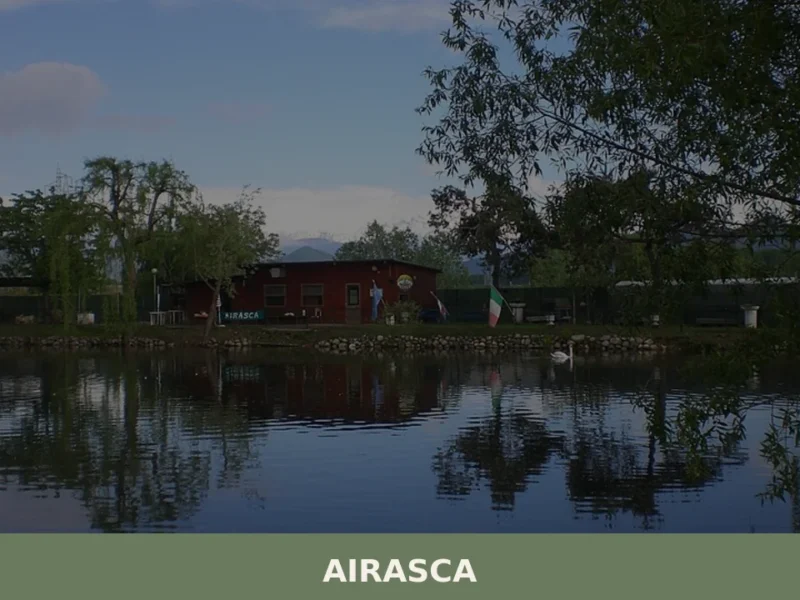
Airasca
Arriving in Airasca along the provincial road that connects Pinerolo to Turin, the first thing you notice is the bell tower of the parish church of San Bartolomeo, a vertical landmark in a horizontal landscape of cultivated fields and rows of poplars. The municipality, home to 3,842 inhabitants at 257 metres above sea level, occupies […]
🧀 Italian traditional products
📝 Incorrect information or updates?
Help us keep the Vercelli page accurate and up to date.