


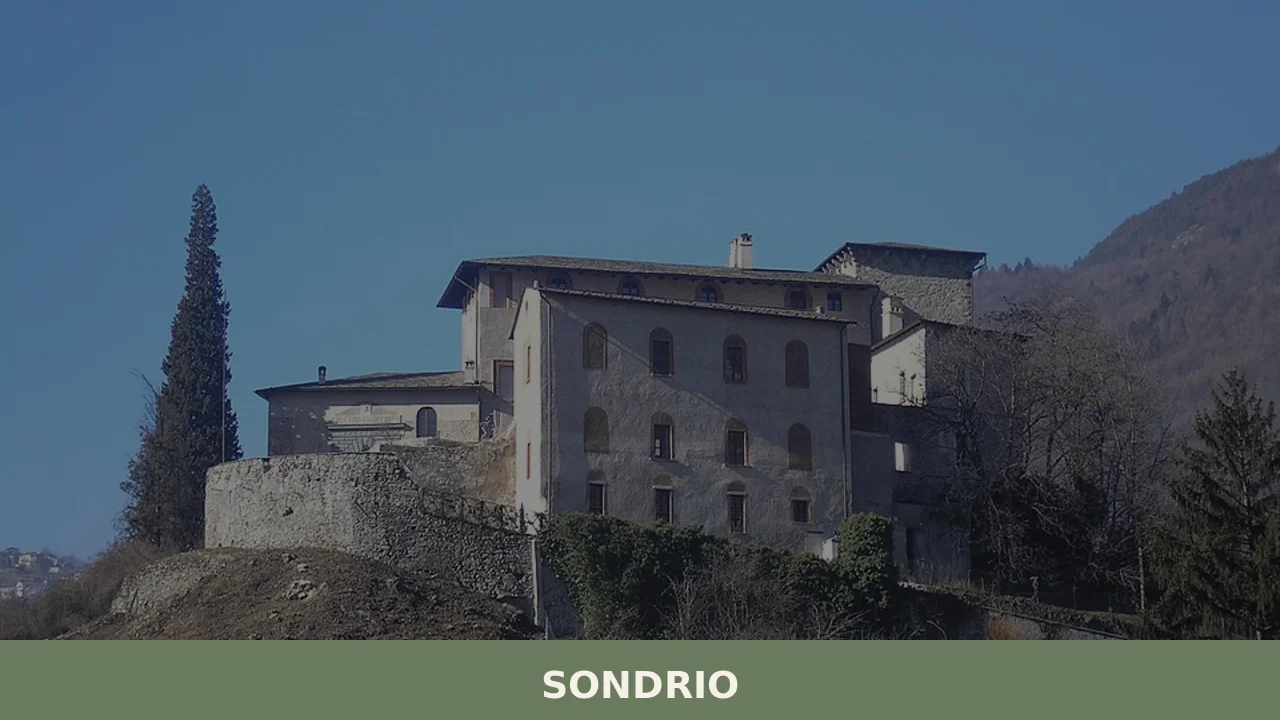
Sondrio
What to see in Sondrio? Located at 298m altitude, discover Castello Masegra and the Collegiata dei Santi Gervasio e Protasio. Explore this Valtellina capital.
Discover Sondrio
Sondrio, the capital of the eponymous province in Lombardy, is located at 307 m above sea level and lies in the heart of Valtellina, an Alpine valley stretching for over 100 kilometers. Its strategic position, a short distance from Switzerland and framed by the Rhaetian and Orobic Alps, has historically fostered commercial and cultural exchanges.
With a population of 21,066 inhabitants, Sondrio represents a focal point for the entire valley, offering visitors a mix of history, culture, and mountain traditions.
For those wondering what to see in Sondrio, the city offers an itinerary ranging from ancient castles to Renaissance buildings, not forgetting the rich food and wine culture of its territory.
History and Origins of Sondrio
Sondrio’s origins are rooted in ancient times, although the most concrete archaeological evidence dates back to the Roman period, when Valtellina was an important crossroads for transit across the Alps.
The name itself, “Sondrio”, is believed to derive from the Germanic term “sunder” meaning “separate land” or “private land”, perhaps indicating a distinctive land ownership during a period of Lombard settlements. During the Early Middle Ages, the area was contested by various powers, with control passing from the Lombards to the Franks, consolidating its role as an administrative and military center.
The town gained greater importance in the Late Middle Ages, when it became a possession of the Bishops of Como and subsequently of the Rusca, a powerful noble family from Como.
In the 13th century, the construction of Masegra Castle on the hill overlooking the city testified to its growing strategic and defensive importance, serving as a stronghold against incursions and a symbol of seigniorial power.
Its geographical position, in the center of Valtellina, made it a crucial hub for controlling Alpine trade, attracting the attention of regional and international powers alike.
A similar historical path can also be found in other centers of Lombardy, such as Cremona, which, although with different dynamics, has seen a succession of dominations and the rise of important noble families over the centuries.
A fundamental chapter in Sondrio’s history is represented by the domination of the Three Leagues (Grigioni), which began in the 15th century and lasted for about three centuries, until the end of the 18th century.
This period saw Valtellina and Sondrio under Swiss influence, with a government that, although foreign, guaranteed a certain autonomy and economic prosperity linked to trade.
The city became the capital of the Terziere of Sondrio, one of the three districts into which the valley was divided, and continued to develop its urban character, with the construction of stately palaces and the expansion of its structures.
With the arrival of Napoleon and the subsequent Restoration, Sondrio returned to the Italian sphere, becoming part of the Lombard-Venetian Kingdom and, finally, of the Kingdom of Italy in 1859, consolidating its role as provincial capital.
What to see in Sondrio: main attractions
Masegra Castle
Masegra Castle is the symbolic building of Sondrio, erected on a hill overlooking the city and the entire valley.
Its origins date back to the 13th century, when it was built by the Bishops of Como and later expanded and fortified by the Rusca family. The current structure is the result of various modifications and additions over the centuries, which transformed its appearance from a medieval stronghold to a Renaissance noble residence.
The castle is characterized by mighty walls, towers, and a large inner courtyard, elements that attest to its dual defensive and residential function.
Inside, it now houses the Valtellinese Historical Museum, which traces the history and art of the valley through exhibitions of archaeological finds, historical documents, and works of art.
Climbing up to the castle offers not only the opportunity to visit the museum but also to enjoy a wide panoramic view of the city and the surrounding mountains, making it a privileged vantage point for those wishing to admire the Valtellinese landscape.
Palazzo Pretorio
The Palazzo Pretorio, located in Piazza Quadrivio, is another building of great historical and architectural significance in Sondrio. Built in the 16th century, during the period of the domination of the Three Grey Leagues, the palace served as the seat of government and administration for Valtellina, housing the podestà and judicial offices.
Its facade features typical elements of Renaissance architecture, with porticoes, decorated windows, and an elegant loggia overlooking the square.
Inside, some rooms preserve frescoes and decorations from the period, testifying to the political and social importance the building held. Today, the Palazzo Pretorio houses the “Pio Rajna” Civic Library, making it a center of culture and knowledge for the community.
Its central location makes it easily accessible and an integral part of a route to discover what to see in Sondrio, immersing oneself in the city’s administrative history.
Collegiate Church of Saints Gervasius and Protasius
The Collegiate Church of Saints Gervasius and Protasius is the main church in Sondrio, dedicated to the city’s patron saints. The current building, in neoclassical style, was constructed between the late 18th and early 19th centuries based on a design by architect Pietro Taglioretti, replacing a previous medieval church.
Its imposing facade is characterized by columns and a large pediment, while the interior has three naves, with rich decorative elements including frescoes, stuccoes, and works of art by local and regional artists.
Particularly noteworthy are the main altar and the pulpit, crafted from precious marbles. The tall and slender bell tower is a landmark in Sondrio’s urban skyline.
The Collegiate Church is not only a place of worship but also a significant example of Lombard religious architecture of the period, representing a cultural and spiritual attraction for visitors.
Valtellinese Museum of History and Art
Housed within Masegra Castle, the Valtellinese Museum of History and Art is a fundamental cultural institution for understanding the historical and artistic heritage of Valtellina. The museum is divided into different sections covering a time span from prehistory to the modern age.
Among the collections on display are archaeological finds discovered in the valley, testimonies of the daily life and economic activities of local populations, as well as a picture gallery that gathers works by Valtellinese and Lombard artists, including paintings, sculptures, and sacred art objects.
The museum layout is designed to guide visitors through a chronological and thematic journey, offering insights into the political, social, and cultural history of the region.
A visit to the museum is an opportunity to appreciate the identity and traditions of Valtellina, providing a broader context for what can be discovered by exploring what to see in Sondrio.
Piazza Garibaldi and the Historic Center
Piazza Garibaldi represents the beating heart of Sondrio’s historic center, a meeting point and hub of city life surrounded by historic buildings and arcades. The square is named after the Risorgimento hero Giuseppe Garibaldi, whose equestrian statue stands in the center. Around the square, 19th-century palaces and shops overlook, contributing to create a lively atmosphere.
From Piazza Garibaldi, the main streets of the historic center branch off, dotted with traditional shops, cafes, and restaurants.
Strolling through these streets allows one to admire Sondrio’s civil architecture, with its noble palaces and decorated facades, which tell the city’s history through the centuries. The historic center is also the ideal place to perceive the rhythm of local life and to take a break, perhaps enjoying a local food and wine specialty
The exploration of this area is essential for anyone who wants to understand the essence of Sondrio.
Typical Cuisine and Products of Sondrio
The gastronomic tradition of Sondrio and Valtellina is deeply linked to its mountain environment, characterized by robust flavors and simple yet genuine ingredients. Local cuisine reflects the historical need to make the best use of available resources, such as cereals, cheeses, cured meats, and mountain vegetables. Culinary influences have been shaped by both proximity to Switzerland and Lombard traditions, creating a repertoire of unique and distinctive dishes.
The harsh climate and the conformation of the territory have favored the development of preservation techniques, such as drying and aging, which are still the basis of many typical products today.
Among the most representative dishes of Valtellinese cuisine are Pizzoccheri della Valtellina, a short buckwheat pasta seasoned with savoy cabbage, potatoes, melted butter, garlic, and abundant Casera or Bitto cheese.
Another iconic dish is Sciatt, small round fritters filled with melted Casera cheese, usually served with fresh chicory.
No less important are Chisciöl, savory buckwheat flour and cheese fritters, cooked in a pan and eaten hot. Meat plays a central role, with preparations such as Bresaola della Valtellina, a lean, cured sausage made from prized cuts of beef, and Deer or Roe Deer Stew, often accompanied by polenta.
Although there are no specific certified products for the municipal area of Sondrio in the provided database, Valtellina is renowned for several characteristic products that are also readily available in Sondrio.
Among the cheeses, Bitto and Casera Valtellina are the most famous, both produced with cow’s milk and aged for varying periods, giving them intense and complex flavors.
Bresaola della Valtellina (PGI) is a European-recognized excellence, produced throughout the province of Sondrio, and represents a symbol of local gastronomy. These products, while not exclusively from Sondrio, are an integral part of its culinary offering and can be enjoyed in the city’s restaurants and shops.
As for festivals and markets, the Valtellina area offers various opportunities to taste and purchase typical products.
Although specific events cannot be mentioned without verifiable sources, it is common to find weekly markets in Sondrio where local farmers and producers offer their cheeses, cured meats, wines, and baked goods.
During autumn, in particular, the grape harvest and product gathering season brings with it numerous food and wine festivals and events in the valley’s villages, celebrating the agricultural richness of the territory and attracting visitors in search of authentic flavors.
Those visiting Lombardy can also find culinary traditions linked to the territory in Arcisate, where Varese cuisine offers its specialties.
Festivals, Events, and Traditions of Sondrio
The cultural and social life of Sondrio is marked by various events that reflect local traditions and the community’s spirituality. The most important festival for the city is dedicated to its patron saints, Gervasio and Protasio, celebrated on June 19th. On this occasion, the city comes alive with religious celebrations, including solemn masses and processions through the streets of the historic center, attended by a large number of faithful and citizens.
The patron saint’s festival represents a moment of gathering and identity for the Sondrio community, an opportunity to honor the history and Christian roots of the village.
In addition to religious celebrations, June 19th is often accompanied by civic events, such as concerts, shows, and market stalls that enliven the city squares and streets.
These initiatives offer visitors the chance to immerse themselves in Sondrio’s festive atmosphere and discover popular traditions.
Throughout the year, the Valtellina capital also hosts other events, such as markets for typical products, art exhibitions, and cultural manifestations, especially in the summer and autumn months, attracting tourists and residents.
Participating in these festivals is a concrete way to experience the city, beyond its monumental attractions, and to grasp the authenticity of its spirit.
When to Visit Sondrio and How to Get There
Sondrio lends itself to being visited in different seasons, each with its own peculiarities. Spring (April-May) and autumn (September-October) are generally considered the best times for those who prefer mild temperatures and vibrant colours. In spring, the valley awakens with blooming flowers, while in autumn the woods are painted with warm hues, offering ideal scenery for hikes and walks.
Summer (June-August) is perfect for mountain lovers and outdoor activities, with pleasant temperatures and the opportunity to explore the numerous alpine trails.
Winter (December-March) transforms Sondrio into a convenient base for winter sports, given its proximity to important ski resorts in Valtellina. Those seeking tranquility and a more authentic experience may prefer the low season months to avoid crowds.
To reach Sondrio, various means of transport can be used.
If you arrive by car, the A4 motorway (Milan-Venice) is the main access point. From Milan, continue along the SS36 del Lago di Como e dello Spluga, which then becomes the SS38 dello Stelvio, arriving directly in Sondrio. The distance from Milan is approximately 130 km, with an estimated travel time of about two hours.
For those coming from other directions, State Road 39 del Passo dell’Aprica can also be considered.
The city is also served by a train station, managed by Trenord, which connects Sondrio with Milan Centrale with regional trains, making it easily accessible even without a car.
The station is a short distance from the city centre, allowing convenient access to the main attractions.
The closest airport to Sondrio is Bergamo Orio al Serio Airport (BGY), located approximately 110 km away, with an estimated travel time of about an hour and forty-five minutes by car. Other reference airports include Milan Linate (LIN), about 135 km away, and Milan Malpensa (MXP), about 170 km away.
From these airports, it is possible to rent a car or use public transport services, combining trains and buses to reach the destination.
Those wishing to further explore Lombardy after visiting Sondrio can consider extending their itinerary to villages like Cadrezzate or Barasso, which offer distinct lake and pre-alpine landscapes.
| Starting Point | Distance | Estimated Time |
|---|---|---|
| Milan | 130 km | 2h 00m |
| Bergamo (BGY Airport) | 110 km | 1h 45m |
| Como | 80 km | 1h 30m |
Where to Stay in Sondrio
Sondrio, being a provincial capital and a gateway to Valtellina, offers various accommodation options for visitors.
In the city centre, you’ll find hotels of various categories, ranging from more traditional establishments to modern solutions, capable of satisfying different needs and budgets.
Many of these hotels are strategically located, allowing easy access to the main cultural attractions and services.
The presence of hotels allows travellers to choose the accommodation that best suits their travel style, ensuring comfort and practicality for exploring the city and its surroundings.
In addition to hotels, those seeking a more intimate experience or contact with local tradition can opt for bed & breakfasts or farm stays located in the immediate vicinity of Sondrio, especially in the surrounding hilly areas.
These establishments often offer a more familiar atmosphere and the chance to taste typical zero-mile products, immersing oneself in Valtellina’s rural life. It is always advisable to check availability and book in advance, especially during high season periods or in conjunction with specific events, by consulting the official websites of the establishments or major booking portals.
Photo Gallery of Sondrio
Do you have photos of Sondrio?
Share your photos of the village: the best ones will be added to the official gallery, with your credit.
Send your photosFrequently asked questions about Sondrio
How can I reach Sondrio by public transport?
Sondrio is well-connected by train, being a key stop on the Tirano-Milan line operated by Trenord. Direct regional trains frequently link Sondrio to major cities like Milan Centrale, Monza, and Lecco, with journey times from Milan typically around two hours. Additionally, various local and regional bus services connect Sondrio with other towns across the Valtellina valley and surrounding areas, facilitating travel within the province.
What is the best way to travel to Sondrio by car?
To reach Sondrio by car, the most common route from Milan involves taking the SS36 'Superstrada dello Spluga' towards Lecco and Colico. From Colico, continue onto the SS38 'dello Stelvio,' which leads directly into Valtellina and to Sondrio. The drive from Milan generally takes between 1.5 to 2 hours, depending on traffic conditions. From Bergamo, follow directions towards Lecco before joining the SS38.
When is the patron saint feast celebrated in Sondrio?
Sondrio celebrates its patron saints, Gervasio and Protasio, annually on June 19th. This day is marked by religious ceremonies and local traditions, providing visitors with an opportunity to experience the community's cultural heritage. The festivities often create a lively atmosphere throughout the town, reflecting the deep-rooted traditions of the Valtellinese people.
Are there hiking or cycling trails accessible from Sondrio?
Yes, Sondrio serves as an excellent starting point for various outdoor activities. The renowned 'Sentiero Valtellina,' a dedicated cycling and walking path, runs along the Adda river and is easily accessible from the town. For hikers, numerous marked CAI trails ascend into the surrounding Rhaetian and Orobic Alps, offering diverse routes for all skill levels, including scenic paths through the terraced vineyards of the 'Strada del Vino'.
What is the recommended duration for a visit to Sondrio?
While a focused exploration of Sondrio's historic center and main attractions can be enjoyed within a half to a full day, visitors often dedicate 2-3 days to fully experience the area. This allows ample time to delve deeper into the city's cultural offerings, explore the wider Valtellina valley, discover its renowned food and wine routes, or embark on hiking and cycling adventures in the surrounding Alpine landscape.
What types of accommodation are available for visitors in Sondrio?
Sondrio offers a variety of accommodation options to suit different preferences. Visitors can choose from hotels, bed & breakfasts, and guesthouses conveniently located in the city center or its immediate vicinity. For those seeking an authentic rural experience, there are also several agriturismi (farm stays) nestled in the nearby countryside and vineyards, providing a taste of Valtellinese hospitality amidst nature.
In Lombardia More villages to discover
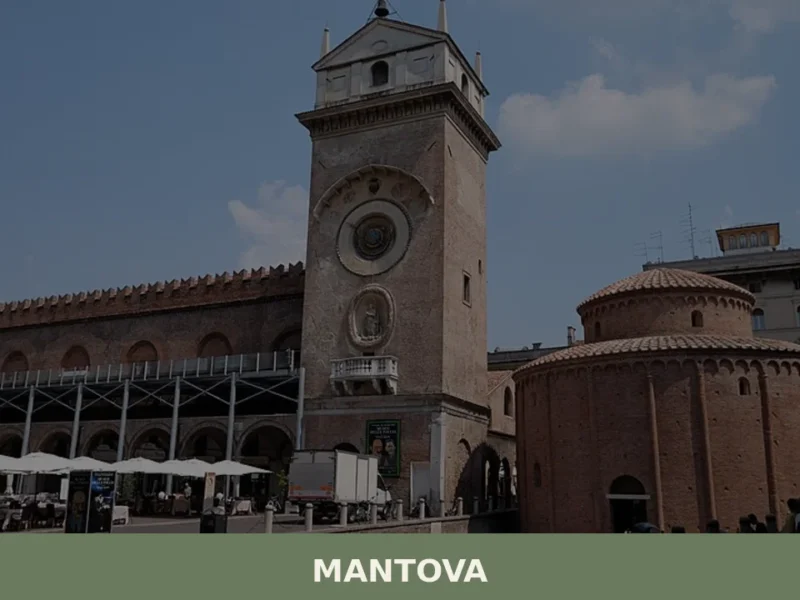
Mantova
what to see in mantova. A UNESCO heritage village with 48,653 inhabitants. Explore Palazzo Ducale and taste the famous Pumpkin Tortelli.
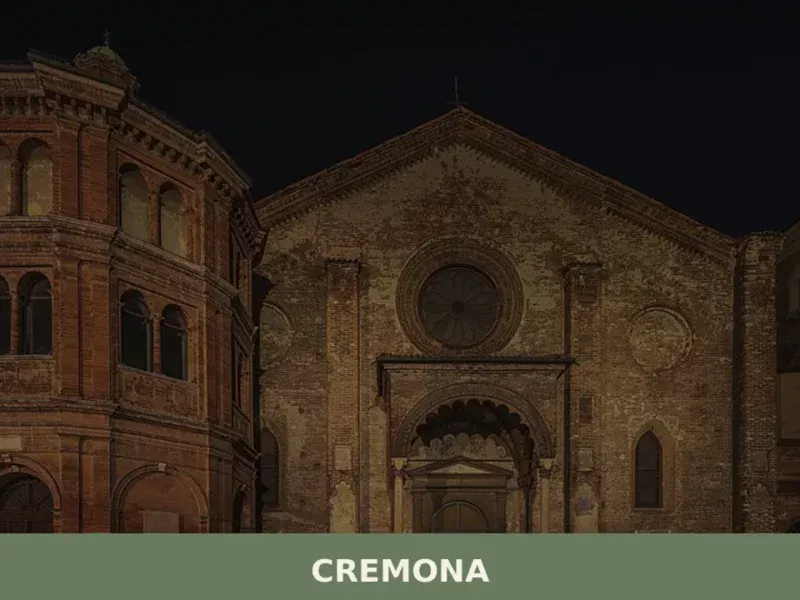
Cremona
What to see in Cremona? With a population of 70,637, this city of lutherie offers the iconic Torrazzo and Violin Museum. Explore our guide.
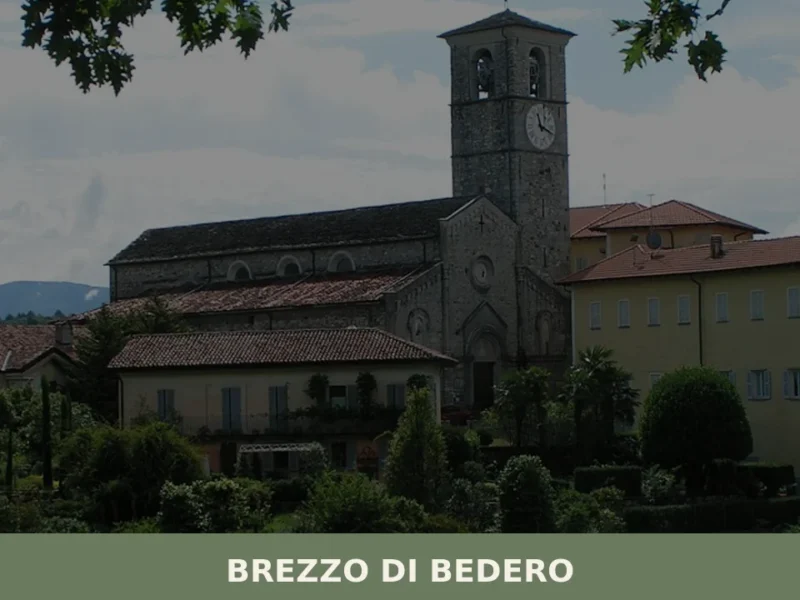
Brezzo di Bedero
What to see in Brezzo di Bedero: Explore Collegiata di San Vittore and the lakeside Hermitage. This village, home to 1,200 residents, offers rich history. Discover more!
📝 Incorrect information or updates?
Help us keep the Sondrio page accurate and up to date.