


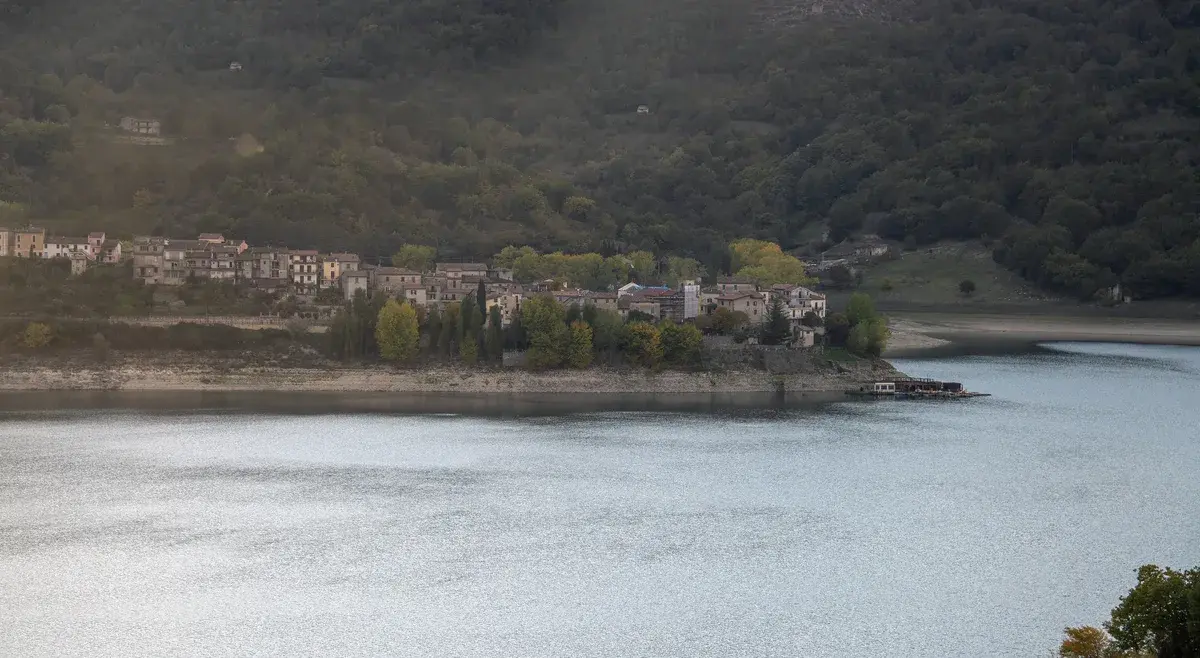
Colle di Tora
What to see in Colle di Tora: a village at 542 m on Lake Turano with 381 residents, a medieval centre and 3 PAT-certified products. Plan your visit today.
Discover Colle di Tora
Colle di Tora sits at 542 metres above sea level in the province of Rieti, on the shore of Lake Turano — an artificial reservoir created in the 1930s by the construction of a large dam across the Turano river.
With a population of 381, the village retains a compact urban layout that spreads across the top of a hill, looking directly out over the lake.
Anyone wondering what to see in Colle di Tora will find a well-preserved historic centre, a lake landscape with considerable visual impact, and a gastronomic tradition rooted in the produce of the inland Sabina region.
History and Origins of Colle di Tora
The origins of Colle di Tora are tied to the Sabina, the historic region stretching between the Tiber and the Rieti area, which in antiquity was home to the Sabine tribe before being absorbed into the Roman sphere.
The village’s name recalls the Turano river, the watercourse that runs through the valley below and that for centuries determined the settlement geography of this area.
The area has been inhabited since the medieval period, when local communities sought elevated positions for defensive reasons, building their settlements on the hilltops that overlooked the valley floors.
During the Middle Ages, the territory of Colle di Tora was drawn into the feudal dynamics that characterised the entire Sabina region, with a succession of local lordships controlling the small hilltop centres.
The modern history of the village is, however, inseparable from a twentieth-century event that fundamentally transformed its landscape: the construction of the dam on the Turano, completed in 1939 under the Fascist regime as part of a plan for water management and hydroelectric production.
The creation of the artificial lake submerged part of the valley floor and altered the physical boundaries of the village, effectively bringing it closer to the shores of the new body of water.
After the Second World War, Colle di Tora followed the fate of many small centres in the Lazio Apennines, marked by depopulation and migration to the cities.
The population, which was once larger, gradually declined to the current 381 residents, though the community has remained active in managing the land and its resources.
The village is part of the province of Rieti and belongs administratively to a mountain and hill territory that includes several small municipalities distributed along the Turano valley.
What to See in Colle di Tora: Main Attractions
Lake Turano
Lake Turano is the primary natural feature that defines the landscape of Colle di Tora.
Created by the dam of the same name, completed in 1939, the reservoir stretches for around 8 kilometres in length and laps at the slopes of the hill on which the village stands.
The lake offers opportunities for fishing, water-based activities and walks along the banks.
It is worth driving the panoramic road that runs along the shoreline to take in the reflection of the village on the water, particularly in the morning hours when the light is at its clearest.
The Dam on the Turano River
The dam that brought the lake into existence is a feat of engineering with considerable historical and industrial interest, built during the 1930s as part of the major hydraulic works promoted during the Fascist era.
The masonry structure blocked the course of the Turano, forming the artificial basin that today defines the entire valley.
Getting close to the dam gives a real sense of the scale of the project and allows visitors to read in the surrounding landscape the signs of a radical transformation that reshaped the geography of the territory throughout the twentieth century.
The Historic Centre of Colle di Tora
The old core of the village spreads across the hilltop in a compact layout, with buildings in local stone arranged along narrow lanes that converge on the central square.
The residential architecture reflects the construction traditions typical of the inland Sabina, with multi-storey limestone houses, arched doorways and loggias opening onto the lake landscape.
Exploring the historic centre on foot allows visitors to appreciate the architectural coherence of the village and to observe the details that document the continuity of settlement from the medieval period through to the modern era.
Anyone wanting to understand what to see in Colle di Tora should start precisely from this urban core.
The Church of San Lorenzo
The church dedicated to Saint Lawrence is the village’s principal place of worship and its main religious and community landmark.
Saint Lawrence is the patron saint of Colle di Tora, venerated on 10 August with the patron feast that marks both the liturgical and civic calendar of the community.
The church, integrated into the fabric of the historic centre, retains the layout of a straightforward rural religious building, consistent with the sacred architecture of the Sabina region.
The interior deserves close attention for the decorative and devotional elements accumulated through centuries of parish life.
The Viewpoints over the Lake
Colle di Tora offers several natural vantage points that open onto Lake Turano and the surrounding hills.
The most accessible viewpoints are located at the edges of the historic centre, where the outer streets end at unobstructed overlooks.
From these elevated positions the eye takes in the entire surface of the lake, the wooded hills of the opposite shore and, on clear days, the ridges of the Simbruini and Reatini mountains in the background.
These observation points make it immediately clear how the village sits within its geographic setting and how it relates to the landscape around it.
Local Food and Produce of Colle di Tora
The cuisine of Colle di Tora belongs to the gastronomic tradition of the inland Sabina, a territory that over the centuries developed a food culture based on sheep farming, pig rearing, dairy production and the use of woodland resources.
The village’s geographic position, halfway between the Rieti valleys and the Amatrice area, encouraged cross-pollination between different culinary traditions of northern Lazio, drawing influences from both the Sabine plain and the mountain plateaus of the interior.
The presence of the lake has also introduced a freshwater fishing element, with whitefish and trout forming part of the local diet.
Among the traditional dishes, preparations based on cured pork and pork meat hold a central place.
Pasta alla gricia, the forerunner of amatriciana, is widespread across the Rieti area and is made with rendered guanciale, grated pecorino and black pepper, without tomato.
Equally common is pasta all’amatriciana, which adds peeled tomato to the sauce.
Pulse soups — in particular lentil soup and white bean soup — have for centuries accompanied the cold months, when mountain conditions isolate the villages and cooking focuses on preserved ingredients.
Lake fish, grilled or braised with garlic and rosemary, is a more recent addition that has nonetheless become firmly established in the local food offer.
Among the certified products of the territory, three items are recognised as Traditional Agri-food Products (PAT) by the Italian Ministry of Agriculture.
Cacio fiore (PAT) is a fresh soft-paste cheese of Lazio tradition, made from sheep’s milk and distinguished by the use of vegetable rennet derived from wild thistle.
Guanciale (PAT) is the cured meat obtained from the pig’s cheek, aged with salt, pepper and aromatics, and essential to many local dishes.
Guanciale amatriciano (PAT) is the specific variant produced in the Amatrice area, with a curing process and seasoning that set it apart from versions made elsewhere in Lazio.
The summer food festivals are the main opportunity to sample these products in their original setting.
In August, coinciding with the patron feast of 10 August dedicated to Saint Lawrence, the village fills its squares with food stalls serving traditional local dishes.
Farmers’ markets and local shops offer the chance to buy cured meats, cheeses and preserves directly from producers, with the assurance of a short supply chain rooted in the province of Rieti.
Festivals, Events and Traditions of Colle di Tora
The patron feast in honour of Saint Lawrence, celebrated on 10 August, is the most significant event in the civic and religious calendar of Colle di Tora.
The date falls on the night of Saint Lawrence, traditionally associated across Italy with shooting stars, which gives the occasion a dual meaning — both liturgical and popular.
The celebrations include a solemn mass in the parish church dedicated to the patron saint, followed by a procession through the streets of the historic centre.
The summer evenings of August also see the organisation of food and cultural events that bring the village to life in the days surrounding the main feast.
The community of Colle di Tora keeps alive a number of traditions tied to the agricultural and pastoral calendar of the inland Sabina.
Christmas and Easter are marked by parish religious rites, while Carnival and spring celebrations follow the patterns common to villages throughout the Rieti area.
Lake Turano plays a central role in events related to fishing and water-based activities, which are concentrated in the summer months when the reservoir attracts both residents and visitors.
These initiatives, though modest in scale compared to major regional events, represent important gathering points for a community of 381 permanent residents.
When to Visit Colle di Tora and How to Get There
The best time to visit Colle di Tora falls between May and September, when the mild climate makes walks along the lake shore and through the historic centre comfortable.
Summer — particularly July and August — is the busiest season: Lake Turano draws visitors from Rome and the wider Lazio region for water sports and lakeside relaxation.
August also offers the opportunity to take part in the Saint Lawrence celebrations on 10 August.
Spring, with the deep green of the surrounding woodland and fewer visitors around, suits those who prefer to explore the village at a slower pace.
Autumn, with the colours of the foliage across the hills, is popular with hikers.
For updates on local events and municipal services, it is useful to consult the Colle di Tora municipal website.
If you are travelling by car, the most direct route from Rome follows the Via Salaria to Rieti and then continues towards the Turano valley along the provincial road connecting the lakeside villages.
The distance from Rome is around 90 kilometres, with an estimated journey time of about an hour and a half depending on traffic.
Travellers arriving by train can reach Rieti station, approximately 30 kilometres from the village, with connections from the Roma Tiburtina line.
For those coming from outside the region, the main airport is Rome Fiumicino, around 130 kilometres from Colle di Tora, reachable via the same Via Salaria.
For planning the journey by public transport, it is worth consulting the Cotral website — the company that manages road transport in Lazio, with services linking Rieti to the villages of the Turano valley.
Other Villages to Explore in Lazio
Those who have visited Colle di Tora and want to explore more of northern Lazio have several worthwhile options within a short distance.
In the Viterbo area, Tessennano is a village of just a few hundred inhabitants that retains a compact medieval layout and a panoramic position over the Lazio Maremma.
Equally rewarding is a visit to Bassano in Teverina, a village in the Tuscia area that rises on a tufa spur overlooking the Tiber valley, with a well-preserved historic core and an established winemaking tradition.
Both centres share with Colle di Tora a contained scale and a distance from the major mass-tourism circuits.
Extending the radius towards the borders with Umbria and Tuscany, it is worth including Proceno in the itinerary — a small village in upper Lazio that rises on a volcanic hill and retains its medieval castle in excellent condition, with views over the Maremma and Val d’Orcia landscapes.
In the Rieti area, Accumoli represents the case of an Apennine village severely damaged by the 2016 earthquake and now at the centre of a reconstruction process, making it a place of memory and reflection as much as a destination in its own right.
Building an itinerary that combines what to see in Colle di Tora with these nearby destinations allows visitors to cross, in just a few days, a stretch of inland Lazio marked by layered history and varied landscapes.
Photo Gallery of Colle di Tora
Do you have photos of Colle di Tora?
Share your photos of the village: the best ones will be added to the official gallery, with your credit.
Send your photosIn Lazio More villages to discover
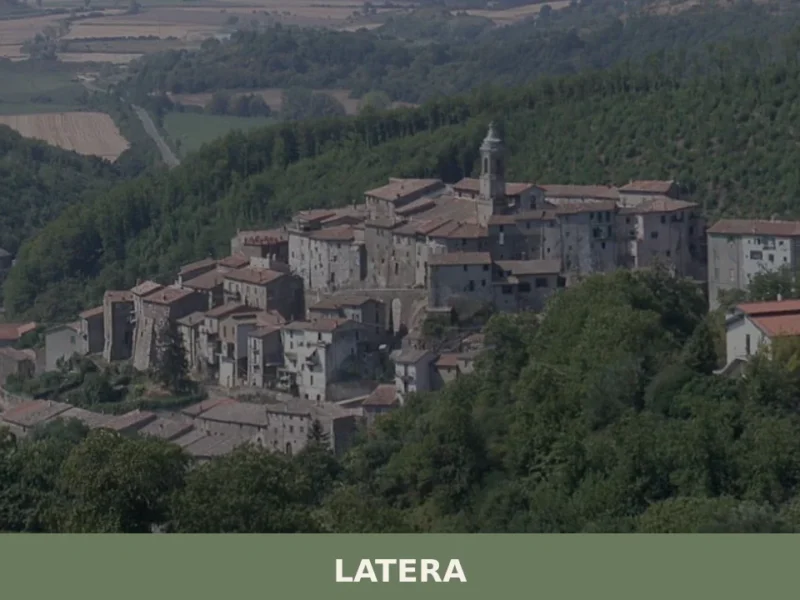
Latera
Latera has 766 inhabitants and sits on a tuff plateau at 508 metres above sea level, on the far northern edge of the province of Viterbo, close to the borders with Umbria and Tuscany. For centuries a fiefdom of the Farnese family, this small centre retains a compact Renaissance urban layout, with straight streets converging […]
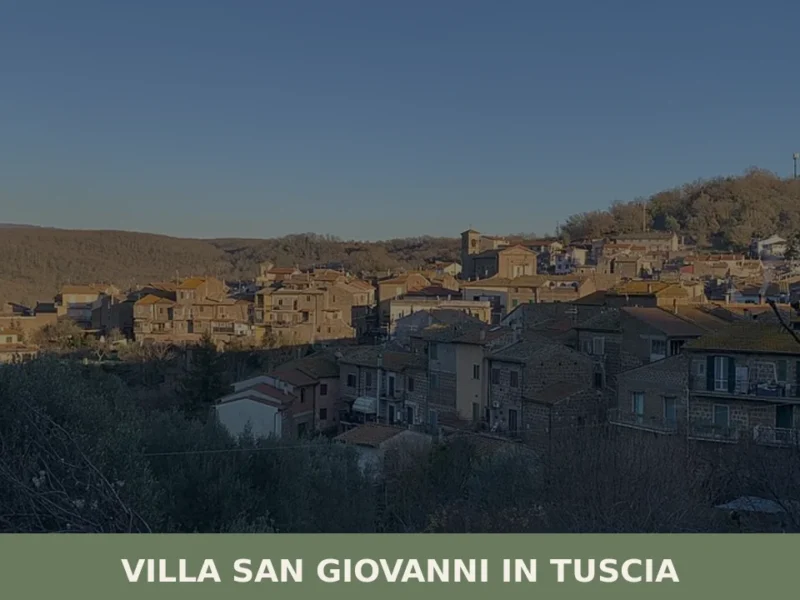
Villa San Giovanni in Tuscia
Villa San Giovanni in Tuscia has 1,196 inhabitants spread across a hilly territory at 329 metres above sea level, in the province of Viterbo. The settlement preserves a compact layout dating back to the feudal reorganisation of the late Middle Ages, when the village was under the control of baronial families that ruled upper Lazio. […]
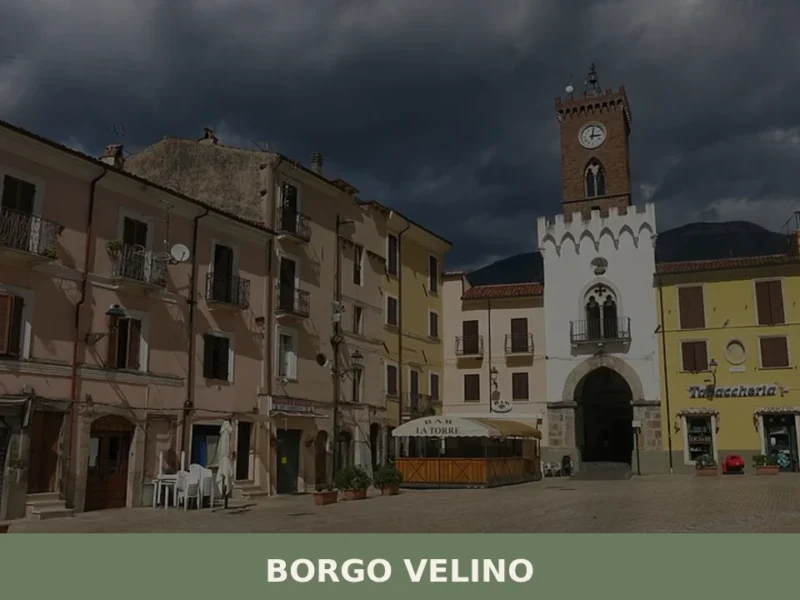
Borgo Velino
What to see in Borgo Velino: discover 5 key attractions in this village of 996 inhabitants at 460m. Explore Palazzo Brancaleoni and taste Cacio fiore. Plan your visit now.

📝 Incorrect information or updates?
Help us keep the Colle di Tora page accurate and up to date.