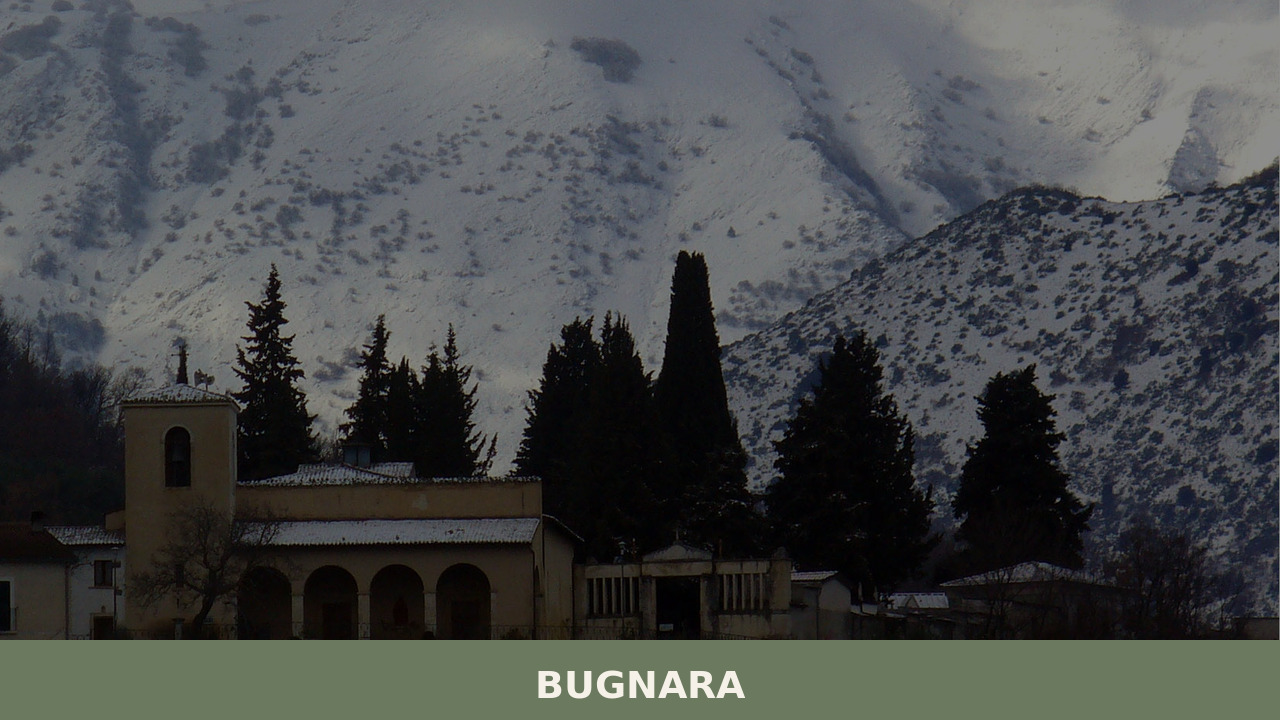
Morning light falls across the Sagittario valley in long, amber strokes, catching the limestone walls of a settlement that has watched over this corridor of central Abruzzo for the better part of a millennium. Bells from a church tower mark the hour, their sound flattening against the surrounding slopes before fading. The streets are narrow, […]
Morning light falls across the Sagittario valley in long, amber strokes, catching the limestone walls of a settlement that has watched over this corridor of central Abruzzo for the better part of a millennium. Bells from a church tower mark the hour, their sound flattening against the surrounding slopes before fading. The streets are narrow, steep, paved in worn stone. With just over 1,100 residents, Bugnara reveals itself slowly — a place where architecture and landscape are in constant dialogue. Understanding what to see in Bugnara requires walking at the pace the village demands: unhurried, attentive, upward.
Bugnara’s documented history reaches back to at least the early medieval period, when the settlement grew around a fortified position overlooking the Valle Peligna — a broad, fertile basin that has attracted human habitation since pre-Roman times. The name itself likely derives from the Latin balneare, a reference to bathing or thermal waters in the area, though some local traditions connect it to older Italic roots. By the Norman period, the village had consolidated around its castle, serving as a strategic point along routes linking Sulmona to the mountainous interior of the Abruzzo Apennines.
Through the centuries of feudal rule that shaped so much of southern Italian life, Bugnara passed between noble families. The Cantelmo and later the Santucci families held sway over the village, leaving their marks in the form of ecclesiastical patronage and architectural commissions. The feudal system defined not only governance but the physical layout of the village — the castle at the apex, religious buildings along the descent, and residential quarters arranged in tight, defensive clusters below.
Like many small Abruzzo settlements, Bugnara experienced significant emigration in the late nineteenth and twentieth centuries, particularly toward North America. The population, once considerably larger, contracted to the figure that holds today. Yet the built fabric of the village — its churches, its palazzo walls, its stone stairways — preserves the memory of a community that once played a more prominent role in the civic and religious life of the province of L’Aquila.
This Renaissance-era church, erected in the sixteenth century, stands as Bugnara’s most significant religious monument. Its façade presents a clean, disciplined geometry, while the interior houses painted altarpieces and decorative elements that reflect the artistic currents flowing through the Abruzzo hinterland during the Counter-Reformation. The dedication to Our Lady of the Snows connects the building to mountain devotional traditions widespread across the central Apennines.
The remains of Bugnara’s castle occupy the highest point of the village, where walls and partial towers survive in a state that makes legible the original defensive perimeter. From this position, the strategic logic of the settlement becomes immediately clear: unobstructed sightlines extend across the Sagittario valley in both directions. The ruins are best appreciated in late afternoon, when low light sharpens the texture of exposed stonework.
Dedicated to the patron saint, this parish church anchors the spiritual life of the village. Its structure incorporates elements from different construction phases, a common characteristic of Abruzzo churches that were rebuilt or expanded following earthquake damage over the centuries. Interior furnishings include wooden choir stalls and devotional statuary that reflect local artisan traditions.
Bugnara’s centro storico is itself an attraction — a layered composition of arched passageways, external staircases, and narrow vicoli that follow the contour of the hillside. Building facades display a mix of rough-cut limestone and occasional carved door surrounds. Walking these streets offers an unmediated encounter with vernacular Abruzzo architecture, unaltered by modern restoration trends.
Several points along the upper village and near the castle ruins open onto wide views of the Valle Peligna and the surrounding mountain ridges. On clear days, the Maiella massif dominates the eastern horizon, its bulk a constant geographic reference. These viewpoints are not signposted attractions but earned perspectives — reached by climbing through the village’s upper quarters.
The cooking of Bugnara belongs to the pastoral and agricultural traditions of the Abruzzo interior. Lamb, prepared in various ways — roasted with herbs, slow-cooked as a stew, or grilled as arrosticini (small skewered cubes of mutton) — is central. Pasta is handmade: sagne e fagioli (torn pasta with beans) and maccheroni alla chitarra (cut on the wire-strung frame that gives this format its name) appear regularly. Lentils, chickpeas, and other pulses reflect the agricultural realities of a high-altitude valley where grain crops and legumes dominated smallholder farming. Local producers also keep alive the tradition of cured meats, including dry-cured sausages seasoned with chilli and fennel seed.
The broader province contributes DOP products such as Zafferano dell’Aquila, the prized saffron cultivated on the Navelli plateau not far to the north. Wine from the Montepulciano d’Abruzzo grape and olive oil from lower-altitude groves round out the regional table. Dining in Bugnara itself is a modest affair — a handful of trattorias and agriturismi in the surrounding countryside serve meals rooted in seasonal availability, where the menu reflects what the land yields rather than what a market supplies.
Spring and early autumn offer the most comfortable conditions for exploring Bugnara on foot. April through June brings mild temperatures, wildflowers on surrounding hillsides, and daylight that extends well into the evening — ideal for photographing the village’s upper quarters and the valley below. September and October carry the warmth of summer without its intensity, and the harvest season adds texture to the local food scene. Summers can be warm in the valley, though the village’s altitude provides some relief. Winters are cold and occasionally snowy, which limits accessibility but transforms the landscape into something austere and photogenic.
The village’s festa patronale and other local celebrations — typically tied to the liturgical calendar — bring processions, outdoor cooking, and a temporary density of social life that gives visitors a sense of communal rhythms otherwise difficult to witness. Checking with the Abruzzo regional tourism board for updated event calendars before planning a trip is advisable, as dates shift from year to year and smaller festivals receive little advance publicity.
Bugnara lies within the province of L’Aquila, positioned along the valley that connects Sulmona to the Sagittario gorge and the villages of the Abruzzo interior. By car, the most direct route from Rome (approximately 170 km) follows the A25 motorway toward Pescara, exiting at the Cocullo-Bugnara junction. From Pescara, the distance is roughly 100 km via the A25 in the opposite direction. From Naples, expect a drive of approximately 200 km, largely along the A1 and then the A25.
The nearest mainline train station is Sulmona, roughly 10 km away, served by regional trains from Rome (Tiburtina and Termini) and Pescara. From Sulmona, local bus services or a taxi cover the remaining distance. The nearest commercial airports are Pescara (Abruzzo Airport) and Rome Fiumicino, the latter offering far greater international connectivity. A rental car is strongly recommended for reaching Bugnara and exploring the surrounding territory, where public transport is infrequent and tied to school and work schedules rather than tourist convenience.
The territory surrounding Bugnara is dense with small settlements, each shaped by the same geological and historical forces but each distinct in character. To the north, on the Fucino plain’s edge, Aielli has drawn attention for its striking murals that cover the walls of its old centre — a contemporary art intervention layered over medieval bones. The contrast between Bugnara’s unadorned authenticity and Aielli’s painted facades makes the two villages natural complements on a single day’s itinerary.
Further into the mountains, toward the border with Molise and the Parco Nazionale d’Abruzzo, Lazio e Molise, Alfedena offers a different register entirely — an ancient Italic settlement with archaeological remains predating Roman expansion, set against forests of beech and pine. Together, these villages trace a route through the Abruzzo interior that moves from valley to highland, from medieval to pre-Roman, and from the cultivated to the wild. Each stop deepens the understanding of a region that resists easy summary.
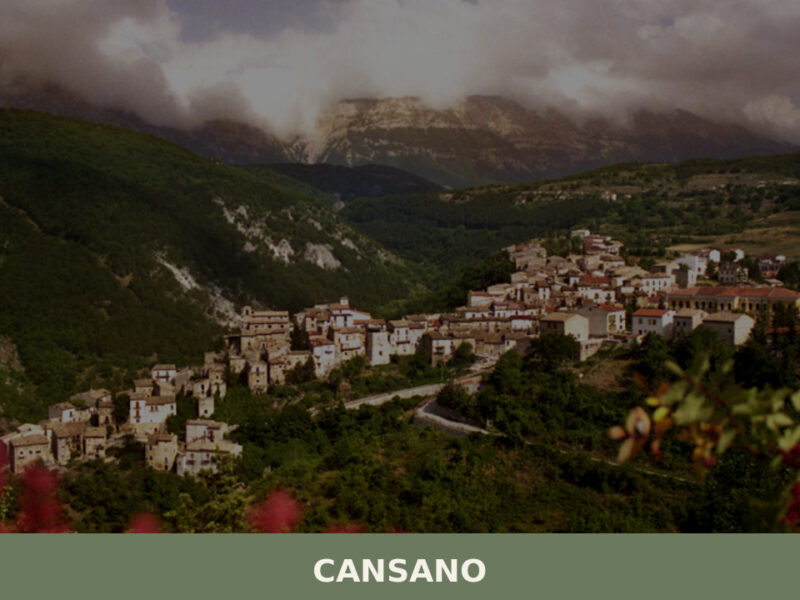
A guide to Cansano in Abruzzo — its Roman archaeological site of Ocriticum, medieval stone centre, Majella trails, and pastoral food traditions at 835 metres.
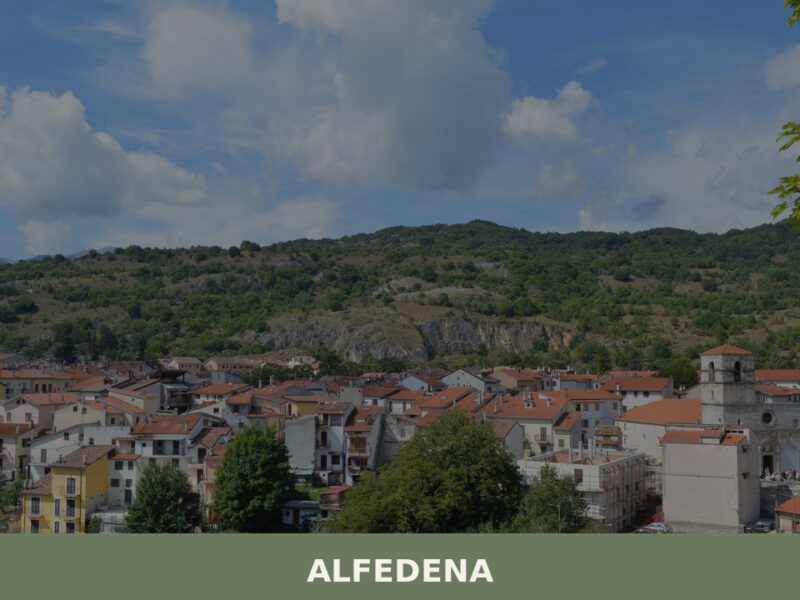
Morning light falls across a line of limestone rooftops, turning them the colour of raw honey. A church bell marks the hour — its sound rolls downhill, across empty streets still cool from the night, and fades into the forested slopes of the upper Sangro valley. Alfedena sits at roughly 914 metres above sea level […]
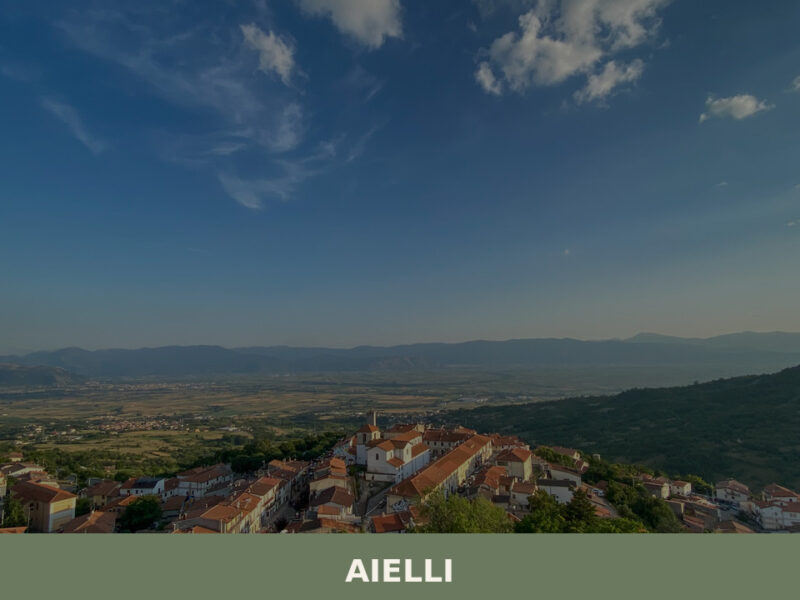
Morning light falls across a wall of painted figures three storeys tall, their colours sharp against old stone. A narrow street turns, and another mural appears — an astronomical chart, its constellations precise enough to navigate by. Aielli sits at over 1,000 metres on the Fucino plateau in the province of L’Aquila, a village of […]
📝 Incorrect information or updates?
Help us keep the Bugnara page accurate and up to date.


