Morning light hits the limestone facades along Corso Umberto at a low angle, turning the walls the colour of raw honey. A few voices carry across the piazza — unhurried, familiar. Aliminusa is a village of just over a thousand people, set at 450 metres above sea level in the hills of the Palermo province, […]
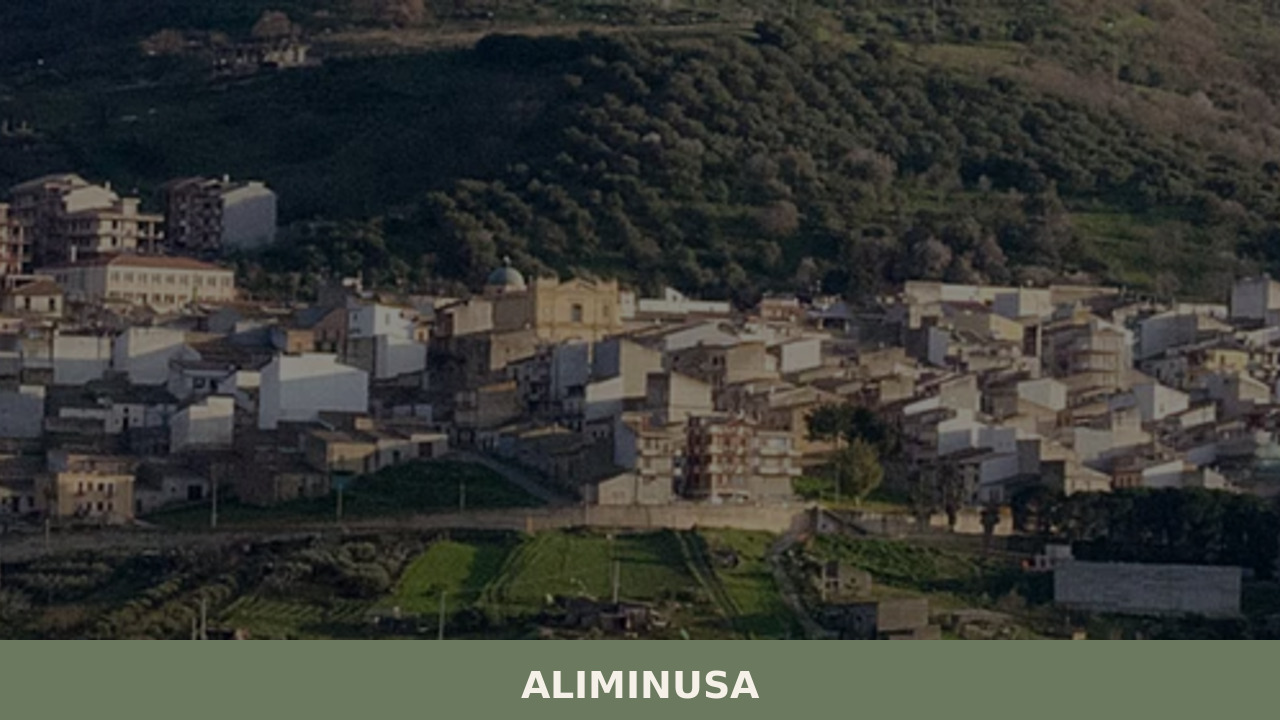
Morning light hits the limestone facades along Corso Umberto at a low angle, turning the walls the colour of raw honey. A few voices carry across the piazza — unhurried, familiar. Aliminusa is a village of just over a thousand people, set at 450 metres above sea level in the hills of the Palermo province, and it rewards the kind of attention that only slow travel allows. If you are wondering what to see in Aliminusa, the answer begins with learning to look carefully: at the stone, the silence, the agricultural terraces that step down toward the Torto river valley below.
Aliminusa’s origins trace to the late seventeenth century, a period of deliberate colonisation across inland Sicily. The village was founded in 1635 under the licentia populandi system — a feudal mechanism by which Sicilian nobles were granted permission to establish new settlements on their lands. The Ferreri family, who held the barony, oversaw the creation of the settlement, drawing agricultural labourers to cultivate the surrounding grain fields and olive groves. The village grew slowly and methodically around a central axis, its grid-like street plan still legible today.
The name “Aliminusa” is thought to derive from Arabic-era Sicilian topography. While the precise etymology remains debated among scholars, the prefix “ali-” is common in Sicilian place names of Arabic origin, often relating to water sources or elevated terrain — both applicable here. The village sits within a landscape shaped by centuries of Arab, Norman, and Spanish influence, though its own built history is comparatively recent, rooted firmly in the Baroque period of Sicilian expansion. For broader context on Sicily’s layered feudal history, the History of Sicily article on Wikipedia offers useful background.
By the eighteenth and nineteenth centuries, Aliminusa functioned as a compact agricultural community centred on wheat, olive oil, and pastoral farming. It never grew beyond a few thousand inhabitants, and like many villages in the Madonie foothills, it experienced significant emigration during the twentieth century — particularly to the Americas and northern Europe. Today, with a population of 1,054, it retains the architectural coherence of a settlement that was planned as a single gesture and has changed only gradually since.
The parish church anchors the village’s central piazza and dates to the founding period of Aliminusa. Its single-nave interior holds a collection of polychrome wooden statues typical of rural Sicilian devotional art. The bell tower, visible from nearly every approach road, serves as the village’s vertical landmark — a functional compass point rather than a decorative flourish.
The main street runs through the village with the directness of a surveyor’s line, reflecting Aliminusa’s planned origins. Walk it slowly and notice the consistent building heights, the wrought-iron balconies, and the soft tufa stone lintels above doorways. Side streets branch off at right angles, each one framing a different slice of the surrounding hills.
The village’s civic square is compact but proportioned with a certain deliberateness. Older residents gather here in the late afternoon, and the space functions as a living room for the community. The municipal building itself is modest, but the piazza’s orientation captures prevailing breezes from the valley — a feature unlikely to be accidental in Sicilian town planning.
At several points along the village’s southern edge, the terrain drops away to reveal the valley of the Torto river. The landscape is dry grassland and olive groves in summer, turning vivid green after the autumn rains. These viewpoints require no marked trail — simply follow the roads that lead to the village perimeter and the valley presents itself.
Scattered along the roads leading out of Aliminusa, small rural chapels and votive niches mark intersections and property boundaries. These structures, some no larger than a wardrobe, hold ceramic madonnas and faded photographs. They are documents of private faith and communal memory, and they map a devotional landscape that predates the village’s modern infrastructure.
Aliminusa’s cuisine belongs to the broader tradition of inland Sicilian hill-country cooking — substantial, seasonal, built around wheat, olive oil, and foraged greens. Bread remains central, often baked in wood-fired ovens and served alongside dishes of wild fennel, broad beans, and cured olives. Pasta con le sarde, though more associated with Palermo, finds a drier, simpler variant in the hill towns. Local olive oil, pressed from trees adapted to the rocky, calcareous soil, has a peppery, assertive character. The province of Palermo falls within the production area of several Sicilian DOP and IGP products, including Sicilian extra-virgin olive oil.
During festive periods, the village’s home kitchens produce traditional sweets — cassatelle filled with ricotta and cinnamon, and biscotti made with almonds and citrus zest. There is no fine-dining scene here; eating in Aliminusa means either a trattoria serving daily-changing plates or, if you are fortunate, an invitation to someone’s table. In either case, the food is honest, unfussy, and deeply tied to what the surrounding land produces.
Spring — from late March through May — is the most rewarding season. The hills are green, wildflowers carpet the roadsides, and temperatures hover around 18–24°C. This is also the period when the village celebrates its patron saint, San Giuseppe, with processions, communal meals, and music in the piazza. The feast day, 19 March, transforms the village’s quiet routines into something more collective and animated. Autumn, particularly October and November, offers a second window: the light is warm, the first rains revive the landscape, and the olive harvest brings a focused energy to the surrounding countryside.
Summer can be hot, with temperatures climbing above 35°C in July and August, though Aliminusa’s 450-metre elevation provides some relief compared to the coastal plains. Winter is quiet and occasionally cold, with fog settling into the valleys. For visitors seeking solitude and the village at its most unguarded, the off-season months have their own particular appeal — but be prepared for reduced hours at any commercial establishments.
Aliminusa lies approximately 70 kilometres southeast of Palermo. By car, take the A19 motorway (Palermo–Catania) and exit at Sciara-Aliminusa. From the exit, a provincial road winds uphill for roughly 5 kilometres to the village centre. The drive from Palermo takes about 50–60 minutes under normal conditions. From Catania, the journey is approximately 160 kilometres, or roughly two hours via the same motorway.
The nearest railway station is Sciara-Aliminusa, served by regional Trenitalia services on the Palermo–Catania line. Trains are infrequent, and a local connection (or a short taxi ride of about 5 kilometres) is needed to reach the village itself. The nearest airport is Palermo Falcone-Borsellino (PMO), about 80 kilometres northwest. There is no scheduled public bus service with high frequency, so a rental car is the most practical option for reaching Aliminusa and exploring the surrounding territory.
Aliminusa occupies a transitional zone between the Madonie mountains and the lower hills descending toward Palermo’s coastal plain, placing it within reach of several other villages that share its quiet, unhurried character. To the east, Sclafani Bagni sits higher in the Madonie foothills, known for its thermal springs and a compact medieval centre that feels even more remote than Aliminusa — a place where the population has dwindled but the stone architecture remains remarkably intact.
Closer to the coast but still rooted in the agricultural interior, Cerda lies just a short drive to the northwest and is recognised across Sicily for its annual artichoke festival, a celebration of the spiny carciofo variety that thrives in the local red soil. Together, these villages form a constellation of small communities that offer a view of Sicilian life far from the island’s more visited coastlines — a landscape where the rhythms are agricultural, the architecture is functional, and the welcome is genuine precisely because it is unpractised.
📝 Incorrect information or updates?
Help us keep the Aliminusa page accurate and up to date.