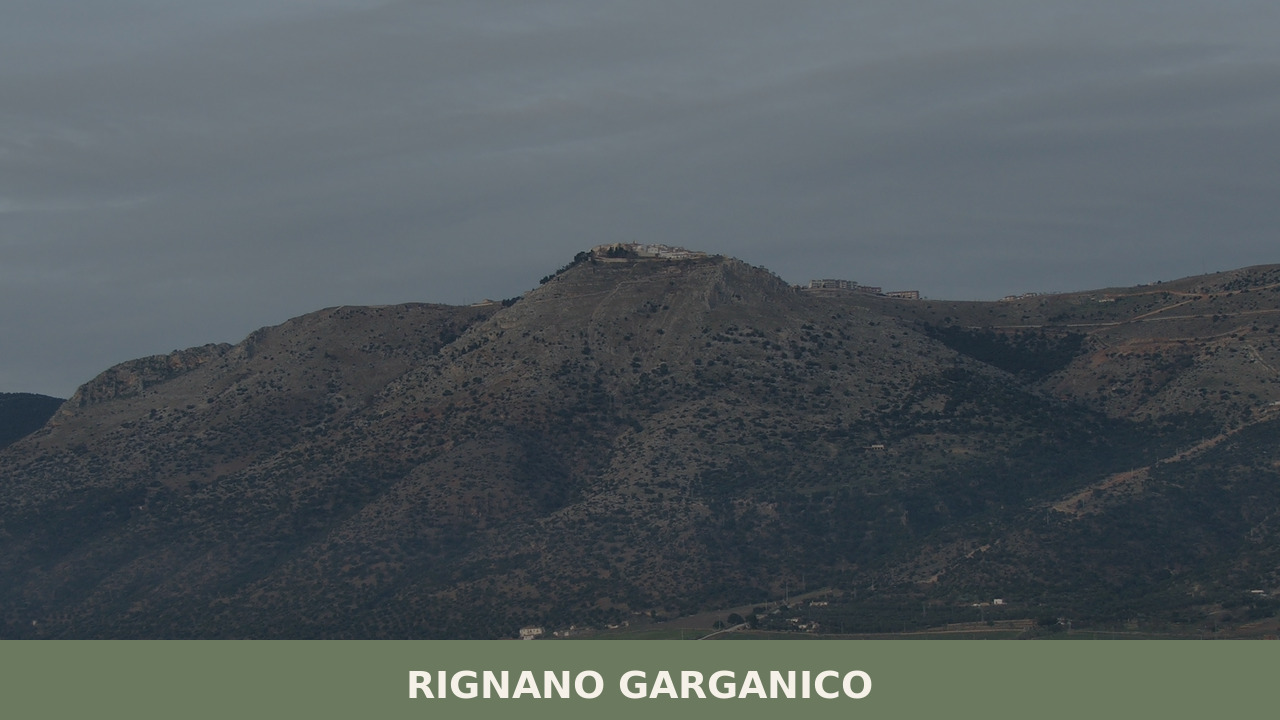
A quiet hilltop village at 590 metres on the Gargano promontory, Rignano Garganico rewards visitors with medieval lanes, wide Tavoliere views, and the honest food traditions of inland Puglia.
Morning light hits the limestone pavement of the main square before it reaches anything else — a sharp, lateral glow that throws every crack and cobblestone into relief. At 590 metres above sea level, Rignano Garganico wakes in a silence that belongs to a different century, broken only by the scrape of a wooden shutter and the distant clatter of a coffee cup set on a saucer. With fewer than 1,900 inhabitants, this is one of the smallest and highest settlements on the Gargano promontory. Knowing what to see in Rignano Garganico begins here, in the narrow lanes where the light does all the talking.
The origins of the name are generally traced to the Latin Praedium Arinianum, a reference to a Roman estate or landholding — one of many that dotted the Apulian sub-Apennine plateau during the late Republican period. Over the centuries, the name compressed and shifted through medieval Latin documents: Arinianum, Rinianum, and eventually Rignano. The suffix “Garganico” was added after Italian unification to distinguish the village from other towns bearing the same name, anchoring it firmly to the Gargano massif on which it sits.
During the Norman period, Rignano was absorbed into the feudal system that reorganised much of southern Italy under figures like Robert Guiscard and his successors. The village passed through the hands of several baronial families across the following centuries — a pattern common to small Apulian settlements caught between the Kingdom of Naples and the shifting allegiances of regional lords. Its elevated position, commanding a wide view over the Tavoliere delle Puglie plain below, gave it strategic value that outweighed its modest size. Fortified walls, fragments of which still mark the old town’s perimeter, date from this era of contested ownership.
By the eighteenth and nineteenth centuries, Rignano Garganico had settled into the rhythm of an agricultural and pastoral community. Its population fluctuated with the broader economic pressures that affected the Mezzogiorno — waves of emigration to the Americas and northern Europe hollowed out many Gargano villages. Today, with 1,817 registered inhabitants, Rignano is among the smallest municipalities in the Province of Foggia, yet it retains a built fabric that records, layer by layer, nearly a millennium of continuous habitation.
The old town is compact enough to cross in fifteen minutes, but dense with detail. Whitewashed walls line alleys so narrow that opposing balconies nearly touch. Stone arches span the passages overhead, structural remnants of the medieval fortification system. Look for carved door lintels bearing dates and family crests — quiet records of who lived here and when, some reaching back to the sixteenth century.
The principal parish church anchors the upper part of the village. Rebuilt and modified across several centuries, it contains a Baroque interior that contrasts with the plain stone exterior typical of Gargano ecclesiastical architecture. Inside, painted wooden altarpieces and modest devotional sculpture speak to the resources of a small rural community investing what it could in sacred decoration.
At the edge of the village, a terrace opens onto the Tavoliere delle Puglie — the largest plain in southern Italy, stretching flat and geometric toward Foggia and beyond. On clear winter mornings, the view extends to the coastline near Manfredonia. This is not a manicured observation deck; it is a stone wall at the village’s limit, with the land simply falling away beneath it.
Sections of the original defensive perimeter survive embedded in later construction. Walking the outer ring of the old town, you can trace where the curtain wall once ran — incorporated into house foundations, visible as a change in masonry technique from rough-cut limestone blocks to later, smaller stonework. A couple of archways mark former gate positions, their proportions still legible despite centuries of alteration.
Rignano sits at the western threshold of the Gargano National Park. Footpaths and unpaved roads lead into mixed oak and pine forests within a short drive. The transitional zone between the flat Tavoliere and the Gargano heights creates a distinctive terrain of low scrub, rocky outcrops, and seasonal wildflower meadows — a landscape shaped more by grazing than by cultivation.
The cooking here belongs to the pastoral and grain-growing traditions of the Gargano interior. Bread is central — large loaves made from local durum wheat, baked in shapes that vary from household to household and served alongside preparations of wild greens, dried beans, and preserved vegetables. Orecchiette and cavatelli appear regularly, dressed with simple sauces of turnip tops, anchovy, or slow-cooked ragù. Lamb and goat, raised on the rocky hillsides above the village, are roasted or braised with herbs gathered from the surrounding macchia — rosemary, bay leaf, wild fennel.
Olive oil from the Gargano carries a particular character: peppery, with a bitter finish that reflects the Ogliarola garganica cultivar dominant in the area. Local cheeses include caciocavallo podolico, made from the milk of Podolica cattle that graze semi-wild across the promontory, and fresh ricotta that appears in both savoury and sweet dishes. Small trattorias and agriturismi in the surrounding countryside offer the most reliable access to these products, prepared without affectation and served in quantities that assume you have spent the morning walking uphill.
At nearly 600 metres, Rignano’s climate differs sharply from the coast. Summers are warm but rarely oppressive — evenings cool enough to require a light jacket, while the Tavoliere below bakes in August heat. Spring, from late March through May, brings the surrounding hillsides into full bloom and makes walking the landscape genuinely rewarding. Autumn is equally attractive, with clear skies and harvest-season activity in the village. Winter can be cold and occasionally snowy; the village empties further, and some services reduce their hours.
The main annual festa typically falls in the summer months, centred on the patron saint, with processions through the narrow streets, temporary food stalls, and evening events in the square. Visitors looking for solitude will find it almost any time outside these few days. Practical considerations: bring comfortable walking shoes with grip — the stone streets are steep and polished smooth — and carry water if venturing into the surrounding countryside, where shade and facilities are scarce.
Rignano Garganico lies approximately 35 kilometres north of Foggia, the provincial capital. By car, take the SS89 or the network of provincial roads that climb from the Tavoliere toward the Gargano. The A14 motorway (Bologna–Taranto) connects to Foggia via the Foggia exit; from there, the drive to Rignano takes roughly 40 minutes through open agricultural land that gradually tilts upward. The nearest railway station is in San Marco in Lamis or Foggia itself, both served by Trenitalia regional lines. From Foggia station, a local bus service operated by the provincial transport authority reaches the village, though schedules are infrequent and best checked in advance. The closest airport is Bari Karol Wojtyła (BRI), approximately 160 kilometres to the southeast — a drive of about two hours. Smaller charter connections may also serve Foggia’s Gino Lisa Airport, though regular commercial service there is limited.
The territory surrounding Rignano Garganico holds a constellation of small communities, each shaped by the same geological and historical forces but expressing them differently. To the southwest, toward the Daunia sub-Apennines, Celle di San Vito is one of the smallest municipalities in all of Italy and the last outpost of the Franco-Provençal language in Puglia — a linguistic survival that dates to Angevin-era settlement. Its stone houses cling to a steep hillside in a way that makes Rignano look almost spacious by comparison.
Further south across the Tavoliere, Ascoli Satriano occupies a different kind of elevation — both geographical and historical. An ancient Daunian settlement with roots predating Rome, it produced the famous polychrome marble griffins now housed in the Getty Museum debate and returned to Italy. Together with Rignano, these villages form a network of stopping points that reward the traveller willing to leave the coast behind and follow the older, slower roads of inland Puglia.
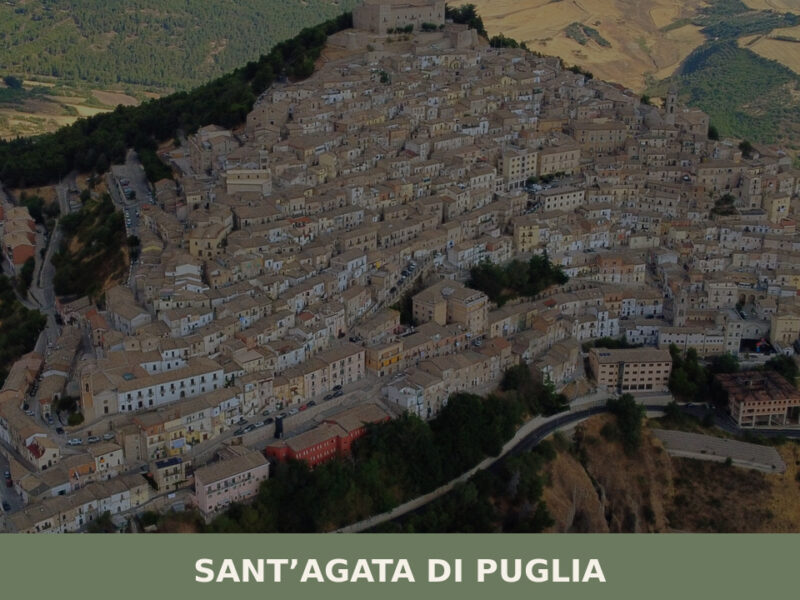
A ridge-top village at 794 metres in the Daunia hills, Sant'Agata di Puglia rewards slow exploration with its Norman castle, stepped stone alleyways, and mountain cooking.
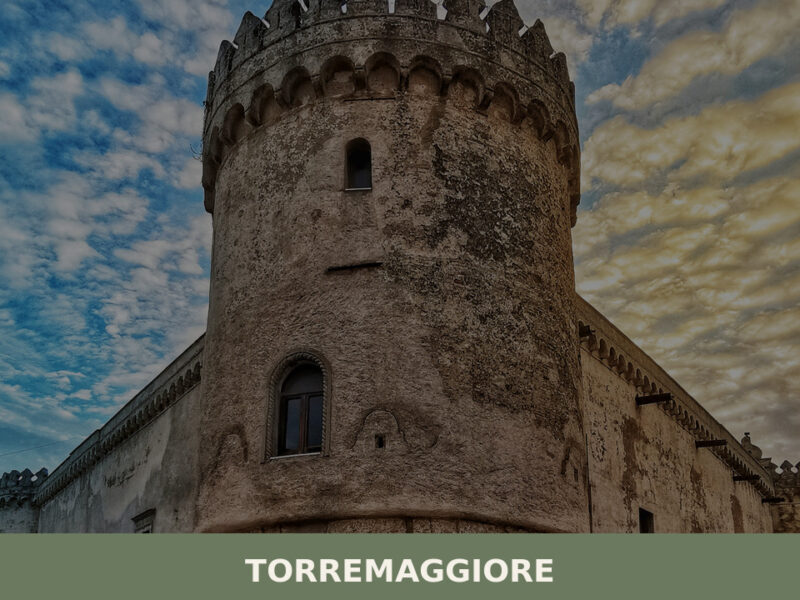
A complete guide to Torremaggiore in northern Puglia — its medieval castle, the ruins of Fiorentino, local food traditions, and practical travel information.
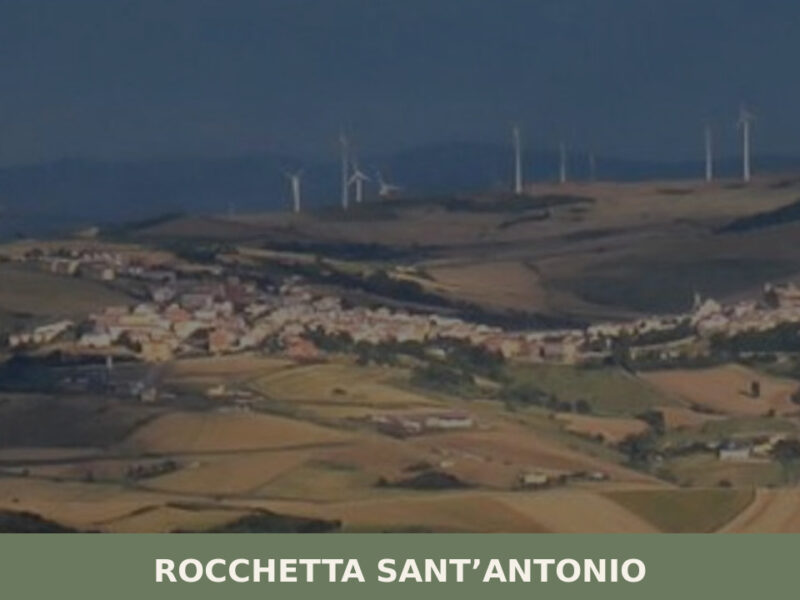
A hilltop village at 633 metres in the Province of Foggia, Rocchetta Sant'Antonio holds a medieval castle, centuries-old churches, and wide views over the Ofanto valley.
📝 Incorrect information or updates?
Help us keep the Rignano Garganico page accurate and up to date.