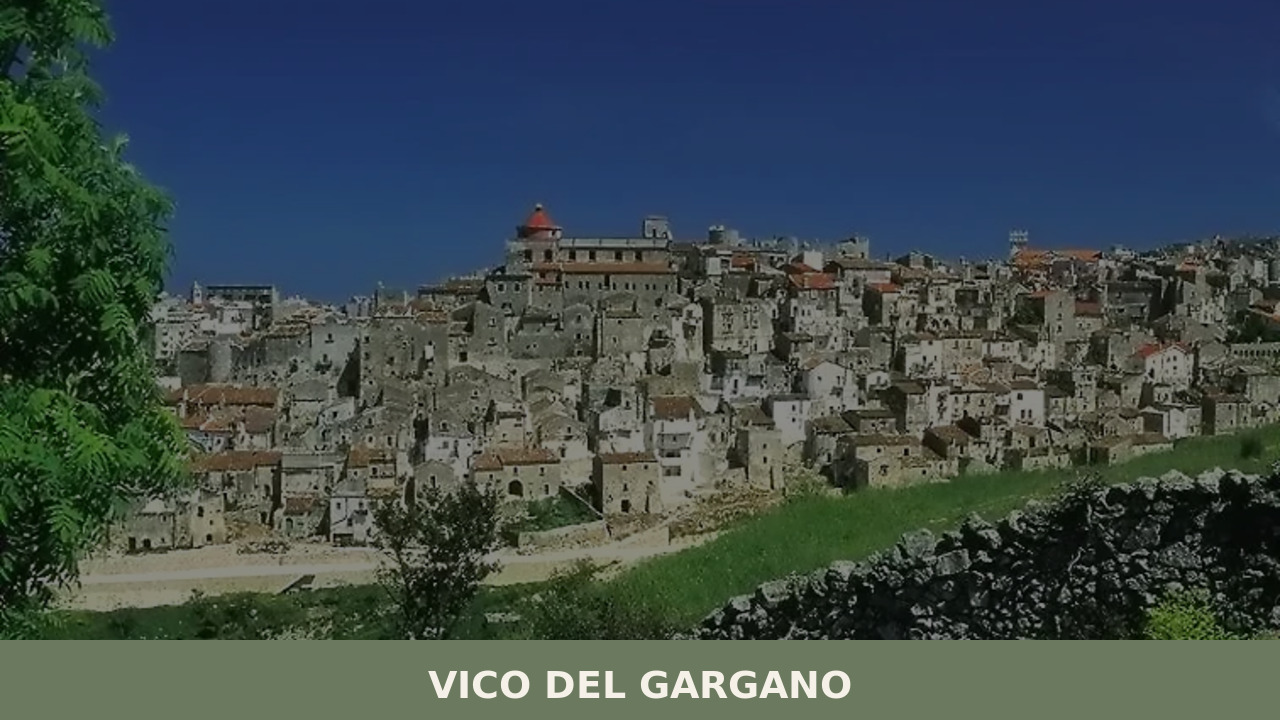
A hilltop village at 445 metres on the Gargano promontory, Vico del Gargano rewards slow exploration — medieval alleys, underground olive presses, and ancient forest at its edge.
Morning light hits the limestone walls of the centro storico at a low angle, turning every alleyway into a corridor of amber and deep shadow. The smell of wood smoke mixes with citrus — orange trees press against balconies, their branches heavy with fruit even in February. Somewhere below, a door scrapes open across worn stone. This is the Gargano promontory at 445 metres above sea level, and the question of what to see in Vico del Gargano begins the moment you step through the first medieval gate. With just over 7,000 inhabitants, the village operates at a pace that rewards attention.
Human settlement on this ridge of the Gargano promontory predates written records by millennia. Archaeological fragments suggest habitation since at least the Neolithic period, when the dense Umbra Forest — one of the oldest woodland ecosystems in Italy — provided both shelter and sustenance. The name “Vico” derives from the Latin vicus, meaning a small settlement or cluster of dwellings, a designation that points to the village’s Roman-era origins as a rural outpost in the province of Foggia.
The medieval period reshaped Vico del Gargano decisively. Under Norman rule in the eleventh and twelfth centuries, the village acquired its castle — a defensive structure later expanded by the Swabians under Frederick II, whose network of fortifications across Puglia remains one of the most ambitious building programmes of the thirteenth century. The castle’s square tower still anchors the upper town. Successive feudal lords — the della Marra, Spinelli, and later the Marchesi di Vico — left their mark in the form of noble palazzi, churches, and the village’s distinctive concentric street plan, which spirals inward like a tightened knot.
Throughout the early modern period, Vico del Gargano served as an agricultural centre, its economy rooted in olive oil and citrus cultivation. The village’s oranges, in particular, became central not only to commerce but to local identity — a fact still visible in the ritual traditions that survive today. By the nineteenth century, Vico had become one of the more prosperous communities on the promontory, a status reflected in its baroque church interiors and the ornate doorways that punctuate even its narrower streets.
Built under Norman authority and reinforced during the reign of Frederick II in the thirteenth century, the castle occupies the highest ground in the village. Its square tower and surviving curtain walls frame views across the Gargano to the Adriatic. The structure has served variously as a feudal residence, a prison, and a civic building — layers of use that are legible in its stonework.
A passage in the old quarter so narrow that two people cannot pass without pressing together. Barely wider than a pair of outstretched arms, its walls are decorated with expressions of devotion — handwritten notes, dried flowers, small devotional images. The alley has become a symbol of the village, particularly during the February feast of San Valentino, patron saint of Vico del Gargano.
The principal church anchors the centro storico with a façade of dressed stone and an interior reworked in baroque style during the seventeenth and eighteenth centuries. Inside, carved wooden altars and painted panels document the devotional life of a community whose religious calendar still governs the rhythm of the year. The bell tower is audible across the entire village.
An underground olive press carved from the rock beneath the village, this trappeto preserves the machinery and stone basins used to extract oil for centuries. The subterranean space maintains a constant cool temperature — a practical necessity for oil production — and its low ceilings and millstones offer a visceral connection to the agricultural economy that sustained Vico del Gargano for generations.
Immediately south of the village, the Foresta Umbra is one of the last old-growth beech and oak forests on the Italian peninsula. Part of the Gargano National Park, it covers over 10,000 hectares and harbours roe deer, wild orchids, and more than 2,000 botanical species. Marked trails lead from the village edge into deep canopy within twenty minutes on foot.
Vico del Gargano’s cuisine is shaped by altitude, forest, and coast. The village is renowned for its Arancia del Gargano IGP — a citrus variety grown on terraced groves that benefit from the promontory’s mild microclimate. These oranges, smaller and more aromatic than their Sicilian counterparts, are eaten fresh, pressed into juice, and candied. Olive oil production remains central: the Ogliarola garganica cultivar yields a peppery, low-acidity oil pressed in the local frantoi from late October onward. Bread is baked in large wheels, often studded with olives or fennel seeds, and paired with pancotto — a slow-cooked dish of stale bread, wild greens, and potatoes dressed with raw oil.
In the trattorias of the old quarter, look for orecchiette with turnip tops, roasted kid goat seasoned with wild herbs from the Umbra Forest, and paposcia — a flatbread specific to the Gargano, filled with tomato, ricotta, or cured meats. Local cheeses include caciocavallo podolico, produced from the milk of the semi-wild Podolica cattle that graze on the promontory’s uplands. Meals close with ostie ripiene, thin wafers filled with almonds and honey — a confection tied to the village’s feast days.
The village’s most distinctive event falls on 14 February: the Festa di San Valentino. Unlike the commercialised holiday observed elsewhere, Vico del Gargano’s celebration has deep local roots — San Valentino is the village’s patron saint, and the streets are decorated with oranges and laurel branches. Processions move through the centro storico, and the air is thick with the scent of citrus fruit hung from doorways and balconies. It is one of the few places in Italy where the feast retains its pre-commercial character.
Spring (April to June) and early autumn (September to October) offer the most comfortable conditions for walking both the village and the Foresta Umbra. Summer brings heat and a larger tourist presence along the Gargano coast, though the village’s altitude — 445 metres — keeps temperatures several degrees below the littoral. Winters are cool and occasionally wet, but quiet; the orange harvest runs from December through March, and the village has a stripped-down, working character during these months that appeals to those who prefer observation over spectacle.
The nearest major airport is Bari Karol Wojtyła Airport (BRI), approximately 200 kilometres to the southeast — a drive of roughly two and a half hours via the A14 motorway and the SS89 coastal road. Foggia, the provincial capital, lies about 100 kilometres to the west and is connected to Vico del Gargano by the SP28 and SP51 provincial roads; the drive takes approximately ninety minutes. From Foggia, regional bus services operated by local carriers serve the Gargano promontory, though schedules are infrequent outside summer months.
The nearest railway station is at San Severo, on the main Adriatic line (approximately 60 kilometres west), from which buses connect to the Gargano. Drivers should note that roads on the promontory are winding and narrow, particularly the final stretch into the village. Parking is available outside the historic centre. For those arriving from the north, the A14 exit at Poggio Imperiale provides the most direct route onto the promontory.
The Gargano promontory and the wider province of Foggia hold a concentration of small communities whose histories interlock with that of Vico del Gargano. To the west, across the Tavoliere plain, Casalnuovo Monterotaro occupies a ridge above the Fortore valley — a village whose compact medieval layout and agricultural traditions mirror Vico’s, though the landscape shifts from forest to open grain country. The contrast between the two offers a clear picture of how terrain shapes daily life across a single province.
Further south, in the sub-Apennine hills that form Puglia’s mountainous spine, Sant’Agata di Puglia rises to over 800 metres — one of the highest settlements in the region. Its Norman castle and steep, interlocking streets share a defensive logic with Vico del Gargano, though the two villages developed in relative isolation from one another. Visiting both gives a fuller understanding of how Puglia’s inland communities adapted to altitude, climate, and the pressures of feudal administration across several centuries.
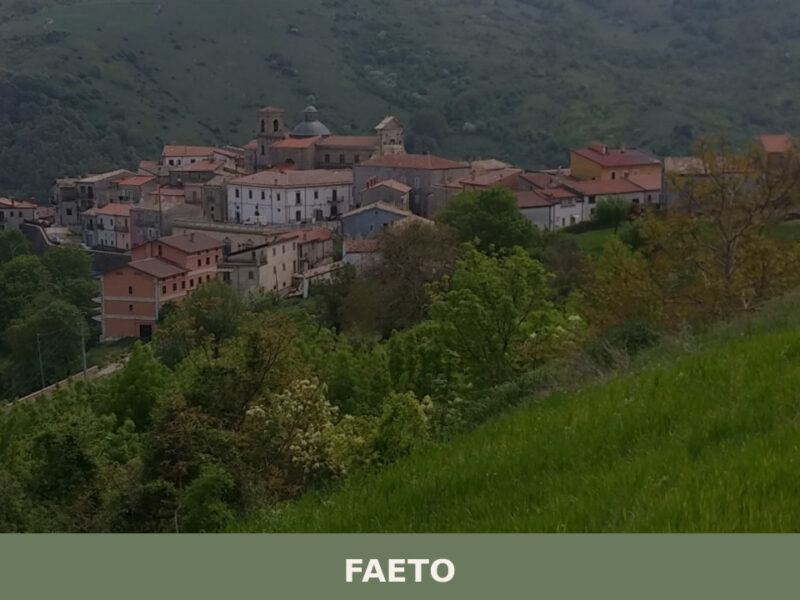
A Franco-Provençal-speaking village of 616 inhabitants high in the Daunia mountains. Discover what to see in Faeto: ancient dialect, beech forests, and Puglia's highest peak.
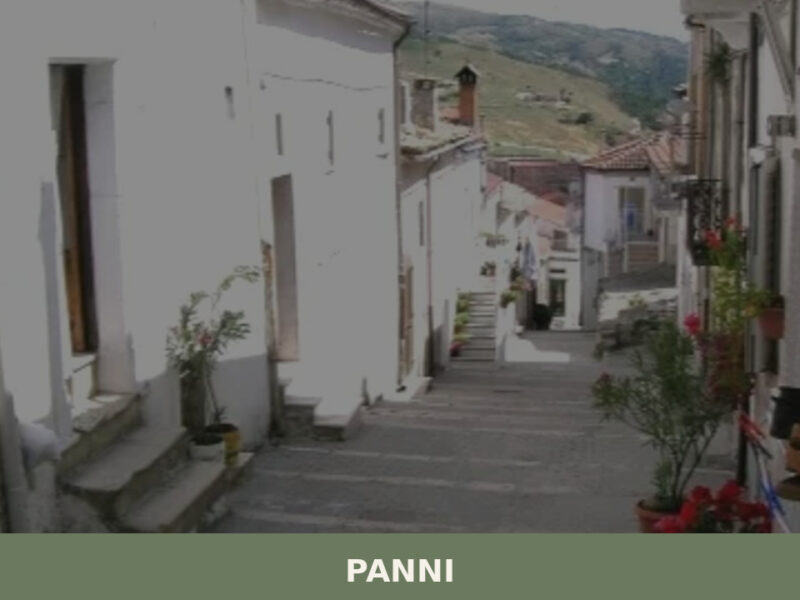
Panni stands at 801 metres in the Daunian Sub-Apennines, a wind-swept village of 693 people in the province of Foggia. A guide to its history, sights, and food.
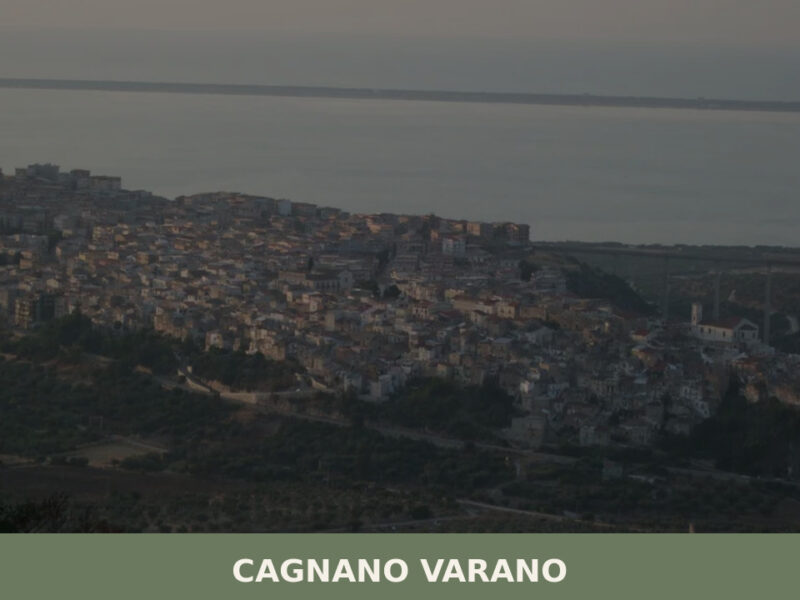
Discover Cagnano Varano, a quiet Gargano village overlooking Italy's largest southern lagoon. Explore ancient caves, lakeside trails, and authentic Puglian flavours.
📝 Incorrect information or updates?
Help us keep the Vico del Gargano page accurate and up to date.


