

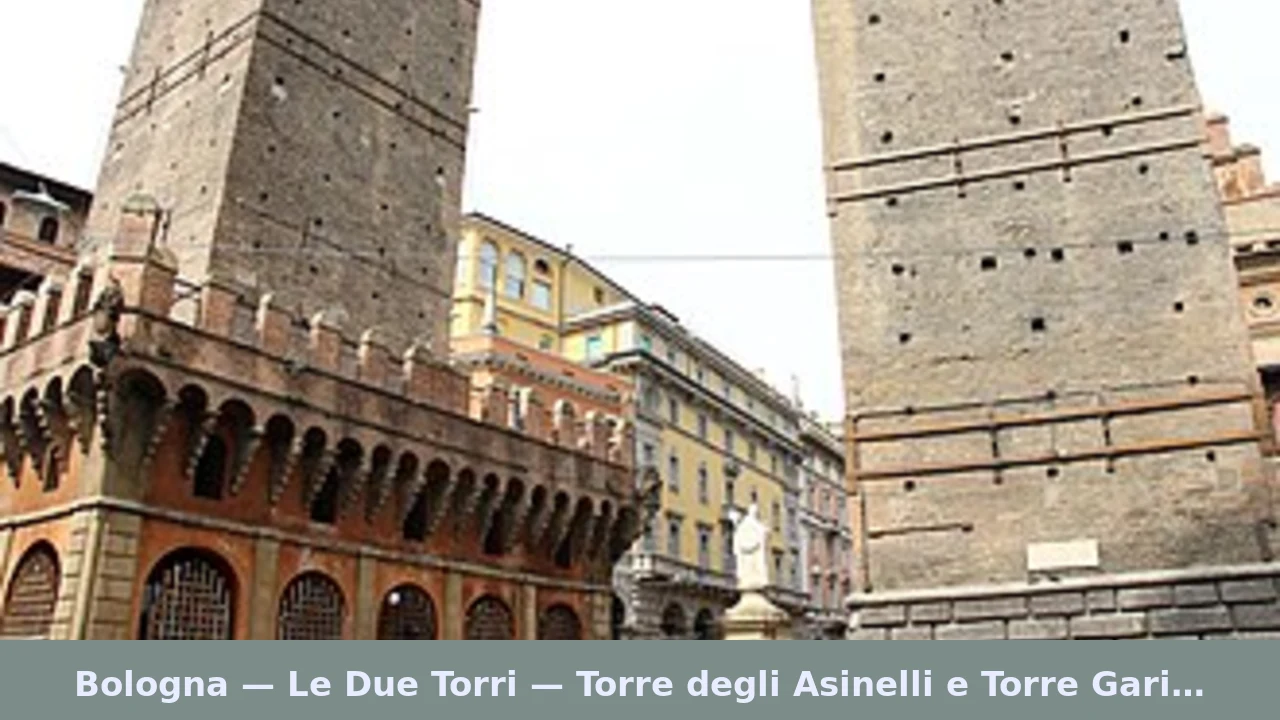
Imagine a cityscape where ancient giants pierce the sky, leaning precariously yet standing as defiant sentinels of history. This is the captivating reality of Bologna, a city renowned for its vibrant culture, delectable cuisine, and, most notably, its iconic medieval skyscrapers: le due torri — torre degli asinelli e torre garisenda. These magnificent structures, remnants of a bygone era when over a hundred towers dotted Bologna’s skyline, continue to mesmerize visitors with their grandeur, their staggering height, and the dramatic tilt that has made them symbols of human ambition and the passage of time. They are not merely buildings; they are storytellers, whispering tales of power, rivalry, and architectural daring from their lofty perches.
Unveiling the Legacy: The Enduring Charm of Le Due Torri — Torre degli Asinelli and Torre Garisenda
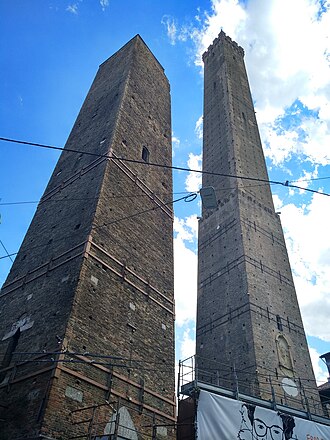
Standing proudly at the heart of Bologna, the Asinelli and Garisenda Towers are more than just landmarks; they are the very soul of the city, embodying its rich medieval past and its enduring spirit. Built between 1109 and 1119, these two magnificent structures are the most prominent survivors of Bologna’s “tower boom,” a period when wealthy families constructed private towers as symbols of their power and prestige. The phenomenon was widespread across Italian communes, but Bologna’s towers were particularly numerous and ambitious.
The Torre degli Asinelli, soaring to an impressive 97.2 meters (319 feet), is the taller and more accessible of the two. Its formidable height offered strategic advantages, serving as a watchtower and a defensive stronghold. Climbing its 498 wooden steps is a pilgrimage for many, rewarded by breathtaking panoramic views that stretch across the red-tiled rooftops of Bologna, the surrounding plains, and even to the distant Apennine mountains on a clear day.
Beside it stands the shorter, yet arguably more dramatic, Torre Garisenda. Originally around 60 meters (197 feet) tall, its severe lean, caused by subsidence, led to its partial demolition in the 14th century for safety reasons, reducing its height to its current 48 meters (157 feet). Its perilous tilt has fascinated observers for centuries, inspiring poets like Dante Alighieri, who referenced it in his Inferno, comparing the giant Antaeus to the leaning tower.
Together, le due torri — torre degli asinelli e torre garisenda represent a unique architectural heritage, a testament to the engineering prowess and competitive spirit of medieval Bologna. They stand as a powerful reminder of a time when private families, not just states or churches, shaped urban skylines with their monumental ambitions.
At one point in the 13th century, Bologna boasted over 100 towers! Many were demolished over time due to structural instability, urban development, or to make way for new constructions. The Asinelli and Garisenda are the most famous, but a few other smaller towers can still be found tucked away in Bologna’s historic center.
Why Climb the Asinelli Tower? Your Guide to Experiencing Bologna’s Iconic Twin Towers
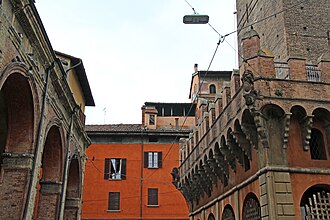
For any visitor to Bologna, the question isn’t whether to see the towers, but whether to conquer the Torre degli Asinelli. The answer, unequivocally, is yes. The climb is an unforgettable experience, a journey back in time that culminates in one of Italy’s most spectacular urban vistas.
The Ascent: A Journey Through History
The 498 steps of the Asinelli Tower are not for the faint of heart, but they are manageable for anyone with a moderate level of fitness. The staircase is mostly wooden, winding its way upwards along the inner walls of the tower. As you ascend, you can feel the ancient timbers creak beneath your feet, and catch glimpses of the city through narrow windows, offering tantalizing previews of the view to come. It’s a physical challenge, but also a meditative one, allowing you to appreciate the sheer scale and ingenuity of its medieval construction.
Torre degli Asinelli:
Orari: Generally open daily, but hours vary by season. Check the official website for current times.
Prezzi: Tickets must be purchased in advance online. Expect to pay around €5-€8 per person.
Accesso: The climb is via a wooden staircase; there is no lift. Not suitable for those with mobility issues or severe vertigo. Children must be accompanied.
Prenotazioni: Highly recommended, especially during peak season, as entry is timed. Book via the official Bologna Welcome website: Bologna Welcome – Asinelli Tower
The Reward: A Breathtaking Panorama
Upon reaching the summit, you are greeted by an expansive, 360-degree panorama of Bologna. The city unfolds beneath you like a vast, terracotta-colored tapestry, interwoven with the intricate patterns of its porticoes. You can clearly see:
- The majestic Piazza Maggiore, with the Basilica di San Petronio and Palazzo d’Accursio.
- The sprawling University district, a hub of intellectual life for centuries.
- The countless other towers and bell towers that still punctuate the skyline.
- The distant green hills of the Emilia-Romagna region, providing a stunning backdrop.
It’s an ideal spot for photography, but more importantly, it’s a place to truly grasp the unique urban fabric of Bologna and its historical significance. From here, you can fully appreciate why these structures, le due torri — torre degli asinelli e torre garisenda, have captivated generations.
Beyond the Heights: Stories and Legends of Torre degli Asinelli and Torre Garisenda
The towers are not just architectural wonders; they are steeped in folklore and legend, adding layers of mystique to their already impressive presence. Their very existence is born from a mix of ambition, rivalry, and a touch of the extraordinary.
The Legend of the Asinelli
One popular legend surrounding the Torre degli Asinelli tells of its humble origins. It is said that a poor peasant, known as Asinelli, discovered a treasure while working with his donkeys (asinelli in Italian). With this newfound wealth, his family commissioned the tower, which eventually bore their name, rising as a testament to their changed fortunes. This tale, whether true or not, highlights the social mobility and the desire for status that fueled the construction of these private towers.
Dante and the Garisenda’s Lean
The dramatic lean of the Torre Garisenda has always been its most striking feature. As mentioned, Dante Alighieri himself was so impressed by its tilt that he immortalized it in his Inferno (Canto XXXI), comparing the giant Antaeus to the tower as seen by someone looking up at it from its base, making it seem to sway. This literary reference cemented the Garisenda’s place in cultural history and underscores its long-standing reputation as a marvel of engineering (or rather, a marvel of engineering gone slightly awry).
The Garisenda’s severe inclination led to fears of collapse throughout the centuries. It was significantly reduced in height in the 14th century to prevent it from toppling, a decision that saved it from total ruin but forever altered its original form. Today, its lean continues to be monitored with advanced technology, ensuring its stability for generations to come, as it stands next to its taller sibling, le due torri — torre degli asinelli e torre garisenda.
Architectural Marvels: A Deeper Look at Le Due Torri’s Unique Structure
The construction of private towers in medieval Bologna was a complex undertaking, requiring significant resources, engineering knowledge, and skilled labor. The Asinelli and Garisenda Towers are prime examples of this medieval urban architecture.
Construction Techniques
The base of these towers was typically constructed from selenite, a gypsum-like rock found in the Bolognese hills, providing a strong foundation. As the towers rose, they transitioned to brickwork, often using a cavity wall technique where the inner and outer walls were separated by a gap, sometimes filled with rubble for added stability. The sheer weight of the structures and the soft, alluvial soil of the Po Valley made stability a constant challenge, explaining why so many towers eventually collapsed or developed significant leans.
The interior of the Torre degli Asinelli features sturdy wooden scaffolding and platforms, which were essential during construction and later adapted for the internal staircase. These wooden elements have been periodically reinforced and replaced over the centuries, maintaining the tower’s integrity.
The Towers as Symbols of Power
Beyond their defensive capabilities, the towers were potent symbols of the families who built them. Their height directly correlated with the family’s wealth and influence. The taller the tower, the greater the prestige. This competitive spirit led to a race to the sky, creating Bologna’s unique medieval skyline. The fact that le due torri — torre degli asinelli e torre garisenda still stand, despite the passage of centuries and numerous seismic events, is a testament to the resilience of their construction and the continuous efforts to preserve them.
Planning Your Visit: Essential Tips for Exploring Bologna and its Famous Towers
Visiting Bologna and its iconic towers is an experience that combines history, culture, and culinary delights. To make the most of your trip, consider these practical tips.
Best Time to Visit
Spring (April-May) and early autumn (September-October) offer the most pleasant weather for exploring Bologna and climbing the Asinelli Tower. The temperatures are mild, and the crowds are generally thinner than in the peak summer months. Summer can be very hot, especially in July and August, which can make the climb less comfortable.
What to See Around the Towers
The area immediately surrounding le due torri — torre degli asinelli e torre garisenda is a vibrant hub of activity:
- Piazza di Porta Ravegnana: The square where the towers stand is a natural gathering point, often hosting street performers and local vendors.
- Via Rizzoli: One of Bologna’s main shopping streets, leading directly from the towers towards Piazza Maggiore.
- University Quarter: Just a short walk away, this historic area is filled with ancient university buildings, lively student bars, and independent shops.
- Mercato di Mezzo: A fantastic food market nearby, perfect for sampling local delicacies like mortadella, Parmigiano Reggiano, and balsamic vinegar.
Exploring Bologna’s Porticoes
Bologna is famous for its extensive network of porticoes, which total over 38 kilometers (24 miles) within the city center alone, and are a UNESCO World Heritage site. These covered walkways provide shelter from sun and rain, making it a joy to explore the city regardless of the weather. Stroll through them, discovering hidden courtyards, charming cafes, and historic shops.
Discovering the Emilia-Romagna Hinterland: Day Trips from Bologna, Home of Le Due Torri
While le due torri — torre degli asinelli e torre garisenda are undoubtedly a highlight, Bologna serves as an excellent base for exploring the wider Emilia-Romagna region, a land rich in medieval villages, stunning landscapes, and culinary traditions. Consider these charming day trips:
Castel del Rio: A Gem in the Apennines
Just an hour’s drive southeast of Bologna, you’ll find Castel del Rio, a picturesque medieval village nestled in the green hills of the Romagna Apennines. Dominated by the magnificent Alidosi Palace, a fortified residence from the 15th century, Castel del Rio offers a glimpse into a tranquil past. Explore its historic center, walk along the Santerno river, and enjoy the fresh mountain air. It’s a perfect escape from the city hustle, offering beautiful natural scenery and a rich history.
Castel d’Aiano: Panoramic Views and Nature
Venturing southwest from Bologna, Castel d’Aiano is another delightful village in the Bolognese Apennines. Known for its stunning panoramic views of the surrounding valleys and mountains, it’s an ideal destination for nature lovers and hikers. The area is dotted with ancient churches, charming hamlets, and trails that wind through lush forests. It offers a peaceful contrast to the bustling city, allowing you to immerse yourself in the serene beauty of the Italian countryside.
Camugnano: Lakeside Serenity and Mountain Peaks
Further into the Apennines, about an hour’s drive southwest of Bologna, lies Camugnano. This municipality is famous for its beautiful artificial lakes, particularly Lake Suviana and Lake Brasimone, which are popular for water sports, fishing, and relaxing by the shore. The surrounding mountains offer excellent opportunities for trekking, mountain biking, and enjoying breathtaking natural landscapes. It’s a fantastic option for those seeking outdoor adventures and a refreshing change of scenery from urban exploration.
These nearby villages provide a wonderful opportunity to experience the diverse beauty and rich history of the Emilia-Romagna region, complementing your visit to Bologna and its iconic towers.
Frequently Asked Questions
What is the history behind Bologna’s Two Towers?
Bologna’s Two Towers, Asinelli and Garisenda, were built by wealthy noble families between 1109 and 1119 as symbols of their power and prestige during a period when private towers dotted the city’s skyline. They served both defensive and status-symbol purposes.
Can you climb both the Asinelli and Garisenda Towers?
Only the Torre degli Asinelli is open to the public for climbing. The Torre Garisenda is significantly shorter and has a severe lean, making it unsafe for public access. Its lean is closely monitored due to ongoing structural concerns.
How long does it take to climb the Asinelli Tower?
The climb up the 498 steps of the Torre degli Asinelli typically takes about 20-30 minutes, depending on your pace. Allow additional time to enjoy the panoramic views from the top.
What is the best way to get tickets for the Asinelli Tower?
It is highly recommended to purchase tickets online in advance through the official Bologna Welcome website. Entry is timed, and tickets often sell out, especially during peak tourist season.
Why does the Garisenda Tower lean so much?
The Torre Garisenda began to lean significantly shortly after its construction due to subsidence of the soft, alluvial soil beneath its foundations. Its original height was reduced in the 14th century to prevent its collapse, but its dramatic tilt remains.
As you conclude your journey through the captivating history and soaring heights of le due torri — torre degli asinelli e torre garisenda, you’ll carry with you not just photographs, but a profound appreciation for Bologna’s enduring spirit. These magnificent structures are more than just landmarks; they are a vibrant testament to human ambition, resilience, and the timeless beauty of Italy. Don’t just admire them from below – climb the Asinelli, feel the history, and let the panoramic views inspire you to delve deeper into the wonders of Bologna and its enchanting surroundings.