


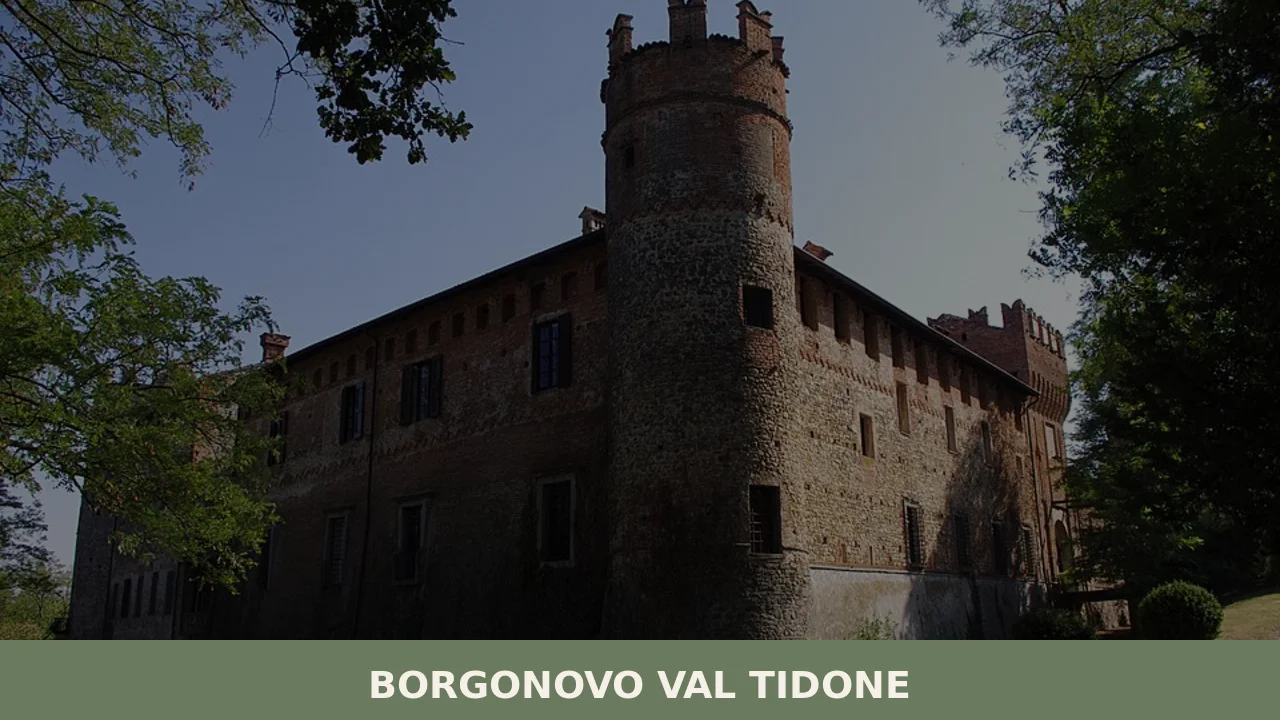
Borgonovo Val Tidone
 Plains
What to see in Borgonovo Val Tidone: 7,774 residents, a medieval castle, the Santa Maria Assunta church and Piacenza cuisine. Plan your visit with this complete guide.
Discover Borgonovo Val Tidone
At 114 metres above sea level, in the lower Po plain of Piacenza crossed by the Tidone river, Borgonovo Val Tidone has a current population of 7,774 and is the most populous centre in the Val Tidone, a valley that has maintained a distinct identity between the Po plain and the first Apennine foothills.
Those looking into what to see in Borgonovo Val Tidone will find a municipality with medieval roots, a well-documented network of historic buildings, and a strategic position that makes it an ideal base for exploring the wider Piacenza area.
This is not a marginal stop on the tourist circuit: it is a living centre with its own history and architecture that remains legible today.
History and Origins of Borgonovo Val Tidone
The name Borgonovo appears in medieval documents and reflects the pattern of settlement expansion typical of the communal period in Emilia: borghi nuovi were settlements founded from scratch or reorganised under aristocratic or communal initiative to control road and valley routes.
The Val Tidone, traversed by the river of the same name — a tributary of the Po — served as a natural transit corridor between the Po plain and the Apennine passes leading to Liguria, and the establishment of an organised centre along this route met specific economic and military needs.
The settlement grew around defensive structures and a residential nucleus that would gradually take on the characteristics of a market town.
During the late Middle Ages and the Renaissance, the Val Tidone came within the orbit of the great dynasties competing for control of the Piacenza territory. The Visconti family, which dominated the Duchy of Milan and the province of Piacenza for much of the fourteenth and fifteenth centuries, exercised its influence across the entire area, leaving traces in the defensive and road organisation of the district.
With the transfer of Piacenza to the Sforza and subsequently its incorporation into the Farnese system in the sixteenth century, Borgonovo Val Tidone followed the fortunes of the Duchy of Parma and Piacenza, whose territorial structure remained essentially stable until the Napoleonic era.
With Italian Unification in 1861, Borgonovo Val Tidone became a municipality of the newly formed Kingdom of Italy within the province of Piacenza, establishing an administrative continuity that persists to this day.
The twentieth century brought the transformations of Po valley agriculture and the development of an economic base founded on light industry and trade — factors that account for the current population of nearly 8,000, a figure that sets Borgonovo apart from the smaller rural centres around it.
The urban layout of the historic centre reflects this layering: alongside the oldest nucleus stand modern and contemporary buildings that demonstrate the continuity of a settlement that has never been abandoned.
What to See in Borgonovo Val Tidone: Main Attractions
Castello Zanardi Landi
The castle is the most recognisable architectural landmark in the historic centre of Borgonovo Val Tidone.
The structure, medieval in origin and modified in subsequent centuries, belonged to the Zanardi Landi family, a noble house with deep roots in the Piacenza territory. The building displays the characteristic features of Emilian noble residential architecture, with corner towers and an articulated central block.
Its position within the town’s urban fabric makes it an immediate visual reference point from any direction of approach.
Visitors should check public accessibility in advance, as the building is privately owned.
Church of Santa Maria Assunta
Dedicated to Santa Maria Assunta, the patron saint of the municipality celebrated on 15 August, the main church of Borgonovo Val Tidone is the religious focal point of the town. The building, which has undergone restoration and enlargement over the centuries, retains decorative and artistic elements dating from several distinct construction phases. The façade and interior are worth examining to understand how Marian devotion has shaped the civic and religious life of the community.
The patron feast on 15 August is the occasion when the bond between the community and this building is most visibly expressed.
Historic Centre and Main Square
The old core of Borgonovo Val Tidone preserves a legible urban layout, with historic buildings arranged around the central square. Walking the streets of the centre on foot is the best way to observe the historic palazzi and civic architecture that define the built fabric.
The main square functions as a gathering and commercial space, as is traditional in Po valley towns, and hosts the weekly market.
Those researching what to see in Borgonovo Val Tidone in a few hours can focus their visit on this area, where the greatest concentration of documented architectural elements is found.
The Val Tidone Landscape
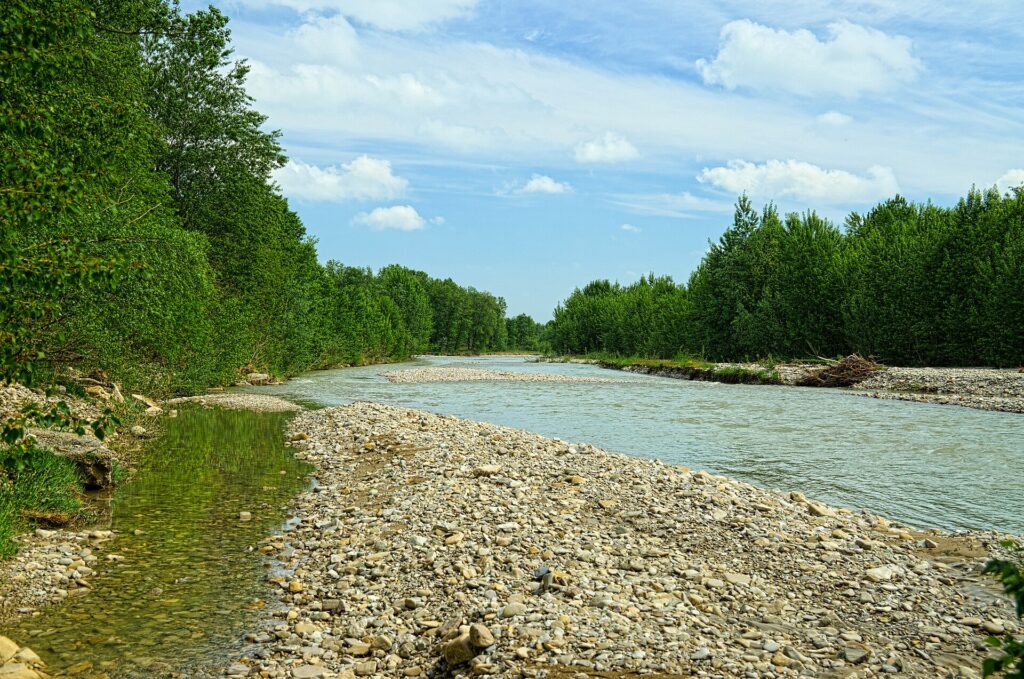
The municipal territory extends between the plain and the first hillside outcrops, offering views over the Piacenza agricultural landscape where cultivated fields, rows of vines and bends of the Tidone stream alternate.
At 114 metres above sea level, the town occupies a transitional zone that allows excursions both towards the Po plain and towards the Apennine hills of the Val Tidone. The Tidone river itself, with its banks, is a natural element that defines the geographical identity of the municipality and can be followed along cycle and footpaths during the milder months.
Minor Religious Buildings and Rural Oratories
As throughout the Piacenza territory, the municipality of Borgonovo Val Tidone includes within its boundaries a number of oratories and rural chapels scattered across its hamlets and outlying areas.
These buildings, often modest in scale, document the widespread diffusion of religious practice across the Emilian countryside between the sixteenth and eighteenth centuries. Some retain frescoes or decorative elements of local interest.
For those studying rural devotional architecture in Emilia, these minor buildings complement the picture offered by the main church and represent an alternative visiting route beyond the town centre alone.
Local Cuisine and Products of Borgonovo Val Tidone
The cuisine of the Borgonovo Val Tidone area belongs to the gastronomic tradition of the province of Piacenza, one of the most structured and highly regarded in the whole of Emilia-Romagna.
The geographical position of the town, straddling the Po plain and the hills, has historically encouraged the integration of varied agricultural produce: cereals and legumes from the plain, wines from the hillsides, and pork and beef from local farming.
This variety of raw ingredients has given rise to a substantial cuisine, tied to seasonal agricultural rhythms and the need to preserve food through the winter months.
Among the dishes most deeply rooted in Piacenza tradition that also appear on the menus of Val Tidone trattorias, pisarei e fasò hold a prominent place: small dumplings made from breadcrumbs and flour, served with a sauce of borlotti beans, onion and lard — a frugal dish of considerable flavour.
Tortelli con la coda, a distinctively Piacenza filled pasta, are prepared with a filling of ricotta and spinach or potato, depending on family tradition.
Risotto alla pilota and main courses based on beef and pork complete a table where generous portions reflect the farming heritage of the territory.
In terms of cured meats, the Piacenza territory is known for the production of high-quality charcuterie.
No DOP, IGP or PAT certifications specifically attributed to the municipality of Borgonovo Val Tidone appear in the available database, but the local tradition of cured meats — coppa, salame and pancetta in their Piacenza variants — is well documented at provincial level. Visitors to the town can find these products in the shops of the centre and at the weekly markets, where local producers bring their preparations directly to sell.
On the wine front, the Val Tidone falls within the production area of the Colli Piacentini wines, a denomination covering both red and white varieties.
The local winemaking tradition includes the production of Gutturnio, a sparkling red wine made from Barbera and Bonarda grapes, widespread throughout the Piacenza hill zone.
The summer and autumn festivals tied to the agricultural calendar — particularly those connected with the grape harvest — are the most direct opportunity to meet local producers and taste the wines of the area in a convivial setting.
Festivals, Events and Traditions of Borgonovo Val Tidone
The feast of Santa Maria Assunta, celebrated on 15 August, is the most keenly felt religious event in the Borgonovo Val Tidone community.
As in most Emilia-Romagna centres where Marian devotion is established, the Feast of the Assumption takes the form of a day of celebrations combining the liturgical moment — solemn Mass and procession — with civic festivities. The date, which coincides with the Ferragosto holiday period, also draws residents originally from Borgonovo who return for the occasion, making the patron feast a moment of community cohesion as well as a religious one.
The local events calendar includes, during the summer and autumn months, food festivals and fairs linked to Piacenza agricultural and livestock products.
The Val Tidone is part of a circuit of gastronomic events involving the municipalities of the valley, with appointments dedicated to traditional cured meats, Colli Piacentini wines and fresh handmade pasta.
For up-to-date information on the annual programme of events, the official reference is the Borgonovo Val Tidone municipal website, which publishes the events calendar with dates and practical details.
When to Visit Borgonovo Val Tidone and How to Get There
The most favourable period for visiting Borgonovo Val Tidone runs from spring through to autumn, with a preference for May, June and September, when temperatures are mild and the Val Tidone landscape displays its full range of colours.
July and August concentrate the summer events and the patron feast, but the heat of the Po plain can be intense during the middle hours of the day.
Those researching what to see in Borgonovo Val Tidone while also planning excursions into the valley will find autumn the most suitable season, with the grape harvest under way on the surrounding hillsides and more comfortable walking temperatures.
In terms of transport connections, Borgonovo Val Tidone is reachable by car from the A21 Turin–Piacenza–Brescia motorway, exiting at the Piacenza Sud junction and continuing westward towards the Val Tidone for approximately 20 kilometres.
The nearest railway station is Piacenza, served by regional and intercity connections on the Milan–Bologna line. From Piacenza, onward travel requires either a scheduled bus or private transport.
For those arriving by air, the main reference point is Milan Malpensa Airport, approximately 110 kilometres away, connected to Piacenza by motorway in around one hour and twenty minutes under normal traffic conditions.
Other Villages to Explore in Emilia-Romagna
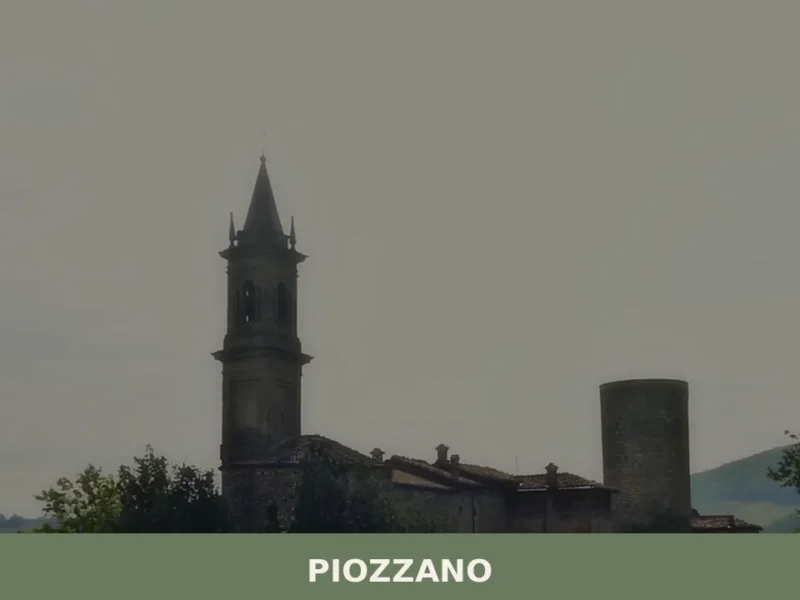
Those travelling the Val Tidone who wish to extend their itinerary into the Piacenza hill country will find in Piozzano a small centre of considerable landscape interest, positioned at a greater altitude than Borgonovo and home to a castle that commands the valley.
Moving towards the Bologna area, Castel del Rio offers a different example of an Apennine village, with the celebrated sixteenth-century Ponte Alidosi spanning the Santerno river, in a setting within the Valle del Santerno that differs markedly from the Piacenza plain.
For those wishing to combine village visits with the historic cities of Emilia, Imola is a significant centre with a well-documented architectural and cultural heritage, as well as the renown that comes with its motor racing circuit.
Towards the Bolognese Apennine ridges, Camugnano introduces a mountain landscape of artificial lakes and woodland, offering a clear contrast with the plain around Borgonovo Val Tidone.
These centres, varying in geographical position and character, illustrate how Emilia-Romagna presents a range of territorial situations that no single itinerary can fully cover.
Frequently asked questions about Borgonovo Val Tidone
What is the best time to visit Borgonovo Val Tidone?
The most lively period is summer, particularly around 15 August when the town celebrates its patron feast of Santa Maria Assunta with solemn Mass, procession and civic festivities. Autumn is ideal for food and wine enthusiasts: the grape harvest season brings gastronomic events dedicated to Colli Piacentini wines, Gutturnio and traditional Piacenza cured meats. Spring offers pleasant temperatures for exploring the Val Tidone landscape and cycling along the Tidone river. July and August also coincide with local food festivals across the valley circuit.
What are the historical origins of Borgonovo Val Tidone?
The name Borgonovo reflects the medieval practice of founding new organised settlements — borghi nuovi — to control valley roads and transit routes. The Val Tidone served as a natural corridor between the Po plain and Apennine passes leading to Liguria. The settlement developed under the influence of the Visconti and later the Sforza, before becoming part of the Farnese Duchy of Parma and Piacenza in the sixteenth century. After Italian Unification in 1861 it became a municipality of the province of Piacenza, a status it retains today.
What to see in Borgonovo Val Tidone? Main monuments and landmarks
The principal landmark is Castello Zanardi Landi, a medieval castle modified over the centuries by the noble Zanardi Landi family, featuring corner towers and a central residential block — note that it is privately owned, so check public accessibility before visiting. The Church of Santa Maria Assunta, the town's main religious building, contains decorative elements from multiple construction phases and is the heart of the 15 August patron feast. The historic centre and main square, best explored on foot, concentrate the greatest number of historic palazzi and civic architecture.
What are the main natural or scenic attractions of Borgonovo Val Tidone?
Borgonovo Val Tidone sits at 114 metres in a transitional zone between the Po plain and the first Apennine foothills. The Tidone river, a tributary of the Po, defines the geographical identity of the municipality and can be followed along cycle and footpaths during the milder months of spring and autumn. The surrounding landscape alternates cultivated fields, vineyards and river bends, offering easy excursions both towards the flat Po plain and into the hillside wine country of the Colli Piacentini.
Where to take the best photos in Borgonovo Val Tidone?
The most photogenic spot in the town is Castello Zanardi Landi, whose corner towers and historic façade are visible from multiple approach directions within the urban fabric. The main square of the historic centre provides classic Po valley townscape compositions. For landscape photography, the banks of the Tidone river and the surrounding vineyard slopes offer open views over the Piacenza agricultural plain, particularly attractive in autumn when the vines change colour during the harvest season.
Are there museums, churches or historic buildings to visit in Borgonovo Val Tidone?
The Church of Santa Maria Assunta is the town's main religious building, retaining artistic and decorative elements from several historical phases and remaining open for visits and worship. Castello Zanardi Landi is the most significant civic historic building, though as a privately owned property public access should be verified locally before planning a visit. The municipal territory also includes a number of rural oratories and chapels scattered across the hamlets, some preserving frescoes of local interest and accessible as part of an off-centre itinerary.
What can you do in Borgonovo Val Tidone? Activities and experiences
Visitors can explore the historic centre on foot, visit Castello Zanardi Landi and the Church of Santa Maria Assunta, and follow cycle paths along the Tidone river. The town is an ideal base for wine touring in the Colli Piacentini denomination, with Gutturnio producers accessible in the surrounding hills. Seasonal food festivals and the weekly market in the main square offer direct contact with local producers of cured meats and wine. The transitional landscape between plain and hills also suits recreational cycling on flat terrain.
Who is Borgonovo Val Tidone suitable for? Families, couples, hikers, solo travelers?
Borgonovo Val Tidone suits food and wine travellers drawn to the Piacenza gastronomic tradition and the Colli Piacentini wine circuit. Couples and cultural travellers will appreciate the medieval castle, the Marian church and the legible historic centre. Cyclists and nature lovers benefit from the flat Tidone river paths and the gentle transition towards the Apennine foothills. Families visiting during Ferragosto will find the 15 August patron feast a convivial and authentically local experience. It also works well as a practical base for exploring the wider Val Tidone and Piacenza province.
What to eat in Borgonovo Val Tidone? Local products and specialties
The cuisine belongs firmly to the Piacenza tradition. Signature dishes found in local trattorias include pisarei e fasò — small breadcrumb-and-flour dumplings with a borlotti bean sauce — and tortelli con la coda, filled with ricotta and spinach or potato. Piacenza cured meats — coppa piacentina, salame piacentino and pancetta piacentina, all holding DOP status at provincial level — are available in town shops and at the weekly market. The area falls within the Colli Piacentini DOC zone; Gutturnio, a sparkling red from Barbera and Bonarda grapes, is the most characteristic local wine.
📷 Photo Gallery — Borgonovo Val Tidone
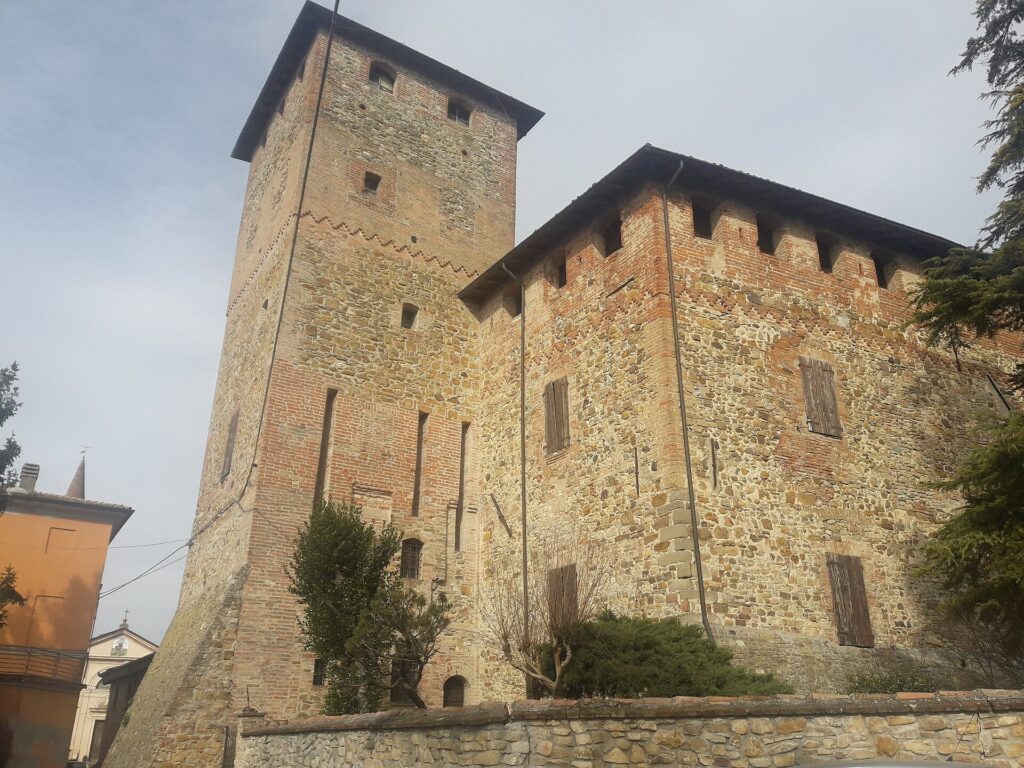
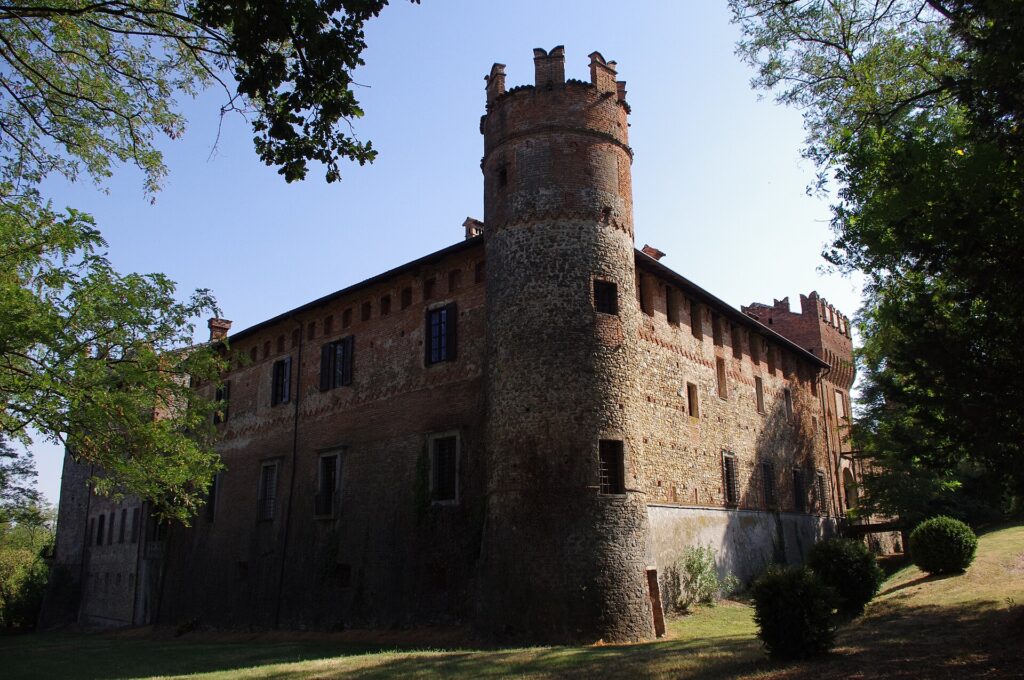
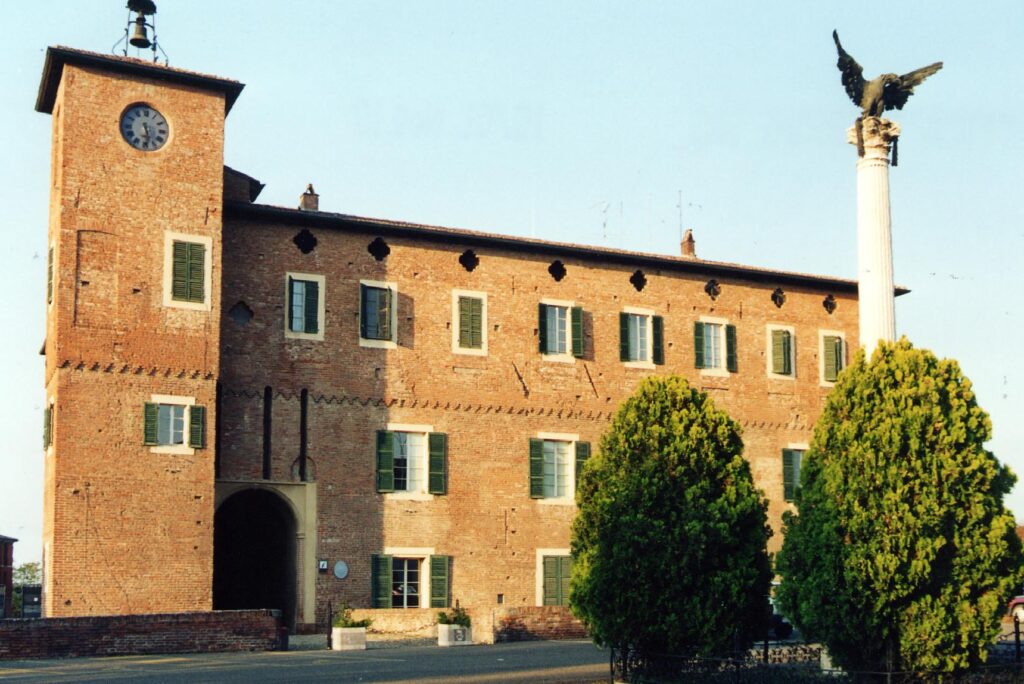
Nearby Villages near Borgonovo Val Tidone
In Emilia-Romagna More villages to discover
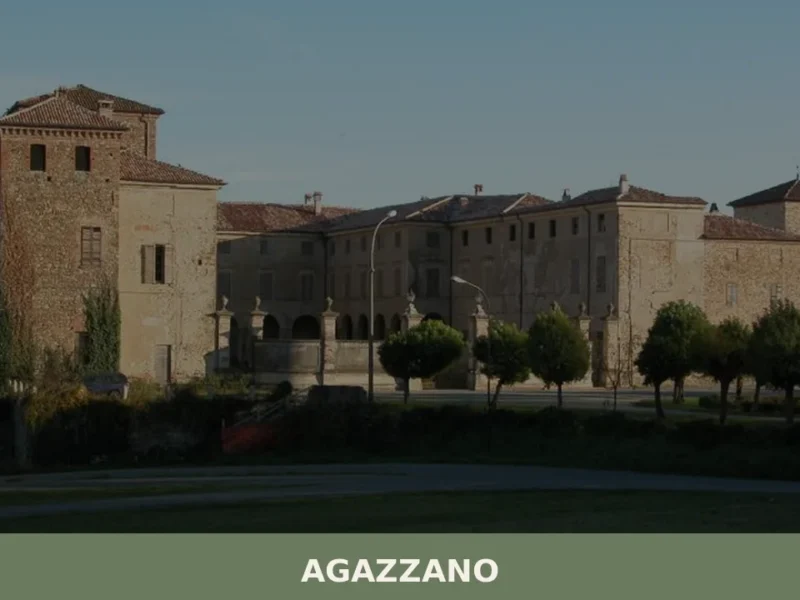
Agazzano
Plains
What to see in Agazzano, a village at 187 m in Piacenza province with 2,054 residents. Explore the medieval castle, Santa Maria Assunta church and Val Luretta. Plan your visit.
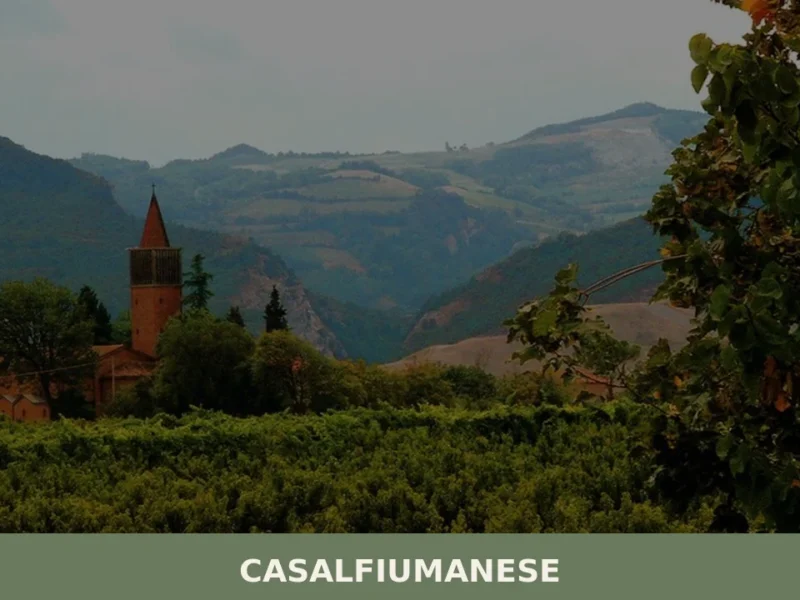
Casalfiumanese
Plains
About twenty kilometres from Imola, along the valley of the Sillaro stream, the municipal territory of Casalfiumanese stretches between the lower plain and the first hills of the Bolognese Apennines, covering an elevation range from 50 to nearly 500 metres above sea level. The main town, sitting at 125 metres above sea level, has approximately […]
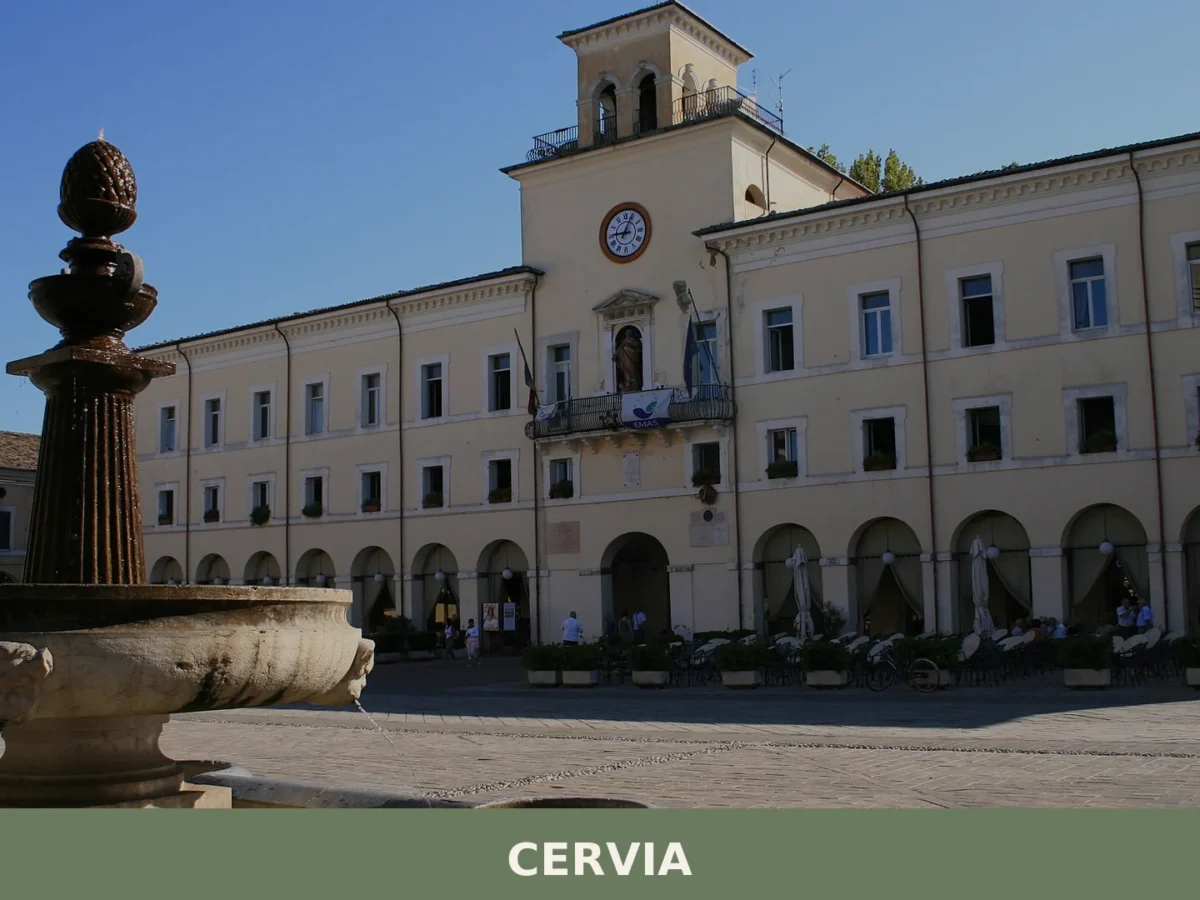
Cervia
 Sea
Sea
A coastal settlement built atop ancient salines, Cervia preserves nine centuries of salt heritage and 9 km of protected beaches in the Ravenna province.
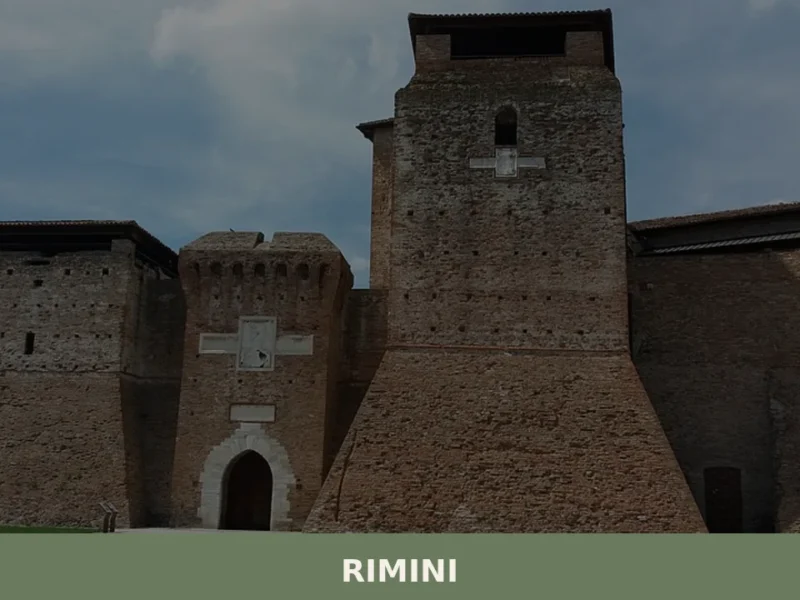
Rimini
Sea
What to see in Rimini: 149,211 residents, Arch of Augustus, Tempio Malatestiano, Fellini Museum. Plan your visit with our complete guide to Roman history and local food.
Castel di Casio
 Hills
Hills
In February 1944, during the German retreat along the Gothic Line, the bridges over the Limentra di Treppio torrent were blown up one by one, cutting the territory of Castel di Casio in two. That act of destruction left a lasting mark on the collective memory of a mountain municipality that, as far back as […]
Cadeo
Plains
What to see in Cadeo: a Piacenza plain town at 65m with 6,035 residents. Discover Romanesque churches, historic villas and DOP cured meats. Plan your visit.
Bagnolo in Piano
Plains
What to see in Bagnolo in Piano, Emilia-Romagna, Italy: explore the medieval Torrazzo tower, the Pieve Rossa church, and local Po Valley cuisine. Discover now.
Castel d’Aiano
 Mountain
In 1944 the Gothic Line cut through these mountains, and Castel d’Aiano found itself at the centre of the clash between Allied forces and German troops: the hamlets of Villa d’Aiano, Sassomolare and Rocca di Roffeno still bear the marks of that period. Today the municipality has 1,916 inhabitants spread across a vast, hilly territory […]

Langhirano
Mountain
Population 10,916. Langhirano sits at 265 metres altitude on the slopes of Monte Milano, gateway to the Val Parma and epicentre of prosciutto production.
Argelato
Plains
What to see in Argelato? Explore the 5 main attractions of this Emilian village. Our complete guide awaits for your trip. Read now!

🏡 Know Borgonovo Val Tidone better than we do?
If you’re a local or have been there, your knowledge matters: add what’s missing or fix a detail on this page.