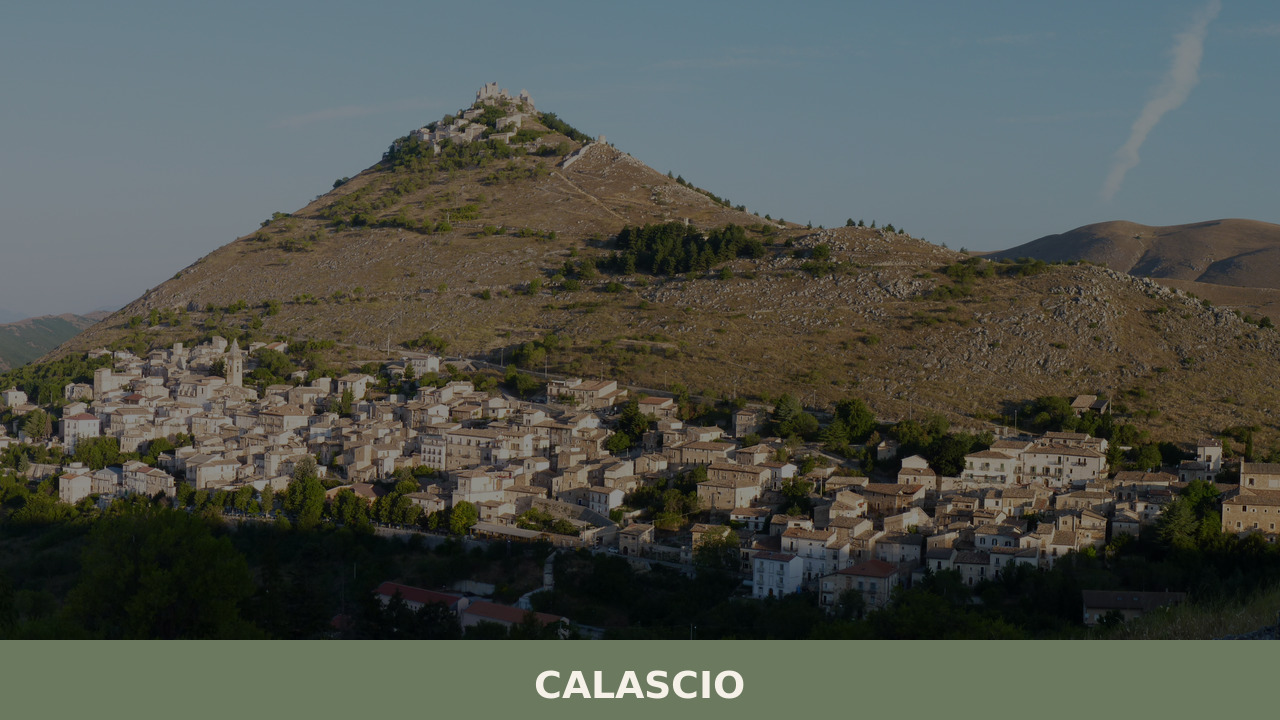
Morning light catches the limestone walls of Rocca Calascio before it reaches the village below, turning the fortress a pale gold against the dark mass of the Gran Sasso. At 1,210 metres above sea level, the air is thin and sharp, carrying the sound of wind through empty doorways. Only 127 people live here year-round, […]
Morning light catches the limestone walls of Rocca Calascio before it reaches the village below, turning the fortress a pale gold against the dark mass of the Gran Sasso. At 1,210 metres above sea level, the air is thin and sharp, carrying the sound of wind through empty doorways. Only 127 people live here year-round, yet the village draws visitors who want to understand what to see in Calascio — a place where medieval stone, open sky, and the silence of the Apennines converge with an almost theatrical clarity.
The origins of Calascio are tied to the broader military and pastoral history of the L’Aquila province. The settlement likely developed around the 10th century, when local lords constructed watchtowers along the Apennine ridgeline to monitor the valleys below and defend the transhumance routes — the seasonal paths along which shepherds moved their flocks between mountain pastures and the lowlands of Puglia. The name “Calascio” may derive from a corruption of the Latin callis, meaning path or sheep track, reflecting the village’s deep connection to this ancient practice.
By the 12th and 13th centuries, Calascio had come under Norman and then Angevin control. The hilltop fortress, Rocca Calascio, was expanded significantly during this period, evolving from a simple watchtower into a more complex defensive structure with corner towers. The Barony of Carapelle, which included Calascio, passed through the hands of several feudal families, including the Piccolomini and the Medici — not the Florentine branch, but a lesser-known Abruzzese line. Each left administrative marks on the territory, though the landscape itself remained defined by sheep, stone, and altitude.
The village experienced a steady decline in population from the 17th century onward, accelerated by a devastating earthquake in 1703 that damaged much of the L’Aquila province. Residents gradually moved downhill to the more sheltered hamlet of Calascio Nuovo, leaving the upper village largely abandoned. What remains today is a remarkable fossil of medieval mountain life — narrow alleys, collapsed roofs open to the sky, and a fortress that has outlasted the community it was built to protect.
The highest fortress in the Apennines stands at approximately 1,460 metres. Its four cylindrical corner towers, added in the 15th century, frame a central keep of earlier construction. The structure was used as a filming location for the 1985 film Ladyhawke and Umberto Eco’s The Name of the Rose. On clear days, the panorama extends across the Campo Imperatore plateau to the Adriatic coast — a span of nearly 130 kilometres.
Just below the fortress, this small octagonal church from the late 16th century sits alone on the ridge, its proportions perfectly calibrated to the landscape. Built, according to tradition, to commemorate a local victory over brigands, it has become one of the most photographed structures in Abruzzo. The interior is modest — a single altar, faded frescoes — but the setting, against the open grassland and sky, is architecturally striking.
The upper village of Calascio, now largely uninhabited, preserves a labyrinth of stone arches, vaulted passageways, and houses built directly into the rock. Walking through it is a study in vernacular mountain architecture: thick walls for insulation, small windows against wind, and stairways cut from the living stone. Partial restoration efforts have stabilised some structures, but much remains in a state of dignified ruin.
The arched stone gateway that once controlled access to the medieval settlement still stands, marking the threshold between the inhabited lower village and the older, emptied quarter above. Its simple pointed arch is characteristic of 13th-century Abruzzese construction. Passing through it creates a palpable sense of crossing between centuries — from the lived-in present into the silence of the abandoned borgo.
A well-marked footpath connects Calascio to the neighbouring village of Santo Stefano di Sessanio, crossing open grassland used for grazing. The walk takes roughly 45 minutes and offers unobstructed views of the Gran Sasso massif. It follows a route once used by shepherds and traders, passing through terrain where orchids and gentians bloom in late spring.
The cuisine of Calascio belongs to the pastoral tradition of the high Apennines — direct, unsentimental food shaped by altitude and scarcity. Lamb is central: arrosticini, small skewers of castrated mutton grilled over a narrow brazier, are ubiquitous across Abruzzo and prepared with particular care in these mountain villages. Pecorino cheese, made from the milk of sheep that graze the Campo Imperatore plateau, has a sharp, complex flavour developed through months of ageing in cool cellars. Lentils from the nearby Santo Stefano di Sessanio area are cultivated at altitude, yielding small, flavourful legumes served in thick soups with garlic and local olive oil.
Dining options in Calascio itself are limited — the village’s size does not support many establishments — but a handful of agriturismi and small trattorias in the area serve dishes rooted in these ingredients. Sagne e fagioli, hand-cut pasta with beans, and maccheroni alla chitarra, a pasta pressed through a string frame, appear regularly. Local honey, produced from wildflowers at elevation, carries distinct herbal notes. For provisions, the markets in nearby Castel del Monte offer a wider selection of regional products, including saffron from the Navelli plain — one of the most prized in Italy.
Late May through early October provides the most accessible conditions. In summer, daytime temperatures at 1,210 metres remain moderate — typically between 20°C and 28°C — while evenings cool sharply, requiring a jacket even in July. The wildflower season peaks in June, when the grasslands around the fortress fill with colour. August brings the highest visitor numbers, particularly around Ferragosto (15 August), when Italian families travel inland. For relative solitude, early June or September are preferable — the light is warmer, the air clearer, and the trails less trafficked.
Winter transforms Calascio entirely. Snow can cover the upper village and fortress from December through March, and temperatures drop well below freezing. Access may be difficult during heavy snowfall, though the sight of Rocca Calascio under snow, against a hard blue sky, is extraordinary for those prepared for the conditions. There is no single dominant festival in Calascio, but the broader area hosts traditional events tied to the agricultural calendar, including sheep-shearing festivals and processions linked to the pastoral heritage of transhumance.
Calascio lies in the province of L’Aquila, roughly 120 kilometres east of Rome. By car, take the A24 motorway (Roma–L’Aquila–Teramo) and exit at L’Aquila Est, then follow the SS17 bis toward Barisciano and continue on provincial roads through Calascio Nuovo to the upper village. The final stretch is a narrow, winding mountain road — manageable but requiring care, particularly in winter. The total drive from Rome takes approximately 1 hour and 45 minutes in normal conditions.
The nearest train station is L’Aquila, served by regional services from Rome Tiburtina and Sulmona. From L’Aquila, there is limited bus service to the area, but a rental car is strongly recommended for reaching Calascio and exploring the surrounding villages. The nearest airports are Rome Fiumicino (FCO), approximately 160 kilometres to the west, and Pescara (PSR), roughly 100 kilometres to the east. Pescara offers a smaller selection of flights but provides a more direct route through the Apennine valleys.
The mountain territory surrounding Calascio contains several villages that reward a slower kind of travel. To the northwest, Aielli sits on the edge of the Fucino plain at a comparable altitude. Once a declining hilltop settlement, it has reinvented itself through a striking programme of murals — large-scale works painted directly onto the facades of village houses. The contrast between its contemporary art and its ancient stone fabric makes it an unexpected companion piece to Calascio’s more austere beauty.
Further south, in the gorge of the Sagittario River, Anversa degli Abruzzi occupies a dramatically different landscape — a village built along the rim of a narrow canyon, surrounded by dense forest and vertical rock. Together with Calascio, these villages form a constellation of small communities that illustrate the extraordinary range of Abruzzo’s mountain geography, from open windswept plateaux to enclosed, shadowed gorges. Visiting them in sequence reveals the region not as a single destination but as a territory of sharp, beautiful contrasts.
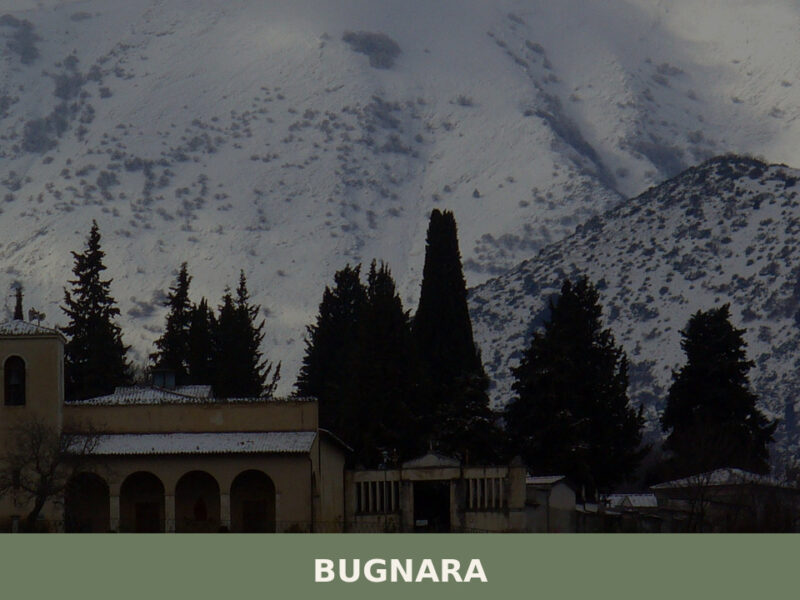
Morning light falls across the Sagittario valley in long, amber strokes, catching the limestone walls of a settlement that has watched over this corridor of central Abruzzo for the better part of a millennium. Bells from a church tower mark the hour, their sound flattening against the surrounding slopes before fading. The streets are narrow, […]
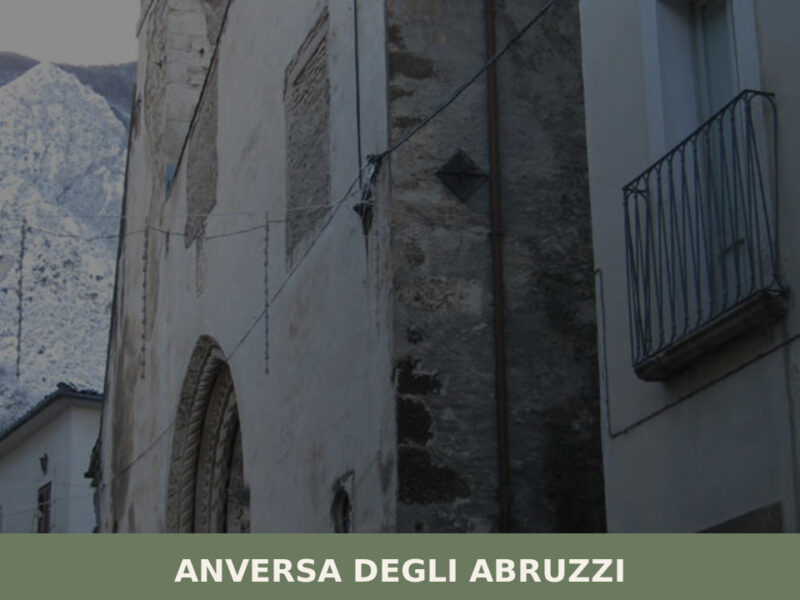
Morning light strikes the limestone walls of the old quarter at an angle that turns them the colour of raw honey. Below, the Sagittario Gorge drops away — a vertical wound in the rock that swallows sound. The air carries a faint mineral chill even in July. With only 368 residents, Anversa degli Abruzzi holds […]
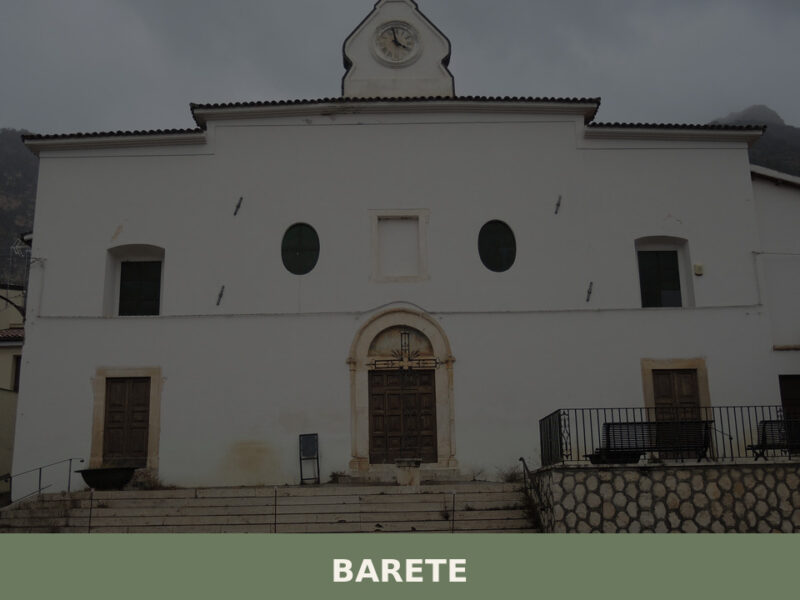
Morning light hits the limestone walls of Barete’s older houses at a low angle, turning them briefly gold before the shadow of the Gran Sasso massif reclaims the narrow lanes. A rooster calls from somewhere behind a garden wall. The air smells of woodsmoke and cold stone. This is a settlement of roughly 695 inhabitants, […]
📝 Incorrect information or updates?
Help us keep the Calascio page accurate and up to date.


