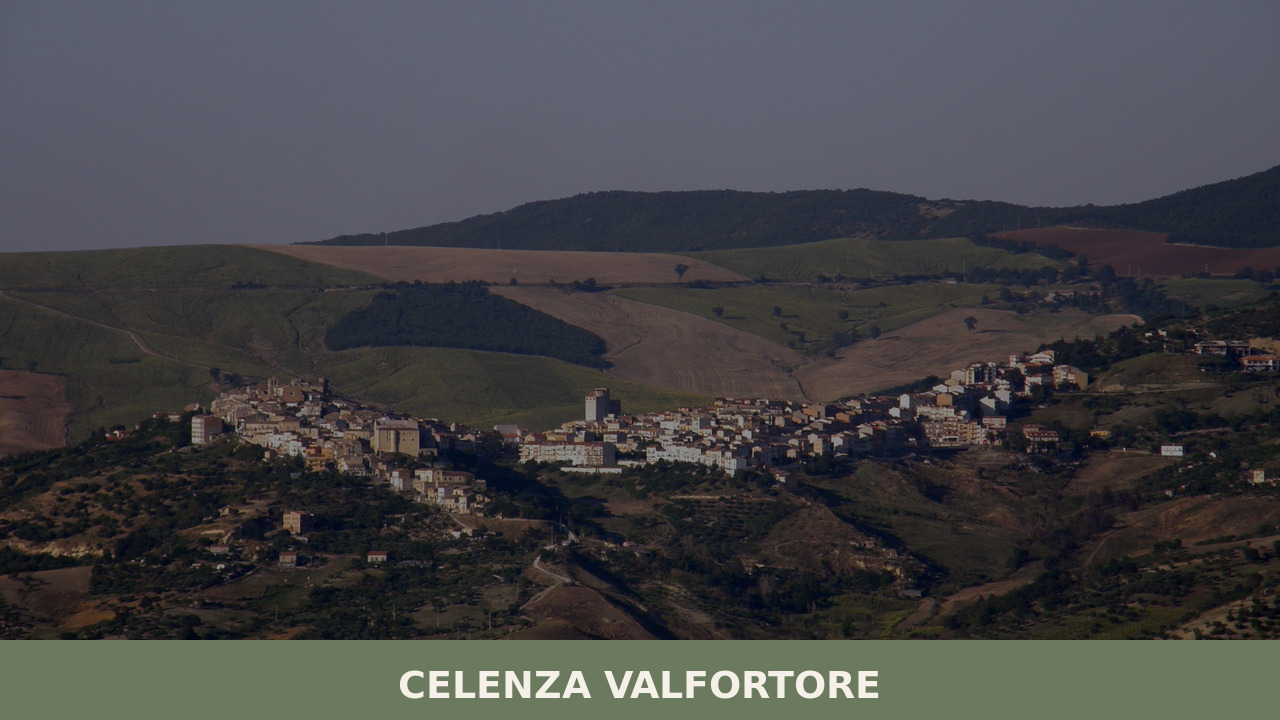
A hill village of 1,363 people above the Fortore valley in Puglia’s Daunia highlands. Castle, churches, stone lanes, and a working landscape far from the tourist coast.
Morning fog lifts from the Fortore river valley in slow, pale sheets, revealing a ridge of stone houses stacked against the sky at 480 metres above sea level. Church bells mark the hour to a population of barely 1,363. A rooster answers from somewhere below the castle walls. This is Celenza Valfortore, a settlement in the province of Foggia where the Apennine foothills meet the Tavoliere plain, and where centuries of layered history remain legible in every alley and archway. Understanding what to see in Celenza Valfortore begins with learning to read those layers.
The name itself is a map. “Celenza” likely derives from the Latin Celentia or from an earlier Italic root, while “Valfortore” anchors the village firmly to the valley of the Fortore river, which carves through the northern edge of Puglia before emptying into the Adriatic. The river has shaped settlement patterns here since pre-Roman times, drawing pastoral communities to the fertile terraces above its banks.
Under Norman rule in the eleventh and twelfth centuries, Celenza gained strategic importance as a fortified point along the routes connecting the Capitanata plain to the Sannio highlands of Campania. The Normans built or expanded the castle that still dominates the village’s highest point, and the settlement grew within its defensive perimeter. Successive feudal lords — including the powerful Caracciolo family during the Aragonese period — left their marks on the ecclesiastical and civil architecture. Earthquakes, particularly the devastating tremors of 1456 and 1688, repeatedly damaged the built fabric, prompting cycles of reconstruction that gave the village its present blend of medieval layout and later Baroque and Neoclassical detail.
By the eighteenth century, Celenza functioned as a modest agricultural centre, its economy tied to wheat, sheep, and the transhumance routes — the tratturi — that crisscrossed the Daunia sub-Appennina. Emigration in the twentieth century reduced the population significantly, but the village’s compact historic centre survived largely intact, spared from the kind of speculative building that transformed larger towns in the province.
Set at the village’s apex, the castle retains its Norman-era footprint despite centuries of modification. The cylindrical tower and segments of curtain wall are the oldest surviving elements. From the terrace, the view extends across the Fortore valley to the Daunian mountains — a panorama that explains precisely why this elevation was chosen for defence. The structure served as a feudal residence well into the eighteenth century.
The main parish church, dedicated to the Holy Cross, stands near the castle and anchors the upper part of the village. Its interior preserves Baroque altarpieces and wooden choir stalls that reflect the patronage of local noble families. The bell tower, visible from every approach road, functions as the village’s vertical signature — a reference point that orients the eye from kilometres away.
Below the castle, narrow lanes — some barely shoulder-width — descend through the old quarter in switchback patterns dictated by the terrain. Stone doorways bear carved dates from the seventeenth and eighteenth centuries. External staircases lead to upper-floor dwellings. Walking this network slowly, noting the masonry shifts from rough limestone to dressed tufa, reveals the village’s construction chronology more clearly than any plaque.
Located outside the medieval core, this smaller church dates to the period of Franciscan influence in the Daunia region. Its simple façade and single nave reflect the mendicant orders’ architectural restraint. Inside, fragmentary frescoes and a carved stone portal reward careful attention. The church serves as a reminder that religious life here extended well beyond the main parish.
The territory surrounding Celenza is itself an attraction. The Fortore valley, with its mix of cultivated terraces, oak woodland, and seasonal watercourses, offers walking routes that follow ancient mule tracks between villages. In spring, wildflowers — orchids, asphodels, poppies — cover the uncultivated margins. The landscape has a working, unmanicured quality that distinguishes it from more touristic parts of Puglia.
The cooking of Celenza Valfortore belongs to the inland Daunia tradition, which relies on durum wheat, lamb, wild greens, and preserved pork rather than the seafood of the Puglian coast. Handmade pasta shapes — orecchiette, cavatelli, and troccoli — appear with ragùs of lamb or with turnip tops and anchovy. Bread is still baked in large loaves using local grain, and it is common to find pancotto, a soup of stale bread, potatoes, and wild herbs, on family tables. Sheep’s milk cheeses, including aged cacioricotta, are produced by small dairies and shepherds in the surrounding countryside.
Olive oil from the Daunia sub-Appennina carries the Dauno DOP designation, and the cultivars grown on the slopes around Celenza — primarily Ogliarola and Coratina — yield an oil with a pronounced bitter and peppery finish. Local wine production is modest but present, with red wines from Montepulciano and Sangiovese grapes. Dining options in the village are limited to a small number of family-run trattorie; asking locally for recommendations is the most reliable approach, as opening hours can be seasonal and informal.
At 480 metres, Celenza experiences cooler temperatures than the Puglian lowlands. Summers are warm but not oppressive, with highs typically around 28–30°C and cool evenings — a welcome contrast to the 40°C heat of the Tavoliere plain in July. Winter brings occasional snow, and January nights can drop below freezing. The most rewarding months for visiting are May, June, September, and October, when the light is clear, the countryside is either flowering or harvest-gold, and the village is at its most accessible.
The village’s patron saint festival and other local celebrations, often held in summer, bring temporary energy to the streets — processions, outdoor dining, and music that fill the small piazzas. Checking with the municipality’s official website before a visit is advisable for exact dates and any access restrictions. Visitors should note that services — fuel stations, ATMs, pharmacies — are limited, so planning ahead is practical rather than optional.
From the A14 Adriatica motorway, exit at Foggia and follow the SS90 and then provincial roads westward into the Daunian hills; the drive from Foggia takes approximately one hour over 55 kilometres of progressively narrower and more winding road. From Naples, the route via the A16 motorway (exit Benevento or Grottaminarda) and then north through the Fortore valley covers roughly 130 kilometres and around two hours of driving. The nearest railway station with regular service is Foggia, which is connected to Rome, Bari, and Naples by Trenitalia’s Intercity and Frecce lines. From Foggia station, local bus services operated by regional carriers reach Celenza, though schedules are infrequent and should be verified in advance. The closest airports are Bari Karol Wojtyła (approximately 170 km) and Naples Capodichino (approximately 150 km). A rental car is strongly recommended for exploring both the village and the surrounding territory.
Celenza Valfortore does not exist in isolation. It belongs to a constellation of small hill towns across the Daunia sub-Appennina, each with its own architectural character and historical trajectory. Fewer than thirty kilometres to the south, Bovino occupies a prominent ridge position and holds one of the best-preserved medieval centres in the province of Foggia, complete with a Norman-Swabian castle and a Romanesque cathedral — a natural complement to a visit to Celenza.
To the northeast, in the flatlands closer to the Adriatic, Casalvecchio di Puglia represents a different thread of the region’s cultural fabric: a community with Arbereshë (Albanian) roots, where traces of a minority language and distinct traditions persist in daily life. Travelling between these villages — through wheat fields, along river valleys, past isolated masserie — is itself an education in the diversity contained within a single Italian province.
A working agricultural village on the Tavoliere plain near Foggia, Stornarella offers wheat-field panoramas, rural chapels, and the elemental cuisine of northern Puglia.
A hill village of 378 residents at 489 metres in the Daunian Subapennines. Volturara Appula offers medieval lanes, panoramic views over the Tavoliere, and the quiet of a place most travellers never find.
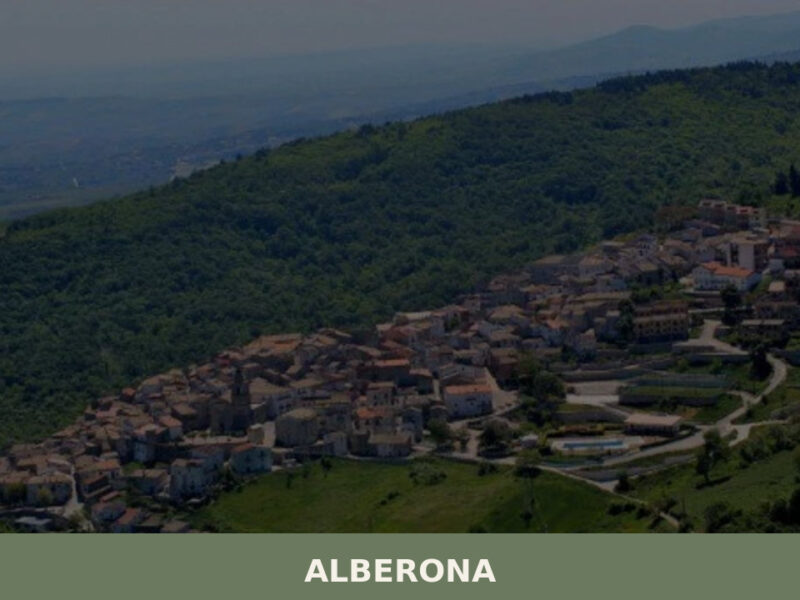
Explore Alberona, a hidden gem in Puglia's Apennines. Discover its attractions, rich history, and delightful local cuisine.
📝 Incorrect information or updates?
Help us keep the Celenza Valfortore page accurate and up to date.


