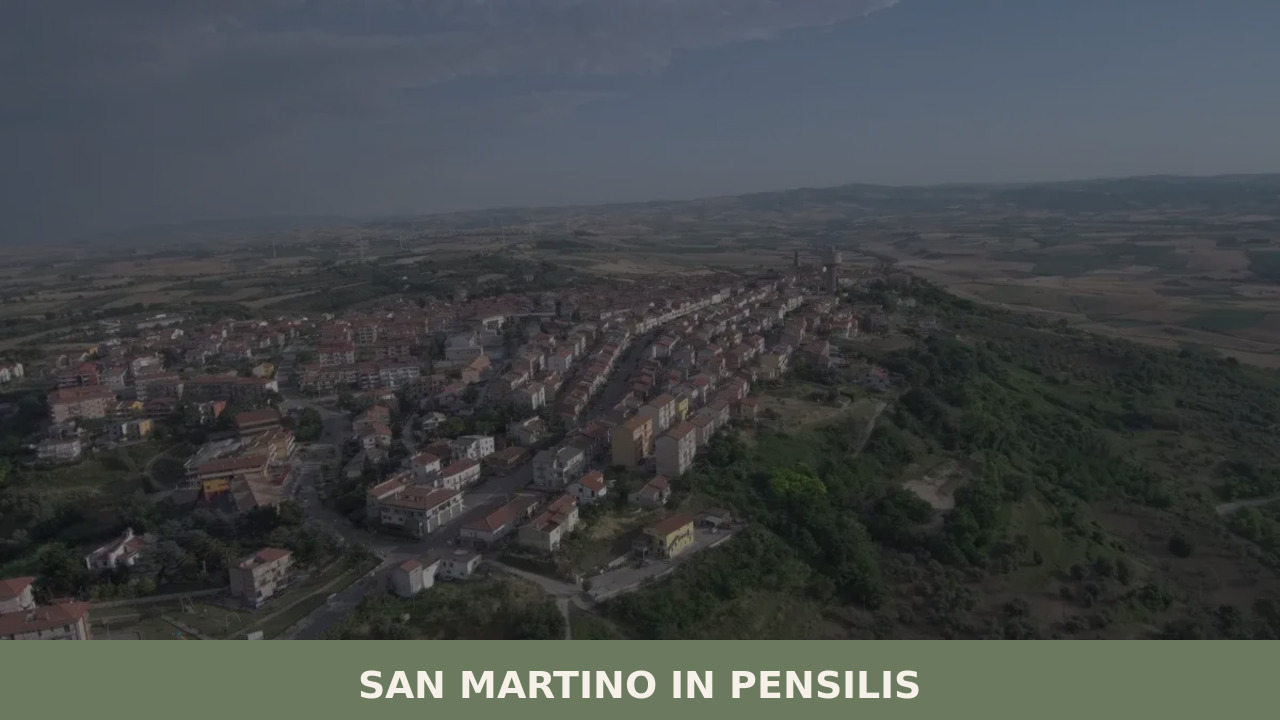
Morning light catches the pale stone of a church bell tower, and below it, the long main street empties into a piazza where a handful of men stand with espresso cups, talking over one another. San Martino in Pensilis sits at 281 metres above sea level in the province of Campobasso, a settlement of roughly […]
Morning light catches the pale stone of a church bell tower, and below it, the long main street empties into a piazza where a handful of men stand with espresso cups, talking over one another. San Martino in Pensilis sits at 281 metres above sea level in the province of Campobasso, a settlement of roughly 4,500 people on a low ridge overlooking the Biferno valley. Knowing what to see in San Martino in Pensilis means understanding a place shaped by agriculture, medieval lordship, and one of southern Italy’s most dramatic equestrian traditions.
The village’s origins are typically traced to the early medieval period, when small fortified settlements began to consolidate across the hills of Molise. The name itself is revealing: “San Martino” honours Martin of Tours, the Roman soldier turned bishop whose cult spread widely across Europe from the fourth century onward. “In Pensilis” likely derives from the Latin pensilis, meaning “hanging” or “suspended,” a reference to the village’s elevated position above the surrounding farmland. The toponym distinguishes it from the many other Italian villages named after the same saint.
During the Norman and Swabian periods, San Martino in Pensilis passed through the hands of various feudal families. Like much of the Campobasso hinterland, it was drawn into the administrative orbit of the County of Molise and later the Kingdom of Naples. The village’s economy centred on grain cultivation and sheep grazing — the same pastoral rhythms that defined life across the Apennine foothills for centuries. Its position along routes connecting the Adriatic coast to the interior gave it modest strategic relevance, though it never grew into a major centre.
By the eighteenth and nineteenth centuries, the feudal system had dissolved, but the agrarian character of San Martino in Pensilis persisted. Emigration, particularly to the Americas and northern Europe, thinned the population during the twentieth century — a pattern shared by nearly every village in inland Molise. What remained, and what continues to define the village today, is a strong attachment to local tradition, most visibly expressed in its annual festivals.
The main parish church anchors the old centre. Dedicated to Saint Peter the Apostle, the structure has been rebuilt and modified across several centuries, but its current form retains elements of late Baroque styling. Inside, look for carved wooden altarpieces and devotional paintings typical of provincial churches in the Campobasso diocese. The bell tower, visible from well outside the village, serves as the primary landmark.
Every year on 30 April, ox-drawn carts race through the streets at startling speed during the Carrese, a tradition honouring San Leo. The route itself — steep, narrow, paved in stone — is worth walking even outside the festival. Scars on building corners and worn kerbstones record centuries of the event. It is one of the most physically intense folk traditions still practised in southern Italy.
Among the notable civil buildings in the historic centre, Palazzo Ferrara stands out for its proportioned façade and stonework portal. Dating from the period of the local landowning aristocracy, the building speaks to the modest prosperity that grain production brought to families who controlled the surrounding territory. Its architecture is representative of the genteel style found in Molise’s smaller centres.
The old quarter is compact and walkable, organised along a main axis with narrow lateral alleys. Stone archways, external staircases, and ground-floor cellars once used for storing oil and wine mark the vernacular building tradition. Several doorways bear carved dates from the seventeenth and eighteenth centuries. The overall fabric is intact enough to read as a coherent historical settlement rather than a collection of isolated monuments.
At the village’s edge, the terrain drops away and the view opens across the Biferno river basin toward the Adriatic. On clear days, the coastline near Termoli is faintly visible. The panorama provides geographic context — the transition from Apennine hills to the narrow Adriatic coastal plain is laid out in a single sweep, explaining why settlements like this were positioned precisely where they are.
The cooking here is rooted in the same ingredients that have sustained Molise’s inland communities for generations: durum wheat, olive oil, pork, and wild herbs. Pasta made by hand — cavatelli, fusilli, and taccozze — is dressed with slow-cooked ragù or with simple sauces of tomato, garlic, and peperoncino. Pork features prominently: the local tradition of home butchering (la pista) yields sausages, ventricina (a cured salami seasoned with sweet and hot peppers), and various preserved meats that carry the family through winter. Olive oil production, while modest in scale compared to neighbouring Puglia, remains an important element of local agriculture.
Bread deserves particular attention. Large loaves baked in wood-fired ovens — dense, golden-crusted, and slow to stale — remain a point of local pride. During festivals, specific ritual breads are prepared, connecting food to the liturgical calendar. Visitors looking for a meal will find a handful of trattorie and agriturismi in and around the village where these dishes are served with little ceremony and considerable substance. The municipality’s official website can be a useful starting point for local accommodation and dining information.
The single most compelling day to be in San Martino in Pensilis is 30 April, when the Carrese takes place. The ox-cart race transforms the village completely: streets fill with spectators, the air carries the smell of woodsmoke and grilled meat, and the noise of iron-rimmed wheels on stone is something that stays with you physically. The event carries genuine risk — these are heavy carts moving at speed through confined spaces — and the atmosphere reflects it. It is not a performance staged for visitors; it is an internal community ritual that outsiders are permitted to witness.
Beyond the Carrese, late spring (May and June) and early autumn (September and October) offer the most comfortable conditions for exploring on foot. Summers can be hot, though the elevation provides some relief compared to the coastal plain. Winters are quiet and cold, with occasional snow, but the village takes on a stark, photogenic quality when the surrounding fields are bare. Midweek visits outside festival season will find the village at its most silent — which, depending on your temperament, is either the point or the problem.
San Martino in Pensilis lies in the province of Campobasso, roughly 35 kilometres northeast of the regional capital. By car, the most practical approach from the north or south is via the A14 Adriatica motorway, exiting at Termoli and following the provincial roads inland — the drive from Termoli takes approximately 25 minutes. From Campobasso, the SS647 leads east toward the coast, with a turnoff south toward the village.
The nearest railway station with regular service is Termoli, on the Adriatic line connecting Bologna to Lecce. From Termoli, local bus services (operated by regional carriers) connect to San Martino in Pensilis, though schedules are limited and a car is strongly recommended for flexibility. The closest airports are Pescara (roughly 120 km north) and Naples Capodichino (approximately 200 km southwest). Bari Karol Wojtyła airport is another option at roughly 200 km to the southeast.
The territory surrounding San Martino in Pensilis is rich with small settlements that share a similar history of feudal lordship, agricultural labour, and quiet resilience. To the south, within Molise itself, Palata offers another example of a hill village shaped by centuries of grain farming and emigration. Its compact historic centre and surrounding landscape echo many of the same themes found in San Martino, and the two villages are close enough to visit in a single day.
Looking further afield, across the regional border into Puglia, Castelnuovo della Daunia sits in the Subappennino Dauno, a landscape of wind-scored ridges and sparse settlements that feels even more remote than inland Molise. Together, these villages illustrate the continuity of life across southern Italy’s interior highlands — places where the calendar still turns with the seasons, where food is local by necessity as much as by choice, and where the weight of history is carried lightly because it was never anything other than ordinary.
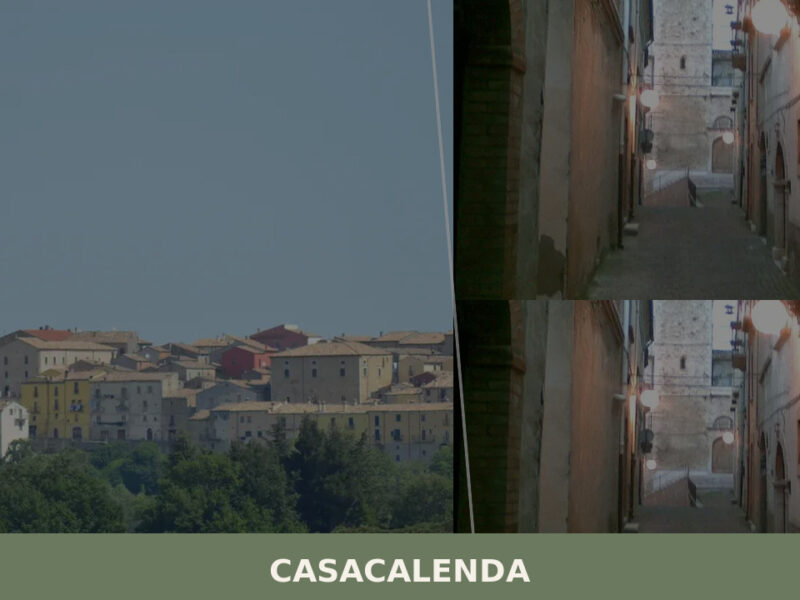
Morning light hits the limestone facades along Corso Roma and the sound is not silence but something close — a dog barking two streets away, the clatter of a shutter being folded back, the low idle of a Fiat Panda parked outside the only bar open before eight. Casacalenda sits at 631 metres above sea […]
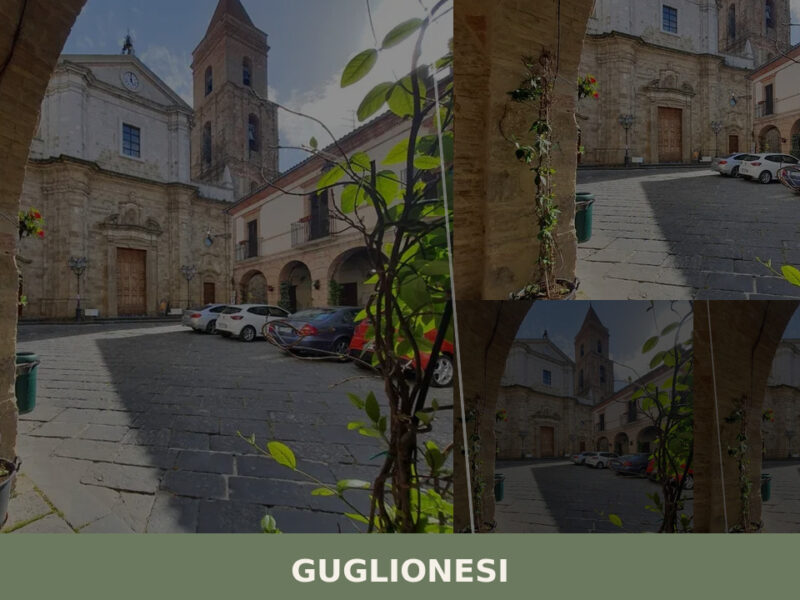
A hill town of nearly five thousand people in Campobasso province, Guglionesi offers Romanesque churches, Samnite archaeological traces, and wide Adriatic views across the Biferno valley.
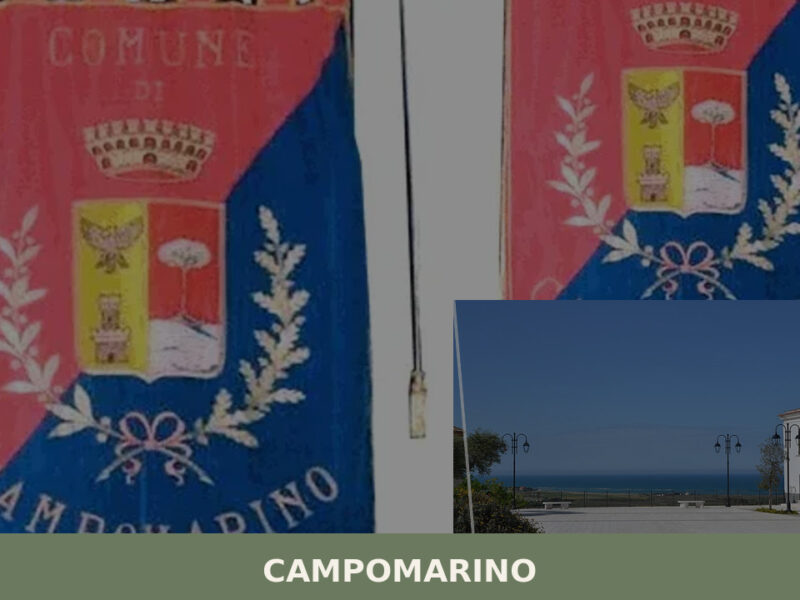
Campomarino straddles a Molise hilltop and the Adriatic shore. Explore its Arbëreshë heritage, three historic churches, and the unspoiled coast of Campomarino Lido.
📝 Incorrect information or updates?
Help us keep the San Martino in Pensilis page accurate and up to date.


