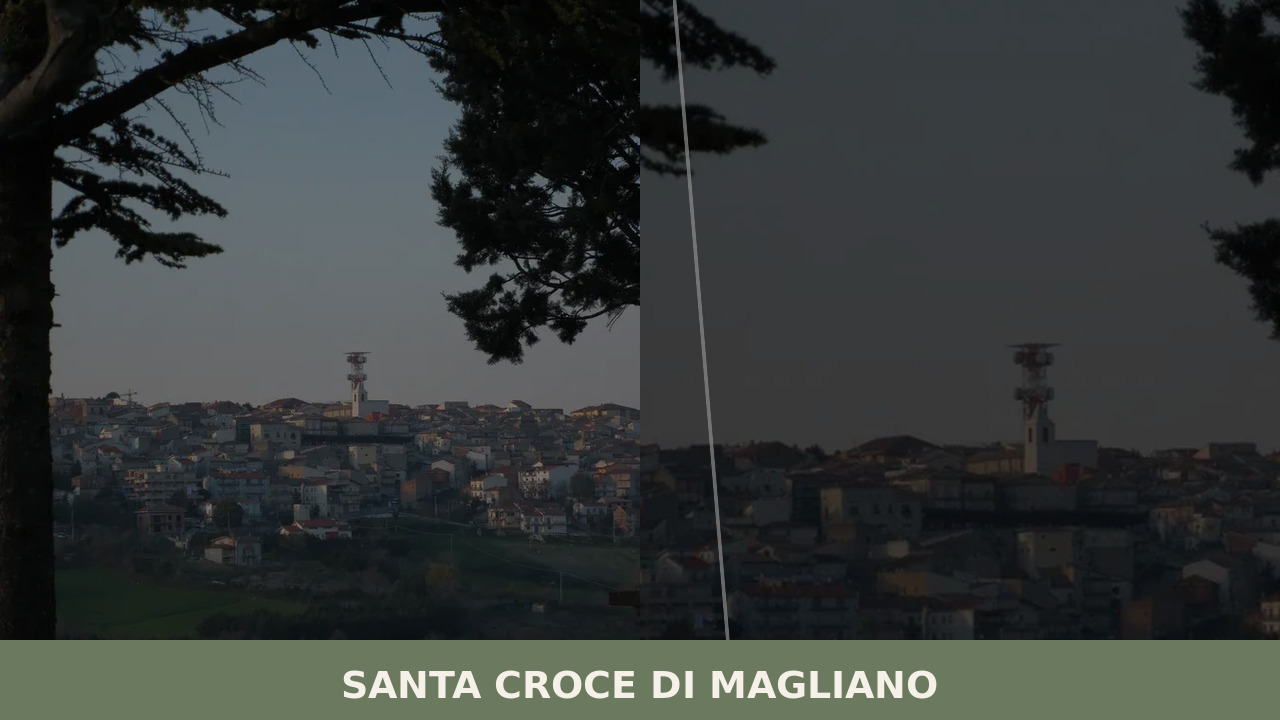
Morning light falls across a row of stone facades on Corso Vittorio Emanuele, and an elderly man drags a wooden chair onto the pavement, positioning it with the precision of someone who has done this for sixty years. The air at 608 metres carries a dry, herbal sharpness — rosemary and broom from the surrounding […]
Morning light falls across a row of stone facades on Corso Vittorio Emanuele, and an elderly man drags a wooden chair onto the pavement, positioning it with the precision of someone who has done this for sixty years. The air at 608 metres carries a dry, herbal sharpness — rosemary and broom from the surrounding hills of Molise. Santa Croce di Magliano, home to roughly 3,960 inhabitants, sits on a ridge between the Fortore valley and the Biferno basin, a place where silence is a tangible presence between conversations. Understanding what to see in Santa Croce di Magliano means slowing down enough to read these details.
The origins of Santa Croce di Magliano are tied to the broader medieval settlement patterns of inland Molise, a region shaped by Lombard duchies, Norman conquest, and the feudal networks that followed. The name itself carries a dual signature: “Santa Croce” refers to the devotion to the Holy Cross, a dedication common in settlements established or re-founded under ecclesiastical influence during the Middle Ages; “Magliano” likely derives from the Latin Mallianum, suggesting a Roman-era estate or landholding. Written records of the settlement become more consistent from the Norman and Swabian periods, when the feudal structure of the Contado di Molise placed small hill towns like this one under the authority of local barons.
Through the centuries of Angevin and Aragonese rule over the Kingdom of Naples, Santa Croce di Magliano remained a minor feudal possession, passing between noble families. The town’s fortunes tracked closely with the agricultural cycles of grain and olive cultivation that sustained the Molisan interior. Earthquakes — a persistent reality in this seismically active zone — periodically reshaped the built environment. The 2002 earthquake, centred near the neighbouring area of San Giuliano di Puglia, caused significant damage in Santa Croce di Magliano as well, collapsing structures and forcing a protracted period of reconstruction that altered the physical character of parts of the town.
Despite these ruptures, the village retained its core identity: a compact settlement of churches, small palazzi, and narrow residential streets, arranged along a ridge with views that extend toward the Daunia sub-Apennines to the east and the Matese massif to the west. Its population, like that of many Molisan towns, has declined steadily from mid-twentieth-century peaks, a consequence of emigration to northern Italian cities and abroad — particularly to Canada and the United States, where Santa Crocese diaspora communities maintain active ties.
The main parish church, dedicated to the Holy Cross, anchors the town’s religious and spatial identity. Its interior preserves elements of baroque decoration alongside more recent restoration work necessitated by seismic damage. The façade, rebuilt in part after 2002, faces a small piazza that functions as the social centre of daily life, particularly during evening passeggiata.
Smaller and quieter than the Chiesa Madre, this church dedicated to Saint James the Apostle contains modest but noteworthy devotional art. Its stonework exterior, partially original, shows the layered construction history typical of Molisan religious buildings — medieval foundations, early modern additions, and post-earthquake repairs visible in a single wall.
The principal street threads through the old town, connecting its churches and civic buildings. Walking its length in late afternoon reveals the rhythm of the place: shuttered ground-floor workshops, iron balconies with drying peppers in season, and doorways leading into courtyards not visible from the street. The architecture is vernacular — local stone, plaster, and tile — rather than monumental.
At the town’s edges, the terrain drops sharply, opening long views across the Fortore river basin toward the hills of northern Puglia. On clear winter mornings, the ridgeline of the Daunia mountains appears as a sharp blue line on the horizon. These are not formalised lookout points but rather stretches of road and low walls where the landscape simply reveals itself.
The town’s central civic space holds its war memorial — a common feature of Italian hill towns, but here carrying particular weight given the scale of emigration that both preceded and followed the World Wars. The surrounding piazza, with the municipal building and a bar or two, is where the administrative and the quotidian overlap in a characteristic Molisan way.
The cooking of Santa Croce di Magliano belongs to the broader Molisan tradition: a peasant cuisine built on grain, pork, sheep’s milk cheese, and whatever the season’s garden yields. Pasta is often handmade — cavatelli, fusilli shaped on a thin rod, or taccozze (rough-cut squares) served with a slow ragù of pork or lamb. Vegetables figure prominently: cardoons, wild chicory, dried peppers ground into a mild powder and stirred into sauces. The local olive oil, pressed from Molisan cultivars, has a peppery finish distinct from the milder oils produced on the Pugliese coast. Ventricina, a spiced pork salami typical of the upper Molise and neighbouring Abruzzo areas, appears on many tables.
Bread, baked in large loaves and meant to last several days, remains central to the diet — sliced thick, rubbed with garlic and oil, or used as a base for pancotto, a bread soup. Cheeses include caciocavallo and fresh scamorza, sometimes smoked. Dining options in the village are limited to a small number of family-run trattorie and agriturismi in the surrounding countryside, where menus change with the season and portions reflect a farming community’s relationship with food — generous, unadorned, and rooted in repetition rather than novelty.
Spring — late April through June — brings warm days without the heavy heat of the Molisan summer, when temperatures at 608 metres can still climb uncomfortably in July and August. The surrounding hills are green and wildflowers mark the roadsides. Autumn, particularly October, offers a different appeal: the grape and olive harvest animates the countryside, the light turns amber and low, and the first woodsmoke from household fires scents the evening air. Winter is cold and can be austere, with occasional snowfall and fog filling the valleys below, but it offers the village at its most unfiltered — few visitors, short days, and an intimacy with the routines of a small community.
The principal religious festivals, including the feast of the Holy Cross and celebrations honouring patron saints, punctuate the calendar and bring the diaspora community back in summer months. These events — processions, outdoor masses, food stalls, and fireworks — offer the most concentrated expression of local identity. Checking dates with the municipality’s official website in advance is advisable, as schedules can shift.
Santa Croce di Magliano lies in the province of Campobasso, in the eastern part of Molise. By car, it is reached via the SS 647 (Bifernina) from Campobasso, a drive of approximately 50 kilometres taking around one hour on winding but well-maintained roads. From the Adriatic coast — Termoli, the nearest town with a railway station on the main Bologna–Lecce line — the distance is roughly 60 kilometres inland. The nearest airports are Pescara (Abruzzo International Airport), about 150 kilometres to the north, and Naples Capodichino, approximately 180 kilometres to the southwest. Rome Fiumicino is around 280 kilometres away. Public transport connections exist via regional bus services from Campobasso and Termoli, but frequencies are limited, particularly on weekends. A car is, practically speaking, essential for exploring both the village and the surrounding territory.
The eastern orientation of Santa Croce di Magliano — facing the Daunia hills and, beyond them, the Adriatic — places it within reach of several distinctive communities across the Molise-Puglia border. To the southeast, the agricultural town of Apricena sits on the edge of the Tavoliere plain in the province of Foggia, known for its extensive stone quarries and a landscape that shifts abruptly from inland hills to the flat, sun-beaten wheat country of northern Puglia. It offers a useful contrast to Santa Croce’s mountain-ridge character.
Further east, on the Gargano peninsula’s northern coast, Vieste presents an entirely different face of southern Italy — a white-walled fishing town perched above clear Adriatic waters, with sea stacks, caves, and the dense Foresta Umbra behind it. Together, these three points — the Molisan interior, the Daunia plain, and the Gargano coast — trace a transect through some of the most varied and least touristed terrain in the Italian south, each village anchored in a distinct geography and a distinct way of living.
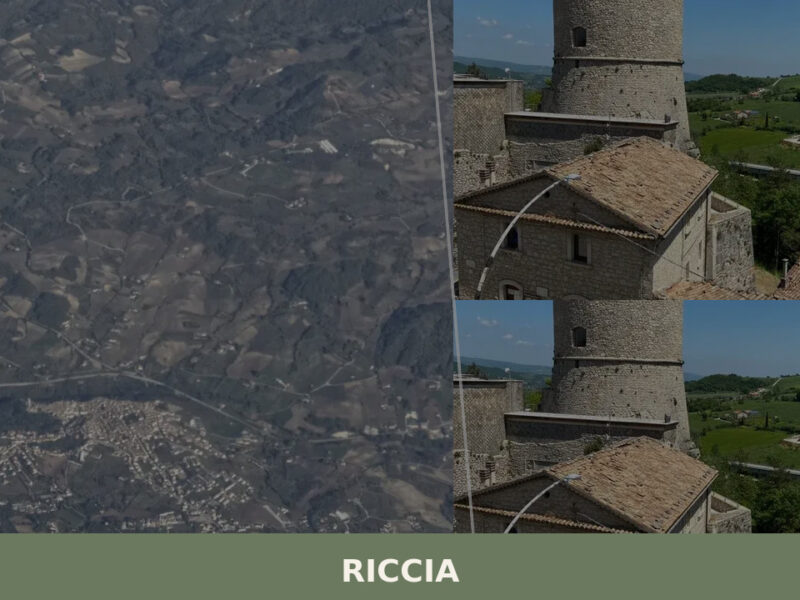
A hilltop village of 4,814 inhabitants in the province of Campobasso, Riccia reveals medieval streets, a Norman castle, and one of Molise's most celebrated food festivals.
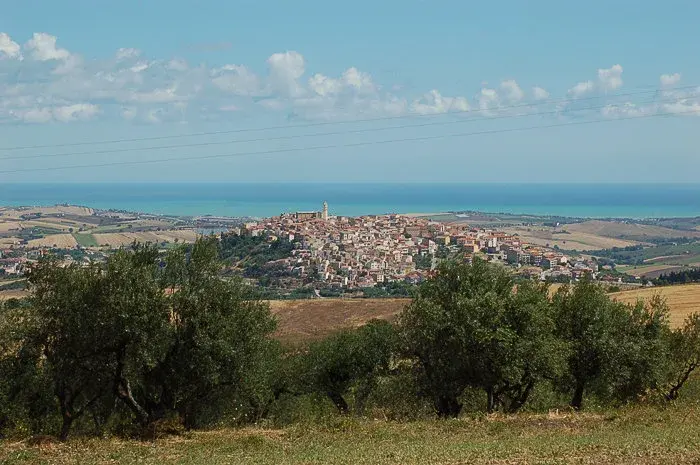
Morning light moves across the rooftops in a slow wave, catching the sandstone walls of old houses before spilling into the main piazza. At 273 metres above sea level, Montenero di Bisaccia sits on a hill that commands views stretching from the Apennine ridgeline to the Adriatic coast — a rare double horizon. With just […]
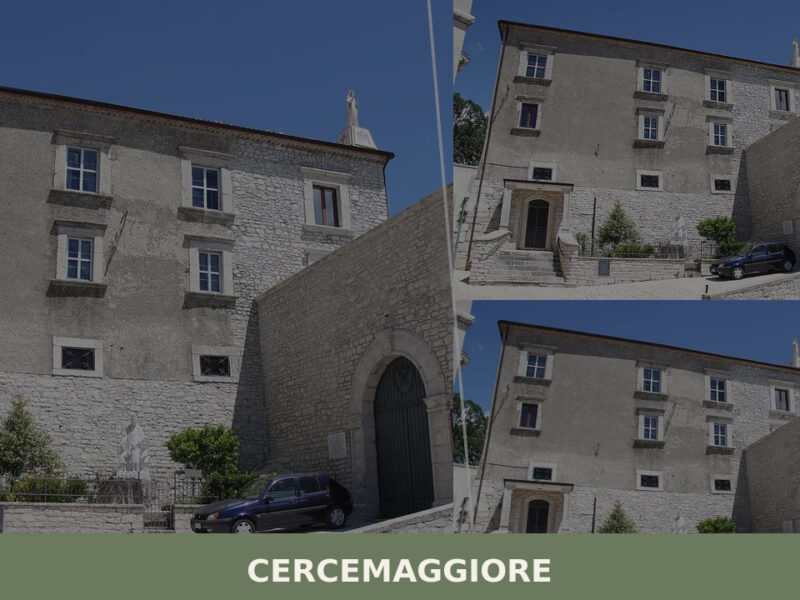
Morning mist spills across the rooftops at 930 metres, thinning as the sun reaches the bell towers. The air carries woodsmoke and the faint sound of a dog barking somewhere below the ridge. Cercemaggiore sits high in the Molise Apennines, a settlement of 3,601 people where stone houses line narrow streets that have changed course […]
📝 Incorrect information or updates?
Help us keep the Santa Croce di Magliano page accurate and up to date.