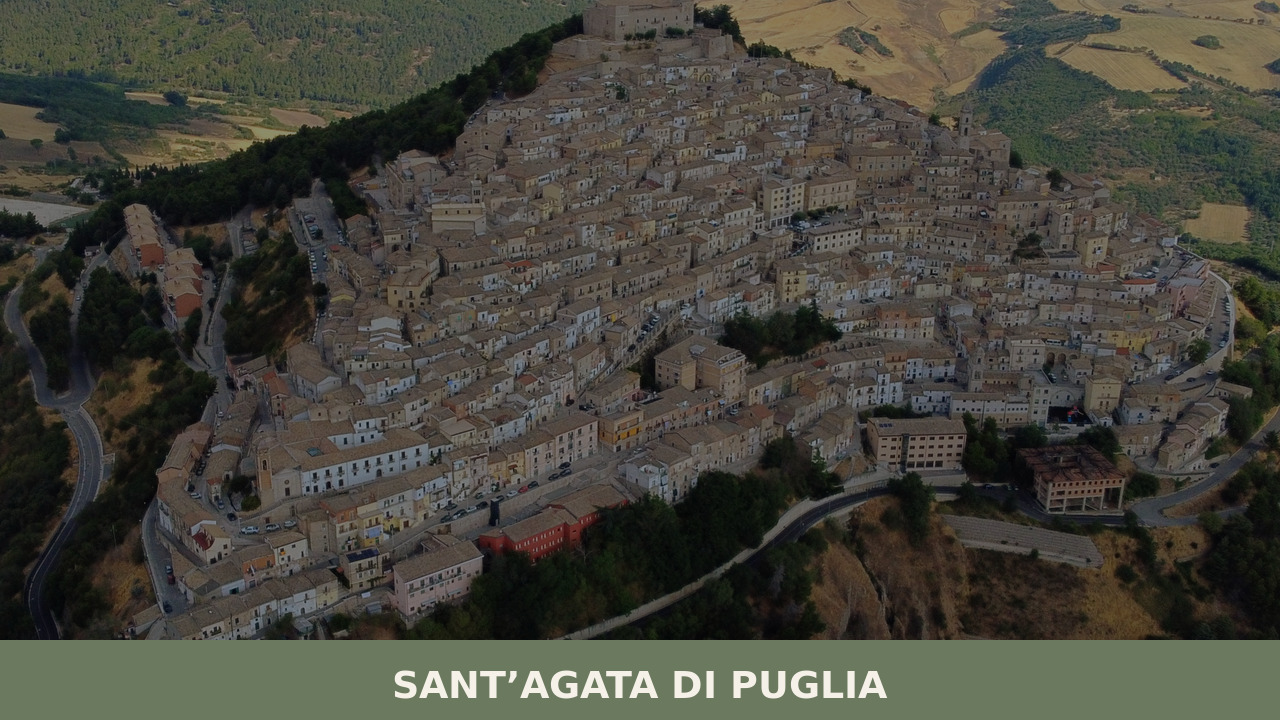
A ridge-top village at 794 metres in the Daunia hills, Sant’Agata di Puglia rewards slow exploration with its Norman castle, stepped stone alleyways, and mountain cooking.
At 794 metres above sea level, the wind arrives before the light does. Mornings here begin with a slow reveal — fog lifting off the Daunia hills to expose a spine of stone houses stacked along a single ridge, their walls the colour of dried wheat. The castle at the summit holds its ground like a watchtower over the Tavoliere plain below. For anyone weighing what to see in Sant’Agata di Puglia, this first impression — a vertical village suspended between sky and grain fields — sets the terms. Home to just 1,803 residents in the province of Foggia, it is a settlement that rewards the unhurried eye.
The origins of this hilltop settlement reach back to pre-Roman times, when the Daunian people occupied the high ground of the sub-Apennine range. The name itself fuses two layers of identity: the veneration of Saint Agatha of Sicily, a third-century Christian martyr, with the broader regional designation of Puglia. The dual naming reflects a pattern common across southern Italy, where sacred dedications were grafted onto existing settlements to anchor them within the Christian order during the early medieval centuries.
Under Norman rule in the eleventh and twelfth centuries, Sant’Agata di Puglia gained strategic importance as a fortified point along the chain of castles that controlled the mountain passes between the Adriatic coast and the interior of Campania. The Imperiale Castle, commanding the highest point of the village at nearly 800 metres, was reinforced during the Swabian period under Frederick II, who recognised the defensive value of the Daunia ridge towns. The village passed through the hands of successive feudal families — Angevins, Aragonese, and later the powerful local nobility — each leaving architectural traces in the churches and palazzi that line the narrow ascending streets.
By the eighteenth century, Sant’Agata had developed as a modest agricultural centre, its economy tied to grain cultivation on the Tavoliere and sheep grazing along the ancient transhumance routes. The town suffered significant damage in the 1930 Irpinia earthquake and again during the Second World War, events that prompted waves of emigration. What remains today is a settlement that wears its centuries visibly — Romanesque stonework beside Baroque church facades, medieval alleyways opening onto panoramic terraces that look east toward the Adriatic and west toward the Campanian Apennines.
The castle occupies the absolute summit of the village, a position that gives it unbroken views across the Tavoliere plain in every direction. Its foundations are Norman, with substantial Swabian-era modifications. The interior courtyard and remaining walls convey the scale of a fortress designed not for comfort but for surveillance — this was a military outpost watching over grain routes and mountain passes. Restoration work has made sections accessible to visitors.
The main parish church sits along the village’s central axis, its stone facade showing Romanesque bones beneath later Baroque additions. Inside, the nave holds carved stone capitals and a number of devotional paintings from the seventeenth and eighteenth centuries. The church functions as a quiet record of the village’s layered history — each renovation campaign left its signature without fully erasing what came before.
Sant’Agata’s centro storico is an exercise in vertical living. Narrow stepped lanes — too tight for vehicles — climb from the lower gates to the castle, passing under arched passageways and between houses whose doorways sit at shoulder height to the street above. Worn limestone treads, iron balconies, and the occasional carved lintel dating to the sixteenth or seventeenth century mark the route. The built fabric itself is the attraction.
Dedicated to the village’s patron saint, this church preserves the devotional heart of the community. Its interior holds a statue of Saint Agatha that serves as the focal point of annual processions. The architecture is modest in scale but characteristic of the Daunia hill towns — thick walls, small windows, a cool interior designed to withstand both summer heat and winter mountain wind.
Several points along the village perimeter open onto wide views that explain why this ridge was settled in the first place. On clear days, the sight line extends from the Gargano promontory to the northeast down across the flat expanse of the Tavoliere and southwest toward the mountains of Irpinia. These vantage points are not constructed attractions but natural consequences of the village’s extraordinary elevation — at 794 metres, it is among the highest inhabited centres in Puglia.
The cooking of Sant’Agata di Puglia belongs to the mountain tradition of the Daunia sub-Apennines, which means it diverges from the seafood and olive oil culture of coastal Puglia. Dishes are built around hard wheat, legumes, and pork. Handmade pasta — orecchiette, cavatelli, and the local cicatelli — is dressed with slow-cooked ragù or simply with turnip greens and anchovy. Lamb, raised on the surrounding hillsides, appears roasted or braised with wild herbs. Cardoncelli mushrooms, gathered from the limestone pastures of the Daunia hills, are a seasonal ingredient of real distinction, appearing grilled, preserved in oil, or folded into pasta sauces.
The province of Foggia produces notable DOP and IGP products, including Daunia extra virgin olive oil and Caciocavallo Silano cheese, both of which appear regularly on local tables. Bread, baked in large rounds from durum wheat flour, remains a staple with cultural weight — households here still judge a meal by the quality of its bread. Small trattorias and agriturismi in and around the village serve these preparations with little ceremony but considerable skill, offering a table experience rooted in seasonal availability rather than restaurant fashion.
The village’s elevation produces a climate quite different from the Puglian coast. Winters are cold, with temperatures regularly dropping below freezing and occasional snowfall transforming the stone streets into something closer to an Apennine mountain village than a Mediterranean town. Summers, by contrast, are warm but tempered by altitude — when Foggia bakes at 40°C on the plain, Sant’Agata sits ten degrees cooler, with evening breezes that make outdoor dining comfortable. Late spring (May and June) and early autumn (September and October) offer the best combination of mild weather, clear visibility for panoramic views, and manageable visitor numbers.
The feast of Sant’Agata, celebrated in February, brings the village’s religious and communal identity into sharp focus, with processions, traditional music, and food prepared for the occasion. Summer months see occasional cultural events and sagre (food festivals) that enliven the historic centre. Practical considerations: the village is small, with limited accommodation, so planning ahead is advisable. Sturdy footwear is essential — the stepped streets are steep and uneven, and the castle approach involves a genuine climb.
Sant’Agata di Puglia lies in the western part of the province of Foggia, along the Daunia sub-Apennine ridge. By car, the most direct route from the A16 Napoli–Canosa motorway is via the Candela exit, from which a provincial road climbs approximately 15 kilometres south through the hills to the village. From Foggia, the drive covers roughly 55 kilometres and takes about one hour, following the SS90 before turning onto secondary mountain roads. From Bari, allow approximately two hours via the A14 and A16 motorways.
The nearest railway station is at Candela or Foggia; from either, a car is necessary for the final approach, as public bus connections to the village are infrequent and unreliable outside of school-term schedules. The closest airports are Bari Karol Wojtyła Airport (approximately 150 km) and Naples Capodichino Airport (approximately 130 km). Drivers should be comfortable with narrow, winding mountain roads — the final kilometres of the approach involve switchbacks with limited guardrails and, in winter, potentially icy surfaces.
The Daunia hills and the broader province of Foggia hold a constellation of small settlements that share Sant’Agata’s character — elevated, stone-built, and largely overlooked by mainstream tourism. To the north, the plain opens toward Lucera, a town of roughly 33,000 people whose enormous Swabian-Angevin fortress ranks among the largest castle complexes in southern Italy. Lucera’s layered history — including a remarkable chapter as a Saracen colony under Frederick II — makes it a natural companion visit for anyone exploring the feudal and military architecture of the Foggia province.
Further east, toward the Gargano promontory, Cagnano Varano offers a different register entirely — a lakeside village on the shores of Lago di Varano, the largest coastal lagoon in Italy. Where Sant’Agata is all verticality and wind-scoured stone, Cagnano Varano spreads along the water’s edge with a quieter, horizontal rhythm. Together, these three villages — mountain, plain, and lagoon — sketch the geographic range that makes the province of Foggia one of the most varied and least expected corners of Puglia.
A quiet agricultural town on Puglia's Tavoliere plain, Stornara rewards visitors with honest rural architecture, sweeping wheat-field panoramas, and a food tradition rooted in durum wheat.
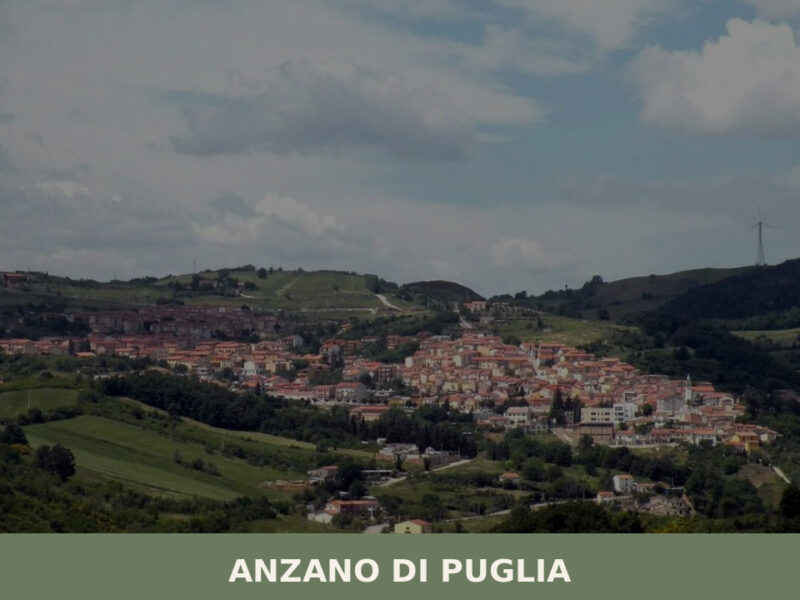
A tiny hilltop village at 760 m in the Daunia Mountains, Anzano di Puglia enchants with stone lanes, sweeping panoramas, and authentic mountain cuisine.
A hill village of 378 residents at 489 metres in the Daunian Subapennines. Volturara Appula offers medieval lanes, panoramic views over the Tavoliere, and the quiet of a place most travellers never find.
📝 Incorrect information or updates?
Help us keep the Sant’Agata di Puglia page accurate and up to date.


