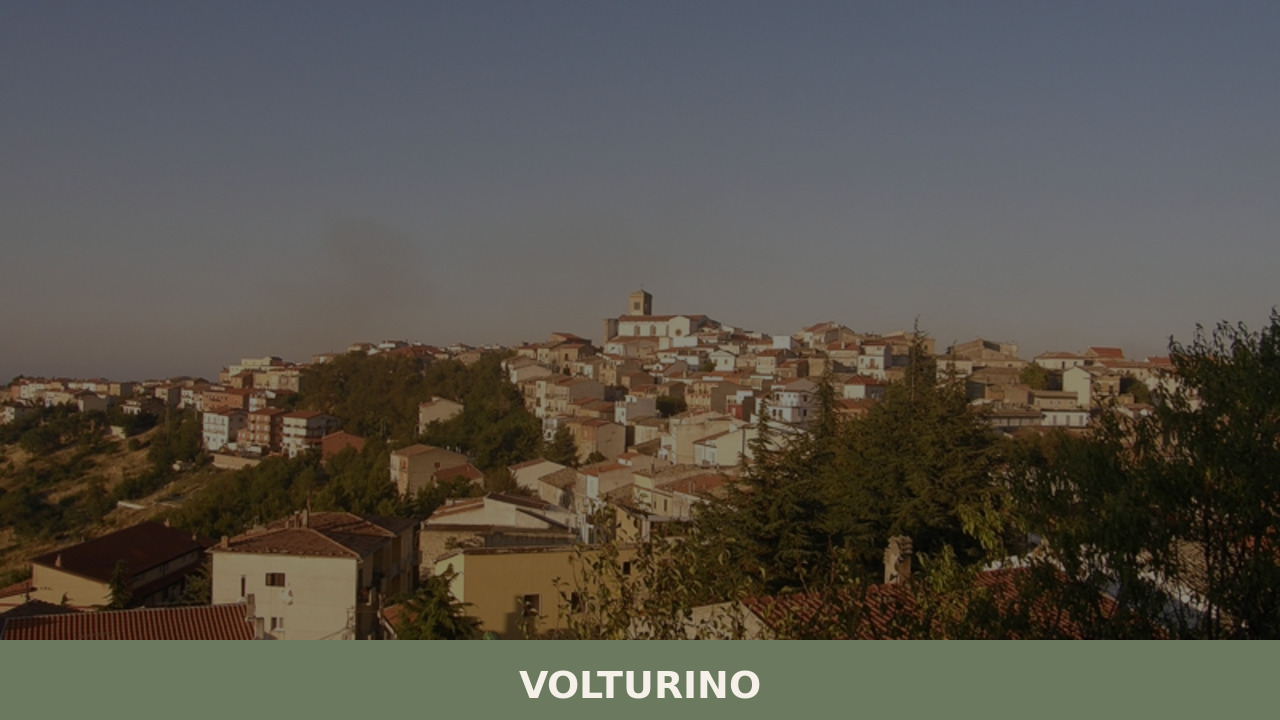
A ridgetop village of 1,554 inhabitants in Puglia’s Daunia mountains, Volturino overlooks the Tavoliere plain from 735 metres. Medieval lanes, stone churches, and panoramic silence.
Morning fog lifts off the Daunia ridgeline in slow, deliberate curtains, revealing stone walls the colour of dry wheat. At 735 metres above sea level, the air here carries a sharpness that the lowland towns around Foggia never know. A rooster calls from behind a shuttered house on Via Roma; an elderly woman sets a chair outside her door, positioning it to catch the first stripe of sun. With only 1,554 residents, every footstep on the cobblestones registers. This is the kind of place you have to earn — a steep road, a series of switchbacks, and then silence. Understanding what to see in Volturino begins with that silence, and with the slow revelation of a settlement that has watched over the Tavoliere plain for centuries.
The origins of Volturino are bound to the restless medieval history of the Province of Foggia and the broader Sub-Appennino Dauno — the chain of ridgetop settlements that served as watchtowers, refuges, and waypoints for the transhumance routes crossing southern Italy. The village’s name most likely derives from the Latin Vultur, meaning vulture, a reference to the birds of prey that once circled — and still occasionally circle — the thermal currents above these heights. Some local scholars have also connected the name to the Volturno River basin to the west, though the etymological link remains debated. What is certain is that the toponym speaks of altitude, wind, and the raw geography of the place.
Like many hill towns in the Daunia, Volturino took its recognisable form during the Norman period, when southern Italy was reorganised under feudal lordship following the conquests of the eleventh and twelfth centuries. The settlement was fortified and passed through the hands of various baronial families over the following centuries, its fate tied to the shifting allegiances of the Kingdom of Naples. Earthquakes — a constant companion in this seismically active corridor — periodically reshaped the built environment, most devastatingly in the 1456 earthquake that damaged settlements across the entire sub-Apennine ridge. The village rebuilt, as it always did, using the same pale local stone, layering new structures onto medieval foundations.
By the eighteenth and nineteenth centuries, Volturino had settled into the rhythm of an agricultural community, its economy driven by grain cultivation on the lower slopes, sheep grazing on the higher pastures, and the seasonal migration of shepherds along the tratturi — the ancient drovers’ roads that connected the mountains of Abruzzo and Molise to the winter pastures of the Tavoliere. The unification of Italy in 1861 brought administrative changes but little immediate improvement to daily life. Emigration, particularly to the Americas and northern Europe in the early twentieth century, reduced the population significantly — a demographic wound from which the village, like so many in the Daunia, has never fully recovered.
The parish church anchors the historic centre with a stone façade that has been repaired and reworked across several centuries. Inside, the single nave holds altarpieces and devotional statues characteristic of southern Italian religious art from the seventeenth and eighteenth centuries. The bell tower, visible from several kilometres away on the approach road, functions as the village’s primary vertical landmark — the point your eye finds first against the skyline.
Volturino’s old quarter preserves a tightly wound medieval layout: narrow vicoli, external staircases carved from tufa, arched passageways connecting one lane to the next. Many doorways carry carved stone lintels with dates and initials from the seventeenth and eighteenth centuries. Walking these streets in the late afternoon, when the low sun turns the stone facades amber, reveals details — a worn heraldic crest, an iron ring for tethering mules — that no guidebook catalogues.
The baronial palace, positioned at the settlement’s high point, reflects the feudal hierarchy that governed Volturino for centuries. The structure has undergone modifications since its original construction, but its massing and position within the village still communicate authority. Its courtyard and entrance portal retain elements of the architectural vocabulary common to noble residences across the Daunia sub-Apennine towns during the late medieval and early modern periods.
The public fountain, located in the lower part of the village, served for generations as the communal water source and social gathering point. Stone-built and utilitarian in design, it belongs to a typology found throughout the hill towns of the Foggia province — places where water, always precious at altitude, was channelled, stored, and shared. Its worn basin edges record centuries of daily use by hands and vessels.
From the edge of the village, particularly along the road that curves toward the cemetery, the view opens eastward across the Tavoliere delle Puglie — the largest plain in southern Italy. On clear winter mornings, the flatland stretches to the Adriatic in a single unbroken sweep of green and brown geometry. The Gargano promontory rises to the northeast like a dark shoulder. This vantage point alone justifies the climb.
The kitchen of Volturino is the kitchen of the Daunia uplands: spare, direct, built on ingredients that endure cold winters and dry summers. Bread remains central — large loaves baked from durum wheat semolina, with a thick crust and a dense, golden crumb that stays edible for days. Pasta is handmade: orecchiette, cavatelli, and cicatelli, typically dressed with vegetable-based sauces — turnip greens, wild chicory, slow-cooked tomato with a dried chilli edge. Lamb and kid goat, roasted or stewed with herbs gathered from the surrounding hillsides, appear on tables during festivals and family occasions. Cheeses include caciocavallo and scamorza, often smoked, produced by small-scale dairies that still follow seasonal rhythms tied to pasture availability.
Olive oil from the lower slopes of the Daunia carries a green, peppery intensity that reflects the terrain — these are not the mild oils of the coastal plains. Local wine production is modest but present, with vineyards planted to varieties such as Nero di Troia and Bombino Bianco. In the village, dining options are limited to a small number of family-run trattorias and agriturismi in the surrounding countryside, where menus change with the season and portion sizes reflect agricultural rather than urban appetites. Asking a host what is fresh that morning will always yield a better meal than consulting a printed menu.
At 735 metres, Volturino experiences a climate distinctly different from the lowland heat of Foggia. Summers are warm but tempered by altitude — evenings often require a jacket, a welcome relief when the Tavoliere below bakes under 40°C. Spring, particularly May and early June, is arguably the finest season: wildflowers cover the surrounding slopes, the air is clear, and the village comes alive with outdoor activity after the closed months of winter. Autumn brings mushroom foraging and the olive harvest, and the landscape takes on a burnished, melancholic quality that rewards patient observers.
Winter can be genuinely cold, with occasional snowfall that transforms the village into a stark study in white and grey stone. The principal religious festivals — particularly the feast of San Nicola di Bari, the patron saint — punctuate the calendar and offer the best opportunity to see Volturino animated by processions, music, and communal meals. Visitors should note that services, including shops and restaurants, operate on reduced schedules, especially outside summer. Carrying cash is advisable, as card payment infrastructure remains limited in smaller establishments.
Volturino sits in the western hills of the Province of Foggia, roughly 35 kilometres from the provincial capital. By car from Foggia, the most direct route follows the SS17 westward before turning south onto provincial roads that climb into the Sub-Appennino Dauno — a journey of approximately 45 minutes, depending on road conditions. From Bari, the drive takes around two hours via the A14 motorway north to Foggia and then west into the hills. Naples lies roughly 150 kilometres to the west, accessible via the A16 motorway through Avellino and then secondary roads eastward.
The nearest railway station is in Foggia, which sits on the main Trenitalia line connecting Milan, Bologna, and Rome to the south. From Foggia station, reaching Volturino requires a car — either rental or a limited local bus service operated by regional transport companies. The nearest airports are Bari Karol Wojtyła Airport (approximately 170 km) and Naples Capodichino Airport (approximately 170 km), both offering domestic and European connections. Driving remains the most practical option for exploring the Daunia hill towns, as public transport connections between the ridgetop villages are infrequent.
The Sub-Appennino Dauno is a chain of interconnected hilltop communities, each with its own character shaped by altitude, aspect, and centuries of local history. Just to the north of Volturino, San Marco la Catola occupies a similarly elevated ridge position, offering another perspective on the same landscape of terraced slopes and long views toward the Gargano. Its compact medieval centre and quiet piazzas make it a natural companion visit for anyone exploring this stretch of the Daunia.
For a change of terrain and scale, consider the town of Apricena, located on the northern edge of the Gargano promontory, where the landscape flattens and the stone shifts from the dark tufa of the hills to the celebrated white marble quarries that have supplied building material across southern Italy for centuries. Together, these villages trace the geographic and cultural range of the Foggia province — from mountain to plain, from shepherd’s path to quarry face, from silence to the sound of stone being cut.
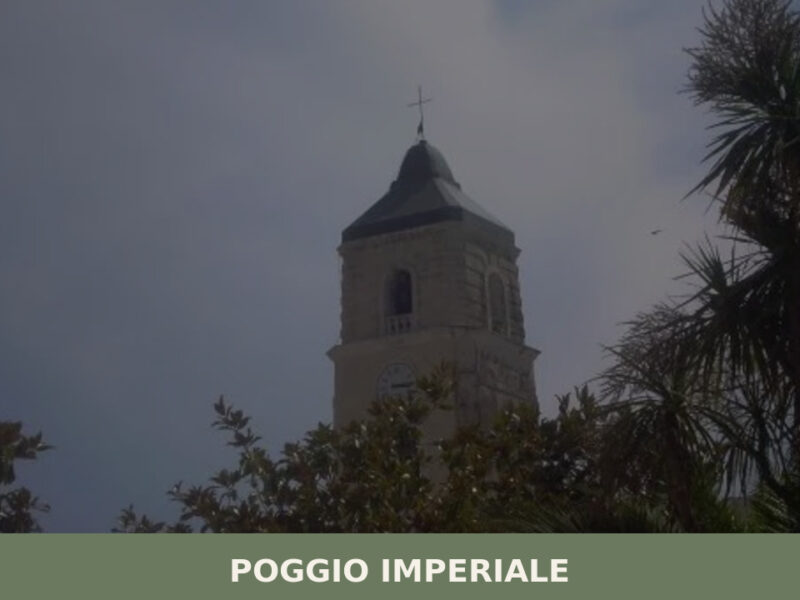
A planned eighteenth-century village on the Tavoliere plain, Poggio Imperiale offers grid-pattern streets, agricultural landscapes, and the unhurried rhythms of northern Puglia.
If you are looking to discover the most fascinating Orta Nova attractions, you are in the right place. This Apulian village, located in the heart of the Tavoliere delle Puglie just 24.7 km from Foggia, holds historical and cultural treasures that tell centuries of Italian history. With its 16,600 inhabitants, Orta Nova offers a perfect […]
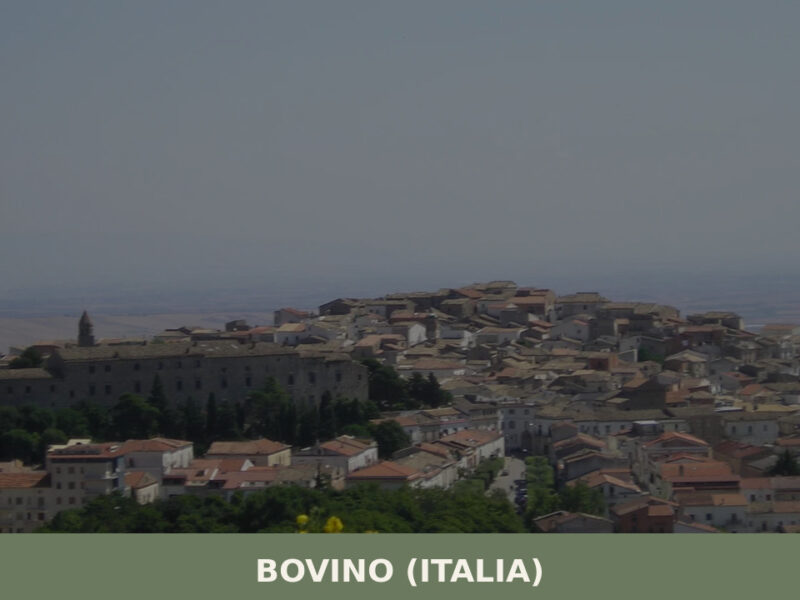
Perched on a Daunia hilltop, Bovino is a stunning medieval village in Puglia. Discover its castle, cathedral, and authentic flavours.
📝 Incorrect information or updates?
Help us keep the Volturino page accurate and up to date.