


Arcisate
In the 9th century, Arcisate, with its 9,779 inhabitants and an altitude of 372 meters above sea level, was already mentioned in Lombard documents as the core of a parish church district. This center in Valceresio, in the province of Varese, shows a layering of eras evident in its architecture and landscape. For those wondering […]
Discover Arcisate
In the 9th century, Arcisate, with its 9,779 inhabitants and an altitude of 372 meters above sea level, was already mentioned in Lombard documents as the core of a parish church district. This center in Valceresio, in the province of Varese, shows a layering of eras evident in its architecture and landscape. For those wondering what to see in Arcisate, the itinerary passes through ancient religious buildings, historic residences, and natural views that document its evolution from a Roman settlement to an industrial hub, and finally, to a residential area. Its past is readable in the structures that form today’s urban fabric, offering insights to understand the history of pre-Alpine Lombardy.
History and Origins of Arcisate
The origins of Arcisate date back to the Roman era, with its name possibly deriving from Arx Isatis, indicating a stronghold near the river Isatis. Its strategic position along communication routes between the Varese area and Switzerland determined its importance from antiquity. During the Lombard period, Arcisate acquired a prominent role as the center of a pieve, an ecclesiastical institution with jurisdiction over a vast surrounding territory. 9th-century documents attest to this function, highlighting its religious and administrative significance.
During the Middle Ages, control of the village was contested between powerful Milanese families, such as the Torriani and the Visconti, who influenced its political and social development. Its economy, traditionally linked to agriculture and livestock farming, underwent a significant transformation starting from the 19th century with the advent of industrialization. The presence of a cement factory and textile mills left visible traces in the landscape and the community’s labor history, shaping the identity of the place up to the 20th century. For further details, you can consult the dedicated page on Wikipedia.
What to see in Arcisate: 5 key attractions
For those wishing to discover what to see in Arcisate, the village offers several points of interest that narrate its historical and cultural evolution. Here are five places that deserve attention:
Pieve di San Vittore
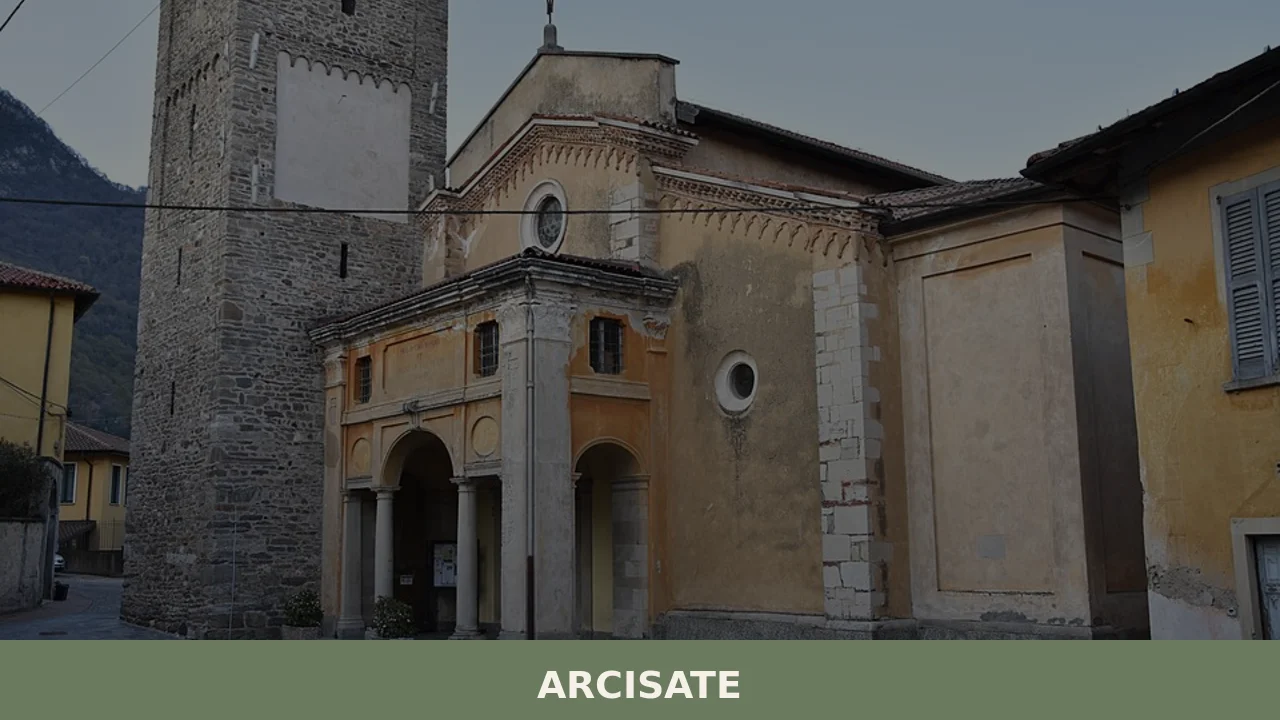
The Pieve di San Vittore represents the historical religious heart of Arcisate. Its Romanesque foundations, dating back to the 11th-12th centuries, attest to its antiquity. The building has undergone modifications and enlargements over the centuries, but retains original architectural elements, including parts of the bell tower and wall sections. Dedicated to Saint Victor the Moor, patron saint of the village, it is an example of the historical layering of local worship.
Palazzo Sessa-Cicogna
This historic palace documents the presence of noble families and their influence on the territory. The building features architecture that reflects the eras in which it was constructed and modified, with details that allow observation of past residential styles. Its structure is a landmark in the urban planning of the village, indicating a period of prosperity and civic importance.
Civic Tower
A distinctive element of Arcisate’s center, the Civic Tower stands as an urban landmark. Often integrated with or adjacent to municipal buildings, its presence highlights the administrative and public function of the place. Although its precise dating may vary, the tower is a symbol of the community and its civic organization throughout the centuries.
Pissaboda Valley
For those seeking a natural dimension, the Pissaboda Valley offers a path along a stream that passes through a wooded environment. This area allows observation of the local flora and fauna typical of Valceresio. It is a suitable place for walks and for connecting with the pre-Alpine landscape surrounding the inhabited center of Arcisate.
Mills of Valceresio (and Mulino del Gaggio)
The traces of ancient mills along the waterways of Valceresio, such as Mulino del Gaggio, document the hydraulic activity and pre-industrial economy of the area. These sites present the remains or modified structures of buildings that harnessed water power for milling or other processes, offering insight into the economic and technological life of the village’s agricultural and artisanal past.
Traditional Cuisine and Local Products
The gastronomic tradition of Arcisate fits into the broader culinary context of the Varese area and pre-Alpine Lombardy, characterized by hearty dishes and distinct flavors. Among the most representative preparations is risotto con il pesce persico (risotto with perch), which takes advantage of the proximity to the lakes and the availability of fresh fish. Another staple dish is polenta e bruscitti, a finely chopped meat stew, often beef, slow-cooked with wine and aromatics, which accompanies polenta, a staple of the local diet.
Regarding local products, the territory offers specific excellences. Nearby, Asparago di Cantello IGP (Cantello Asparagus PGI) is cultivated, a horticultural product renowned for its organoleptic qualities. The pre-Alpine area is also known for honey production, such as Miele Varesino DOP (Varese Honey PDO), which features various floral varieties. There are also cured meats like luganega, a fresh sausage typical of Lombardy, and fresh or aged cheeses that reflect the region’s dairy tradition, often derived from local farms. For further information on the area, you can consult the official website of the Municipality of Arcisate or the section dedicated to Lombardy on Italia.it.
When to Visit Arcisate: The Best Time
Arcisate is suitable for visits in different seasons, each with its specific characteristics. Spring and autumn are ideal periods for exploring the village and its natural surroundings, thanks to mild temperatures that make walks in the Pissaboda Valley and on the hillside trails pleasant. The colors of the vegetation during these months offer an interesting visual context.
On May 8th, the patron saint’s festival in honor of Saint Victor the Moor is celebrated, an opportunity to observe local traditions and participate in community events. Summer, with its climate tempered by the pre-Alpine altitudes, is suitable for those wishing to combine cultural visits with outdoor activities. Winter, though colder, can offer a more secluded atmosphere, with the possibility of observing the landscape under a different light.
How to Get to Arcisate
Arcisate is accessible via various communication routes. By car, the village can be reached by taking the A8 motorway (Milan-Varese) and then continuing on State Road 342. The distance from Varese is about 10 kilometers, while from Milan it is about 60 kilometers.
For those who prefer the train, Arcisate is served by the Varese-Porto Ceresio railway line, which offers connections to the provincial capital. The nearest airport is Milan Malpensa (MXP), located about 40 kilometers away, accessible via road and motorway connections.
Other Villages to Discover in Lombardy
The province of Varese and Lombardy offer a network of villages that present different characteristics, but all are situated in specific territorial contexts. A short distance from Arcisate, you will find Agra, a village that develops on the heights overlooking Lake Maggiore. Its position offers a different perspective on the pre-Alpine and lake landscape, with architecture that adapts to the terrain’s morphology.
Also in the Varese area, but in a position closer to the provincial capital, you can explore Barasso. This village, also classified as a hillside village, presents its own historical and urban identity. Its proximity to Varese allows for combining a visit to Barasso with exploring the city and its surroundings, offering another opportunity to understand the variety of Lombard settlements.



📝 Incorrect information or updates?
Help us keep the Arcisate page accurate and up to date.