Twin castle ruins, a medieval archaeological museum, and the secluded mountain hamlet of Porzûs — Attimis reveals Friuli’s layered history in a quiet valley near Udine.
Morning light falls across a valley floor where two ruined castles face each other from opposing ridgelines, their broken walls still holding the shape of medieval ambition. Below them, the small settlement of Attimis — home to just 1,644 people — spreads quietly at 195 metres above sea level in the province of Udine. The air carries the damp green scent of pre-Alpine foothills. Anyone asking what to see in Attimis will find that the answer begins with those twin fortifications and extends into layers of history pressed deep into this Friulian landscape.
The name Attimis derives from the noble family of the same name — the Lords of Attimis — who held power in this stretch of the Friulian hills from at least the twelfth century. Their influence was substantial enough to warrant not one but two castles: the Castello Superiore (Upper Castle) and the Castello Inferiore (Lower Castle), constructed on the ridges flanking the settlement. The Upper Castle dates to approximately 1100 and served as the original seat of the dynasty; the Lower Castle was built later in the same century, possibly to accommodate a growing lineage or to reinforce territorial control over the valley below.
Both fortifications suffered severe damage over the centuries — earthquakes, sieges, and the slow erosion of abandonment all took their toll. The catastrophic 1976 Friuli earthquake further compromised what remained of these structures. Yet the ruins endured, and archaeological excavations conducted in the decades following the earthquake yielded a remarkable trove of medieval artefacts: ceramics, weapons, coins, and everyday objects that would eventually fill a dedicated museum in the village centre.
The municipality’s territory extends beyond the valley settlement into the surrounding hills and includes the mountain hamlet of Porzûs, a name that carries a heavier, more recent weight. In February 1945, Porzûs was the site of a brutal partisan massacre during the final months of World War II, when communist Garibaldi partisans killed members of the Osoppo Brigade, a non-communist resistance formation. The event remains one of the most painful and contested episodes of the Italian Resistance, studied by historians and memorialised at the site.
The older of the two fortifications, dating to around 1100, sits on the higher ridge north of the village. What remains are substantial walls, partial towers, and the footprint of a once-formidable feudal seat. The climb is short but steep, and from the ruins the entire valley floor is visible — a strategic vantage that explains precisely why the Lords of Attimis chose this spot.
Built later in the twelfth century on the opposite ridge, the Lower Castle complements its older counterpart. Archaeological digs here produced a significant quantity of medieval household objects, now preserved in the village museum. The two castles seen together — facing each other across the valley — form a rare and striking example of paired feudal fortification in Friuli.
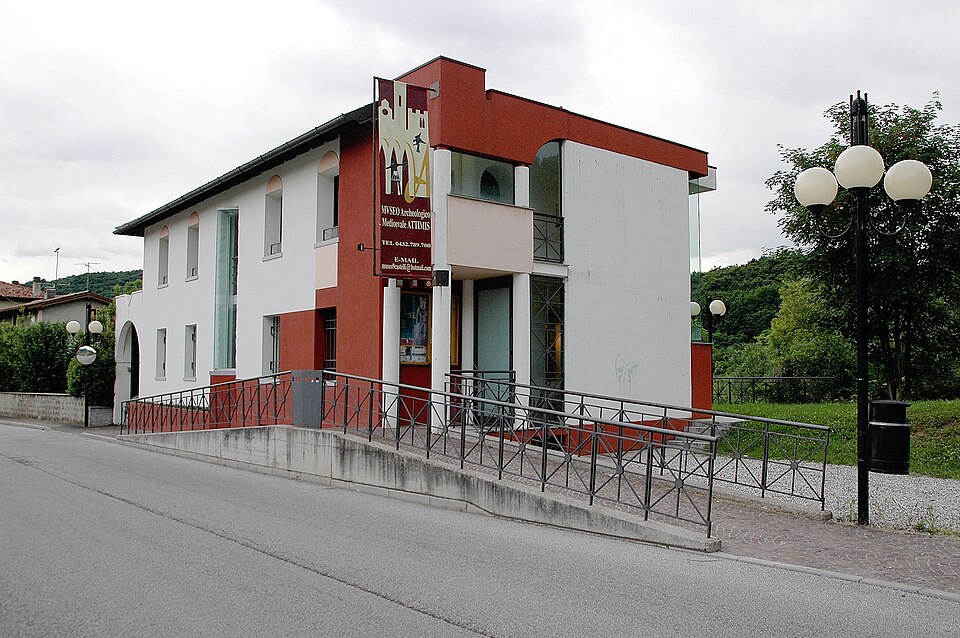
Housed in the village centre, this small museum displays the finds recovered during excavations of both castles. The collection includes ceramic fragments, iron tools, weaponry, and coins spanning several centuries of medieval life. It is a focused, well-curated institution that gives physical substance to the castle ruins visible from its doorstep.
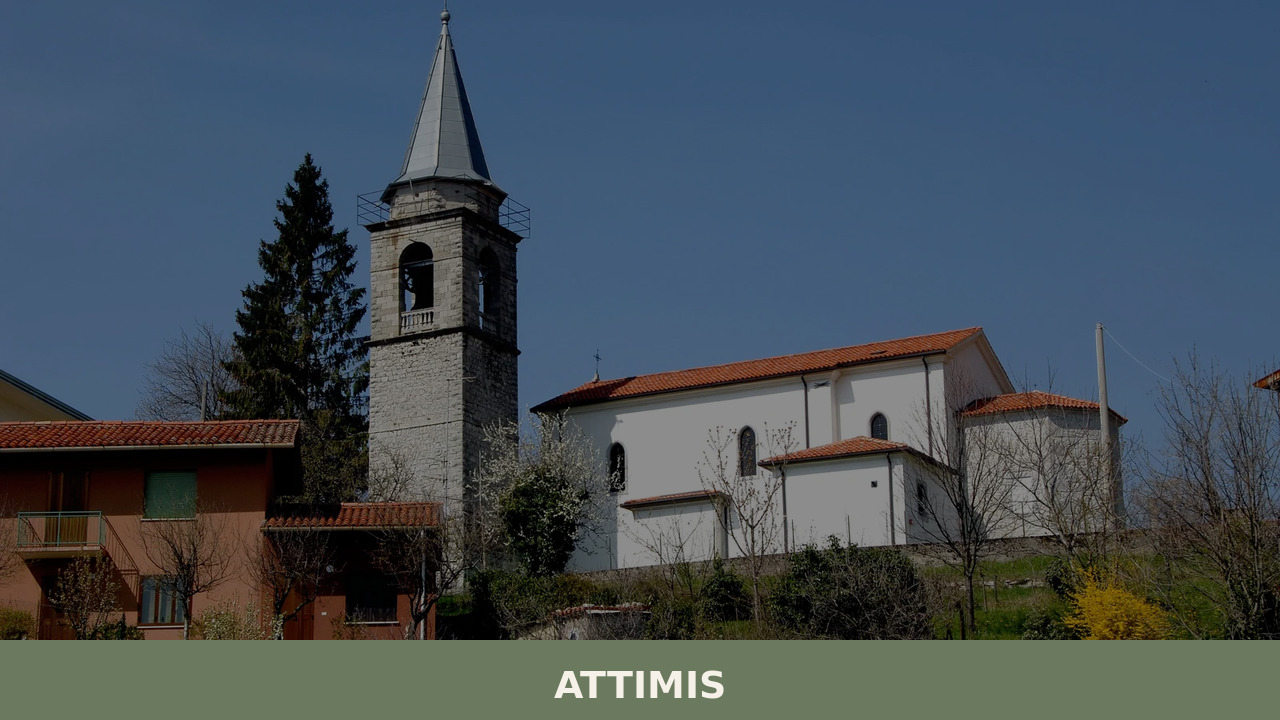
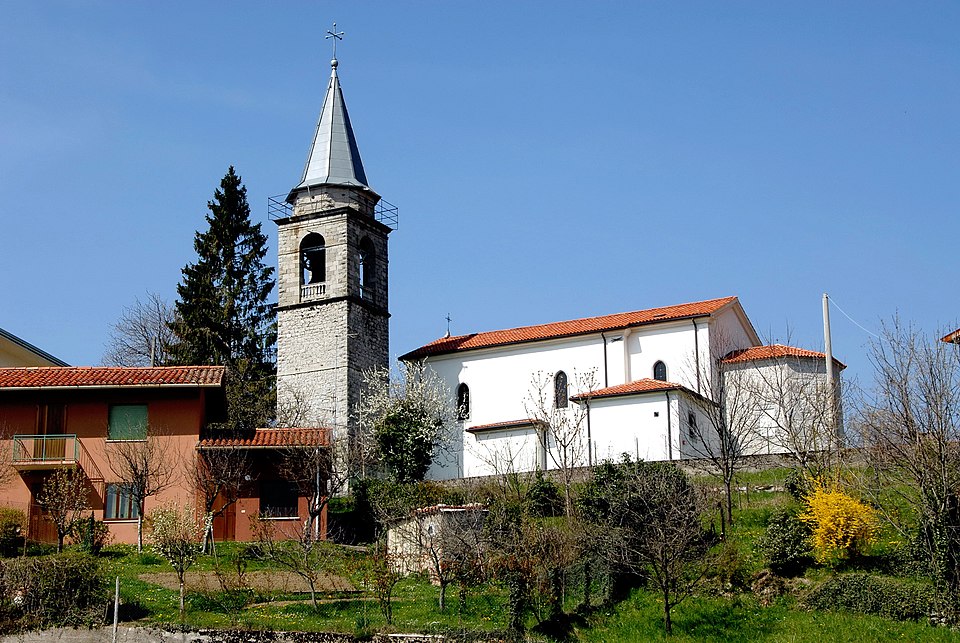
The hill hamlet of Porzûs sits at a higher elevation within the municipality, reached by a winding road through dense woodland. Its parish church, dedicated to Saints John the Baptist and Lucia, anchors a small cluster of stone buildings. The surrounding landscape — dolines, meadows, forest — has a quiet, withdrawn quality distinct from the valley below.
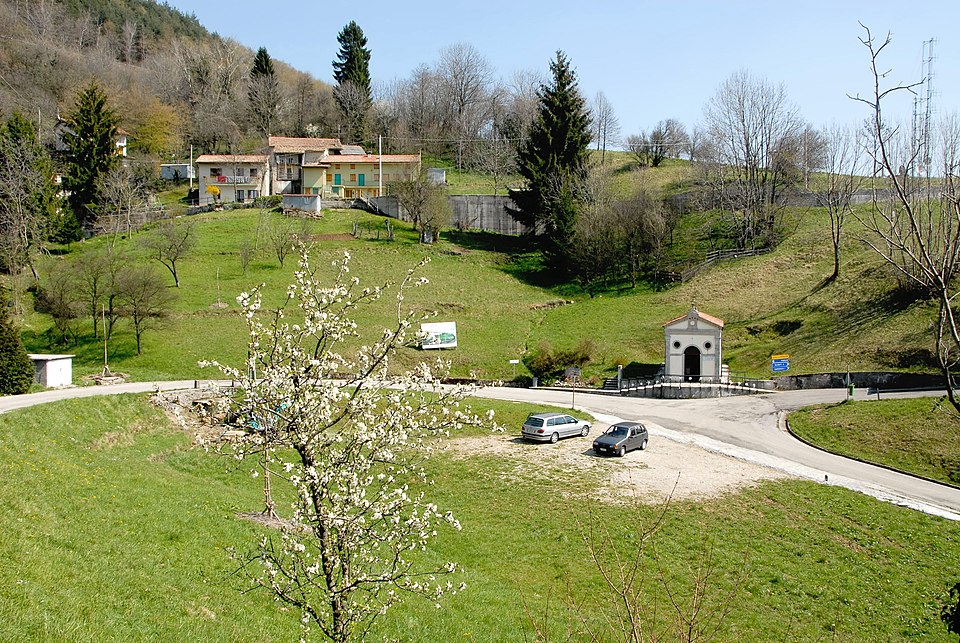
Near Porzûs, a natural dolina — a karst sinkhole characteristic of this limestone terrain — holds a small chapel dedicated to a Marian apparition. The setting is unusual and atmospheric: the chapel sits within the depression, surrounded by trees, as though the landscape itself has drawn inward around it. The site draws both pilgrims and those interested in the region’s distinctive geology.
Attimis sits within the broader culinary territory of the Friulian hills, where the table reflects both Alpine and lowland traditions. Frico — a crisp, golden disc of aged Montasio cheese, sometimes enriched with potatoes — is the emblematic dish of the region. Cjarsòns, the stuffed pasta particular to Friuli’s mountain communities, appear with sweet and savoury fillings depending on the valley. Polenta, made from local maize, remains a daily staple rather than a nostalgic relic, served alongside game, mushrooms gathered from the surrounding forests, and cured meats including the prized prosciutto of nearby San Daniele del Friuli, which holds DOP status.
The hills around Attimis fall within the broader winemaking area of the Friuli Colli Orientali DOC zone, one of Italy’s most respected white wine appellations. Ribolla Gialla, Friulano, and Picolit are among the varieties grown on the slopes east and south of the village. Local agriturismi and small trattorias in the municipality offer the most direct way to experience these flavours — meals tend to be unhurried, portioned generously, and paired with wines produced within a few kilometres of the table.
Late spring — May and June — brings the clearest conditions for walking the castle ruins and exploring the trails around Porzûs. The hillsides are deep green, wildflowers fill the meadows around the dolines, and daytime temperatures hover comfortably between 18 and 25 degrees Celsius. Autumn, particularly October, offers a second ideal window: the forests surrounding the hamlet shift colour, the grape harvest animates the nearby wine country, and the tourist density — never high here — drops further still.
Summer can be warm and occasionally humid in the valley, though the higher elevations around Porzûs remain cooler. Winter brings fog to the lowlands and occasional snow to the hills but also a stark beauty to the castle ruins. Local feast days and sagre (food festivals) tend to cluster in the warmer months; checking with the municipality or the regional tourism board of Friuli Venezia Giulia before visiting will help align a trip with any seasonal events.
Attimis lies approximately 18 kilometres north of Udine, reachable by car in about 25 minutes via the SP502. From the A23 motorway (Tarvisio–Udine), take the Udine Nord exit and follow signs toward Faedis and Attimis. The road climbs gently into the foothills — the transition from the flat Friulian plain to the first green ridges is quick and noticeable.
Attimis occupies a particular niche within Friuli’s geography — a foothill settlement where the Adriatic plain begins its slow rise toward the Carnic Alps. Travellers who appreciate the quiet density of this landscape will find similar rewards further into the mountains. Ampezzo, set deeper into the Carnic Alps to the north, offers a more pronounced Alpine character: higher elevations, timber architecture, and access to some of Friuli’s most dramatic mountain scenery. It makes a compelling continuation of any route that begins in Attimis’s pre-Alpine foothills.
Friuli Venezia Giulia as a whole remains one of Italy’s least-visited regions by international travellers, which means villages like Attimis and Ampezzo retain a texture and rhythm that more famous destinations have long since lost. The infrastructure is good, the distances are short, and the landscape shifts dramatically within the space of an hour’s drive — from lagoon to vineyard to castle ruin to Alpine pass. For those willing to move slowly and look closely, few corners of northern Italy reward the effort as consistently as this one.
📝 Incorrect information or updates?
Help us keep the Attimis page accurate and up to date.