


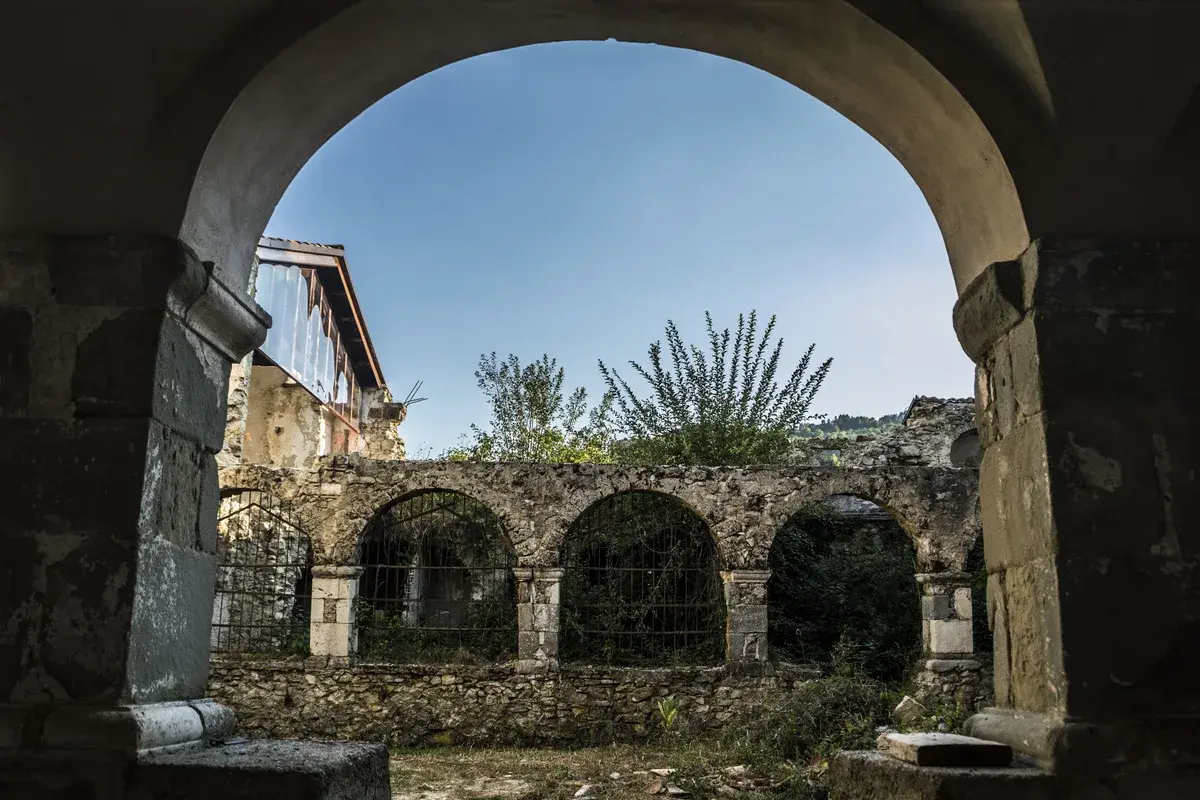
Borbona
What to see in Borbona: a mountain village at 760m in the province of Rieti with 643 residents. Discover the stone historic centre, 3 PAT products, and the 27 May patron feast.
Discover Borbona
At 760 metres above sea level, in the Apennine sector of the province of Rieti, Borbona has a population of 643 and occupies a slope of the mountain group separating Lazio from Abruzzo.
The village faces the Piana di Amatrice to the east and connects to a series of smaller settlements distributed along the Velino valleys.
For anyone wanting to understand what to see in Borbona, the starting point is the physical setting: a high-altitude territory that shaped the history of settlement, the agropastoral economy, and the architecture of the historic centre itself — built from local stone and designed to withstand the severe climate of the Lazio Apennines.
History and Origins of Borbona
According to available historical sources, the name Borbona is traced back to pre-Roman or Latin roots connected to the morphology of the landscape, with references to terms associated with water or springs in the area.
Like most Apennine settlements in central Lazio, the village developed at altitude for defensive purposes and to maintain control over the surrounding territory.
The area was already inhabited during the Roman period, as confirmed by material finds in the inner Sabina region, and it continued to serve as a reference point for local communities throughout the early Middle Ages, when the system of castles and rural settlements definitively shaped the human landscape of this part of the province of Rieti.
During the medieval period, Borbona fell within the orbit of the feudal powers that controlled the Velino and Tronto valleys.
The history of the village is intertwined with that of the great noble families who exercised jurisdiction over these territories between the 12th and 15th centuries, alternating between periods of dependence on Rome and periods of relative autonomy.
Its geographical position, close to the border with the Abruzzo region around L’Aquila, made it a place of passage and exchange, as well as a garrison for controlling the transhumance routes linking the Lazio plains with the high-altitude pastures of the central Apennines.
These routes, followed seasonally by shepherds and their flocks, left a deep mark on the economy and material culture of the village.
From the early modern period through the 19th century, Borbona followed the administrative history of the Kingdom of Naples and later the Papal States, forming part of the network of smaller communities in the mountain Sabina.
After Italian unification, the municipality was included in the province of L’Aquila before being transferred to the province of Rieti in the administrative reorganisation of 1927. The twentieth century brought the depopulation that affected the entire Lazio Apennines, gradually reducing the resident population.
The current 643 inhabitants are the result of this long demographic process, which nevertheless has not erased the continuity of settlement or the coherence of the historic centre’s urban fabric.
What to See in Borbona: Main Attractions
Historic Centre and Medieval Urban Layout
The old core of Borbona retains the typical structure of Apennine villages of medieval foundation: narrow streets, houses built close together in local limestone, passage arches, and carved doorways.
The urban layout adapts to the sloping terrain, following the contour lines of the hillside in a series of terraces.
Walking through the historic centre on foot allows visitors to read directly the constructive logic of a settlement designed for defence and communal life, with minimal but functional public spaces where the relationship between buildings reflects centuries of layered construction.
Parish Church of Santa Restituta
The church dedicated to Santa Restituta, patron saint of the municipality, is Borbona’s principal place of worship.
The building displays architectural features traceable to transformations that took place between the late medieval period and the Baroque era, with successive interventions that altered its original appearance.
The interior preserves devotional elements connected to the cult of the patron saint, whose feast day on 27 May is marked by religious rites involving the entire community.
The church occupies a central position within the urban fabric and represents the strongest point of identity for the village’s inhabitants.
Views over the Velino Massif and the Piana di Amatrice
It is well worth climbing to the highest points of the municipal territory to take in the open views towards the Velino-Sirente massif to the east and the Piana di Amatrice to the north-east.
At 760 metres altitude, Borbona offers broad vistas that, on clear days, extend to the peaks of the Abruzzo Apennines.
These viewpoints are among the most significant landscape elements of a visit, making it possible to appreciate the village’s position as a crossroads between Lazio and Abruzzo and to grasp the scale of the mountain landscape surrounding it.
Countryside and Trails of the Upper Velino Valley
The municipal territory of Borbona extends across a mountain band that offers hiking routes of varying difficulty, connected to the trail network of the Upper Velino Valley.
Those seeking direct contact with the Apennine landscape can follow paths that cross beech forests and high-altitude meadows — environments that fall within the protected area system of the central Apennines.
Summer and autumn are the best seasons for hiking, with trails linking Borbona to the neighbouring municipalities of the area.
Rural Architecture and Historic Fountains
Beyond the residential core, the territory of Borbona preserves minor rural structures of historical interest: stone sheepfolds, dry-stone walls, votive capitals, and public fountains that document the material culture of the agropastoral community.
The historic fountains, fed by springs in the area, were central nodes of daily life and still serve a practical function today alongside their documentary value.
Observing these elements distributed across the landscape helps visitors understand what to see in Borbona beyond the principal monuments, broadening the perspective to encompass the entire rural settlement system.
Traditional Food and Products of Borbona
The gastronomy of Borbona belongs to the culinary tradition of the mountain Sabina and the area spanning inner Lazio and the L’Aquila district of Abruzzo.
This zone has historically developed a cuisine built on local resources: cereals, pulses, sheep and pork, sheep’s cheeses, and products derived from extensive livestock farming.
Transhumance, which for centuries connected these uplands to the coastal plains, encouraged the exchange of techniques and ingredients between different communities, producing a food culture that is robust and firmly rooted in the material conditions of the mountain territory.
Among the dishes of the local tradition, preparations based on lamb and castrated mutton stand out — meats typical of Apennine sheep farming, cooked on the grill or braised with wild aromatic herbs.
Handmade pasta, in the varieties characteristic of the Lazio and Abruzzo tradition — such as maccheroni with mutton sauce or dried pulse soups — forms the backbone of home cooking.
Cured pork products, made using traditional butchery techniques, complete a culinary repertoire that prioritises preservation and the full use of locally available ingredients.
Several traditional Italian agri-food products (PAT) are recognised in the area that includes Borbona and its neighbouring municipalities.
Cacio fiore (PAT) — municipalities: Borbona, Amatrice, Accumoli, Leonessa, Micigliano, Posta, Cittareale, Castel Sant’Angelo sul Nera, Norcia — is a fresh, soft-paste cheese made from sheep’s milk, coagulated with vegetable rennet derived from the flower of the thistle or wild artichoke.
This ancient cheesemaking technique clearly distinguishes it from animal-rennet cheeses and gives it a delicate flavour with vegetal notes.
Guanciale (PAT) — municipalities: Borbona, Amatrice, Accumoli, Leonessa, Micigliano, Posta, Cittareale, Castel Sant’Angelo sul Nera, Norcia — is the cured meat obtained from the pig’s cheek, aged with salt, pepper, and spices, and a fundamental ingredient in numerous dishes of Lazio cuisine.
Guanciale amatriciano (PAT) — municipalities: Borbona, Amatrice, Accumoli, Leonessa, Micigliano, Posta, Cittareale, Castel Sant’Angelo sul Nera, Norcia — is the local variant directly linked to the Amatrice tradition, with specific organoleptic characteristics tied to the breed of pig and the processing methods of the area.
Local markets and summer food festivals are the best opportunities to purchase these products directly from producers.
In July and August, when the resident population swells with the return of emigrants and the arrival of visitors, gastronomic events are held that showcase the specialities of the territory.
Those visiting Borbona during these weeks can find stalls selling cheeses, cured meats, and mountain garden produce at the village’s small shops and at farms in the surrounding area.
Festivals, Events and Traditions of Borbona
The most important event in Borbona’s civic and religious calendar is the feast in honour of Santa Restituta of Sora, celebrated on 27 May.
Restituta is a Christian martyr venerated in several communities across Lazio and Campania, and her cult in Borbona takes the form of a celebration that includes a solemn Mass, a procession carrying the statue of the saint through the streets of the village, and moments of communal gathering.
In small mountain communities, the patron saint’s feast is far more than a religious event: it is the occasion on which bonds are renewed between residents and those who have left the village, many of whom return specifically for 27 May from larger cities across Lazio and the rest of Italy.
Alongside the patron feast, the cycle of local traditions follows the rhythm of the agricultural and pastoral seasons.
Practices connected to pig butchery in winter, cheesemaking in spring, and haymaking in summer once marked the rural calendar and continue to survive in more or less transformed forms.
The summer food festivals, widespread throughout the entire mountain Sabina area and the upper Velino Valley, offer collective opportunities to promote local products and pass on artisan and culinary skills to younger generations.
When to Visit Borbona and How to Get There
The best period to visit Borbona runs from May to October.
In spring, with the patron feast on 27 May, the village is lively and the surrounding landscape is in full bloom.
Summer, with temperatures milder than on the plains thanks to the 760-metre altitude, attracts those looking for a cooler stay without travelling too far from the capital. Autumn brings the colours of the Apennine forests and coincides with the mushroom and harvest season.
Those who prefer to avoid crowds — relative, given the size of the village — can choose June or September, when weather conditions remain good and visitor numbers are at their lowest.
For up-to-date information on events and municipal services, the reference point is the Borbona municipal website.
Travelling by car from Rome, the most direct route follows the A24 Rome–L’Aquila motorway to the Tornimparte exit, then continues along the state road towards Amatrice before turning off in the direction of Borbona: the distance from Rome is approximately 110 kilometres.
Alternatively, the SS4 Salaria offers a scenic route through the Sabina.
The nearest railway station is Rieti, served by the regional Rome–Rieti line, approximately 40 kilometres from the village.
From Rieti, regional bus services connect to municipalities in the Velino Valley.
For those arriving by air, the reference airport is Rome Fiumicino Airport, approximately 150 kilometres away, with frequent train connections to Rome from where onward travel to Rieti is possible.
Other Villages to Explore in Lazio
Those planning an itinerary through the region starting from Borbona can extend the route to other smaller centres in Lazio with similar or complementary characteristics.
In the northern part of the province of Viterbo, Proceno is a medieval village set on a tufa hill, with a well-preserved Visconti castle and a compact urban fabric that evokes the landscapes of northern Lazio.
Also in the Tuscia area, Arlena di Castro offers one of the most intact landscapes of the Lazio Maremma, with a medieval circuit of walls that clearly marks the boundary between the historic core and the surrounding farmland.
For those wishing to extend the itinerary further into the Tuscia, Onano, a small municipality on the Volsini plateau, has a medieval historic centre and a landscape dominated by the caldera of Lake Bolsena.
Further south, Latera sits on a tufa promontory at the edge of the Selva del Lamone Nature Reserve, in a natural setting of considerable environmental interest.
These villages, though geographically distant from Borbona, share the same settlement logic as the smaller centres of Lazio and give visitors the opportunity to build a varied journey across the region’s different territorial identities — from the Apennine mountains to the Maremma, from the Sabina hinterland to the volcanic Tuscia.
In Lazio More villages to discover
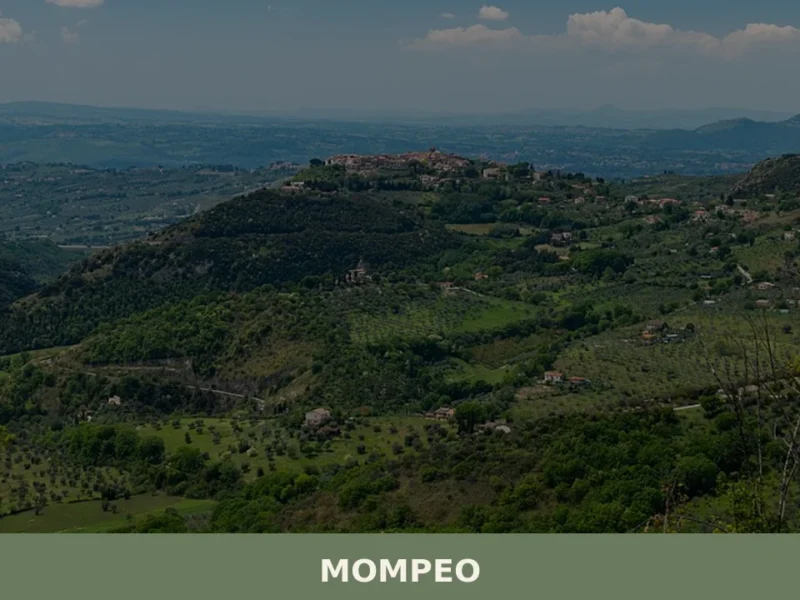
Mompeo
Discover Mompeo, a charming village in Lazio, Italy. Explore its rich history, stunning landscapes, and authentic Italian culture off the beaten path.
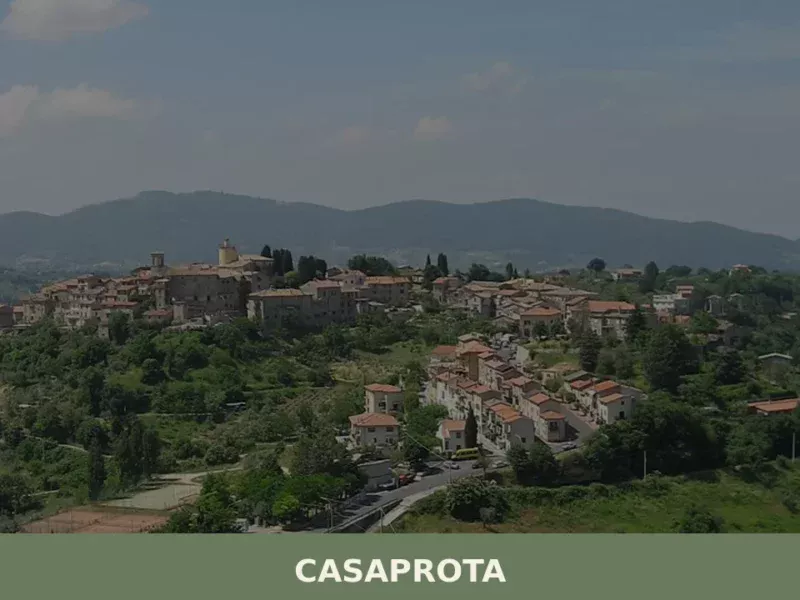
Casaprota
Discover Casaprota, a charming village in Lazio, Italy. Explore its history, culture, and scenic landscapes in the heart of the Italian countryside.
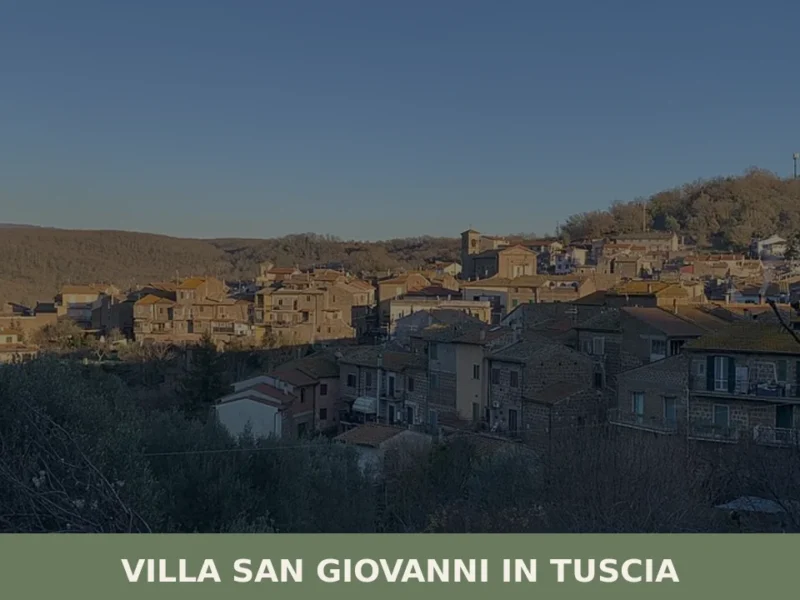
Villa San Giovanni in Tuscia
Villa San Giovanni in Tuscia has 1,196 inhabitants spread across a hilly territory at 329 metres above sea level, in the province of Viterbo. The settlement preserves a compact layout dating back to the feudal reorganisation of the late Middle Ages, when the village was under the control of baronial families that ruled upper Lazio. […]



📝 Incorrect information or updates?
Help us keep the Borbona page accurate and up to date.