


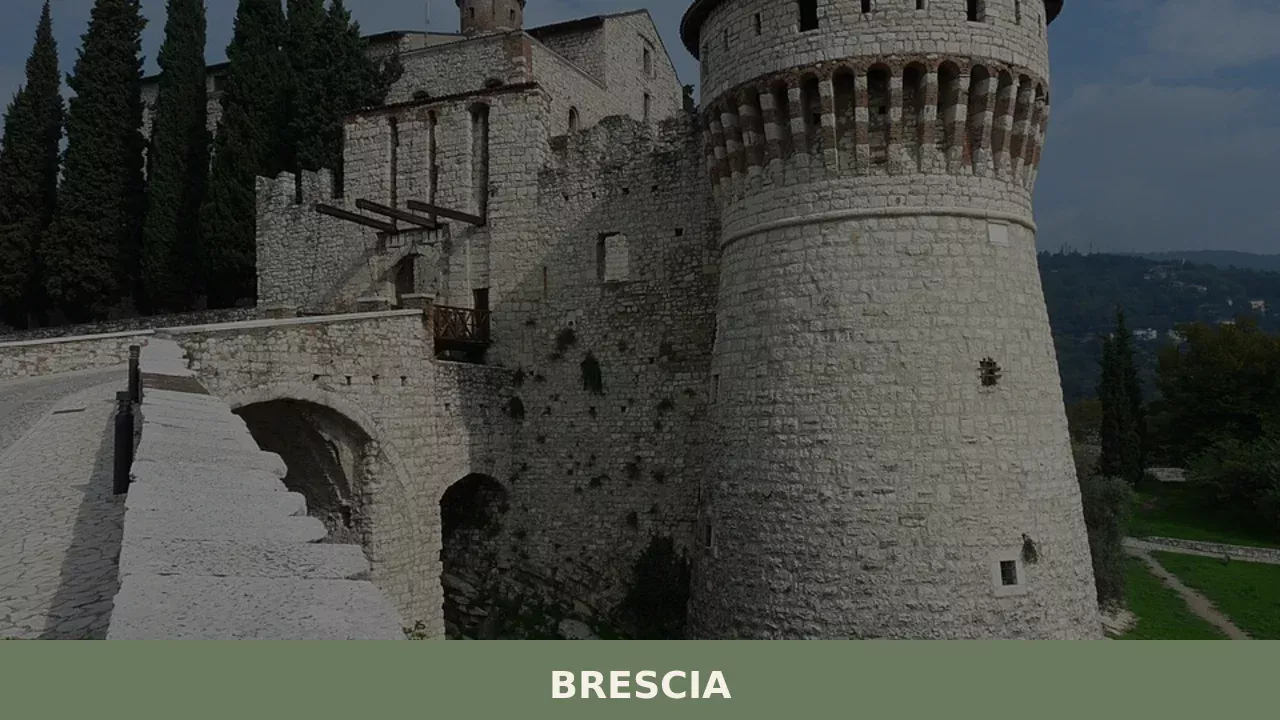
Brescia
In 1826, during the excavation of a house’s foundations on Via Musei, the Winged Victory emerged from the ground — a Roman bronze from the 1st century AD, nearly two metres tall, and the symbol of a city that has layered twenty-five centuries of history upon itself. Anyone wondering what to see in Brescia today […]
Discover Brescia
In 1826, during the excavation of a house’s foundations on Via Musei, the Winged Victory emerged from the ground — a Roman bronze from the 1st century AD, nearly two metres tall, and the symbol of a city that has layered twenty-five centuries of history upon itself. Anyone wondering what to see in Brescia today will find an answer in every square metre of the centre: Roman temples beneath Lombard churches, medieval towers alongside Renaissance loggias, neoclassical squares fading into the industrial districts of the twentieth century.
With its 196,446 inhabitants and an altitude of 149 metres above sea level, Brescia is Lombardy’s second-largest city by population, yet it retains an urban layout as readable as a geological map of Western civilisation.
History and origins of Brescia
The Latin name Brixia most likely derives from the Celtic root brig- or brix-, meaning a height or elevated place — a direct reference to the Cidneo hill where the Cenomani Gauls established the first settlement around the 5th–4th century BC. The city entered the Roman sphere of influence in 225 BC and became a civic colony in 89 BC, when it received Latin citizenship. During the Augustan era, between 73 and 74 AD, the Capitolium was built on the orders of Emperor Vespasian, establishing the sacred and civic axis of the city along what is now Via Musei. The etymology of the name, then, is no scholarly footnote: it tells the story of the original strategic choice — controlling the plain from the hilltop spur.
After the fall of the Western Roman Empire in 476, Brescia experienced a period of great prominence under the Lombards. King Desiderius and his wife Ansa founded the Monastery of San Salvatore-Santa Giulia in 753, which would become one of the most important monastic complexes in northern Italy. In 1238, the city was the scene of clashes with Frederick II of Swabia, who besieged it without managing to take it.
The episode strengthened Brescian civic identity. From 1426, with its allegiance to Venice, Brescia tied its fortunes to the Serenissima for nearly four centuries: a period in which the arms industry and ironworking flourished in the surrounding valleys, activities that earned it the name “Lioness of Italy” well before the poet Aleardo Aleardi coined the expression in 1856, referring to the Ten Days of anti-Austrian insurrection in March 1849.
Notable figures linked to the city include the mathematician Niccolò Tartaglia (1499–1557), the luthier Gasparo da Salò (1540–1609), considered one of the inventors of the modern violin, and Saint Angela Merici (1474–1540), founder of the Company of the Ursulines, proclaimed secondary patron saint in 2010. The population grew significantly during the 20th century: from around 73,000 inhabitants in the 1901 census to nearly 200,000 in the 1970s, driven by industrial expansion in the steel and engineering sectors.
Today Brescia is home to a museum complex declared a UNESCO World Heritage Site in 2011, together with the Capitolium archaeological area, under the designation “The Longobards in Italy. Places of Power”.
What to see in Brescia: 5 top attractions
1. Santa Giulia Museum Complex
The city museum occupies the entire perimeter of the former Benedictine monastery founded in 753 by Desiderius, the last king of the Lombards. The exhibition route covers 14,000 square metres, passing through the Lombard basilica of San Salvatore, the nuns’ choir, the Romanesque church of Santa Maria in Solario, and the Renaissance cloisters. Here the Cross of Desiderius is preserved, a 9th-century artefact in wood and gilded silver foil, studded with gems and cameos from the Roman era. The Winged Victory, after its 2020 restoration carried out by the Opificio delle Pietre Dure in Florence, has returned to this complex, displayed in the Capitolium connected to the museum.
2. Capitolium and Archaeological Park
The Roman temple of the Capitolium, erected in 73 AD under Vespasian, faces Via Musei with three cellae dedicated to Jupiter, Juno, and Minerva. The pronaos retains six Corinthian columns in Botticino stone, a local limestone with a fine grain and ivory-white colour. Below the modern street level, opus sectile floors and wall frescoes are visible, uncovered during 19th-century excavations. The archaeological park also includes the remains of the Roman theatre, the forum, and the Republican sanctuary, dating from between the 1st century BC and the 1st century AD. This site is an integral part of the 2011 UNESCO designation.
3. Brescia Castle on Cidneo Hill
The fortress on Cidneo Hill, at an altitude of 250 metres, is one of the largest fortified structures in Italy, with a wall perimeter reaching 600 metres. The Visconti keep dates to the 14th century, but the defensive structures accumulated from the Roman period through to the Venetian modifications of the 16th century, when star-shaped bastions were added. Inside are the “Luigi Marzoli” Arms Museum, which houses one of Europe’s richest collections of armour and weapons from the 15th to the 18th century, and the Risorgimento Museum. The surrounding park, with its urban vineyard of Invernenga grapes, offers a direct view over the plain and the Pre-Alps.
4. Piazza della Loggia
Piazza della Loggia was designed from 1433 onwards as the representative centre of civic power under Venetian rule. The Palazzo della Loggia, seat of the municipal government, was begun in 1492 and completed in the 18th century; according to sources, Jacopo Sansovino and Andrea Palladio also contributed to its design. On the south side of the square stands the Clock Tower, built in 1546, topped by two bronze automata — known as “i Macc de le ure” — that strike the hours on the bell. The square is also a place of civic remembrance: on 28 May 1974, during an anti-fascist demonstration, a bomb killed eight people and injured over one hundred.
5. Duomo Vecchio and Duomo Nuovo
The Duomo Vecchio, known as “La Rotonda”, is an 11th-century Romanesque co-cathedral with a circular plan — a rare typology in Italy. The building stands on an earlier early-Christian basilica and houses works by Moretto da Brescia and Romanino, two of the foremost Brescian painters of the 16th century. Next to it rises the Duomo Nuovo, the cathedral dedicated to Santa Maria Assunta, whose construction began in 1604 and was completed only in 1825 with the finishing of the Botticino marble dome, 80 metres tall and the third largest in Italy after St Peter’s in Rome and Santa Maria del Fiore in Florence.
What to eat in Brescia: traditional cuisine and local products
Brescia’s gastronomic tradition is the result of a geographical position that connects the cereal-growing plain with the pre-Alpine valleys, the shores of Lake Garda, and the hilly Franciacorta area.
The cuisine reflects a farming and working-class past: substantial dishes built around polenta, alpine cheeses, and slow-cooked meats. The influence of Venetian rule can be read in the use of spices and the presence of baccalà, while the valleys brought game and smoked cured meats to the table. It is a cuisine that favours the patient transformation of ingredients over their variety.
The city’s most representative dish is the spiedo bresciano, a preparation involving the slow, simultaneous cooking of various cuts of meat — small birds, pork, rabbit, chicken — threaded onto long skewers and roasted for hours before the embers, basted with melted butter and sage. Cooking can last from four to six hours. Alongside the spiedo, casoncelli bresciani are the local filled pasta: half-moon shapes of egg dough stuffed with a mixture of bread, grated cheese, butter, eggs, and parsley — a leaner version than their Bergamo cousins — dressed with melted butter and sage. In the cold months, manzo all’olio is prepared: beef slow-cooked with extra virgin olive oil from the Brescian shore of Lake Garda.
The Brescia area is linked to notable dairy production.
Grana Padano DOP, also produced on the Brescian plain, is the most widespread hard cheese in the area. From the valleys come alpine cheeses such as Bagòss, a hard cheese produced in the municipality of Bagolino from whole cow’s milk coloured with saffron: a well-known and documented product, even though it does not hold a DOP designation. Garda DOP extra virgin olive oil, in its Brescian sub-zone, is obtained predominantly from olives of the Casaliva, Leccino, and Frantoio cultivars, grown on the western shores of the lake. The cured-meat tradition of the valleys includes the production of smoked salumi, particularly in the Val Camonica.
Brescia’s gastronomic calendar comes alive in autumn and winter, when village festivals celebrate the spiedo and polenta. In the city, the Piazza Arnaldo market — located in the former public granary of 1823 — is a reference point for local products, along with the weekly neighbourhood markets. The Feast of Saints Faustino and Giovita, on 15 February, is accompanied by the traditional San Faustino Fair, which since the Middle Ages has brought food stalls, crafts, and local products to the centre, turning the city’s streets into an open-air market for three consecutive days.
On the wine front, the area is dominated by Franciacorta DOCG, a designation that since 1995 has identified traditional-method sparkling wines produced in the hilly zone west of the city, from Chardonnay, Pinot Noir, and Pinot Blanc grapes.
It was the first Italian DOCG reserved exclusively for wines produced by secondary fermentation in the bottle. Alongside Franciacorta, the Brescia area also includes the Lugana DOC, a white based on Trebbiano di Lugana (Turbiana) grown on the southern shores of Lake Garda, and the Botticino DOC, a robust red produced from the hills immediately east of the city.
When to visit Brescia: the best time
Spring, from April to June, is the best period to visit Brescia: temperatures range between 12 and 25 degrees, the days are long, and the cultural calendar intensifies. In May the Mille Miglia takes place, the historic re-enactment of the car race founded in 1927, which starts and finishes on Viale Venezia: for four days the city fills with vintage cars and an international audience.
In summer, July and August can reach 35 degrees on the plain, but evenings host music and theatre seasons in the castle and the cloisters. The patronal feast of Saints Faustino and Giovita, on 15 February, coincides with the large fair that draws visitors from across the province: those who prefer a less crowded experience can aim for October and November, when tourist numbers drop and the Franciacorta wineries open their doors for autumn tastings.
Visitors interested in archaeology and museums will find ideal conditions between September and November, when temperatures settle around 10–20 degrees and museum sites are less congested. Those combining Brescia with excursions to Lake Garda or the pre-Alpine valleys should favour the period between May and September. In winter, from December to February, the city takes on a more intimate character: Christmas markets enliven Piazza Paolo VI and Piazza della Loggia, and the fog of the plain — a climatic trait that defines winter in Lombardy — adds a distinctive dimension to visiting the Roman and medieval sites.
How to get to Brescia
Brescia lies on the A4 Milan–Venice motorway: the “Brescia Centro” exit is about 95 kilometres from Milan (one hour’s drive) and 105 kilometres from Verona (about one hour and ten minutes).
From the south, the A21 Turin–Brescia motorway connects the city with Cremona (about 55 km) and Piacenza. Brescia railway station, on the Milan–Venice high-speed line, is served by Frecciarossa and Frecciargento trains: Milan Centrale can be reached in about 55 minutes, Venice Santa Lucia in one hour and forty minutes.
The nearest airport is Gabriele D’Annunzio at Brescia-Montichiari, about 20 kilometres from the centre, connected by shuttle services. Alternatively, Orio al Serio airport (Bergamo) is 55 kilometres away and Verona-Villafranca airport about 60 kilometres, both well connected by road transport services. Since 2013, Brescia has had an automated light metro line that crosses the city from north-east to south-west along a 13.7-kilometre route with 17 stations, facilitating travel between the railway station, the historic centre, and the outer districts.
Other villages to explore in Lombardy
Lombardy is a region where urban dimensions change radically within a few dozen kilometres.
About 120 kilometres west of Brescia, in the province of Varese, Besnate offers a stark contrast: a small centre of a few thousand inhabitants in the Ticino Park area, where the rural character and the proximity to the river reveal a different side of the region. Visiting Besnate after Brescia allows you to observe how the same Lombard matrix — the agricultural imprint, the architectural sobriety, the relationship with water — plays out on a completely different scale. The drive takes about one hour and thirty minutes via the A4 towards Milan and then the A8 towards Varese.
Further north, also in the province of Varese, Agra sits in the Valcuvia at about 600 metres altitude, with a handful of residents and a position overlooking Lake Lugano. From Brescia the journey is about 170 kilometres, with a driving time of roughly two hours. An itinerary combining Brescia, Besnate, and Agra forms a trip across three scales of Lombard settlement — the city of nearly two hundred thousand inhabitants, the town on the Varese plain, the mountain hamlet of the Valcuvia — and three distinct landscapes that document the geographical variety of this region, from the cereal-growing plain to the wooded Pre-Alps and on to the ridges facing the Swiss border.
Getting there
Piazza della Loggia, 25121-25136 Brescia (BS)
In Lombardy More villages to discover
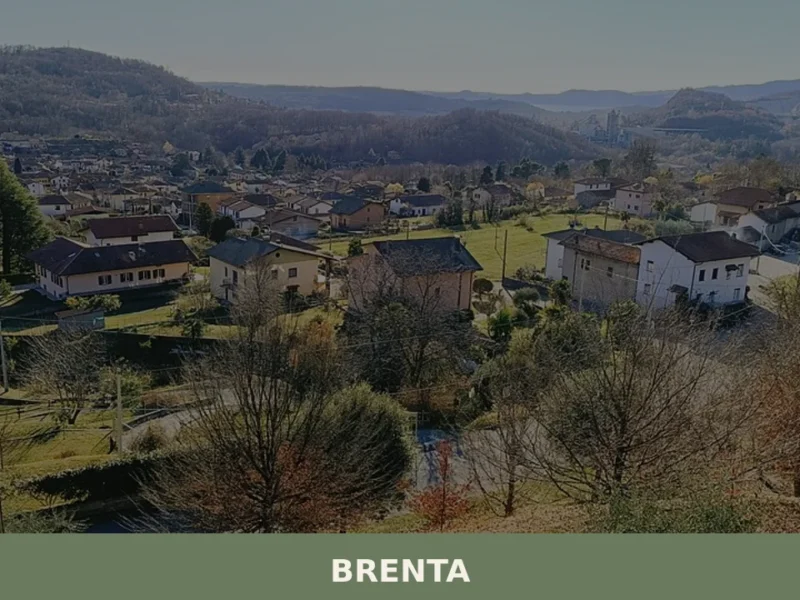
Brenta
Brenta has 1,715 inhabitants and sits at 276 metres above sea level, on the hilly belt separating Lake Varese from the western Po Plain. The municipality, part of the province of Varese, comprises a central nucleus and agricultural hamlets spread across terrain that slopes gently southward. Anyone looking into what to see in Brenta will […]
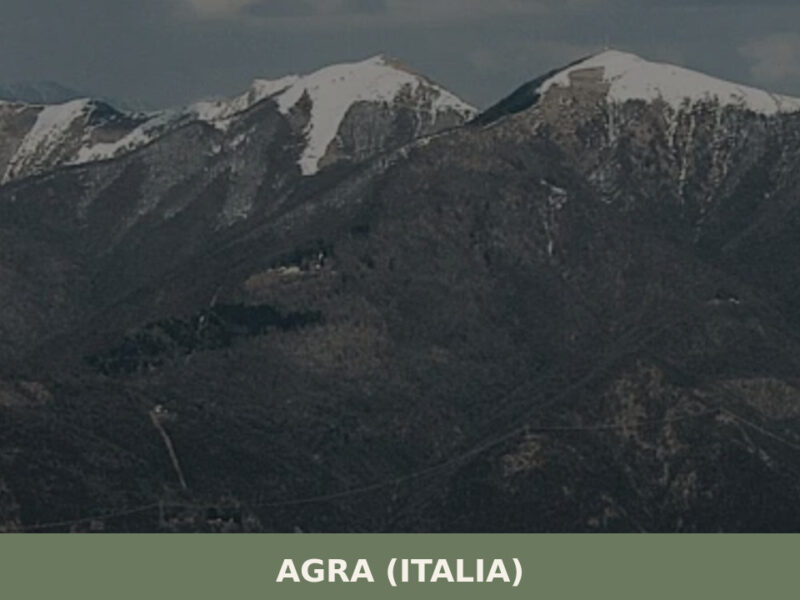
Agra (Italia)
A 391-inhabitant mountain village at 650 metres in Varese province, Agra sits at the Swiss border with trails to Monte Lema and centuries-old chestnut woods.
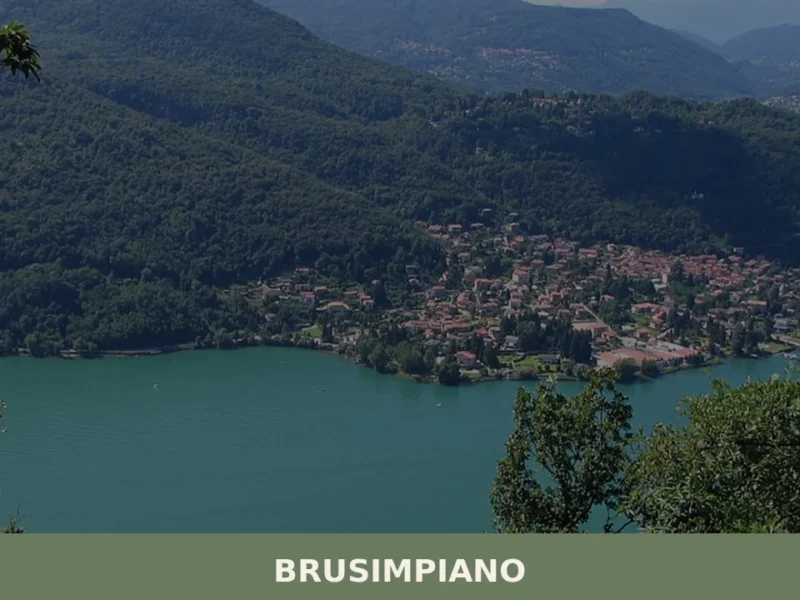
Brusimpiano
What to see in Brusimpiano: 1,229 inhabitants, 289m above Lake Lugano. Discover the Church of the Nativity, lakeside promenade and nature trails. Plan your visit now.
📝 Incorrect information or updates?
Help us keep the Brescia page accurate and up to date.