


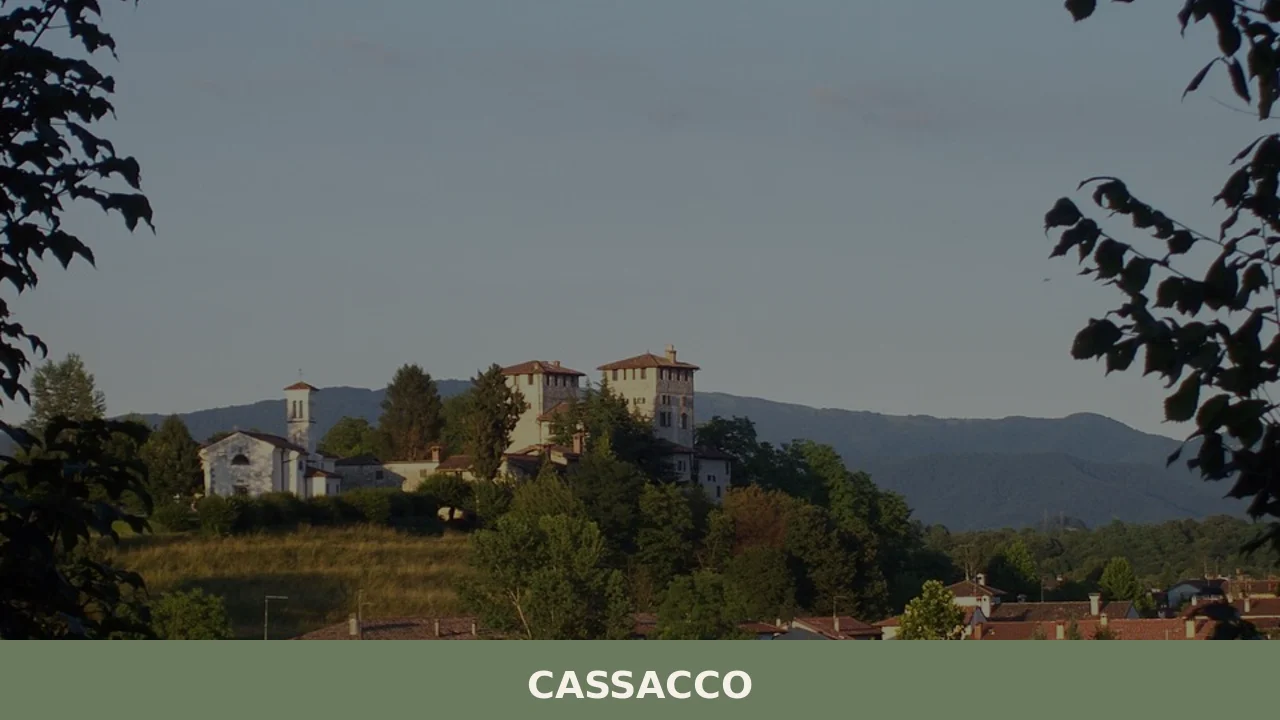
Cassacco
The Castle of Cassacco appears in documents of the Patriarchate of Aquileia as early as 1158, when Patriarch Ulrich II confirmed its possession to the local lords. Since then, that manor in a commanding position over the Friulian plain has shaped the life of an entire rural territory, defined by cultivated fields, rows of vines […]
Discover Cassacco
The Castle of Cassacco appears in documents of the Patriarchate of Aquileia as early as 1158, when Patriarch Ulrich II confirmed its possession to the local lords. Since then, that manor in a commanding position over the Friulian plain has shaped the life of an entire rural territory, defined by cultivated fields, rows of vines and inhabited centres distributed along the course of the Cormor stream.
Today the municipality has 2,902 inhabitants and sits at 179 metres above sea level, in the heart of the Province of Udine. Those wondering what to see in Cassacco will find here a concentration of feudal architecture, rural churches and an agricultural tradition that has carried on through the centuries without interruption, preserving the settlement pattern typical of hilly Friuli.
History and origins of Cassacco
The place name “Cassacco” most likely derives from a Latin personal name, Cassiacus or Cassius, followed by the predial suffix “-acum”, typical of Roman toponymy in Cisalpine Gaul. This formation indicates the existence of a fundus, a rural estate, belonging to a Roman landowner in the area between the morainic hills and the upper Friulian plain. The Roman presence in the territory is consistent with the proximity to the road that connected Aquileia to Noricum via the Monte Croce Carnico pass, a route documented from the 1st century BC.
The medieval period represents the phase in which Cassacco acquired a defined political and military identity.
The castle, documented from the 12th century, was the seat of a family of ministeriales in the service of the Patriarchate of Aquileia. In 1420, with the Venetian conquest of Friuli, the territory passed under the rule of the Serenissima, and the castle sustained damage during the wars between Venice and the Empire. The structure was subsequently remodelled during the 16th century. The village remained a modest agricultural centre, linked to cereal cultivation and viticulture — activities that still characterise the local economy today.
From a demographic standpoint, Cassacco has maintained a small population over the centuries, typical of rural municipalities in central Friuli. The earthquake of 6 May 1976, with its epicentre just a few kilometres away in the Gemona del Friuli area, caused significant damage in Cassacco as well, striking historic buildings and civilian dwellings. The reconstruction, completed during the 1980s, preserved the original urban layout.
The municipality is today divided into several hamlets — including Martinazzo, Conoglano and Raspano — and is part of the Unione Territoriale Intercomunale del Friuli Centrale, an administrative grouping involving several centres in the Udine province.
What to see in Cassacco: 5 key attractions
1. Castle of Cassacco
The Castle of Cassacco dominates the town from the top of a hill, a position chosen in the Middle Ages for visual control over the surrounding plain. The original layout dates to the 12th century, but the structures visible today are the result of later interventions, particularly those carried out in the 16th century after damage from the patriarchal wars. The complex features a main tower, a residential building and a partially preserved curtain wall. Following the 1976 earthquake it underwent restoration. Its mass of local limestone rises sharply above the rooftops, creating a recognisable silhouette visible from several kilometres across the plain.
2. Church of San Giovanni Battista
The parish church, dedicated to San Giovanni Battista — patron saint of the municipality, celebrated on 24 June — stands in the central nucleus of Cassacco. The current building is the result of reconstructions carried out over the centuries, but it retains the orientation and positioning typical of Friulian churches of medieval foundation. The interior, with a single nave, houses sacred furnishings datable to the 17th and 18th centuries. The bell tower, repaired after earthquake damage, serves as a visual reference point across the entire village landscape. The façade, simple and plastered, reflects the restrained taste of ecclesiastical architecture on the Udine plain.
3. Villa Zanon-Marchetti
Among the notable civic buildings in the municipal territory, Villa Zanon-Marchetti represents a significant example of Friulian manor houses built between the 17th and 18th centuries. The structure, with its characteristic central block and lateral barchesse used for agricultural activities, documents the Venetian villa model adapted to the Friulian rural context. The complex stands along one of the municipality’s historic roads and retains traces of the land organisation that shaped the countryside between Udine and the morainic hills for centuries. The villa is privately owned, but its front elevation is visible from the public road.
4. Cormor Stream and rural landscape
The Cormor stream, which crosses the territory of Cassacco in its western section, constitutes a landscape and environmental element of strong local identity. Its banks, lined with native riparian vegetation — willows, alders, field maples — offer routes suitable for walking and nature observation. The watercourse historically powered the mills in the area and influenced the agricultural organisation of surrounding estates. Walking along the Cormor in the morning hours means crossing an agricultural landscape still legible in its historic structure, with rows of trees, field hedgerows and cultivated plots following one after another without interruption.
5. Hamlets of Conoglano and Martinazzo
The hamlets of Conoglano and Martinazzo preserve the layout of the traditional Friulian rural village: stone and brick houses arranged around farmyard courtyards, small votive churches and unpaved roads connecting the settlements to the fields. In Conoglano there is a small rural chapel whose foundation is linked to local popular devotion. Martinazzo, more compact, retains a building fabric in which traces of the post-earthquake reconstruction are still visible.
Exploring these hamlets on foot or by bicycle allows visitors to grasp the dispersed nature of Friulian settlement, where the municipality does not correspond to a single centre but to a network of smaller villages.
What to eat in Cassacco: local cuisine and regional products
The cuisine of Cassacco belongs to the gastronomic tradition of central Friuli, a peasant cooking style built on simple ingredients and preservation techniques developed over centuries to withstand the harsh winters of the foothill plain. The influence of Habsburg culture and Venetian culture intertwine in a culinary repertoire where cereals, pork and dairy products play the leading role. The proximity to the morainic hills and the upper plain has fostered a dual agricultural vocation: the cultivation of maize and wheat in the valley floors, livestock rearing and viticulture on the more exposed slopes.
At the centre of the Friulian table sits polenta, prepared with stone-ground maize flour, served soft or grilled as an accompaniment to cheeses and meats. Frico, the signature dish of Friuli Venezia Giulia documented since the 15th century, consists of Montasio cheese cooked in a pan until it forms a crispy crust in its simplest version, or mixed with potatoes and onion in the softer variant. During the cold months, the preparation of jota is common — a thick soup made with beans, sauerkraut and potatoes, slow-cooked and served as a single-course meal. These dishes are still eaten today in homes and trattorias throughout the area.
The Friulian territory is known for several products with recognised quality status.
Montasio cheese, which holds DOP designation, is a cooked-paste cheese made from regional cow’s milk, available in different ageing stages — fresco, mezzano, stagionato and stravecchio. Prosciutto di San Daniele, also DOP, is produced approximately twenty kilometres from Cassacco, in the hilltop town of San Daniele del Friuli, where climatic conditions allow natural curing. Both products are available in food shops and local markets across the Udine area.
The patron saint’s feast of San Giovanni Battista, celebrated on 24 June, is the main occasion to sample local preparations in a convivial setting. During the summer, municipalities in the area organise village festivals where traditional Friulian dishes are cooked — frico with polenta, grilled meats, desserts made with seasonal fruit. The weekly market in Udine, reachable in about fifteen minutes by car, offers a wide selection of local agricultural products, including mountain-dairy cheeses, cured meats and seasonal vegetables.
From a wine perspective, Cassacco lies within the production area of the Friuli Colli Orientali and the Friuli Grave denomination, two DOC zones that cover the hilly belt and the upper plain of the Province of Udine.
Among the most widely planted indigenous grape varieties are Friulano (formerly known as Tocai), Ribolla Gialla and Refosco dal Peduncolo Rosso, the latter a full-bodied red suited to ageing. Ribolla Gialla has undergone a significant reappraisal in recent decades, both in its still version and in the skin-contact winemaking method typical of local tradition.
When to visit Cassacco: the best time of year
Spring, from April to June, is the most suitable period to visit Cassacco. Temperatures are mild, the fields are in full vegetative growth and the rural landscape reaches its peak of colour. 24 June, the day of the patron saint’s feast dedicated to San Giovanni Battista, coincides with the start of summer and offers the chance to take part in religious celebrations and community gatherings organised by locals. Summer is hot and sometimes humid on the Friulian plain — temperatures can exceed thirty degrees in July and August — but evenings remain pleasant thanks to the breeze descending from the Julian Pre-Alps.
Autumn, particularly between September and October, is the season of the grape harvest and maize picking, two events that animate the surrounding countryside with visible, tangible agricultural activity.
The colours of the riparian vegetation along the Cormor shift from green to yellow and red, making walks along the stream particularly rewarding. Winter is cold — minimum temperatures can drop below zero — and short days limit the hours of daylight, but those seeking quiet and a contemplative atmosphere will find the village a fitting destination. In every season, Cassacco works well as a base for exploring the area between Udine, the hills of eastern Friuli and the Gemona foothills.
How to reach Cassacco
Cassacco can be reached by car via the A23 Palmanova-Tarvisio motorway, exiting at the Udine Nord toll booth, from which the village is approximately eight kilometres to the north-east. From Udine city centre the drive takes about fifteen minutes, following regional road 13 towards Gemona. From Trieste the distance is approximately 85 kilometres (one hour’s drive), from Venice approximately 140 kilometres (one hour and thirty minutes via the A4 and A23).
The nearest railway station is Tricesimo, on the Udine-Tarvisio line, located about five kilometres from the centre of Cassacco.
Udine station, served by regional and high-speed trains, is the main hub for the area and is connected to the principal centres of Friuli and the Veneto. The reference airport is Trieste Airport at Ronchi dei Legionari, approximately 55 kilometres away (forty minutes by car). Local public transport is provided by SAF Udine bus services, which connect the municipality with the provincial capital on daily routes.
Other villages to discover in Friuli Venezia Giulia
South-west of Cassacco, on the plain extending towards the Tagliamento, lies Campoformido, the municipality known across Europe for the treaty signed by Napoleon Bonaparte on 17 October 1797, which sealed the end of the Republic of Venice. The distance between Cassacco and Campoformido is approximately twenty kilometres, drivable in twenty-five minutes. The two villages share a location in the peri-urban area of Udine but differ in their settlement structure: the first compact and hilly, the second spread across the open plain.
An itinerary linking them allows visitors to observe the gradual transition from the foothill belt to the lower Friulian plain.
Further south, towards the lagoon of Grado and Marano, Bagnaria Arsa offers a different example of a Friulian village, linked to land reclamation and intensive cereal production. The distance from Cassacco is approximately thirty-five kilometres (thirty minutes by car), a route that crosses the entire width of the Udine plain. Combining a visit to all three villages in a single day provides an understanding of the variety of the Friulian landscape — morainic hills, upper plain, lower plain — and the different settlement responses that local communities have developed over the centuries in relation to soil, water and available resources.
In Friuli Venezia Giulia More villages to discover
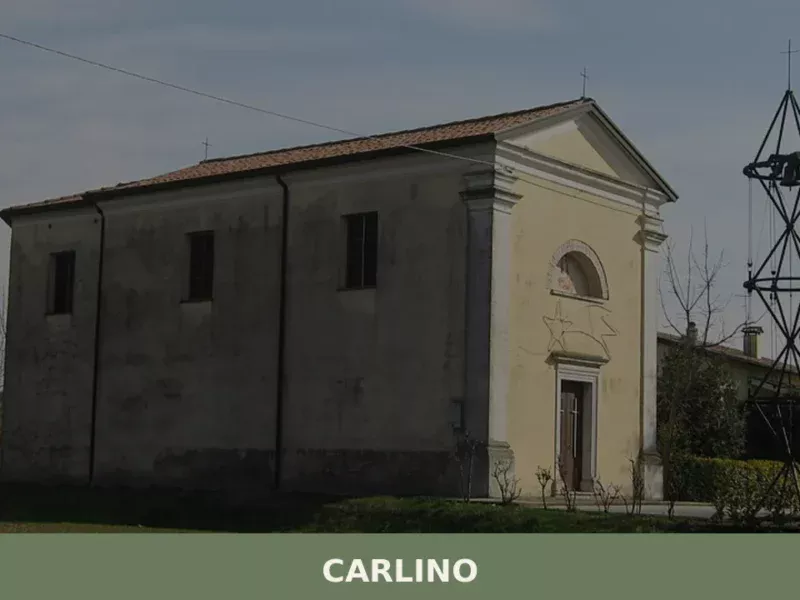
Carlino
The first thing you notice arriving in Carlino is the industrious silence of the Friulian plain, broken only by the rustle of water flowing through the drainage canals that cross the municipal territory. We are in the Bassa Friulana, province of Udine, just a few kilometres from the Marano Lagoon, in a land where agriculture […]
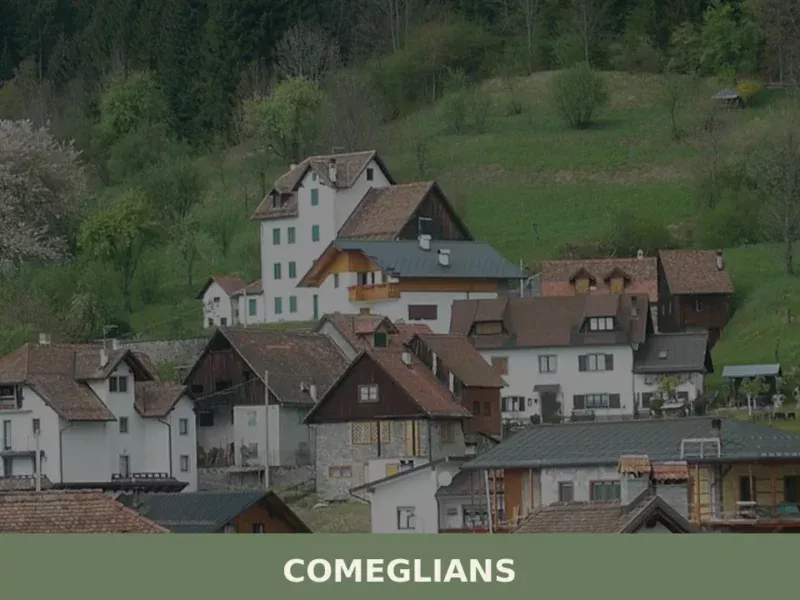
Comeglians
In the valley of the Degano torrent, along the road that climbs from Tolmezzo toward the Monte Croce Carnico pass, Comeglians marks a precise point on the map of Carnia: 553 metres above sea level, 533 inhabitants spread across the main village and the hamlets of Povolaro, Maranzanis, Tualis, and Calgaretto. The municipality is documented […]
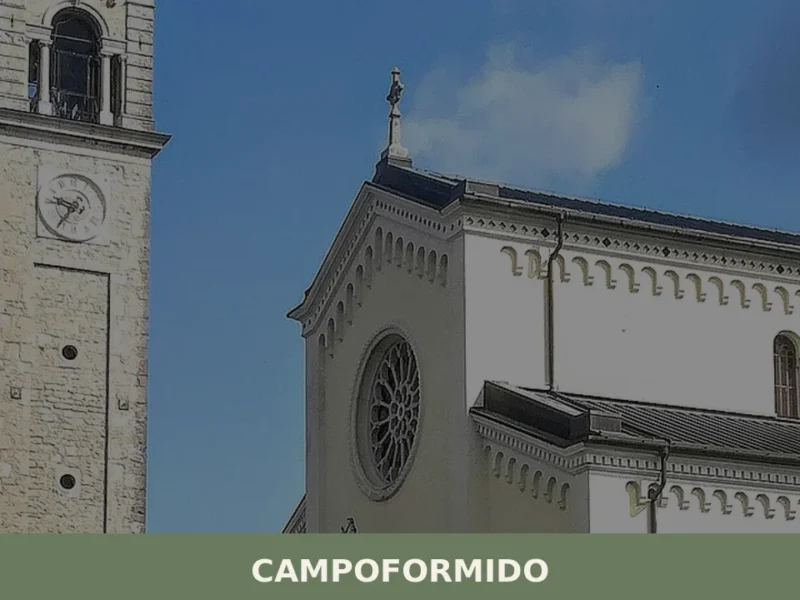
Campoformido
On 17 October 1797, in a country villa on the Friulian plain, plenipotentiaries representing Napoleon Bonaparte and the Austrian Empire signed the treaty that redrew the political map of Europe, erasing the Republic of Venice after more than a millennium of existence. That document bears the name of this place: Campoformido, a municipality of 7,799 […]





📝 Incorrect information or updates?
Help us keep the Cassacco page accurate and up to date.