


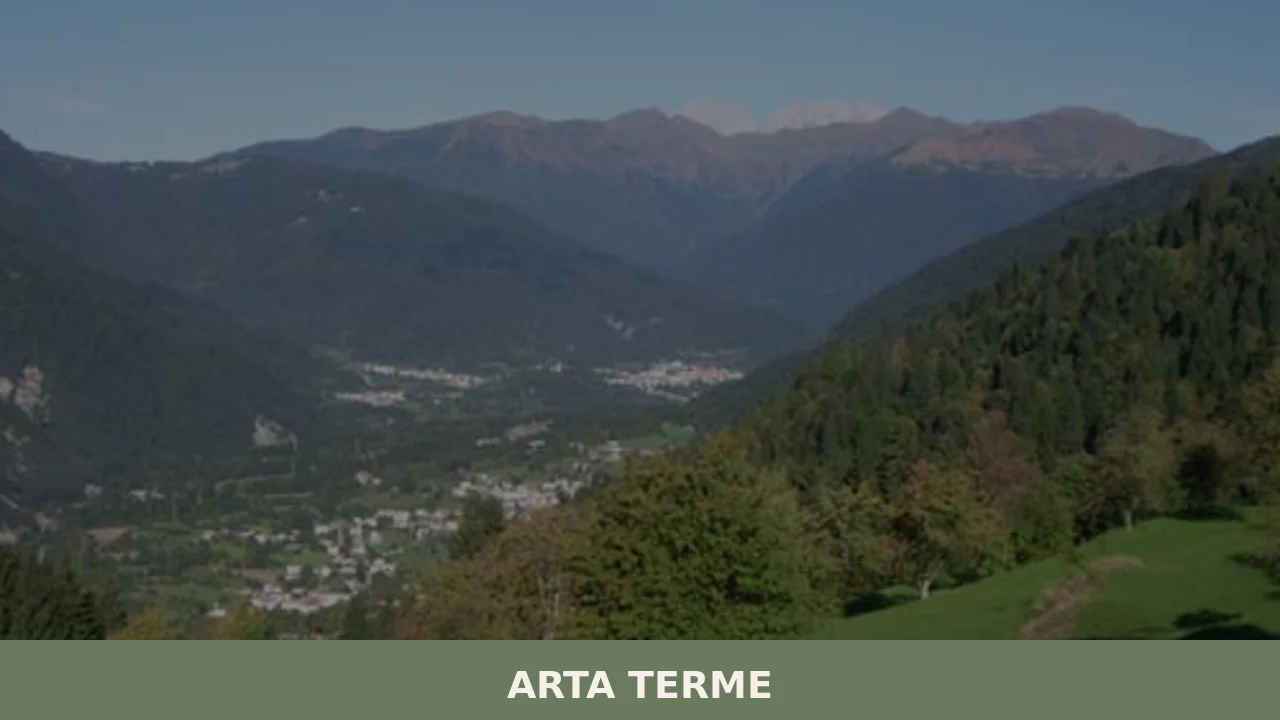
Arta Terme
 Hills
Hills
In 1687, the physician and naturalist Giovanni Battista De Candido published the first treatise on the healing properties of the sulphurous waters flowing from the Fonte Pudia spring in the territory of Arta. That document marked the beginning of a thermal spa tradition that would define the economic identity of this Carnic centre for the […]
Discover Arta Terme
In 1687, the physician and naturalist Giovanni Battista De Candido published the first treatise on the healing properties of the sulphurous waters flowing from the Fonte Pudia spring in the territory of Arta. That document marked the beginning of a thermal spa tradition that would define the economic identity of this Carnic centre for the following three centuries. Today, anyone wondering what to see in Arta Terme will find a town of 2,233 inhabitants set at 442 metres above sea level along the valley of the But torrent, with hamlets scattered across glacial terraces, a heritage of sacred architecture rooted in the Renaissance, and a network of trails that cross beech forests and pastures up to the foothills of the Carnic Alps.
History and origins of Arta Terme
The place name “Arta” first appears in a document from 1275, though its etymology remains debated: some scholars link it to the pre-Latin root *art-, referring to a rocky formation or an elevated point, while others associate it with the Celtic word for “stone”. Evidence of settlement in the area, however, dates back to the pre-Roman period, as suggested by finds recovered along the axis of the Val But, a natural corridor connecting the Friulian plain to the Monte Croce Carnico pass and, from there, to the Austrian side. The Romans travelled this route for both commercial and military purposes, and the presence of intermediate stations along the way is documented by sporadic finds of coins and ceramic fragments on the valley floor. Control of this transalpine road made the territory strategically important for centuries: during the Middle Ages, Carnia fell under the dominion of the Patriarchate of Aquileia, and Arta formed part of the parish system that organised the religious and civic life of the Friulian mountains.
The Parish Church of San Pietro, documented since the 13th century, served as the ecclesiastical point of reference for a vast surrounding territory. The fresco cycle preserved in the church, attributed to the workshop of Giovanni Antonio de’ Sacchis — known as Il Pordenone — or to his circle, places Arta within the circuit of Friulian Renaissance painting of the early 16th century. With the fall of the Patriarchate in 1420 and the transition to the Republic of Venice, Carnia maintained forms of local self-governance: the Community of Carnia, based in Tolmezzo, managed pastures, forests and collective rights, a model of participatory administration that left a deep mark on the organisation of the territory. Arta took part in this communal structure, and its hamlets — Piano d’Arta, Rivalpo, Cedarchis, Zuglio Basso — each retained their own distinct character.
The modern turning point came with the discovery and promotion of the sulphurous thermal waters. The Fonte Pudia, whose dialectal name refers to the pungent smell of sulphur, had been known for centuries by the local population, but it was the aforementioned 1687 treatise that brought it to the attention of the scientific community. In the 19th century, during Habsburg rule, the first purpose-built thermal establishments were constructed, and Arta gradually transformed into a spa resort frequented by visitors from across the entire eastern Alpine arc. The earthquake of 6 May 1976, which devastated Friuli, also struck Carnia: Arta suffered significant damage, but reconstruction was carried out with careful attention to the recovery of its architectural heritage. The addition of the designation “Terme” to the municipal name, made official during the 20th century, sealed the inseparable bond between the town and its hydrotherapeutic vocation. Today the village bears the visible traces of all these phases: medieval stonework, Renaissance frescoes, 19th-century spa architecture and the work of post-earthquake reconstruction.
What to see in Arta Terme: 5 top attractions
1. The Parish Church of San Pietro
The parish church is located in the hamlet of Zuglio, a few kilometres from the centre of Arta, and is one of the most important religious monuments in Carnia. The current building, with a late-Gothic layout and Renaissance additions, contains a cycle of early 16th-century frescoes of remarkable pictorial quality, with scenes of the Passion and figures of saints attributed to the circle of Il Pordenone. The stone portal and the spired bell tower dominate the small surrounding settlement. Visits are free during opening hours for worship; in the summer months it is often possible to access the small annexed museum of sacred art as well. The parish church deserves a longer stop to study the frescoes in detail.
2. The Fonte Pudia and the Thermal Baths
The sulphurous spring flows a short distance from the centre of Arta Terme and represents the historical and economic focal point of the village. The water, rich in hydrogen sulphide, reaches a temperature of around 10°C and is used for inhalation treatments, mud therapy and balneotherapy at the adjacent spa facility. The Fonte Pudia can be reached with a short walk from town along a signposted pedestrian path. The spring area is freely accessible, while thermal treatments require booking at the facility. The distinctive smell of sulphur can be detected from some distance away: it is the village’s most immediate sensory marker.
3. The Church of Saints Hermagoras and Fortunatus in Piano d’Arta
Dedicated to the patron saints Hermagoras and Fortunatus, celebrated on 12 July, this church stands in the hamlet of Piano d’Arta and is the main place of worship in the municipality. The building houses a carved wooden altarpiece of Carnic craftsmanship and several 17th-century altarpieces. The structure reflects the rebuilding that took place after the 1976 earthquake damage, but retains its original volumetric layout. Its position on a slight rise offers a broad view over the But valley and the surrounding mountains. Access is free during liturgical services. Every 12 July, the patron saint festival draws residents from the various hamlets for religious services and communal activities.
4. The Carnic Museum of Popular Arts “Michele Gortani” in Tolmezzo
Approximately 8 kilometres from Arta, in the main town of Tolmezzo, the museum founded by geologist and senator Michele Gortani in 1920 houses over four thousand objects of Carnic material culture: agricultural tools, textiles, carved furniture, kitchen utensils and traditional costumes. For those visiting Arta Terme, this stop provides the ethnographic context needed to understand daily life in the Friulian mountains between the 17th and 20th centuries. The museum is housed in Palazzo Campeis, an 18th-century building in the historic centre of Tolmezzo. Opening hours vary by season; it is advisable to check the institutional website before visiting.
5. The nature trails towards Monte Arvenis and Val Gleria
Several hiking trails depart from the municipal territory of Arta, climbing the valley slopes up to high-altitude pastures. The route towards Monte Arvenis (1,968 m) passes through beech forests, fir woods and clearings with progressively alpine vegetation. The Val Gleria, a side valley branching off from the Val But, offers a shorter itinerary also suitable for families, with the torrent flowing between erratic boulders and pools of clear water. The trails are marked by the CAI (Italian Alpine Club) and can be hiked from June to October without technical equipment. The elevation gain ranges from 500 to 1,500 metres depending on the chosen destination. These routes are the most direct way to experience the geological and botanical landscape of Carnia.
Traditional cuisine and local products
The cuisine of Arta Terme reflects the food traditions of Carnia, built on mountain ingredients and preservation techniques developed to endure long winters. The most representative dish is cjarsòns, half-moon-shaped ravioli with a filling that varies from hamlet to hamlet — and sometimes from family to family — combining potatoes, mountain herbs (mint, lemon balm, marjoram), raisins, grated chocolate, smoked ricotta and occasionally jam. They are dressed with melted butter and grated smoked ricotta, or with butter and sugar. There is no single recipe: the variability of the filling is itself a defining feature, and every Carnic cook defends her own version. Frico, a crispy disc of melted Montasio cheese with potatoes, is the other cornerstone dish: the crispy version uses only aged cheese, while the soft version adds finely sliced potatoes.
Among designated products, the undisputed protagonist is Montasio DOP, a cooked-paste cheese made from cow’s milk across Friuli Venezia Giulia and parts of Veneto, which in the Carnic mountain dairies takes on distinctive flavours linked to alpine pasture fodder. Smoked ricotta from Carnia, a PAT product (Traditional Agri-Food Product) of Friuli Venezia Giulia, is exposed to beechwood smoke and used both grated over cjarsòns and eaten sliced. Carnic speck, also recognised as a PAT product, differs from its South Tyrolean counterpart through a greater emphasis on smoking over curing. Timau bread, produced in the nearby locality of Timau with rye flour and sourdough, is another reference point of local mountain bread-making.
During the summer, various festivals in the hamlets across the territory offer tastings of these dishes. The patron saint festival on 12 July and the summer events organised by the pro loco associations of the hamlets are the main occasions to sample Carnic cuisine prepared according to local recipes. In Arta and the surrounding area, trattorias and agriturismos offer menus based on cjarsòns, frico, polenta with game and porcini mushrooms gathered in the nearby woods. Mountain honey, produced by local beekeepers from the flora of alpine clearings and pastures, rounds out the flavour map of the territory.
When to visit Arta Terme: the best time of year
The period from June to September offers the most favourable conditions for those who want to combine spa treatments with high-altitude hikes. During these months, daytime temperatures range between 20°C and 28°C on the valley floor, the trails towards Monte Arvenis and Val Gleria are fully accessible, and accommodation facilities operate at full capacity. The patron saint feast of Saints Hermagoras and Fortunatus, on 12 July, marks the central moment of the Arta summer. August brings the highest tourist numbers and the food festivals in the hamlets. September, with the first yellowing of the beech forests, offers settled days and fewer visitors: it is the ideal month for those seeking silence in the mountains.
Winter transforms the valley into a snow-covered landscape from December to March, with minimum temperatures regularly dropping below zero. The thermal baths remain open even in the cold months, and the proximity to nearby ski resorts — Zoncolan, Ravascletto-Sutrio — makes Arta a viable base for alpine skiing and cross-country skiing. Spring, between April and May, is the season of wildflower blooms in the valley-floor meadows and the reopening of mountain refuges: the days grow longer, but the higher elevations may still have residual snow. Autumn, especially October, is excellent for walks in the woods: the foliage of the Carnic beech forests colours the entire valley slope in shades of orange and red.
How to get to Arta Terme
By car, Arta Terme is reached from the A23 Palmanova-Tarvisio motorway by taking the Carnia-Tolmezzo-Amaro exit, then continuing on the SS52bis road towards Tolmezzo and subsequently on the SS52 Carnica towards the Monte Croce Carnico pass. From Tolmezzo to Arta the distance is approximately 8 km, covered in about ten minutes. From Udine the total journey is approximately 75 km (one hour); from Trieste approximately 145 km (one hour and forty minutes); from Venice approximately 190 km (two hours). The nearest airport is Trieste-Friuli Venezia Giulia at Ronchi dei Legionari, approximately 130 km away.
The nearest railway station is Carnia, on the Udine-Tarvisio line, located approximately 10 km from Arta Terme. From this station, local bus services operated by TPL FVG connect the valley floor with the localities of the Val But. The service is more frequent during the school term and reduced during summer and holiday periods: it is advisable to check updated timetables on the website of the Municipality of Arta Terme. A car remains the most practical means of transport for moving between the hamlets and reaching the starting points of the hiking trails.
Other villages to discover in Friuli Venezia Giulia
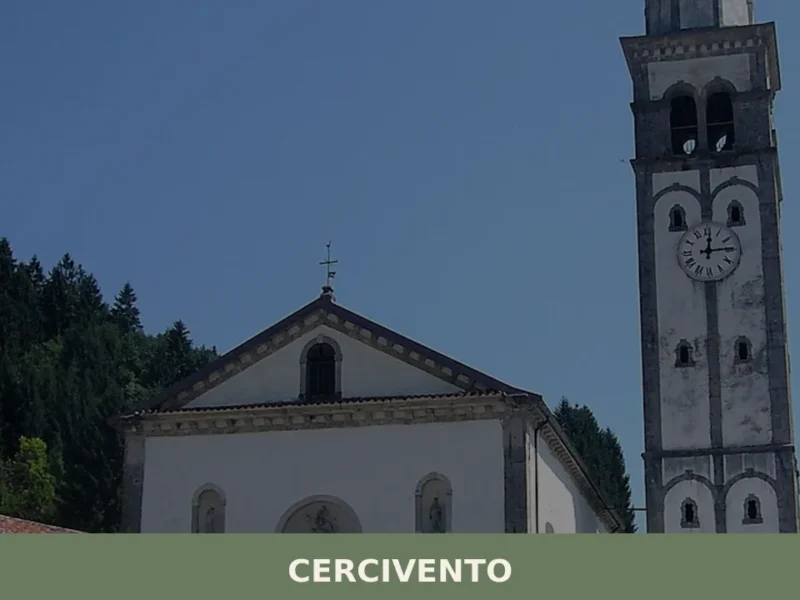
Those who decide to explore Carnia and the mountainous Friuli starting from Arta Terme can put together a multi-day itinerary taking in other localities that deserve attention. Heading up the Tagliamento valley, you reach Ampezzo, a Carnic centre that shares with Arta its position along one of the main valley routes of the region. Ampezzo, situated at the confluence of the Tagliamento with the Lumiei torrent, retains a compact historic core and serves as an access point to the Regional Forest of Cansiglio di Carnia and the hiking routes of the Canal Grande di Socchieve. The distance from Arta is modest — roughly thirty minutes by car — and the road connection crosses the upper valley landscape with notable views of the Tagliamento’s river morphology.
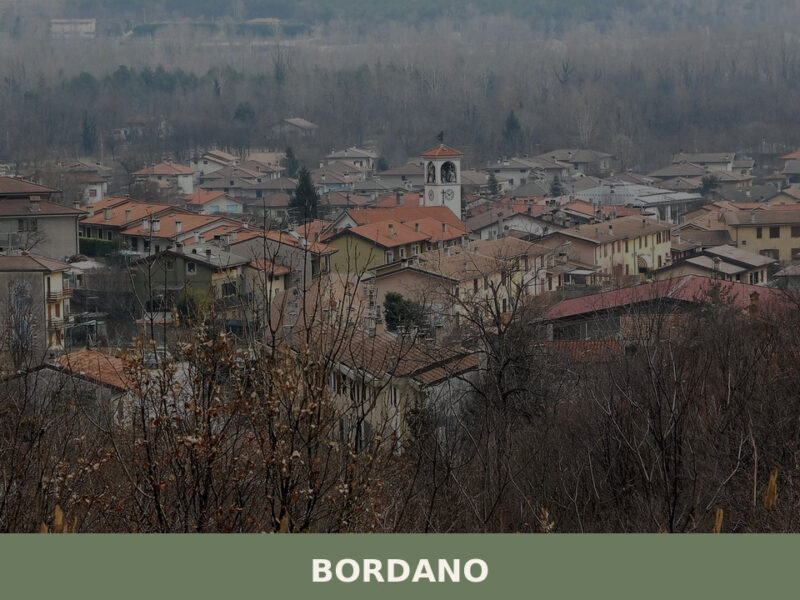
Moving southward, towards the plain, and turning eastward, you reach Bordano, known for the mural art project that transformed the facades of its houses into an open-air exhibition dedicated to butterflies. The village sits at the foot of Monte San Simeone, in a position marking the transition between the mountains and the hilly zone. Bordano and Arta Terme represent two different ways of inhabiting the Friulian territory: the former linked to a contemporary artistic intervention born out of post-earthquake reconstruction, the latter rooted in a centuries-old thermal and alpine vocation. Combining them in a single trip means crossing the geographical and cultural variety of Friuli in little more than an hour’s drive, moving from the deep Carnia to the foothill belt. For a deeper understanding of the regional context, it is useful to consult the dedicated page on Arta Terme on Wikipedia and the information available on the Touring Club Italiano portal.
Frequently asked questions about Arta Terme
What is the best time to visit Arta Terme?
The ideal period is June to September, when hiking trails to Monte Arvenis and Val Gleria are fully accessible and mountain temperatures are pleasant. July is particularly lively: on 12 July the patron saint festival of Santi Ermacora e Fortunato takes place in Piano d'Arta, drawing visitors from across the hamlets. Thermal spa treatments are available year-round, making autumn and winter valid alternatives for those seeking a wellness-focused stay. Spring offers beech forests in fresh leaf and uncrowded trails, though some high-altitude paths may still be snow-covered before late May.
What to see in Arta Terme? Main monuments and landmarks
The top sites include: the Parish Church of San Pietro in Zuglio, with its early 16th-century fresco cycle attributed to the circle of Il Pordenone (free entry during worship hours; annexed sacred art museum open in summer); the Fonte Pudia sulphurous spring, reachable via a short signposted walk from the centre (freely accessible); and the Church of Santi Ermacora e Fortunato in Piano d'Arta, housing a carved Carnic altarpiece (free entry during liturgical services). For broader cultural context, the Carnic Museum of Popular Arts 'Michele Gortani' in nearby Tolmezzo (8 km) is strongly recommended.
What are the main natural or scenic attractions of Arta Terme?
Arta Terme offers several CAI-marked hiking routes departing directly from the municipal territory. The trail to Monte Arvenis (1,968 m) crosses beech and fir forests before reaching high-altitude pastures, with an elevation gain of up to 1,500 metres. Val Gleria, a side valley of the Val But, provides a shorter family-friendly itinerary along a torrent with clear pools and erratic boulders. Both routes are hikeable from June to October without technical equipment. The But valley itself, set between glacial terraces and Carnic Alpine foothills, offers scenic walking even at lower altitudes.
Where to take the best photos in Arta Terme?
The Church of Santi Ermacora e Fortunato in Piano d'Arta sits on a slight rise with an open view over the But valley and surrounding mountains — one of the most photogenic vantage points in the municipality. The Fonte Pudia spring area, with its distinctive sulphurous landscape, offers an unusual and atmospheric subject. Higher up, the trails towards Monte Arvenis provide panoramic shots of the Carnic Alps, best in the golden light of early morning or late afternoon. The hamlet of Zuglio, with its spired bell tower and stone portal, is also a strong architectural subject.
Are there museums, churches or historic buildings to visit in Arta Terme?
Yes. The Parish Church of San Pietro in Zuglio is the most significant historic building, featuring a late-Gothic and Renaissance structure with a 16th-century fresco cycle from the circle of Il Pordenone; a small sacred art museum opens in the summer months. The Church of Santi Ermacora e Fortunato in Piano d'Arta contains a carved wooden altarpiece and 17th-century canvases. Eight kilometres away in Tolmezzo, the Carnic Museum of Popular Arts 'Michele Gortani', housed in the 18th-century Palazzo Campeis, holds over 4,000 objects of Carnic material culture; hours vary by season — check the official website before visiting.
What can you do in Arta Terme? Activities and experiences
The spa complex near the Fonte Pudia spring offers thermal treatments including inhalation therapy, mud therapy and balneotherapy using sulphurous waters rich in hydrogen sulphide; booking is required. Hiking the CAI-marked trails to Monte Arvenis and Val Gleria suits both experienced walkers and families. On 12 July, the patron saint festival of Santi Ermacora e Fortunato provides an authentic local cultural experience with religious services and communal activities. Summer hamlet festivals across the municipal territory offer tastings of Carnic specialities. The nearby Carnic Museum in Tolmezzo rounds out a culturally oriented visit.
Who is Arta Terme suitable for? Families, couples, hikers, solo travelers?
Arta Terme suits a wide range of visitors. Couples and wellness travellers are drawn by the thermal spa tradition and the peaceful valley setting. Hikers of intermediate to advanced level will find rewarding routes to Monte Arvenis and beyond. Families benefit from the shorter Val Gleria trail and the village's safe, unhurried environment. Culture-oriented visitors can explore Renaissance frescoes in Zuglio and Carnic ethnographic heritage in nearby Tolmezzo. The village's small size, mountain air and absence of mass tourism make it especially appealing to those seeking an authentic, slow-paced Friulian mountain experience.
What to eat in Arta Terme? Local products and specialties
The local cuisine follows Carnic mountain traditions. Cjarsòns — half-moon ravioli filled with potatoes, mountain herbs, raisins, chocolate and smoked ricotta, dressed with melted butter — is the defining dish, with recipes varying by hamlet. Frico, a crispy or soft disc of Montasio DOP cheese with potatoes, is equally central. Key local products include Montasio DOP (aged cow's milk cheese from alpine dairies), smoked ricotta from Carnia (a PAT-recognised product, beechwood-smoked), Carnic speck (PAT-recognised, smoke-forward), and Timau rye sourdough bread from the nearby locality of Timau. Summer festivals in the hamlets offer direct tastings.
Nearby Villages near Arta Terme
In Friuli-Venezia Giulia More villages to discover
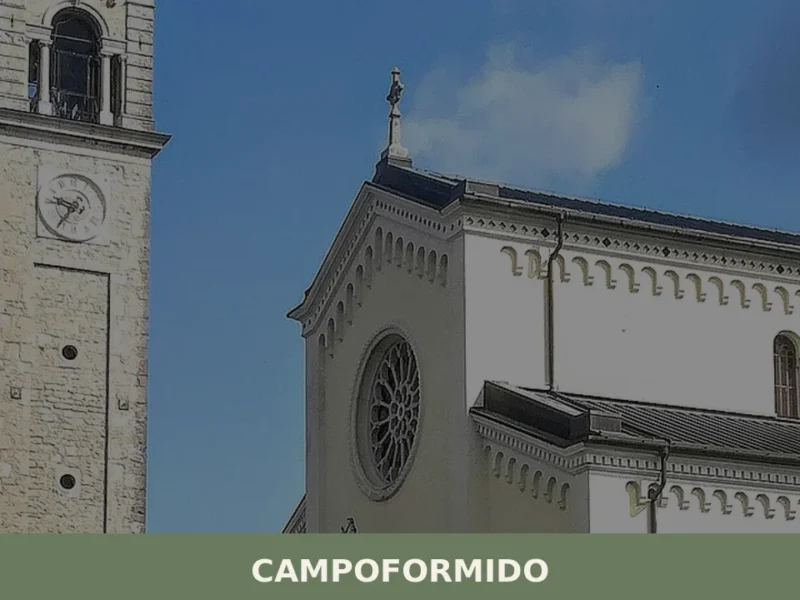
Campoformido
 Plains
On 17 October 1797, in a country villa on the Friulian plain, plenipotentiaries representing Napoleon Bonaparte and the Austrian Empire signed the treaty that redrew the political map of Europe, erasing the Republic of Venice after more than a millennium of existence. That document bears the name of this place: Campoformido, a municipality of 7,799 […]
Comeglians
Hills
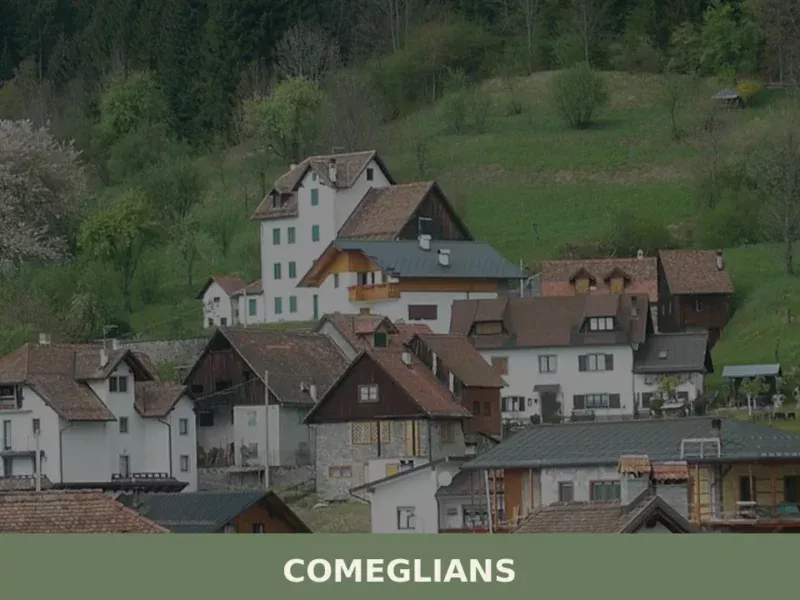
In the valley of the Degano torrent, along the road that climbs from Tolmezzo toward the Monte Croce Carnico pass, Comeglians marks a precise point on the map of Carnia: 553 metres above sea level, 533 inhabitants spread across the main village and the hamlets of Povolaro, Maranzanis, Tualis, and Calgaretto. The municipality is documented […]
Camino al Tagliamento
Plains
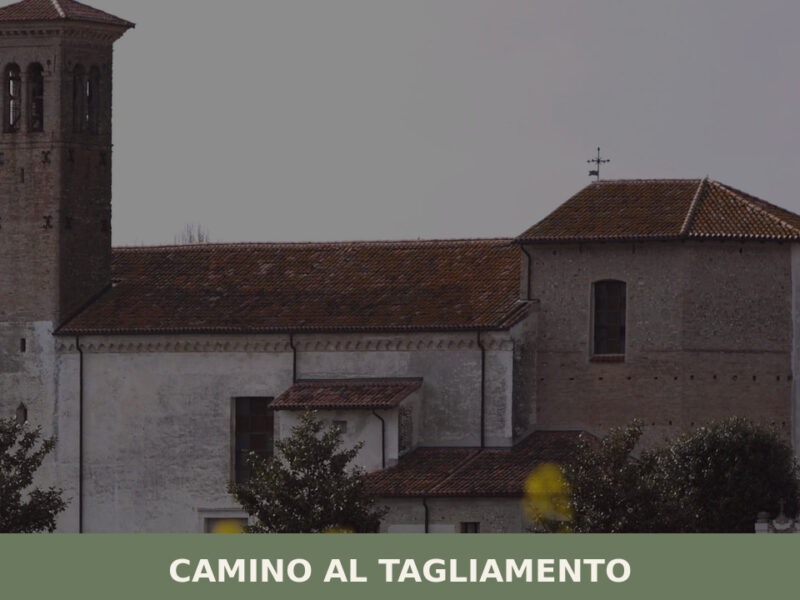
A guide to Camino al Tagliamento in Friuli Venezia Giulia — its medieval parish church, the Tagliamento riverbed, rural hamlets, and Friulian food traditions.
Castions di Strada
Plains
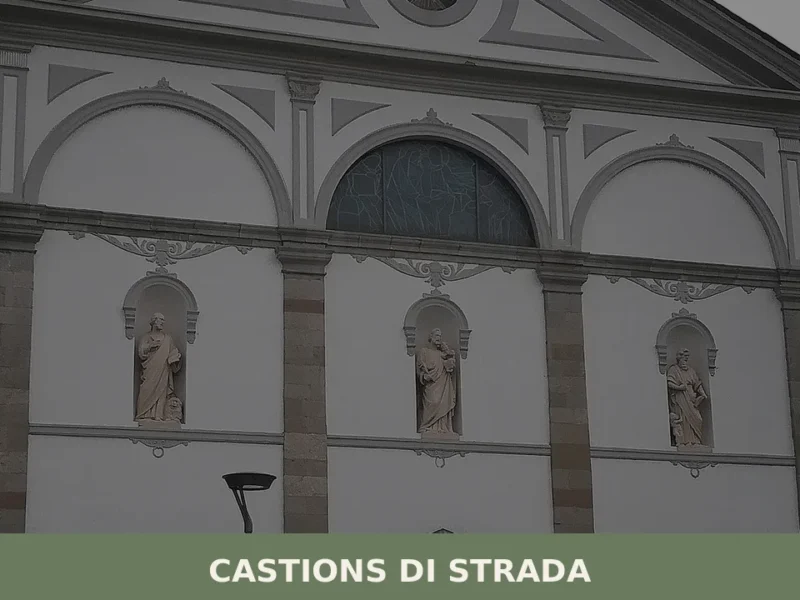
A straight road cuts across the Friulian plain at twenty-three metres above sea level, and along that route — the ancient road that connected Aquileia to Concordia Sagittaria — a settlement grew whose very name declares its reason for being. Castions di Strada owes its identity to that Roman road, to a network of drainage […]
Carlino
Plains
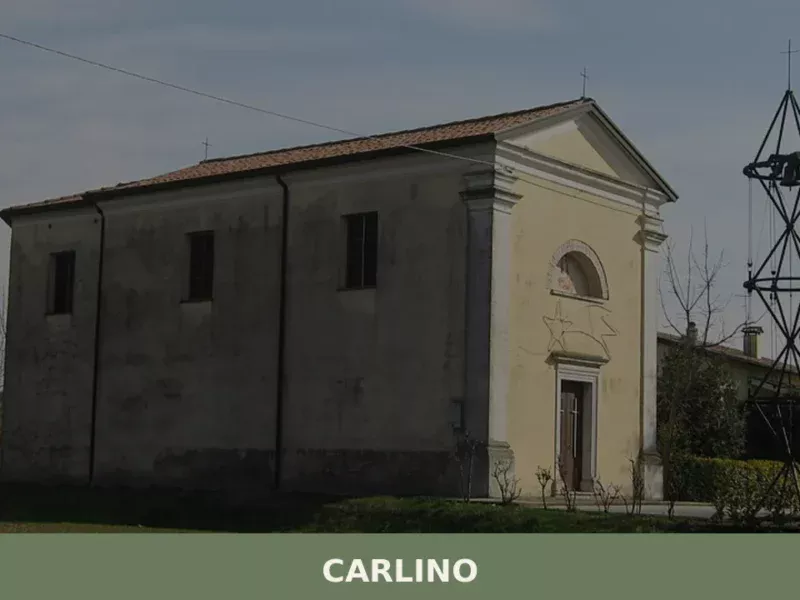
The first thing you notice arriving in Carlino is the industrious silence of the Friulian plain, broken only by the rustle of water flowing through the drainage canals that cross the municipal territory. We are in the Bassa Friulana, province of Udine, just a few kilometres from the Marano Lagoon, in a land where agriculture […]
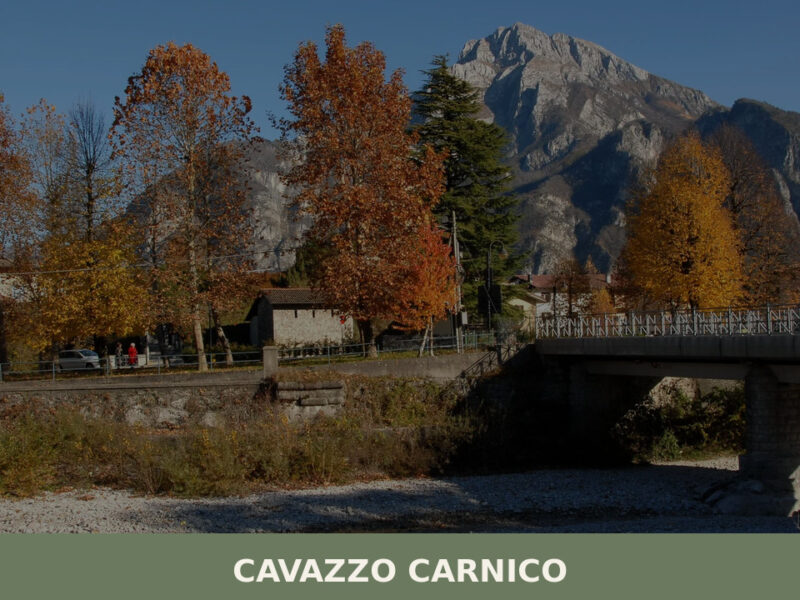
Cavazzo Carnico
 Mountain
Cavazzo Carnico sits beside Friuli Venezia Giulia's largest natural lake, where Romanesque parish churches and Alpine trails converge in Carnia's quiet middle valleys.
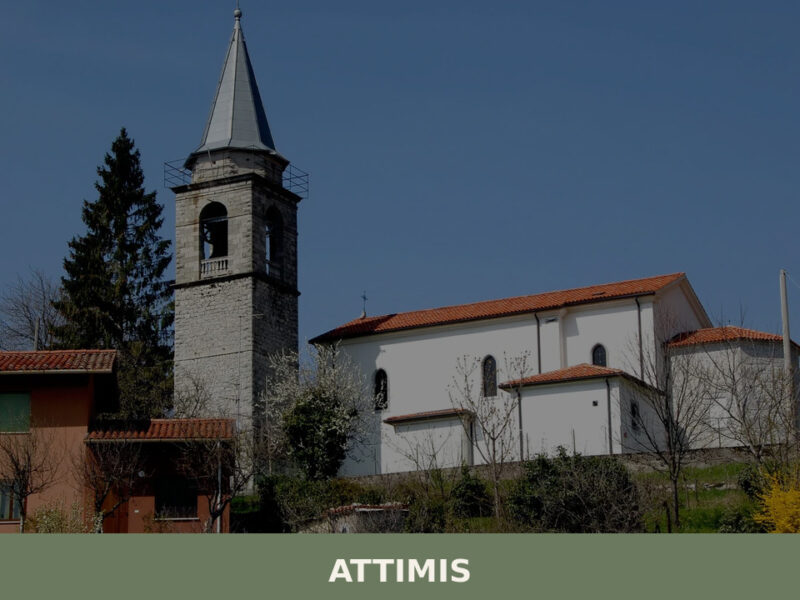
Attimis
Plains
Twin castle ruins, a medieval archaeological museum, and the secluded mountain hamlet of Porzûs — Attimis reveals Friuli's layered history in a quiet valley near Udine.
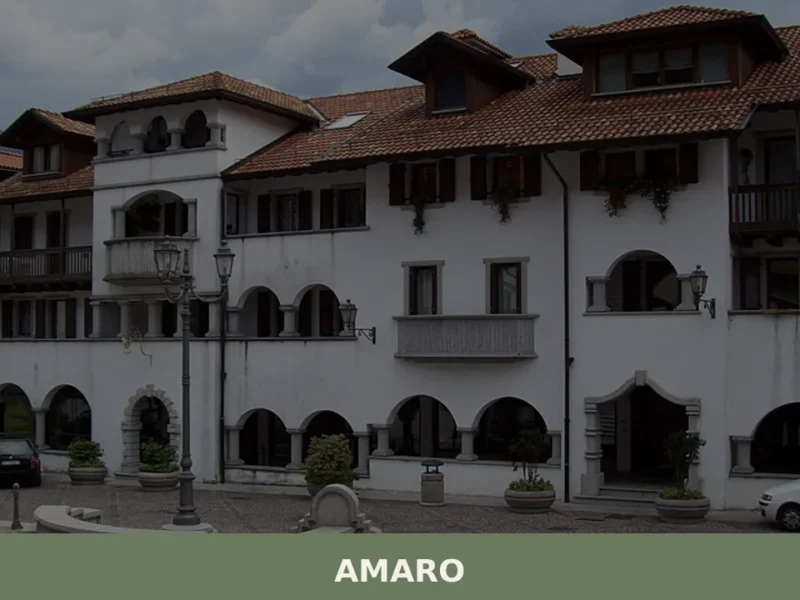
Amaro
Hills
What to see in Amaro, Italy: Discover this Friuli-Venezia Giulia village at 296 m (971 ft) altitude. Explore local traditions and planning your visit.
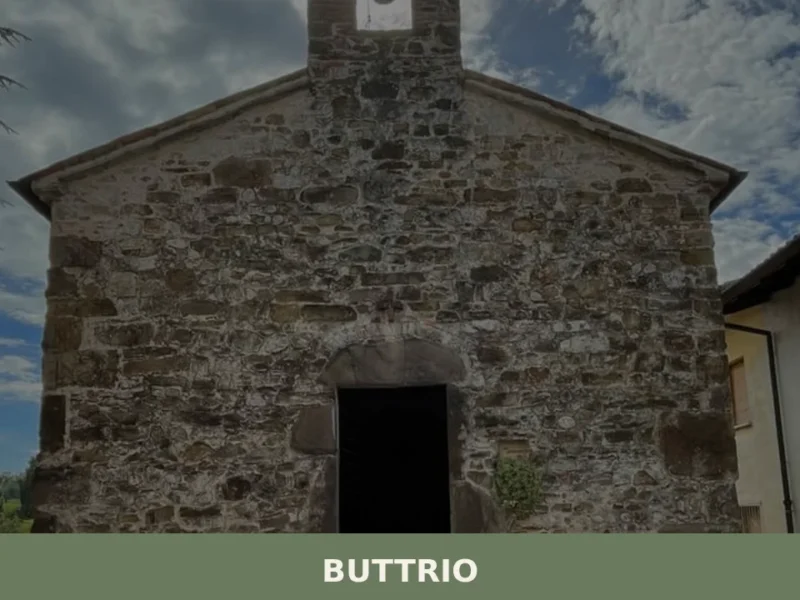
Buttrio
Plains
In 1031 a document issued by Emperor Conrad II mentioned for the first time the name Butrium, referring to a hilltop settlement where grapevines had already been cultivated for centuries. Today that nucleus has become a municipality of 4,040 inhabitants in the province of Udine, standing at 79 metres above sea level and surrounded by […]
Coseano
Plains
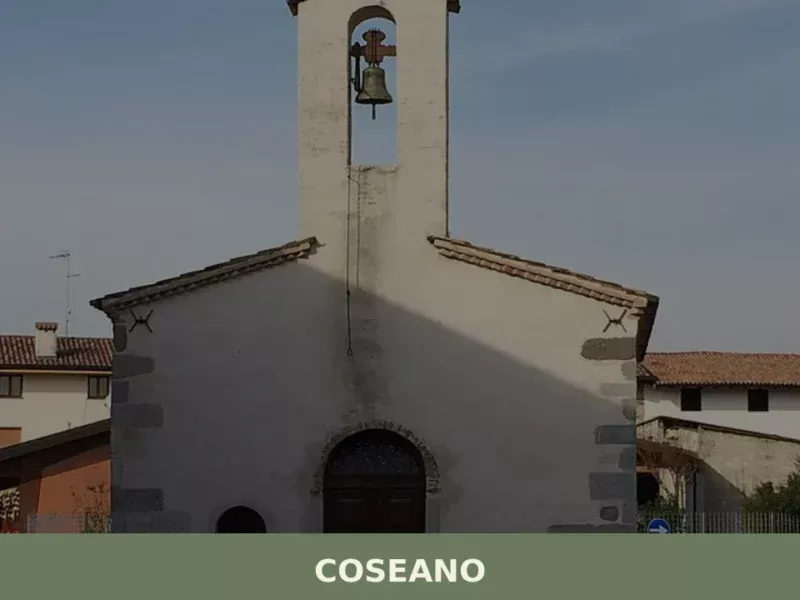
In 1275, a document from the Patriarchate of Aquileia records the name Cosean among the communities subject to feudal jurisdiction in the Udine hill area. Seven centuries later, the municipality retains its rural layout, spread across the main settlement and the hamlets of Cisterna, Barazzetto, Muscletto and Nogaredo di Coseano, scattered over flat terrain at […]

🏡 Know Arta Terme better than we do?
If you’re a local or have been there, your knowledge matters: add what’s missing or fix a detail on this page.